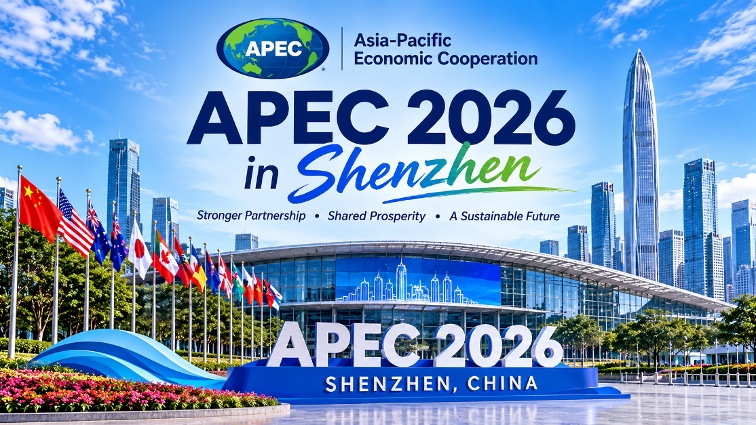
[People News] In November 2026, the Chinese Communist Party (CCP) will host its third informal meeting of APEC leaders in Shenzhen. A report by the Central News Agency highlights the CCP’s three-time hosting of APEC as a key indicator of the dramatic shift from the Party’s strategic efforts to integrate into the global economy to facing increasing global de-risking and resistance. This transformation is the inevitable outcome of the interplay between a 25-year macroeconomic cycle, changes in export structure, policy shifts, political-economic relationships, system operations, and geopolitical manoeuvring under CCP governance.
Macroeconomic Cycle: Structural Collapse Concealed by Rapid Expansion
In 2001, China’s Gross Domestic Product (GDP) was around $1.3 trillion, placing it sixth in the world. The CCP took advantage of its accession to the World Trade Organisation to promote a dual-driven model of exports and investments, establishing a typical export-oriented growth model. Between 2001 and 2010, the average annual growth rate of real GDP was nearly 10%, with exports at one point accounting for over 30% of GDP. Following the global financial crisis in 2008, the CCP implemented a 4 trillion yuan stimulus plan, which further reinforced investment-driven growth, with local financing platforms and the real estate sector becoming the primary engines of growth. Consequently, debt accumulated rapidly, and economic bubbles continued to inflate.
Between 2012 and 2013, the Chinese economy transitioned into what is known as the ‘new normal,’ with growth rates declining from double digits to a medium-high rate of 7%. By the time of the 2014 APEC meeting in Beijing, China had already established itself as the world’s second-largest economy. Over the next decade, the growth trajectory continued to decline. Following the impact of the pandemic in 2020, the annual average growth rate mostly fluctuated between 4.5% and 5.5%. By 2025 to 2026, nominal GDP is projected to approach or exceed the $20 trillion mark, but the growth rate is expected to have fallen to around 4.5%, with the third quarter of 2026 estimated at approximately 4.6%. Low inflation, volatility in the producer price index, and weak consumer demand have become commonplace. Real estate investment has faced several years of negative growth or stagnation, while pressures from local debt and bank asset quality have surfaced, compounded by negative population growth and an ageing demographic that further restrict potential growth.
The cyclical volatility clearly reveals the fundamental flaws within the CCP system. The first ten to fifteen years were characterised by quantitative expansion and the benefits of globalisation, while the subsequent decade has been marked by a decline in quality and the accumulation of both internal and external pressures. The long-standing structural imbalance of high investment rates and low consumption rates has become even more evident following the downturn in the real estate sector. The domestic scenario of strong supply and weak demand has left officials struggling for solutions, even as they adamantly deny the existence of overcapacity. The investment-driven and debt-expansion model that the CCP has relied upon to sustain growth is increasingly unsustainable, with the potential growth centre consistently shifting downward, leading the economy into a structural slowdown.
Export situation: Surplus driven by subsidies and global backlash.
Exports have been the central pillar supporting the trajectory of the Chinese Communist Party’s (Zhonggong) economic growth over the past 25 years. Following China’s accession to the World Trade Organisation, labour-intensive products dominated exports, resulting in a rapid expansion of the trade surplus. After the mid-2010s, the structure of exports began to upgrade, with an increasing share of electromechanical and high-tech products. In recent years, electric vehicles, lithium batteries, photovoltaics, and machinery have emerged as new growth drivers. By 2025, the goods trade surplus is projected to reach a historic high of approximately 120 billion USD, with net exports contributing to GDP growth at one of the highest levels seen in recent years. Notably, in the automobile sector, some companies have experienced substantial increases in overseas sales, attempting to offset the shortfall in domestic demand.
Currently, the entire economic framework of the Chinese Communist Party is heavily reliant on exports, yet this robust export performance has also become a new source of trade friction. China’s formidable export capabilities in advanced manufacturing are perceived by trading partners as a threat to employment and industrial security. Export subsidies encompass direct fiscal support, low-interest loans, and land incentives, with local government competition and aggressive price wars significantly exceeding the average levels of OECD countries by three to eight times. The overcapacity issues faced by the Chinese Communist Party extend from steel and aluminum to new energy and electric vehicles, resulting in a swift decline in global prices and prompting anti-dumping and anti-subsidy investigations, as well as tariff barriers from the United States, Europe, and even Russia.
The Chinese Communist Party’s (Zhonggong) dependence on exports has rendered its production chain vulnerable. U.S. technology restrictions concerning chips and equipment, European carbon border adjustments and industrial protection measures, along with localization demands from emerging markets, are all constricting the external space available to the Chinese Communist Party. The approach of maintaining export competitiveness through subsidies effectively shifts domestic surplus production capacity abroad, ultimately leading to global pushback, indicating that the export model has reached an unsustainable stage.
Policy Changes: The Collapse of Marketisation Commitments and State Leadership
Around 2001, the WTO accession negotiations led by Zhu Rongji resulted in significant tariff reductions and expanded market access. In 2013, the Third Plenary Session of the 18th Central Committee of the Chinese Communist Party proposed that the market should play a decisive role in resource allocation, which was initially perceived by the international community as a signal for deeper reforms. The 2014 APEC meeting in Beijing adopted the Beijing roadmap for the Asia-Pacific Free Trade Area, showcasing the Chinese Communist Party’s intention to actively shape regional regulations.
However, the central issue lies not in the Chinese Communist Party’s openness, but in what it has done post-liberalisation. Beyond exploiting the advantages offered by developed nations, it has failed to fulfil any of its commitments made upon joining the WTO. Following this, the Chinese Communist Party shifted its policy focus towards optimizing, strengthening, and expanding state-owned enterprises, fostering new productive forces, and achieving technological self-reliance. Industrial policies include ‘Made in China 2025’ and subsequent potential plans, which provide extensive support for sectors such as semiconductors, new energy, artificial intelligence, and robotics.
The Xi Jinping era places even greater emphasis on the core principle of prioritising politics over the economy. This involves pursuing political security and stability, maintaining the Party’s leadership over the economy, reinforcing the dominant role of state-owned enterprises in critical sectors, stifling the growth of private enterprises, forcefully deflating the real estate bubble, and postponing the enormous debts of local governments through the issuance of new debt. Additionally, there is a nationwide push for a technological leap in AI, which has resulted in a solidification of overcapacity. The fundamental nature of the Communist Party’s policy shifts is a transition from limited marketization to more stringent state control, with reform promises ultimately devolving into empty rhetoric and a source of ridicule.
Inherent flaws in the system’s operation: rigid control and suppression of innovation.
A defining feature of the Communist Party’s system is its highly centralised power structure and the Party’s extensive control over the economy. Local governments, striving to meet political performance metrics, compete to initiate similar projects, leading to redundant construction, overcapacity, and relentless resource wastage. The banking system is aligned with political objectives, resulting in a significant portion of credit being directed towards inefficient state-owned enterprises and local government financing platforms.
The absence of an exit mechanism further intensifies the severity of these issues. Many unprofitable enterprises struggle to declare bankruptcy due to concerns about employment and stability, while zombie companies continue to drain resources, creating an illusion of favourable statistical data. Private enterprises, facing policy uncertainty and financing discrimination, experience significant setbacks in their innovation drive and confidence. Large-scale subsidies promoted under the banner of technological self-reliance often result in bubbles rather than genuine breakthroughs. The dual challenges of negative population growth and an ageing demographic contribute to a widespread decline in labour supply and consumer potential. These inherent flaws within the Communist Party’s operational framework render the Chinese economy akin to an old ox struggling to pull a cart, with structural challenges deepening and the system teetering on the brink of collapse.
Geopolitics and trade wars: a global backlash ignited by expansionist ambitions.
In 2001, the Chinese Communist Party (Zhōnggòng) joined the World Trade Organisation (WTO) during the Shanghai Asia-Pacific Economic Cooperation (APEC) meeting, coinciding with the peak of globalisation following the Cold War. At that time, the United States did not recognise the true nature of the Chinese Communist Party, which was deliberately presenting itself as a responsible global power. By around 2014, China’s rise had already sparked geopolitical tensions and strategic concerns in the West, although cooperation between East and West remained the prevailing approach. However, after Donald Trump assumed the presidency in 2018 and initiated the trade war, there was a comprehensive escalation in tariffs, export controls, entity lists, and investment reviews, with competition extending beyond trade to encompass technology, finance, standards, and supply chains.
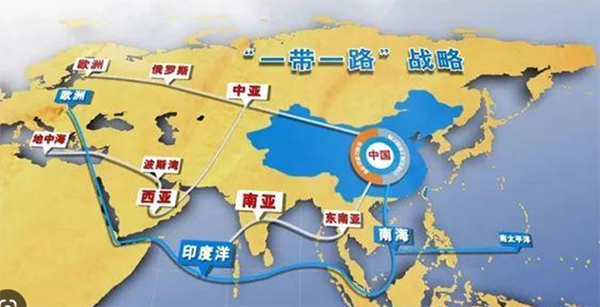
The concept of ‘risk reduction’ emerged as a key expression of the US-China competition that has expanded and institutionalised in Europe and America since 2018. The US and Europe have shifted away from the goal of complete decoupling, focusing instead on reducing reliance on China in critical technologies, essential minerals, and key infrastructure, while building alternative networks through coordination with allies. Meanwhile, the Chinese Communist Party has been promoting initiatives such as the Belt and Road Initiative, the Regional Comprehensive Economic Partnership (RCEP), and bilateral free trade agreements to mitigate the risks associated with the West’s de-China-ization efforts. The Asia-Pacific Economic Cooperation (APEC), as a regional economic platform led by the Chinese Communist Party, serves as one of the channels for dialogue between East and West. However, the trust deficit between the West and the Chinese Communist Party has significantly deepened, and what began as simple trade disputes has transformed into sharply confrontational national security issues.
Geopolitical tensions are intensifying economic friction. Exchanges between the United States and China across various areas and platforms—including the Taiwan Strait, South China Sea, technological decoupling, and cultural exchanges—are increasingly restricted, resulting in a shrinking space for mutual economic benefit. The Chinese Communist Party (CCP) has leveraged government subsidies and a national system to achieve industrial success in the electric vehicle and new energy sectors, which has also become a bargaining chip in geopolitical contests. The surplus production exported has been explicitly labelled by Western nations as economic coercion and unfair competition, compelling China to resort to trade protectionism in response. The restructuring of global supply chains presents long-term constraints and real pressures on Beijing’s growth model. The CCP’s dual strategy of external expansion and internal control ultimately provokes a systematic global backlash, making trends toward isolation increasingly unavoidable.
In summary: The trajectory of decline dictated by the system.
Over the past 25 years, the three Asia-Pacific Economic Cooperation (APEC) meetings organised by the CCP illustrate a complete arc of China’s evolution from a superficial acceptor of rules to a rule breaker, and finally to a nation marked with red lines and resistance. From a macroeconomic perspective, the benefits derived from the CCP’s earlier high-speed investment and export-driven growth have largely been depleted, exacerbated by downturns in the real estate and demographic cycles, leading to a rapid decline in potential growth rates. On the policy front, the CCP has shed the guise of market-oriented reform, with state dominance and security prioritisation becoming the new norm. The political-economic dynamics indicate that the CCP has reached a deadlock, needing to balance growth and employment with the control of debt and financial risks; needing to attract technology and capital while safeguarding against security and ideological threats. The CCP is engaged in a game that is impossible to win. The APEC framework established by the CCP will struggle to rebuild mutual trust based solely on slogans. The Chinese economy is moving from an illusion of prosperity toward a structural crisis, and the trajectory of decline is becoming increasingly evident.
(First published by People News) △