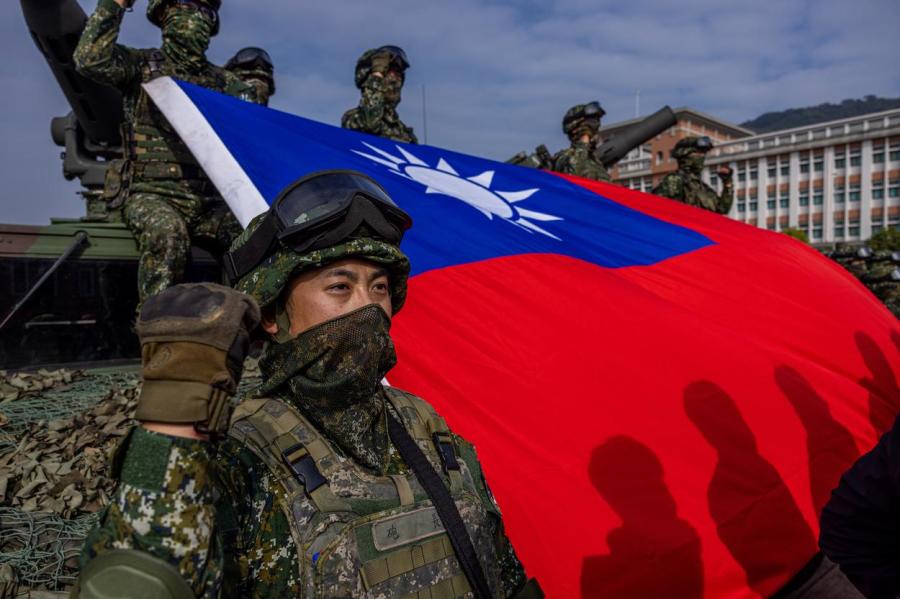
[People News] Although the Chinese Communist Party (CCP) has frequently staged large-scale military exercises around Taiwan in recent years, projecting an image of a “modern, elite force” capable of imposing a “powerful blockade,” the PLA Daily, the official newspaper of the CCP Central Military Commission, has recently made an unusually candid disclosure of its own shortcomings. It revealed a series of serious errors during joint exercises involving different branches of the Eastern Theatre Command. Not only were Air Force aircraft twice “shot down” by their own Navy’s air-defence fire, but the Rocket Force, supposedly an elite branch, also struggled to guide strikes effectively against moving maritime targets. These incidents reflect a structural bottleneck in the PLA: after spending vast sums over the past decade to acquire advanced weapons, it has become a force with “hardware ahead of software.”
I. Exercises Turn into “Attacking Their Own Forces” and “Missing the Target”
According to a series of reports in the PLA Daily, cited by the South China Morning Post, the PLA’s Eastern Theatre Command exposed some deeply embarrassing shortcomings in practical combat capabilities while advancing its joint training across different military branches.
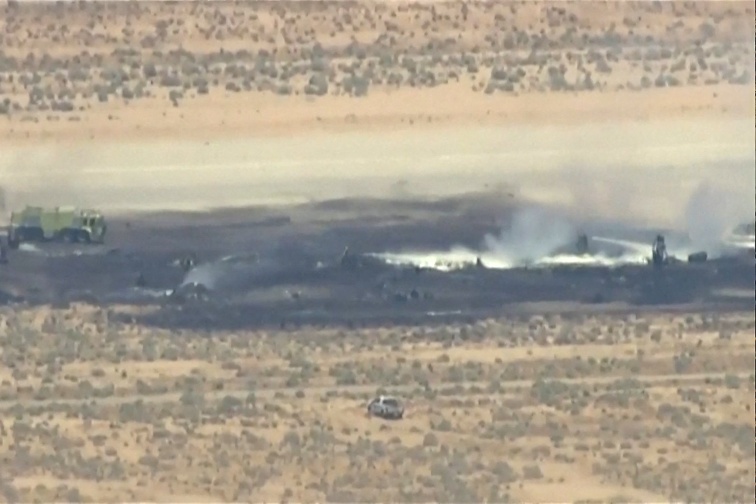
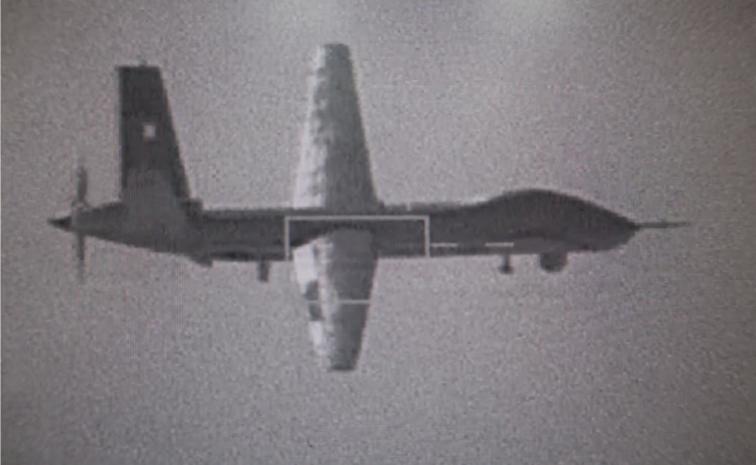
During a joint naval and air force exercise, a destroyer flotilla under the Eastern Theatre Command’s Navy twice misidentified its own Air Force aircraft, which were carrying out assigned missions, as enemy aircraft and “shot them down” with its air-defence systems. The incidents occurred because there was no unified system for friend-or-foe identification or coordination of airspace. In addition, during the early stages of joint training, conflicts between the different branches over competing demands for airspace and training grounds even disrupted the entire day’s exercise schedule.
In strike exercises targeting moving vessels at sea, Rocket Force units revealed that they had difficulty accurately guiding strikes and locking onto fast-moving ships. In other words, they could “see the targets but could not hit them accurately.” This is undoubtedly a major warning sign for the PLA, which promotes an “anti-access/area-denial” (A2/AD) strategy and aims to use long-range strikes against major US and Japanese surface warships in the Taiwan Strait and the western Pacific.
II. Why Does the PLA Have “New Weapons” but Struggle to Conduct “Joint Operations”?
The PLA resolved to transform itself after witnessing the overwhelming joint-operational capabilities of the US military during the 1991 Gulf War. In 2016, it went further by replacing the traditional seven military regions with five joint theatre commands, in an attempt to break down the entrenched barriers of “Army-centric thinking.” However, several international military experts have identified deep-rooted obstacles that the PLA has yet to overcome.
Senior Commanders Can Rehearse the Script, but Frontline Units Fail to Adapt
A recent report by the Washington-based think tank Centre for Strategic and International Studies (CSIS) pointed out that the PLA’s joint operational capabilities are highly uneven. It is relatively well prepared for “scripted operations” that can be meticulously planned in advance and carried out according to a fixed schedule, such as routine deterrence patrols along predetermined routes around Taiwan. However, once it enters high-intensity combat, the command-and-control system appears rigid and inadequate at the tactical level, where frontline units must respond rapidly and coordinate in a decentralised manner.
Data Links Remain Incomplete, Creating Information Silos
Modern joint naval and air operations rely heavily on the real-time sharing of battlefield information, as exemplified by the US military’s Link 16 system. Although the PLA has individually acquired advanced equipment, including early-warning aircraft, Aegis-equipped destroyers, and long-range missiles, barriers remain between the radar parameters, communications frequencies, and command systems of different military branches. Once the electromagnetic environment on the battlefield becomes complicated, the Navy’s radar may fail to interpret the Air Force’s flight tracks correctly, resulting in the absurd situation of “one’s own air-defence network attacking one’s own aircraft.”
Dennis Blasko, a former US military attaché in Beijing, pointed out that resolving airspace conflicts at sea and preventing mutual interference between naval, air force, and missile units remain entirely new challenges for the PLA. Christian Wirth, a researcher at the German Institute for International and Security Affairs, also bluntly observed that most PLA generals have risen through the ranks within a single military branch. To genuinely change this branch-centric way of thinking, officers must undergo cross-branch rotations and gain experience from the early stages of their careers.
Overall, these training failures, which have now been disclosed proactively by the authorities themselves, show that the PLA is attempting to force its units to address practical combat weaknesses by “exposing shortcomings and admitting embarrassing mistakes.” At the same time, they confirm a long-standing assessment held by outside observers: although the PLA has made substantial advances in the quantity of its hardware and the performance of individual weapons, it still has a long and painful process of integration ahead before it can turn its Army, Navy, Air Force, and Rocket Force into a sophisticated, smoothly functioning modern war machine. △