

Year-End Military Drills Against Taiwan
[People News] In the final days of 2025, the Chinese Communist Party (CCP) did not calm down. Starting on December 29, the military exercises encircling Taiwan sharply escalated tensions in the Taiwan Strait. Taipei Mayor Chiang Wan-an had just returned from Shanghai’s Twin Cities Forum on December 28, still immersed in the dream of harmonious and joyful exchanges with guests, when Beijing poured a bucket of cold water over it. Just after giving a carrot, it immediately wielded a big stick—what exactly is Beijing up to? Although the CCP has repeatedly shouted about unifying Taiwan, is this exercise truly a rehearsal for seizing the island?
From December 29, the CCP’s Eastern Theater Command organized multiple branches of the military—including the army, navy, air force, and rocket forces—for the so-called “Righteous Mission-2025” exercises in the Taiwan Strait, north of Taiwan, southwest of Taiwan, southeast of Taiwan, and east of Taiwan. This exercise included port blockades, combat readiness patrols, and multiple mobile operations, described as a large-scale “comprehensive encirclement of Taiwan.” On December 30, live-fire drills lasting 10 hours were conducted, closely approaching Taiwan’s territorial baseline, raising the threat level to an extreme. Moreover, the end date of the exercise has not yet been clarified.
In response, Taiwan’s Ministry of National Defense condemned the CCP for launching the military drills, which undermine regional peace, and has dispatched forces to respond and execute immediate combat readiness exercises. In addition, the Taiwanese military posted training videos on social media as a countermeasure, with captions stating, “Security cannot rely on any illusion, nor can it be decided by others,” emphasizing the necessity for Taiwan to strengthen self-defense and combat readiness.
As 2026 approaches its end, Beijing suddenly seems to have gone mad, forming an “iron bucket” to encircle Taiwan, putting Mayor Chiang Wan-an in a difficult position. Just the day before the exercises, he was at the Shanghai Twin Cities Forum, quoting classics and eloquently discussing how the two sides of the strait could coexist peacefully.
Besides sharing his proud municipal achievements, Chiang cited the popular Shanghai novel Blossoms (繁花) to liken Taipei and Shanghai to “blossoming flowers,” and even traced back to the May Fourth Movement in the 8th year of the Republic of China. He publicly mentioned the “Republic of China” and hoped that “in the near future, when people talk about the Taiwan Strait, they will think not of waves and howls, but of peace and prosperity.”
However, Chiang’s heartfelt appeals had no immediate effect. Within a few hours, CCP military aircraft roared across the Taiwan Strait. Instead of the “blossoming flowers” expected, the waves and turbulence were shocking. Presumably, the Kuomintang was also awakened by this bucket of cold water.
This is not the CCP’s first military exercise against Taiwan. Statistics show that from 2022 to the present, there have already been seven such exercises. So, what is different about this one, and what is its purpose?
On December 29, CCP Foreign Ministry spokesperson Lin Jian openly stated that the drills target “external forces” and “Taiwan independence forces.”
From the perspective of recent international dynamics, the “external forces” Beijing refers to naturally involve the United States and Japan.
Earlier, Japanese Prime Minister Sanae Takaichi publicly declared, “Taiwan’s issue is Japan’s issue,” which was followed by CCP diplomat Xue Jian’s terrifying “decapitation theory,” causing a huge uproar. Relations between China and Japan fell to a low point. Despite the CCP using verbal provocations and policy pressure to demand Takaichi retract her statement, she did not yield, and domestic support for her rose to nearly 80%. Moreover, this round of CCP operations strengthened the US-Japan alliance. In the end, Beijing gained nothing and was slapped in the face by the US and Japan.
As one wave of tension subsided, another arose. In mid-December, the United States announced a $11.1 billion arms sale to Taiwan, the largest since 2001. Beijing was furious and immediately imposed sanctions on 20 US defense companies in retaliation.
In fact, Beijing has been trying to gauge how the US would react to the Russia-Ukraine conflict to decide when and how to act against Taiwan.
At the end of October, after a summit between Trump and Xi Jinping in South Korea, a temporary trade truce was reached, and Trump was invited to visit Beijing in April. US-China relations seemed to ease. Beijing initially hoped that Trump’s visit would lead the US to make some concessions regarding Taiwan. Therefore, Trump’s sudden decision on a major arms sale to Taiwan caught Beijing off guard.
However, Beijing did not want to escalate the situation before Trump’s visit. It ultimately decided to conduct large-scale encircling drills, using a feint to warn the Trump administration not to go too far in supporting Taiwan.
So, how did Trump respond? On December 29, at Mar-a-Lago, he told the media that he was not worried about Beijing’s military exercises around Taiwan, and he did not believe Xi Jinping would order an invasion. It seems Trump was not intimidated by the CCP’s tactics at all.
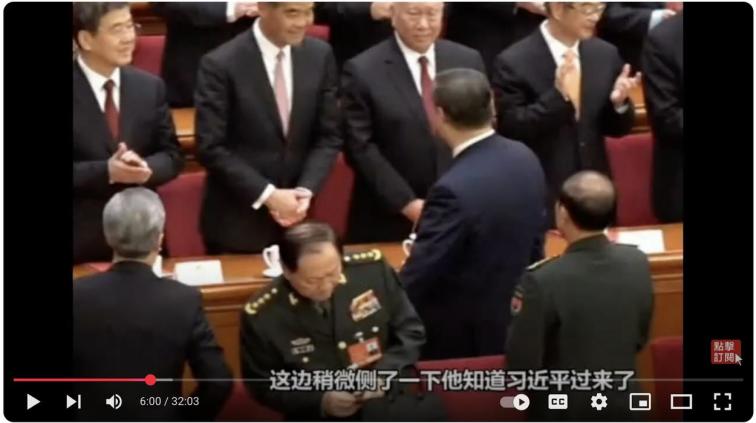
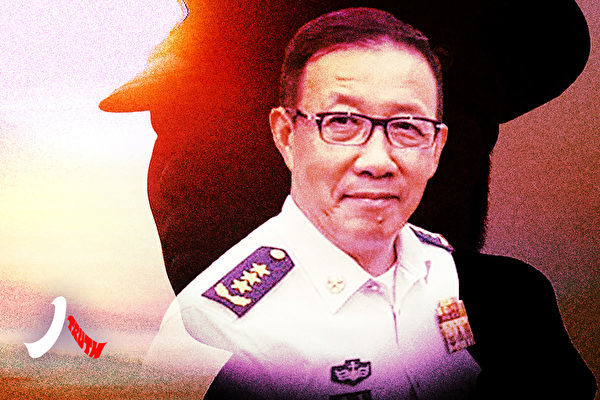
On December 22, the CCP promoted Yang Zhibin, commander of the Eastern Theater Command, and Han Shengyan, commander of the Central Theater Command, to full generals. This exercise coincided with the post-promotion period. However, only four full generals—Zhang Youxia, Zhang Shengmin, Liu Zhenli, and Dong Jun—attended the promotion ceremony, making it a sparse affair. By contrast, the last promotion ceremony on December 23, 2024, had 20 full generals in attendance. In one year, the CCP cut 16 generals.
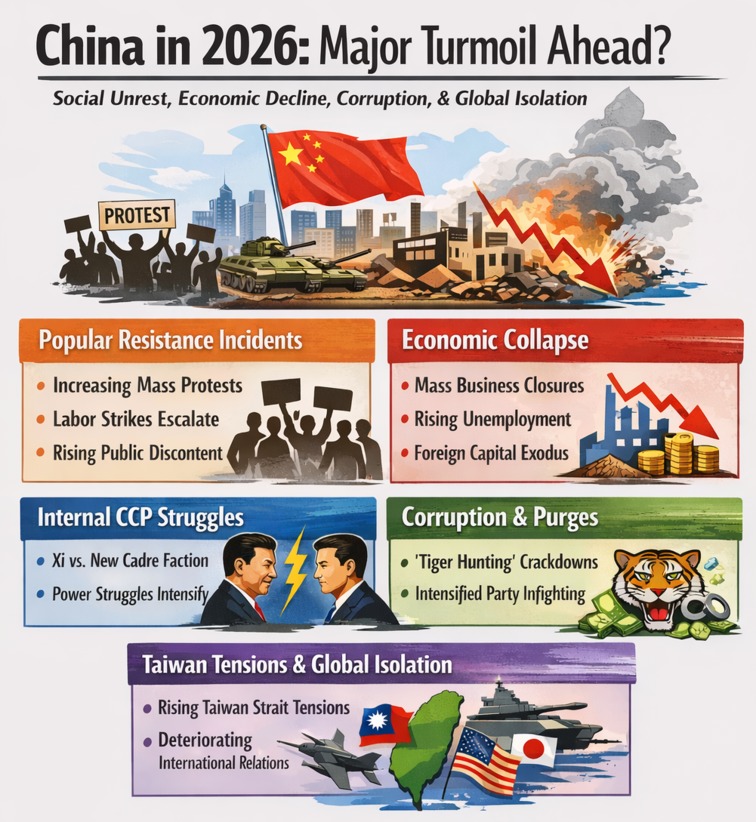
Judging by the dwindling number of top generals within the CCP alone, it is clear that this military exercise is still largely a “performance.” Moreover, such massive exercises can affect Western investors’ perceptions of China’s investment environment. Mainland China urgently needs foreign investment to improve its overall economic environment. Therefore, some scholars suggest, “Beijing is not fully prepared for a hard confrontation.” With a declining domestic economy, fiscal difficulties, and unstable public sentiment, the critical foundations for attacking Taiwan are lacking. Consequently, this exercise is destined to be all sound and fury, starting with a spectacle and ending in a hasty withdrawal.
(Exclusive first publication by People News)△





News magazine bootstrap themes!
I like this themes, fast loading and look profesional
Thank you Carlos!
You're welcome!
Please support me with give positive rating!
Yes Sure!