

During Beijing’s September 3rd military parade, Xi Jinping and Vladimir Putin discussed immortality and organ transplants, shocking the public. (Screenshot from NTD video)
[People News] On May 6, 2026, South Korea's Ministry of Unification released the full text of North Korea's new constitution, signifying that Kim Jong-un's regime has officially abandoned its long-standing goal of "national unification" at a legal level.
In March 2026, an amendment passed by North Korea's Supreme People's Assembly removed all references to national unification, such as "northern half," "national unification," and "complete victory of socialism," from both the preamble and the main text. New territorial clauses were introduced, clearly stating that North Korea's territory "borders the People's Republic of China and the Russian Federation to the north, and the Republic of Korea to the south," and defining the inter-Korean relationship as a boundary relationship between two independent states.
Kim Jong-un's move is a historic and definitive shift, reshaping the geopolitical landscape of the Korean Peninsula and serving as a clear challenge to Xi Jinping's "unification cause." The Kim dynasty's public acceptance of permanent division, now enshrined in the constitution, is set to directly undermine Beijing's long-promoted narratives of "national rejuvenation" and "cross-strait family ties" regarding unification. Kim Jong-un's pragmatic decision is driven by the real pressures faced by a totalitarian regime and a strategic retreat, which undoubtedly serves as a blow to Xi Jinping's Taiwan unification strategy.
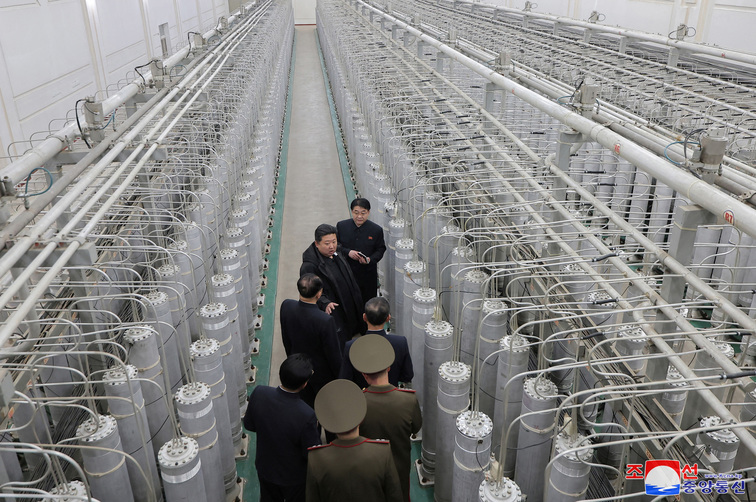
The revision of the North Korean constitution represents a legal culmination of Kim Jong-un's years of policy adjustments. By the end of 2023, he had publicly declared that North and South Korea are "two hostile countries," dismantling unification monuments and cutting off communication channels. The 2026 constitutional amendment finalises this institutional shift, reinforces his position as head of state, clarifies his exclusive control over nuclear weapons, and aims to project an image of a normal nuclear state on the international stage, while downplaying the unification achievements of Kim Il-sung and Kim Jong-il.
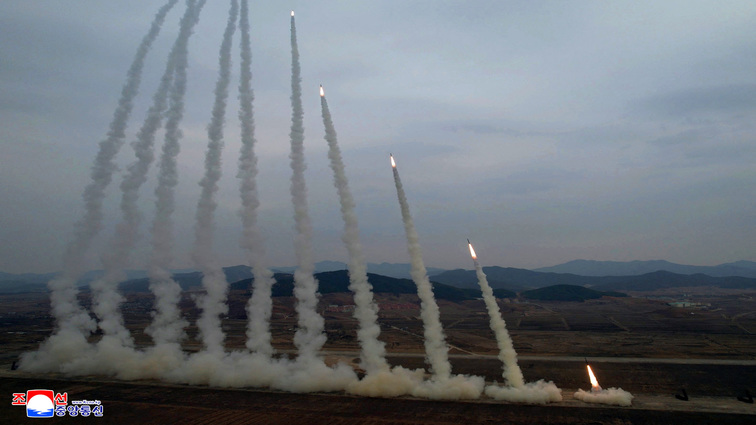
Kim Jong-un's actions stem from his clear recognition that the military reality in North Korea is the primary constraint on achieving unification. While North Korea has a numerical advantage in conventional military forces, there is a significant gap in modern military technology, logistics, precision strikes, drones, and AI military resources when compared to the South Korea-U.S. alliance.
The brutal lessons learned from the four-year Russia-Ukraine war, marked by high-intensity attrition, the dominance of drones and electronic warfare, and ongoing military support from the West, have likely dealt a severe blow to Kim Jong-un's unification aspirations. North Korea has previously deployed troops to Russia, resulting in most of them becoming cannon fodder. Should a full-scale unification war erupt on the Korean Peninsula, with the involvement of the U.S., Japan, and South Korea, North Korea's military capabilities would struggle to withstand the onslaught, and the costs would far outweigh any potential benefits. Although North Korea has nuclear weapons, they are primarily used to assert its presence and maintain a strategic balance; employing them in a unification war would ultimately lead to self-destruction.
On the other hand, Kim Jong-un's personal health is a significant factor influencing this historical process. According to various intelligence sources, including the South Korean National Intelligence Service (NIS), Kim Jong-un has struggled with obesity for a long time, with his weight once reaching approximately 140 kilograms, marking the heaviest point in his life. This has directly resulted in chronic conditions such as hypertension and diabetes, with symptoms emerging since he was in his early 30s. Additionally, he suffers from severe insomnia, heavy drinking, and nicotine dependence, while a family medical history and heart risks further complicate his health uncertainties. This situation compels him to prioritise the stability of his regime, as Kim Jong-un plans to pass the power baton to his underage daughter, underscoring that his health issues pose a threat to the stability of the Kim dynasty. South Korean intelligence agencies have assessed that Kim Jong-un's daughter, Kim Ju-ae (around 13 years old), has been identified as the heir. She frequently participates in military events, including driving tanks, to cultivate a military image and diminish gender barriers. Kim Jong-un must prepare the way for his daughter, ensuring that the transitional regime remains stable and is not disrupted by unification risks or potential political adversaries. In this context, avoiding unification appears to be a prudent decision.
In the highly centralised North Korean system, any signs of leadership decline could lead to internal instability. Kim Jong-un must consolidate his power and arrange for succession within a limited timeframe, rather than initiating a potentially unsuccessful and lengthy unification war. Strengthening personal nuclear command authority through constitutional amendments provides institutional safeguards for the power transition amid health uncertainties. Kim Jong-un has shifted his focus from the distant goal of 'unification' to the narratives of 'nuclear normalisation' and 'independent coexistence,' which are more effective in facilitating power transfer, maintaining domestic control, and coordinating externally.
Additionally, the pressure exerted by the United States on anti-American regimes such as Venezuela, Cuba, and Iran has highlighted the vulnerabilities faced by totalitarian governments, prompting Kim Jong-un to recognise the risks involved. He is determined not to become the next target; instead, he is capitalising on the benefits of the Russia-Ukraine war to strengthen cooperation with Russia while striving to maintain a balance between China and Russia.
China, as North Korea's largest implicit supporter, has responded to the situation with considerable caution. Beijing is worried about potential chaos on the Korean Peninsula, the impact of a refugee influx on its borders, and the increased instability in the East Asian region. North Korea's public renunciation of unification and its clear definition of enemy lines clearly undermine the narrative of 'traditional friendship' between China and North Korea, casting a shadow over their diplomatic relations and reducing the Chinese Communist Party's influence over North Korea. As a tool in the CCP's anti-American strategy, North Korea's effectiveness is waning. Additionally, the ongoing political and border tensions between North and South Korea are likely to remain significant for some time, which could lead to a tighter U.S.-South Korea alliance and, in turn, strengthen the strategic partnership among the U.S., Japan, and South Korea, undoubtedly presenting a negative factor for the CCP.
Moreover, this incident serves as a stark warning for Xi Jinping's Taiwan strategy. Xi views the Taiwan Strait issue as a core element of the CCP's major power diplomacy. Since taking office, his ambitions for military unification with Taiwan have been clear. In recent years, Xi's extensive purging of corrupt military officials has exposed the CCP's facade of combat readiness, revealing that most senior military leaders oppose military unification. As military leaders continue to be dismissed, Xi Jinping's dream of military unification with Taiwan is crumbling. Consequently, Xi has shifted towards a strategy of peaceful unification, aiming to collaborate with the Kuomintang, deeply infiltrate Taiwan, and attempt to eliminate the Democratic Progressive Party to achieve unification.
North Korea's public constitution has accepted permanent division, serving as a living counterexample. This situation seems to have imparted a lesson to Xi Jinping: instead of risking unification, it is wiser to pragmatically consolidate power. The implications of Kim Jong-un's health issues are particularly intriguing. Similarly, Xi Jinping's health has been a crucial indicator for external observers regarding the stability of the highest echelons of power within the Communist Party of China. While Xi Jinping is expected to secure a fourth term at next year's 21st National Congress, his advancing age and declining health raise concerns. The Communist Party's system may struggle to enable Xi Jinping to transfer power to Xi Mingze. Additionally, Peng Liyuan's ambition to follow in Jiang Qing's footsteps has drawn public mockery from both party insiders and outsiders regarding the Xi-Peng couple's political alliance. If the Xi family aims to maintain political authority indefinitely, it can only rely on Xi Jinping ruling for life. However, health issues may serve as an internal limitation on Xi Jinping's ambitions for power. If the pressure for national unification continues to mount on Xi Jinping, it could hasten a potential collapse.
(First published by People News) △





News magazine bootstrap themes!
I like this themes, fast loading and look profesional
Thank you Carlos!
You're welcome!
Please support me with give positive rating!
Yes Sure!