

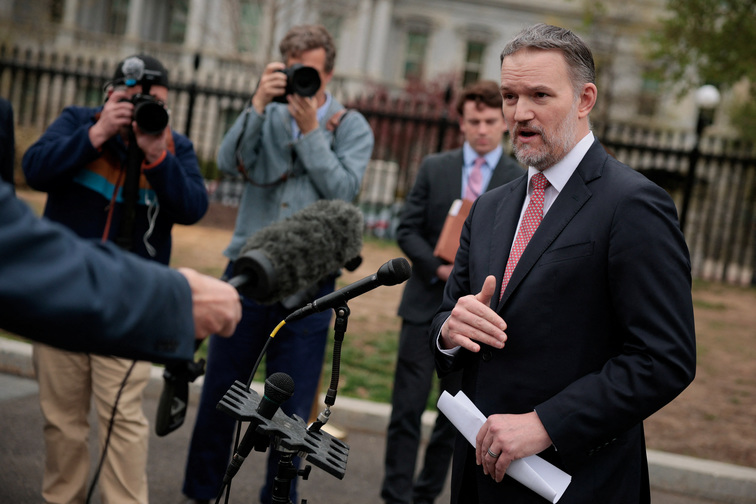
July 22 (Reuters) - U.S. Trade Representative Jamieson Greer said on Wednesday he hoped to strike some interim trade deals with Mexico and Canada this year while tackling thornier changes to the U.S.-Mexico-Canada Agreement in 2027, his strongest signal yet that the pact will not be renewed this year.
"I would love to have by the end of the year at least some arrangements — one with Canada, one with Mexico," Greer told a Senate Finance Committee hearing.
He said issues such as tighter rules of origin for autos and labor and environmental regulations could require more time and discussion "including with Congress in the following year."
Greer's comments left little doubt that a full renegotiation of the six-year-old U.S.-Mexico-Canada Agreement will bleed into next year, prolonging business and investment uncertainty that Canada and Mexico have been seeking to ease.
Mexico's Economy Ministry declined to comment on Greer's remarks. The Canadian ministry in charge of U.S. trade did not immediately respond to a request for comment.
Greer said the U.S. is "moving with all due speed" on the potential interim agreements, adding that he wanted to have options for Trump, Mexican President Claudia Sheinbaum and Canadian Prime Minister Mark Carney to consider by the end of the year. He did not provide specifics on what the agreements could look like.
"Greer’s testimony confirms that the United States is no longer aiming for a clean USMCA renewal this year," said Michael Camunez, chief executive of Monarch Global Strategies, which advises firms doing business in Mexico.
"The likely outcome is an interim political agreement that keeps negotiations moving but leaves the hardest issues — and much of the investment uncertainty — unresolved."
TARIFF RELIEF SOUGHT
USMCA and its predecessor, the North American Free Trade Agreement, have defined North America's economy for 32 years, underpinning nearly $1.6 trillion in once duty-free regional trade, with Mexico and Canada sending the vast majority of their exports to the United States.
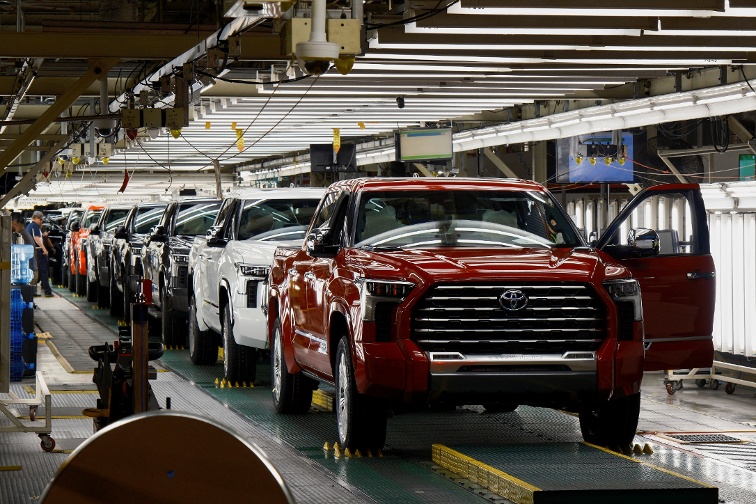
But U.S. President Donald Trump last year fundamentally altered the trade pact by imposing "Section 232" national security tariffs of 25% on autos and 50% on steel and aluminum from Mexico and Canada — duties from which they are now seeking relief.
Luis de la Calle, a former Mexican trade official, said that for an interim agreement with Mexico, "a good place to start is elimination of the 232 duties."
The relationship between Canadian and U.S. officials has been tense in recent months, with Trump announcing a 50% tariff on some $20 billion in Canadian goods, including beer, dairy and hockey sticks, this week to punish Ottawa for retaliating against Trump's autos and metals tariffs.
Greer was due to arrive in Mexico City later on Tuesday to join bilateral talks with Mexico on potential USMCA revisions. Canada has been excluded from the negotiations, raising the risk that it will be forced to accept terms agreed by Mexico.
The Trump administration is demanding that Mexico raise the level of regional content in North American-built cars to qualify for preferential trade access, part of an effort to incentivize more production in the U.S. and North America and restrict Chinese-origin content in vehicles.
While Mexico broadly agrees with these goals, it differs on how to achieve them and has first sought reductions in U.S. tariffs on autos, steel and aluminum.
TRUMP THREATS
Trump has been sharply critical of the U.S.-Mexico-Canada Agreement that he signed into force in 2020, often threatening to terminate the pact due to persistent U.S. trade deficits with Mexico and Canada.
On July 1, Trump chose not to renew the agreement, a decision that triggers a 10-year countdown to its expiration unless all three countries agree to renew it with changes.
Greer told senators that for Trump to agree to an interim trade deal with Mexico, some non-trade disputes may need to also be resolved, including U.S. demands that Mexico tighten border security and improve compliance with a 1944 Rio Grande River treaty to supply Texas farmers with irrigation water.
"The president is going to have a hard time agreeing to renewal or even revisions if Mexico isn't playing ball in all areas, and the water treaty is one of them," Greer said.
(Reporting David Lawder and Emily Green in Mexico City and Dan Burns in New York; Editing by Chizu Nomiyama, Andrea Ricci and Sonali Paul)




News magazine bootstrap themes!
I like this themes, fast loading and look profesional
Thank you Carlos!
You're welcome!
Please support me with give positive rating!
Yes Sure!