

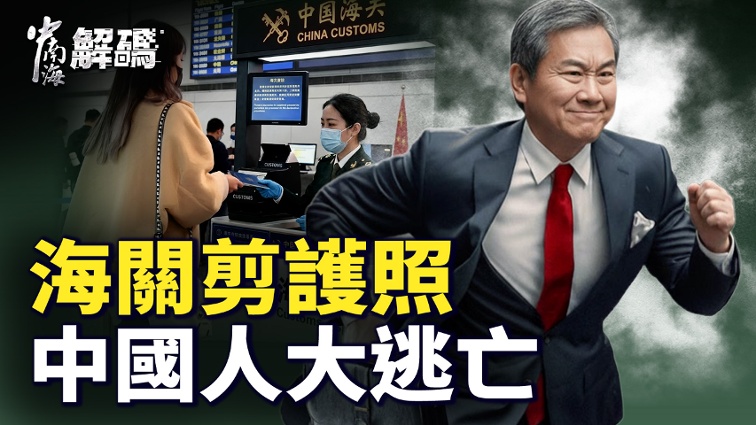
During the fierce struggle between the anti-Xi faction and Xi’s camp at the Beidaihe Conference, Liu Jianchao, the head of the CCP’s International Liaison Department and a trusted appointee of Xi Jinping, was arrested. (Image by People News)
[People News] Since the establishment of the Communist Party of China (CPC) in 1949, the Beidaihe resort in Qinhuangdao, Hebei Province, has been heavily guarded every summer between July and August. Senior CPC elders and current high-ranking leaders gather there under the pretense of vacation meetings, and each year, secret stories of internal power struggles within the CPC emerge.
Most observers believe that in recent years, the so-called Beidaihe meetings have marked the end of elder interference in politics, with the real power struggles increasingly shifting to the political landscape outside of Beidaihe. This year, the so-called vacation in Beidaihe has transformed into a venue for high-ranking CPC officials to plot internal repression and external expansion. However, as totalitarian rule intensifies, it often signals that the regime is entering its twilight phase.
Since Xi Jinping assumed office in 2012, rumors have proliferated in Beidaihe, and the evolution of power struggle narratives clearly outlines the changing dynamics of the power structure.
2012: The Downfall of Bo Xilai and the 'Disappearance' of Xi Jinping
In 2012, amid a power transition, Zhongnanhai was marked by turmoil and crises surrounding the 18th National Congress of the Communist Party of China.
In February 2012, Wang Lijun, the Vice Mayor of Chongqing and Director of the Public Security Bureau, sought refuge at the U.S. Consulate in Chengdu, which triggered a political upheaval within the Communist Party's upper ranks, resulting in the downfall of Bo Xilai, the Chongqing Party Secretary who was aspiring to a higher position.
During the Beidaihe meeting held in August that year, factional conflicts were fierce. The Communist Party's top leaders convened for only a few days to finalize a list of over 2,000 delegates for the 18th National Congress, but the proposed list for the new leadership was not released. During the meeting, retired leader Jiang Zemin and then-General Secretary Hu Jintao engaged in intense disputes over personnel arrangements for the Congress, ultimately leading to Hu's displeasure and his exit from the Beidaihe meeting.
Following this Beidaihe meeting, at the end of August, Xi Jinping, who was set to succeed at the 18th National Congress, suddenly went missing. International media reported various 'versions' of the story.
Some reports suggested that a military officer had attempted to assassinate Xi but failed; others claimed that Xi was recovering from a 'back injury' sustained while swimming. Foreign media indicated that during an internal meeting of the 'Red Second Generation,' a quarrel escalated into violence, resulting in Xi Jinping being injured by a chair thrown at him. However, the prevailing narrative was that Xi had 'lost his temper' due to dissatisfaction with the political arrangements.
Insider sources indicated that Xi only realized close to his succession that he was not the ultimate decision-maker, as the elders were still involved in the arrangements. As a result, Xi decided to withdraw, and his readiness to confront the elders caused them to panic. Motivated by the shared interest of preserving the Party, the elders made concessions, leading to Xi Jinping being appeased and reemerging.
Subsequently, during the 18th National Congress, then-General Secretary Hu Jintao stated in person that he had decided to step down from all his positions and completely transfer power to Xi. Xi Jinping praised Hu for his 'noble character and integrity'.
2013: The Assassination Attempt on Xi Jinping by Zhou Yongkang
One of the key topics at the 2013 Beidaihe Conference was how to handle Zhou Yongkang, who had retired in 2012. During the conference, rumors of a plot to 'strangle Zhou Yongkang' emerged, causing a significant uproar.
Leading up to and following the Beidaihe Conference, Zhou Yongkang reportedly made at least two attempts to assassinate Xi Jinping: once by placing a timed bomb in a conference room, and another time by trying to inject poison into Xi while he was undergoing a medical check-up at the 301 Hospital. Sources indicate that these assassination attempts were executed by Zhou's assistant and bodyguard, Tan Hong, who was arrested on December 1 of that year.
After Xi Jinping assumed power, he consolidated authority and severed the financial lifelines of the elite, which led to resentment from various interest groups. These groups even sought to impeach Xi Jinping during the Beidaihe Conference. The political landscape was highly volatile, prompting Xi Jinping to temporarily relocate to the Xishan Military Command Center as a precautionary measure.
2014: The 'Strangling' of Zhou Yongkang
Before the 2014 Beidaihe Conference, on July 29, the Xinhua News Agency unexpectedly announced that Zhou Yongkang was under 'formal investigation.'
The agenda for that year's Beidaihe Conference included discussions on anti-corruption efforts concerning three individuals: the already announced Zhou Yongkang, and the yet-to-be-announced Ling Jihua and Guo Boxiong. The conflict surrounding Zhou Yongkang became a central issue in the anti-corruption campaign, with overseas media referring to it as 'the turbulent waters of Beidaihe.'
By mid-August, sources disclosed that during the recently concluded Beidaihe meeting, several major interest groups within the Communist Party utilized high-level proxies to exert pressure on Xi Jinping and Wang Qishan to abandon the judicial proceedings against Zhou Yongkang. Some elders from the Jiang faction even explicitly proposed, 'It would suffice to hold Zhou's family members, secretaries, and subordinates accountable, and then impose a party disciplinary action on Zhou Yongkang.' The Jiang faction's political elders, who were directly involved, engaged in a heated argument with Xi and others at the meeting. In June 2015, Zhou Yongkang was ultimately sentenced to life imprisonment.
In 2015: Zhou Benshun Creates a 'Political Nuclear Bomb'
The Beidaihe meeting in 2015 coincided with the peak of Xi Jinping's anti-corruption campaign. The most suspenseful and challenging case at that time was that of Guo Boxiong, which was announced just before the 'August 1' Army Day, serving as a symbolic gesture.
In July of that year, Zhou Yongkang's former subordinate Zhou Benshun was reported to have fallen from power in Hebei, becoming the first provincial party secretary to be ousted after the 18th National Congress of the Communist Party of China. Hebei is a key area for safeguarding the capital, and Beidaihe is located in that province; Zhou Benshun had even conducted inspections in the area prior to his downfall.
Following Zhou Benshun's ousting, former Hong Kong Wen Wei Po reporter Jiang Weiping revealed that Zhou Benshun had participated in a second coup alongside Jiang Zemin and Zeng Qinghong, and had fabricated a top-secret report challenging the Xi Jinping administration, referred to as the so-called 'political nuclear bomb,' which resulted in his swift removal by Xi Jinping.
In 2016: Standing Committee Members Negotiate Retirement
The Beidaihe meeting in 2016 served as a precursor to the 19th National Congress of the Communist Party of China scheduled for the following year. With five of the seven members of the Politburo Standing Committee set to retire due to age, the power struggles at the Beidaihe meeting were particularly intense.
At the Beidaihe meeting, Yu Zhengsheng, Zhang Dejiang, and Zhang Gaoli negotiated their retirements, aiming to secure greater privileges for themselves in the future. Following Zhang Gaoli's retirement, a sexual scandal involving tennis star Peng Shuai emerged, and Xi Jinping, adhering to prior agreements made during the Beidaihe meeting, chose to overlook the situation.
During this meeting, Wang Qishan was clearly instructed to step back to a secondary role and assume the position of Vice President. Xi Jinping invested considerable effort into this transition, primarily because Wang Qishan's successful anti-corruption campaign had eclipsed his own authority.
Since Xi Jinping and Li Keqiang began their collaboration upon taking office, their relationship has grown increasingly tense. Their mutual disregard was evident during the two sessions in March, which ultimately resulted in Li Keqiang's complete exit following the 20th National Congress. Li Keqiang's downfall also left Xi Jinping facing allegations of 'assassination.'
In 2017: The 'Kneeling Before the Dragon Robe' Incident Involving Sun Zhengcai
On the eve of the 2017 Beidaihe meeting, rumors of a coup were rampant. Sun Zhengcai, the former Chongqing Party Secretary who had once been regarded as a 'crown prince,' unexpectedly fell from power on July 24 of that year. The 19th National Congress of the Communist Party of China was set to take place in October.
The official narrative accused Sun Zhengcai of harboring excessive political ambitions and personal desires. Mainland media revealed that Sun Zhengcai's mistress had bought him a dragon robe, and he would kneel and burn incense at home daily.
Some overseas political analysts speculated on the reasons behind Sun Zhengcai's downfall, suggesting that he may have been involved in or plotted a coup—anti-Xi factions were consolidating, positioning Sun Zhengcai as their leader, which forced Xi Jinping into a decisive confrontation, ultimately leading to Sun Zhengcai's fall.
Prior to the 2017 Beidaihe Conference, reports emerged that Xi Jinping had installed bulletproof glass in Villa No. 0 in Beidaihe. Security measures for the Beidaihe resort area were elevated to the highest level.
2018: "No. 1 on Leave, the Sea in Command"
In March 2018, Xi Jinping successfully amended the constitution to abolish presidential term limits, which sparked significant controversy. During the summer of that year, numerous rumors circulated widely before and after the Beidaihe Conference, with various messages spreading across the internet.
The most prevalent rumors at the time included: 1. Wang Huning was forced to resign, taking responsibility for the setbacks in the China-U.S. trade war; 2. Hu Chunhua was promoted to the Politburo Standing Committee, positioning him as a potential successor to the General Secretary; 3. A second constitutional amendment was proposed to reinstate the presidential term limit.
There were also rumors that a group of elder party members had jointly petitioned the Politburo, highlighting a leftward shift and a resurgence of personality cults following the 19th National Congress of the Communist Party of China, and calling for an expanded meeting of the Politburo.
Additionally, rumors suggested, "No. 1 on leave, the Sea in command." Here, No. 1 clearly referred to General Secretary Xi Jinping, while the "Sea" leading the charge was reportedly Wang Yang, a member of the Politburo Standing Committee.
2019: Hong Kong Anti-Extradition Movement, Hu and Wen Warn Xi Jinping
The 2019 Beidaihe Conference coincided with the China-U.S. trade war and the Hong Kong anti-extradition movement. Reports indicated that the Communist Party elders had differing views on the revision of the "Fugitive Offenders Ordinance" in Hong Kong.
According to Hong Kong media reports, Hu Jintao issued a rare warning to the current leadership, advising them not to become the tough figures in Hong Kong. Wen Jiabao conveyed a message to Xi Jinping's side, stating, "We have said what we needed to say; you can handle it as you see fit." Ultimately, however, Xi Jinping did not heed the advice of Hu and Wen.
2020: Exposure of Hong Kong Mansions Owned by Relatives of Standing Committee Members
On the eve of the 2020 Beidaihe Conference, the Chinese Communist Party (CCP) regime was ignited by a series of crises, both internal and external, stemming from various issues such as the CCP virus pandemic, the Yangtze River floods, the Hong Kong National Security Law, and the new Cold War with the United States.
Reports from Hong Kong media indicated that this year, the high-ranking officials of the CCP enjoyed an unusually extended vacation in Beidaihe. After going 'off the grid' on August 1, aside from Li Zhanshu, who returned to Beijing partway through to lead a National People's Congress Standing Committee meeting, the other officials did not reappear until August 16.
During this time, foreign media exposed that relatives of CCP Standing Committee members Li Zhanshu and Wang Yang owned luxury properties in Hong Kong valued at a total of 51 million Hong Kong dollars. Additionally, prior to the Beidaihe Conference, Xi Jinping confiscated the assets of Xiao Jianhua, the 'bagman' for the families of CCP elders, from his Tomorrow Group, which later issued a strong statement countering the official narrative. This has led to much speculation.
In 2021: Xi's Concerns Over Military Instability Amid the Pandemic
In early August 2021, a netizen shared a video showing the highway exit to Beidaihe, revealing that cars coming from Haidian and Changping in Beijing were being turned back or quarantined for 14 days. This suggests that during the CCP virus pandemic, the CCP leaders may not have halted their gatherings in Beidaihe.
On July 31, just before the Beidaihe Conference, Xi Jinping led a collective study session of the Political Bureau focused on the concept of a 'strong military,' after which party media highlighted themes of 'military loyalty' and 'absolute leadership.' At that time, with the pandemic surging, the military was also severely affected, and individuals were primarily looking out for their own safety. Xi Jinping appeared to be quite anxious about the military's stability.
In 2022: Rumors of Xi's 'Brain Aneurysm' and the Departure of the Youth League Faction
In the autumn of 2022, the 20th National Congress of the Communist Party of China (CPC) was set to take place. Prior to the Beidaihe meeting, rumors emerged regarding Xi Jinping's alleged 'brain aneurysm,' which were reported by foreign media and subsequently spread widely on overseas Chinese social media. During the Beidaihe meeting, political rumors suggesting 'Xi down, Li up' circulated for some time.
Following the conclusion of the Beidaihe meeting, Xi Jinping conducted an inspection in Northeast China, while Li Keqiang traveled to Shenzhen in the south. The content of their speeches indicated a clear divergence in their political paths. During his visit to the Liaoshen Campaign Memorial Hall, Xi Jinping emphasized the importance of safeguarding the red territory. In contrast, Li Keqiang visited the south, laid flowers at the statue of Deng Xiaoping, and advocated for reform and opening up, but the CPC's internet censors blocked the video of Li Keqiang's speech.
As anticipated, Xi Jinping secured a third five-year term at the 20th National Congress and removed Li Keqiang, Wang Yang, Hu Chunhua, and other members of the Youth League faction from the Politburo. Under the scrutiny of international media, he also forcefully removed former party leader Hu Jintao, who had raised objections to personnel arrangements, from the venue, with no one daring to protest.
Despite Xi Jinping's apparent victory, a 'White Paper Movement' against the lockdown policies erupted among the youth across the country following the 20th National Congress. This marked the first instance of slogans calling for the 'overthrow of the Communist Party' and the 'overthrow of Xi Jinping' appearing side by side. Xi was compelled to end the heavily criticized zero-COVID policy.
In 2023: Elders Strike Back, Old Military Leaders Remain Silent Under Pressure
As Xi Jinping began his third term, claiming to have consolidated power in 2023, the Beidaihe meeting, which was expected to be discontinued, still took place. Even if older cadres went on vacation, they were closely monitored. However, some surviving CPC elders found themselves once again drawn into the unfolding 'story.'
In recent months, military and political officials who were personally promoted by Xi Jinping have begun to be purged. Initially, Qin Gang, the Minister of Foreign Affairs of the Communist Party of China, who had been missing for a month, was dismissed. Subsequently, Li Shangfu, the Minister of National Defense, also disappeared at the end of August. Several foreign media outlets have reported that Li Shangfu disclosed the names of eight generals from the military's equipment development department. Prior to this, several former and current commanders and deputy commanders of the Rocket Force had already been arrested.
On September 5 and 21 of this year, Nikkei Asia published articles indicating that during the Beidaihe meeting, a group of elders led by former Vice President Zeng Qinghong criticized Xi Jinping; former Vice Chairman of the Central Military Commission, General Chi Haotian, also pressured Xi Jinping with a stern demeanor.
The credibility of these reports remains unverified. However, the 20th Central Committee's Third Plenary Session, which was originally scheduled for last autumn, has been postponed multiple times and is now set to take place in July 2024. Before this session, two former Ministers of National Defense, Wei Fenghe and Li Shangfu, were both expelled from the Party and military, and stripped of their general ranks.
This situation indicates that the internal power struggle within Zhongnanhai is indeed fierce, forcing Xi Jinping to make difficult decisions.
In 2024, Xi's close associates are falling one after another, with accusations of 'betrayed loyalty.'
Following the lifting of restrictions, China's economy continues to decline, with both economic and political risks rising simultaneously. The authorities have intensified internal purges to deter disloyalty. However, even Qin Gang, the Foreign Minister personally promoted by Xi Jinping, has suddenly fallen from grace, becoming the center of a scandal that the authorities wish to conceal. The two former Ministers of National Defense, Wei Fenghe, is labeled as 'betrayed loyalty,' suggesting involvement in treason, while Li Shangfu is implicated in bribery, with the authorities reluctant to reveal who received the bribes.
During the Beidaihe meeting this year, rumors of a 'change in the sky' were widespread. A WeChat screenshot from Major General Yang Xiaoping, a member of the red second generation, circulated online, stating, 'Just wait for that thunderous sound.' There were also speculations that Xi Jinping might step down due to illness, with Hu Chunhua or Ding Xuexiang potentially taking over. Veteran official Leng Jiefu issued an open letter calling for the Communist Party of China to withdraw.
In 2025, rumors of Xi's 'sudden illness' and 'changes in autumn' began to circulate
After the Beidaihe meeting, there were reports that Xi was hospitalized at the 301 Hospital due to a sudden illness, and the red second generation was planning to prevent his re-election in 2027, with overseas sources hinting at 'changes in autumn.' Following the Beidaihe meeting and before the Fourth Plenary Session in October, generals such as He Weidong and Miao Hua, who were personally promoted by Xi Jinping, were announced to have been expelled from the Party and military.
In 2026, 'rumor strikes' against Hu-Wen and curses from the red second generation
The most significant news at the beginning of this year was the downfall of senior military leaders Zhang Youxia and Liu Zhenli. Before the summer Beidaihe period began, bizarre rumors circulated overseas about the poisoning death of Hu Jintao's family and the arrest of Wen Jiabao's relatives, which were later verified as false by multiple sources. Concurrently, reports emerged that old military leaders like Liu Yuan refused to attend the August 1 reception, viewing Zhang Youxia and Liu Zhenli as the 'stabilizing force in the military.'
Australian scholar Yuan Hongbing revealed that some families of the red second generation had reached a consensus to widely spread accusations against Xi Jinping for betraying reform and opening up, causing disaster to the country and its people, and committing tyrannical and foolish acts. This was aimed at creating a political curse to unite society in denouncing Xi Jinping.
In conclusion, the flurry of rumors corresponds to key moments of regime change.
In the opaque political landscape of the Chinese Communist Party (CCP), distinguishing the truth behind the rumors emerging from Beidaihe is challenging. Some of these rumors may stem from factional leaks, while others reflect the genuine concerns of officials and the 'red second generation.' Additionally, some are simply expressions of sentiments from abroad. Historically, periods of rampant political rumors in China often align with rising public sentiment and significant historical junctures, where there is an anticipation of major changes or a shift in dynasties. As a result, CCP political rumors have been frequently utilized by international observers to analyze the dynamics of CCP politics.
(Dajiyuan)
△






News magazine bootstrap themes!
I like this themes, fast loading and look profesional
Thank you Carlos!
You're welcome!
Please support me with give positive rating!
Yes Sure!