
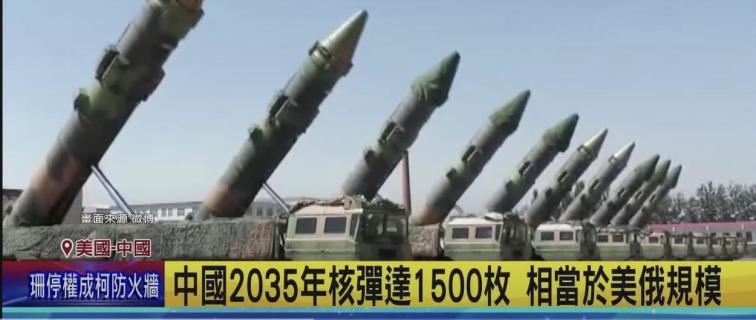
The Chinese Communist Party (CCP) is aggressively expanding its military, with its nuclear arsenal expected to reach 1,500 warheads by 2035, approaching the scale of the U.S. and Russia. The United States is increasingly concerned about China's nuclear expansion. (Video screenshot)
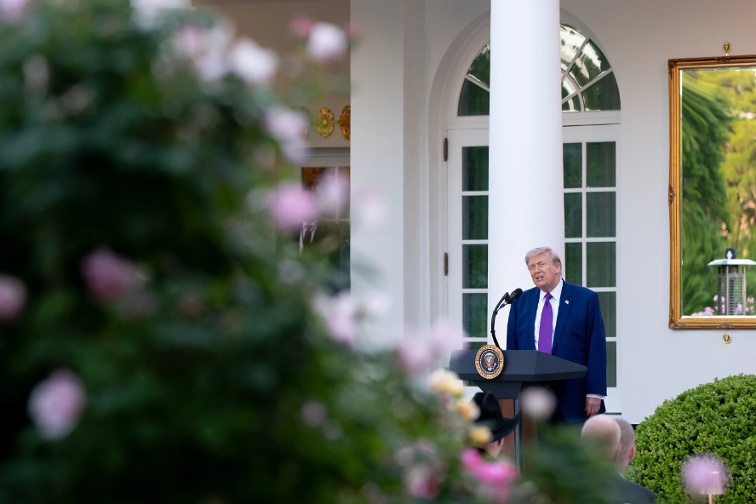
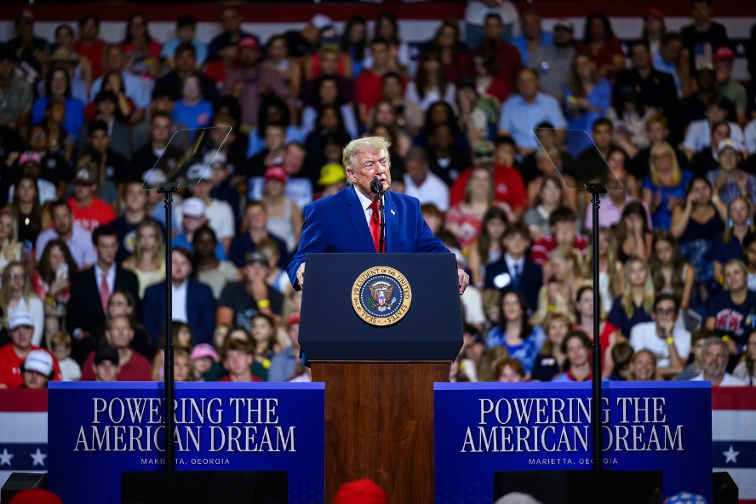
[People News] With less than a month to go before the APEC summit hosted by the Chinese Communist Party in Shenzhen, Guangdong Province, reports suggest that the leaders of the U.S., China, and Russia have not yet confirmed whether they will hold talks or what the agenda will entail. Current information from various sources indicates that Russian President Putin aims to focus on the Russia-Ukraine war, while U.S. President Trump seeks to discuss nuclear weapons control. However, Beijing has not accepted Trump's proposal, leaving the possibility of a trilateral meeting in doubt.
On February 5 of this year, the U.S.-Russia New Strategic Arms Reduction Treaty expired after five years, primarily due to the Trump administration's refusal to renew it. In a previous media interview, Trump addressed renewal questions by stating, "It expires, it expires." He also expressed a desire to reach a "more favourable" agreement that includes China. This implies that the U.S. does not wish to be constrained by the treaty while the Chinese Communist Party, regarded as the primary "enemy," can develop nuclear weapons without limitations.
Strategic weapons typically refer to weapons capable of attacking an enemy's deep strategic targets with a wide area of destructive impact. These weapons can be categorised into offensive and defensive strategic weapons. Offensive strategic weapons include land-based and submarine-launched strategic missiles, nuclear submarines, strategic bombers, and space-based nuclear weapons. Defensive strategic weapons consist of anti-ballistic missile systems designed to counter these strategic missiles.
To prevent the uncontrolled development of strategic weapons, the United States and Russia signed the New START Treaty in 2010. Under this treaty, both nations agreed to reduce their deployed nuclear warheads to below 1,550 and their deployed strategic delivery vehicles to below 700. Following the treaty's signing, both countries largely adhered to its terms. After the expiration of the U.S.-Russia Intermediate-Range Nuclear Forces Treaty in 2019, the New START Treaty became the only arms control agreement between the two nations. Following President Biden's election, the treaty was renewed, remaining in effect until its expiration this February.
The Trump administration viewed the treaty as a constraint that hindered the United States from rapidly advancing its strategic weapons development while observing the covert advancements of the Chinese Communist Party (CCP). According to official statements from the CCP, it has been continuously strengthening its “trinity” nuclear deterrent force, which consists of nuclear-powered ballistic missile submarines, land-based mobile missiles, and air-launched bombers. The CCP is also advancing the mobility and road-rail transport capabilities of its land-based intercontinental ballistic missiles, such as the DF-41 series, thereby enhancing their concealment and survivability. The technology of naval strategic nuclear submarines is maturing, significantly improving their underwater nuclear counterattack capabilities.
Furthermore, the CCP is focused on developing strategic strike forces capable of swiftly overcoming traditional missile defence systems, claiming to hold a world-leading position in hypersonic glide technology, among other advancements.
In other words, the Chinese Communist Party (CCP) seeks to bind the United States to this treaty, thereby restricting its actions while allowing itself to develop freely. From Trump's perspective, who aims to restore America's greatness and believes in exchanging strength for peace, if the CCP is unwilling to accept the treaty's constraints, then the United States has no obligation to restrict itself. This is the fundamental reason behind America's refusal to extend the treaty.
At the same time that Trump proposed rejecting nuclear weapons control during the APEC trilateral summit, on November 2, the Bulletin of the Atomic Scientists published a new research analysis by Harvard University nuclear expert Hui Zhang. The analysis revealed that the CCP is significantly expanding its uranium enrichment facilities at Mount Emei in Sichuan, which are not included in the verification scope of the International Atomic Energy Agency.
Recent satellite imagery indicates that the fourth large centrifuge enrichment plant at this base is expected to be largely completed by April 2026. Taking into account the enrichment capacity of uranium, the demand for civilian nuclear fuel, the regulatory status of the facilities, and the pace of nuclear arsenal expansion, the research suggests that the CCP's current enrichment capabilities and import supplies are sufficient to meet its civilian nuclear power needs. It is highly likely that the CCP has resumed production of weapon-grade highly enriched uranium, thus ending nearly 40 years of a moratorium on the production of fissile materials for nuclear weapons.
Research indicates that the uranium enrichment capacity of the Emei Mountain base was approximately 2.2 million separative work units (SWU) annually before 2022, and it is projected to reach around 5.4 million SWU by the end of 2026, effectively expanding its capacity by about 2.5 times. Based on theoretical production estimates, if this capacity were entirely dedicated to producing weapon-grade highly enriched uranium, the facility could generate around 25 tons of related materials each year.
Zhang Hui (Zhang Huì) estimates that the combined annual production capacity of the Chinese Communist Party's (CCP) three major uranium enrichment bases—Gansu Lanzhou, Shaanxi Hanzhong, and Sichuan Emei Mountain—was approximately 7.4 million SWU in 2020. This figure is expected to rise to 10.6 million SWU by 2024 and further increase to 15.4 million SWU by the end of 2026.
Simultaneously, the CCP's nuclear warhead count is estimated to have reached around 620, with the U.S. Department of Defence previously forecasting that this number could surpass 1,000 by 2030. Should the CCP aim to expand its nuclear arsenal to over 1,000 warheads, it may need to resume the production of highly enriched uranium.
Evidently, the CCP's move to increase production of weapon-grade highly enriched uranium is a significant issue; it indicates that the CCP's nuclear weapons expansion is no longer solely dependent on its previously accumulated stockpile of nuclear materials but is actively engaging in new production. This likely also explains why Trump proposed trilateral negotiations on nuclear arms control.
Why has Emei Mountain in Sichuan been chosen? Throughout the history of the Chinese Communist Party (CCP), Sichuan has played a significant role in its nuclear weapons development. The Changqing Mountain area in Zitong County, Mianyang City, Sichuan Province, serves as the research and development centre for the CCP's atomic and hydrogen bombs, where numerous top scientists worked in secrecy. In February of this year, foreign media outlets, including The New York Times, highlighted, based on satellite imagery, that the CCP is politically renovating and expanding its nuclear facilities in the Sichuan Zitong and Pingtong regions.
Moreover, early nuclear power expert Peng Shilu believed that the Emei Mountain area offered strong concealment, making it suitable for nuclear weapon development. However, at that time, some experts opposed this view due to the area's cold and humid conditions and poor atmospheric dispersion. Today, the CCP's decision to produce weapons-grade highly enriched uranium in this location is likely influenced by its advantageous concealment.
As the CCP faces both internal and external challenges, what are its intentions behind the accelerated development of nuclear weapons? The world must remain vigilant.
(First published in People News) △






News magazine bootstrap themes!
I like this themes, fast loading and look profesional
Thank you Carlos!
You're welcome!
Please support me with give positive rating!
Yes Sure!