[People News] On the 19th, following the conclusion of the Shenzhen APEC meeting hosted by the Chinese Communist Party (CCP), the CCP released the ‘Peace Declaration’ from the Xi Jinping-Vladimir Putin meeting, which primarily stated that the world should reduce nuclear risks and prevent nuclear proliferation. However, shortly after this announcement, it faced public ridicule from Iran and North Korea.
On November 21, the Iranian official newspaper ‘Iran Daily’ reported that Iranian Foreign Minister Amir-Abdollahian remarked that the question of whether to adjust nuclear policy is a ‘broad and serious’ issue, and both Russia and China (the CCP), which have strategic cooperation agreements with Iran, ‘oppose’ any changes to Iran’s nuclear policy. Amir-Abdollahian further asserted: ‘As of now, our nuclear policy has not changed, and our official stance remains the same.’
Analysts suggest that Amir-Abdollahian’s timing in making this statement right after the Shenzhen APEC meeting can be interpreted as an official challenge from Iran to the Shenzhen ‘Peace Declaration.’ Iran’s nuclear research continues to receive backing from the CCP and Russia, which not only counters the United States but also challenges the CCP and Russia themselves.
Tehran has cited security concerns as a reason for denying International Atomic Energy Agency (IAEA) inspectors access to its nuclear facilities, accusing the agency of failing to condemn attacks by Israel and the United States on Iran’s nuclear infrastructure. Recently, the Secretary of Iran’s Supreme National Security Council, Rezaei, emphasized during a meeting with Pakistan’s Chief of Army Staff, Munir, that all enriched nuclear materials will remain in Iran, as these materials are a valuable asset for the Iranian people and will be utilised domestically.
The media outlets controlled by the Chinese Communist Party, such as Tencent, Sohu, and Phoenix Network, have all reported on this news.
Another close ally of the CCP—North Korea—has also been busy these days with its supreme leader.
Recently, Trump has been sending continuous signals of hope for a meeting with Kim Jong-un, but Pyongyang has yet to respond. Before heading to Shenzhen, Trump made a public appeal through the media, hoping that Xi Jinping could arrange a meeting for him with Kim Jong-un in Shenzhen. However, this left Trump disappointed, as Kim Jong-un did not attend the meeting.
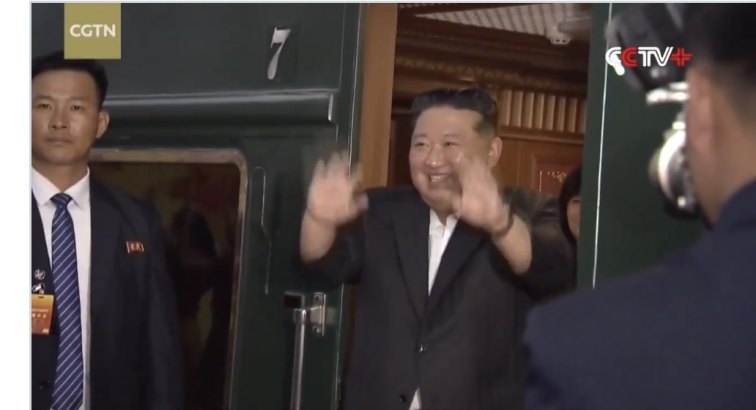
In contrast, Kim Jong-un has been making frequent appearances in North Korean media these days, engaging in inspection activities and seemingly becoming more diligent than before.
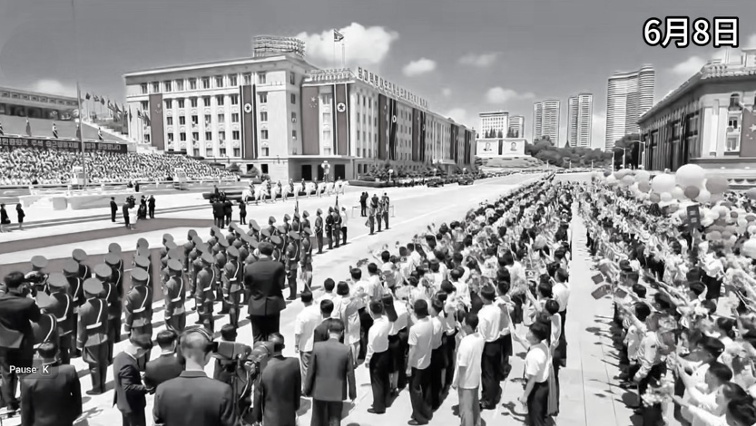
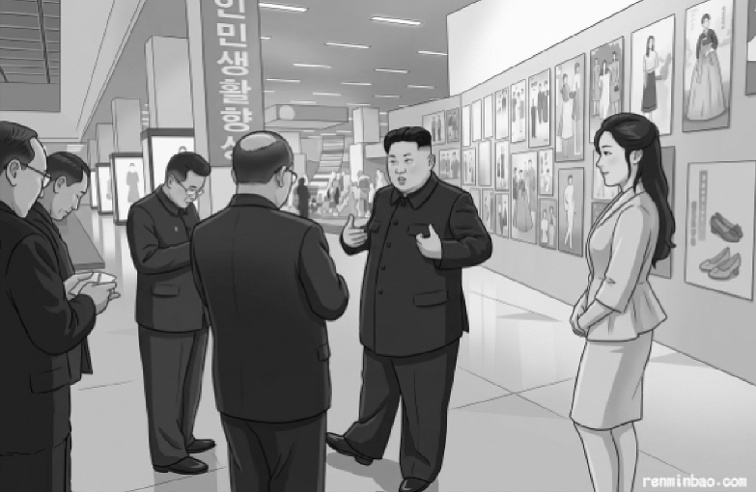
On November 21, the Korean Central News Agency reported that Kim Jong-un, accompanied by several senior North Korean officials, inspected school facilities and factories producing educational equipment. Kim Jong-un stated that science and education “most clearly reflect our revolutionaries’ ideals for future generations and the revolutionary cause.” At the site, he examined educational equipment evidently intended for science curriculum teaching. On the opening day of the APEC summit, Kim Jong-un also inspected a naval school, which was prominently covered by the media.
Regarding nuclear research, North Korea, like the CCP, emphasises technology, believing that nuclear weapons are a powerful tool to restrain Europe and the United States, and has been continuously conducting missile and rocket launches. North Korea has consistently refused to abandon its nuclear weapons program.
Of course, the United States’ attempts to negotiate with North Korea or Iran to abandon nuclear weapons are akin to discussing with a cat and mouse about not stealing food; it merely gives them more time to delay.
Earlier this week, Kim Jong-un (Jin Zheng’en) went skiing with his family in the Baekdu Mountain area near the Chinese border. Baekdu Mountain is considered a sacred site in North Korea, and Kim has visited it several times before making major decisions, which has sparked speculation about the purpose of this trip.
Kim’s frequent public appearances prompt the question: who is he trying to impress? Why now? Beyond dispelling earlier rumours of his death, some analysts suggest that he is trying to send a message to Trump and the meeting in Shenzhen.
Observers have long noted that the Shenzhen ‘Peace Declaration’ is likely to end up as nothing more than a piece of paper. Just days after its announcement, even some of the Chinese Communist Party’s smaller allies have openly ridiculed it, showing that it is not being taken seriously.
Some have commented that seeing Trump, Putin, and Xi Jinping sitting together and smiling resembles a scenario where police and thieves share a drink and exchange idle chatter. Trump calls Xi a friend, which may seem like an attempt to win his favour. However, such flattery is unlikely to be effective in terms of strategy and tactics. △