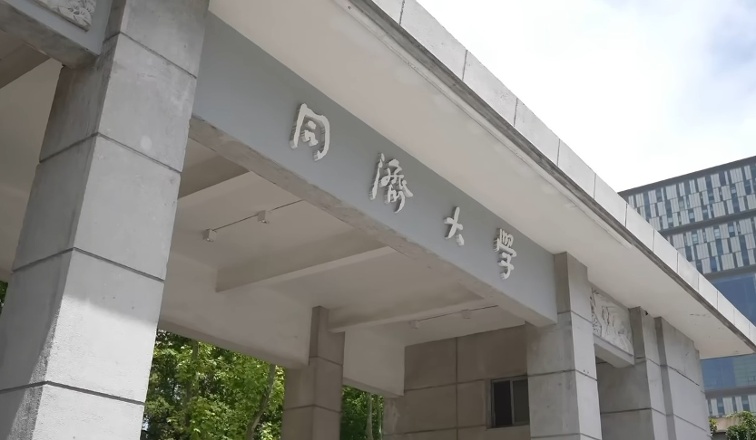
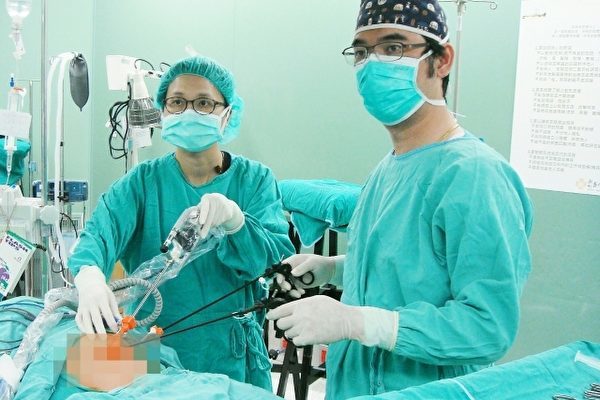
[People News] On November 26, mainland Chinese media and social media platforms reported the death of Chen Qiankun, Deputy Chief Physician of the Department of Thoracic Surgery at Shanghai Pulmonary Hospital, affiliated with Tongji University. The reports were filled with shock and regret because he was only 50 years old.
Chen graduated from the seven-year medical program at Fudan University Medical College, then went on to pursue advanced studies at Okayama University in Japan and the University of Washington in the United States. He devoted himself to thoracic oncology and lung transplantation techniques. The hard work and dedication he invested throughout his career need no elaboration. The ages of 40 to 50 are precisely when a person’s life experience and professional expertise reach their peak, and when life should be unfolding in its most brilliant stage. Yet Chen Qiankun’s life ultimately did not make it past the age of 50.
According to the recollections of his colleagues and patients quoted in media reports, he was a dedicated and responsible doctor who treated patients kindly and performed his duties competently. He performed approximately 1,500 operations a year, constantly rushing between outpatient consultations and operating rooms, maintaining an intensely demanding work schedule year after year.
Several years ago, he was diagnosed with oesophageal cancer, which subsequently metastasised. He also underwent radiotherapy and chemotherapy. However, even while battling cancer, he did not give up his work but “continued to remain steadfast on the clinical front line.” As recently as October this year, he reportedly “insisted on completing more than 100 operations.”
Yet, among those expressing regret over his death, has anyone considered this question: A doctor who saves lives and heals the sick, a doctor who has saved so many patients, should have accumulated considerable blessings and virtue. Why, then, did he develop cancer and pass away in middle age? Isn’t this unusual? How many healthcare workers have experienced similar fates in recent years? Can this really be explained simply by saying that they failed to take care of their health?
Whether or not people believe in it, everything has its cause and effect. According to the hospital’s official website, Chen Qiankun specialised in the clinical treatment of early-stage lung cancer, clinical and translational research into lung transplantation, and basic research on lung cancer. Among the several thousand, or even tens of thousands, of operations he performed, how many involved lung transplants? And how many organ donors were involved whose origins were difficult to explain?
Publicly available information shows that Shanghai Pulmonary Hospital, affiliated with Tongji University, had been placed on the investigation list of the World Organisation to Investigate the Persecution of Falun Gong (WOIPFG) before 2014. The allegations primarily concerned the lung transplant operations conducted by the hospital.
In its report, WOIPFG cited publicly available medical literature and information from the hospital, stating that the hospital began performing clinical human lung transplantation in 2002 and was designated by the CCP Ministry of Health in May 2007 as a hospital authorised to perform lung transplants. The report also documented data on 51 single-lung transplant operations performed by the hospital between January 2003 and August 2012, using these figures to question the sources of the donor organs and the waiting times involved.
The report also listed the doctors allegedly involved, including Chen Qiankun, stating that he had participated in 48 single-lung transplant operations between January 2003 and August 2012.
On July 27, 2023, Hu Yang, Deputy Chief Physician of the Department of Respiratory Medicine at Shanghai Pulmonary Hospital, published an article on Weibo titled “Three Lung Transplants in One Day, Donor Lungs Transported by Helicopter—The Freshness of the Lungs Determines Treatment Outcomes.” In the article, he disclosed that “the hospital had already performed more than 60 lung transplant operations in the first half of this year.”
According to Hu, Shanghai Pulmonary Hospital performed more than ten lung transplants per month on average during the first half of that year, meaning that at least one lung transplant was performed every three days. Hu mentioned the types of lung diseases suffered by these patients but did not specify whether they had received single- or double-lung transplants. Even more notably, he did not mention the highly sensitive issue for the CCP: the sources of the donor lungs.
According to his account, most donor lungs are now transported by air. Because the hospital is some distance from the airport and railway station, the lungs are first transported to Hangzhou Xiaoshan and then flown by helicopter from Xiaoshan to the hospital. But where do these helicopters fly from?
Some internet users commented: “More than 60 lung transplants in just six months, and that’s only the figure from one hospital. If we calculate the annual total, how many donor lungs would the entire country need?” Others asked: “Where do the donor lungs come from?” and “When the organisation needs you, you become the donor!”
Another internet user commented: “In the past, some people would often hand out pamphlets. At the time, I thought their claims about live organ harvesting were nonsense. Now, the more I think about it, the more credible it seems.”
In response to the online controversy, Hu Yang published another article explaining: “Many people associate lung donations with the evil forces of a certain country in the south, and keep saying that without buying and selling, there would be no killing. I must clarify this matter.” However, he still did not explain where the donor organs came from or which hospitals supplied them. He merely stated that “lung donations are free of charge, and saying that donor lungs are bought and sold is an insult to the donors.”
Against the backdrop of the rapid expansion of organ transplantation services in nearly every province of mainland China, the repeated exposure of allegations concerning the live harvesting of organs from countless dissidents, prisoners of conscience, and ethnic minorities, and the growing number of ordinary people who suddenly disappear or are abducted and taken to northern Myanmar, internet users are not wrong to question the sources of these organs. The fact that the CCP authorities and hospitals are unwilling to address these questions directly, in the author’s view, reveals their guilty conscience.
Yet what neither senior CCP officials nor doctors and nurses are willing to believe is that anyone who participates in such activities will face corresponding retribution, and that throughout history, karmic retribution has never failed. People such as Chen Qiankun, who believed themselves to be saving lives and healing the sick, were in fact sometimes taking lives and causing deaths. His cancer, according to the author’s interpretation, was a warning from Heaven.
Heaven has a virtue of cherishing life and gave Chen, who remained unaware of the truth, several years to learn what was really happening. Yet he still failed to repent and continued participating in organ transplant operations, “insisting on completing more than 100 operations” in October alone. When the weight of one’s sins becomes greater than one’s accumulated blessings, being taken away by Heaven becomes inevitable. And this is not the end: in the underworld, he will face the corresponding punishment for the sins he committed.
As for the other doctors engaged in the same activities as Chen Qiankun, will they be able to learn anything from the karmic consequences of his life and death?
(People News, first publication) △