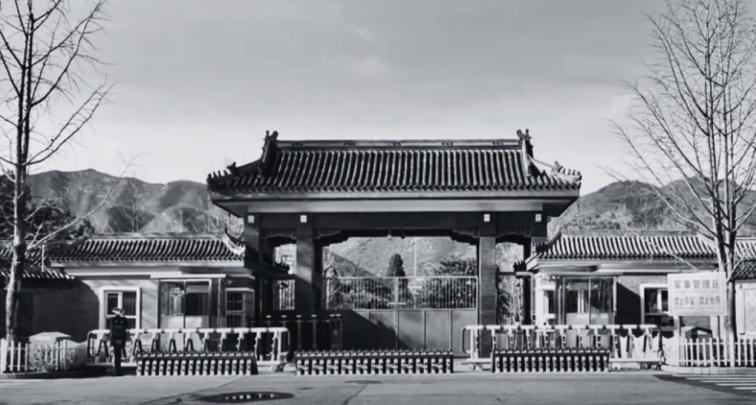
Qincheng is a special prison directly managed by the Ministry of Public Security, where officials at the provincial level and above who have fallen from power are held for extended periods. Notable figures such as Zhou Yongkang and Bo Xilai have served time here. Insiders have indicated that due to the overwhelming number of officials being imprisoned, the facility is overcrowded, leading to some officials being transferred to detention centres in Inner Mongolia and other regions.
The expansion of Qincheng’s physical space is not comparable to major infrastructure projects like airports and high-speed rail; rather, it serves as a signal regarding the political ecology within the upper echelons of the Communist Party. Xi Jinping has shifted anti-corruption efforts from the previous focus on “tiger hunting and fly-swatting” to a normalised, high-intensity, and comprehensive power cleansing. This shift reflects Xi Jinping’s acute sense of crisis regarding political loyalty and his self-preservation actions, which highlight the structural logic that an unchecked one-party system inevitably generates systemic criminals.
[People News] In November 2026, the British magazine The Economist published an article titled ‘China’s prison for the elite is massively expanding.’ The article, which is based on satellite imagery, reveals that Qincheng Prison in the Changping District of Beijing is undergoing its largest expansion since the Cultural Revolution. This project is expected to add at least 300 new cells, increasing the prison’s capacity by approximately 50%, along with an additional area of about 7 hectares on the west side.
Enhancing the Scale of Anti-Corruption and Loyalty Standards
The official statistics released by the Chinese Communist Party (CCP) are alarming enough to attract international attention. According to the Central Commission for Discipline Inspection (CCDI) and the National Supervisory Commission, in the first nine months of 2026, disciplinary inspection and supervisory agencies across the country initiated cases against 73 officials at the provincial level and above, resulting in 105 punishments. During the same period, approximately 800,000 cases were filed nationwide, leading to 680,000 individuals facing disciplinary and administrative penalties. In 2025, a total of 181 cases were filed against centrally managed officials, nearly double the 92 cases recorded in 2024, with 41,000 cases at the county level and 137,000 at the township level. The Fifth Plenary Session of the 20th Central Committee confirmed the expulsion of 33 members and alternate members from the Party, marking a new high since the reform and opening up. Over the past decade, the total number of officials punished has reached millions, including hundreds at the ministerial level and above.
In earlier years, these figures were used by the authorities to showcase the CCP’s ‘overwhelming victory’ in the fight against corruption. However, in the last two years, the CCP has felt embarrassed by these claims and has shifted its narrative to suggest that the anti-corruption campaign is an ongoing journey, one that is ‘forever on the road.’ While it may appear to be an anti-corruption effort on the surface, it actually signals a significant and ongoing purge. Initially, the anti-corruption campaign, although rooted in factional struggles, focused on economic corruption in official public discourse. Following Xi Jinping’s re-election, the CCDI’s reports have increasingly included terms such as ‘political disloyalty,’ ‘lack of honesty towards the Party,’ ‘performing one way while acting another,’ and ‘double-dealing.’ The military has numerous power centres, which makes Xi Jinping particularly uneasy; as a result, his purges within the military have been more severe than those in the Party and government systems. After several rounds of purges, there are now vacancies in the Central Military Commission, and nearly all generals have been removed, including trusted aides like Zhong Shaojun, who was personally taken down by Xi Jinping. This clearly reflects Xi Jinping’s lack of security and the loss of trust from those around him. Consequently, officials are now living in fear, with everyone feeling like a deer caught in headlights.
The Party School Phenomenon: A Cradle for Systemic Criminals
The Central Party School (National Academy of Governance) serves as the primary institution for the Chinese Communist Party (CCP) to train senior officials. Public records indicate that a considerable number of provincial and ministerial-level officials who have been ousted since the 18th National Congress have educational backgrounds or training experiences from the Party School. Notable names on this list include Guo Yongxiang, Ni Fake, Wang Suyi, Liao Shaohua, Wang Sanyun, Ji Jianye, Bai Enpei, Wan Qingliang, among others, creating a long and notorious roster. The Central Party School has been mocked for having the highest crime rate among its graduates; however, it is important to note that Party Schools at all levels are responsible for nurturing individuals who ascend to the core of various power structures. The political environment within the CCP lacks effective external oversight, meaning that as power increases and resources become more concentrated, opportunities for corruption multiply.
Tian Guoliang, the former president of the Central Party School Press, studied 103 corruption cases involving officials at the deputy provincial level and above. In his article titled “Research on Corruption Cases of Provincial and Ministerial-Level Cadres,” he noted that nearly 90% of these cases involved bribery, with the amounts escalating from tens of thousands in earlier cases to an average exceeding ten million, with the highest amount nearing 200 million. Corruption among younger officials also shows trends of being short-lived and involving substantial sums. Notably, 48% of the individuals involved began their criminal activities before attaining deputy ministerial positions, with the youngest being just 39 years old, and 37% were under 50 at the time of their appointments. This suggests that corruption within the CCP’s ranks is not age-restricted; wherever there is power, corruption is likely to follow.
Comprehensive Control and Prison Expansion: From High-Ranking Officials’ Downfall to Social Control
The expansion of Qincheng Prison represents merely the surface of the CCP’s violent governance. The entirety of China resembles a vast prison; not only is Qincheng undergoing expansion, but local detention centres and prisons across the country are also rapidly being upgraded and renovated, while the disciplinary inspection system continues to grow.
In October 2024, the Discipline Inspection and Supervision Group assigned to state-owned enterprises in Heilongjiang Province announced plans to recruit 36 staff members. Concurrently, the Discipline Inspection Commission of Anning City in Yunnan Province hired 5 personnel for public welfare roles. On November 21, 2024, the Discipline Inspection Commission of Yichuan County in Henan Province recruited 20 caregivers for detention. Following this, on November 27, 2024, a recruitment notice for caregivers in the Wudang District of Guiyang generated significant discussion. The job requirements included a short-term work contract, a basic health check, and benefits such as meals and accommodation. Caregivers are only required to work 4 hours a day, with their duties focused on supervising individuals involved in cases within the courtyard of the Discipline Inspection Commission, emphasising discipline and confidentiality.
The Qincheng facility is overcrowded with high-ranking officials, and the demand for detaining ordinary officials and dissenters is also rising rapidly. The Communist Party is continuously enhancing its surveillance network, social credit system, grid management, and the routine monitoring of discipline inspection and supervision, which keeps society under constant high pressure.
Official data indicates that there are around 2,300 detention centres currently in operation across China, as confirmed by the Ministry of Public Security. However, a survey report published by the international human rights organisation ‘Protectors’ in June 2026 estimates that the actual number of pretrial detention facilities in operation exceeds 2,600, with over 500,000 individuals processed annually and an average detention period of more than six months. The report also discloses that 60% of respondents experienced severe overcrowding in these facilities, while more than 70% reported facing various forms of violence or difficulties in accessing legal counsel.
Since 2024, numerous frontline criminal lawyers in mainland China have noted that the national detention centres have entered a phase of rapid expansion. In July 2025, Shenzhen criminal lawyer Guo Zhiyu publicly highlighted that the number of detainees in major detention centres in Shenzhen, including Longgang, Futian, and Luohu, has been on a continuous rise, resulting in severe overcrowding in the cells. By August 2026, senior criminal lawyer Wang Qingshan from Wenzhou observed a troubling trend during his casework: approximately 2,300 detention centres nationwide have almost simultaneously embarked on large-scale expansion projects within the same timeframe.
Under Xi Jinping’s leadership, the anti-corruption campaign and the ‘comprehensive strict governance of the Party’ have been established as long-term institutional frameworks rather than temporary initiatives. While this creates short-term deterrence, it fails to address the underlying issues and instead intensifies the crisis of loyalty. As power becomes more centralised, there is a growing reluctance to relinquish control, accompanied by increasing suspicion and a perception of pervasive double-dealing, leading to more aggressive purges. The dictators of the late Stalin era and Mao Zedong during the Cultural Revolution certainly did not replicate this pattern; such logic ultimately threatens the foundation of the Communist Party’s rule. With agents being repeatedly purged, the pool of reliable talent diminishes, decision-making costs escalate, and execution costs rise accordingly, culminating in the system’s collapse due to the dual bankruptcy of both the economy and policy.
Unsupervised power is inevitably prone to self-corruption.
The addition of 300 new prison cells at Qincheng does not signify a milestone in the fight against corruption; instead, it serves as a tangible indication of Xi Jinping’s crisis of political loyalty and a political graveyard for high-level power struggles. When the highest authority finds it necessary to continually expand prisons to detain its own affiliates and to regularly purge the generals and officials it has appointed, it suggests that the system has lost its capacity to generate new, divergent elements and can only depend on ongoing purges to maintain a facade of stability.
(Originally published by People News) △