[People News] Amid recent reports that university academics in China have jointly called for the abolition of the system allowing the state presidency to be extended indefinitely, Xue Jian, chairman of Jiangsu Wenfeng Group and the actual controlling shareholder of the A-share-listed company Wenfeng Inc., who is currently living overseas, published a lengthy open letter to Xi Jinping on the 26th. In the letter, Xue bluntly stated that China’s economy is approaching the tipping point of a systemic crisis. He urged Xi Jinping to give up seeking another term at next year’s 21st National Congress of the Chinese Communist Party (CCP) and to promote a peaceful political transition to avert the crisis. He also called for Ren Zhiqiang, an entrepreneur suffering from serious health problems, to be released from prison on medical parole.
A Roadmap for “Peaceful Transition” and an Amnesty Mechanism
In his lengthy letter, titled An Open Letter from a Chinese Entrepreneur to Mr Xi Jinping: Recommendations Not to Seek Another Term and to Promote a Peaceful Transition, Xue pointed out that different generations have different expectations for their lives, and that China can no longer return to the conditions that existed before 1978. He acknowledged that the window for a peaceful transition was extremely narrow, with the likelihood of success possibly reduced to just 30 per cent. He therefore proposed a concrete framework for a political transition:
Establishment of a Transitional Institution: Xue proposed that Xi Jinping take the lead in establishing a “National Emergency Committee” authorised by the CCP Central Committee. The committee could consist of seven members, four appointed by Xi and three nominated by civil society, such as Ren Zhiqiang, Jimmy Lai, and Liu Xia. The committee would publicly disclose accurate government financial accounts, bad debts, and foreign exchange data.
Drafting a New Constitution and Transferring Power: During a transitional period of one to two years, the public would participate in consultations on a new constitution, which would guarantee private property rights, the rule of law, and civil liberties, while allowing political parties other than the CCP. During the transition, Xi Jinping would relinquish his principal party and government positions but could temporarily retain the chairmanship of the Central Military Commission for security reasons. Military authority would then be transferred at the same time the new constitution took effect.
Amnesty and Stability Provisions: The new constitution should include special amnesty provisions to protect Xi Jinping, his family, and members of the Central Committee from prosecution, while also safeguarding the employment rights of more than seven million civil servants in order to reduce resistance from within the existing system.
Warning That China’s Economy Is Suffering from “Multiple Organ Failure”
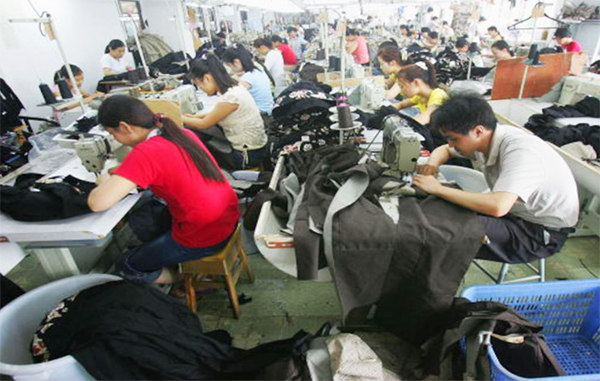
In the letter, Xue issued a severe warning about the current state of China’s economy, describing it as suffering from “multiple organ failure” and warning that it could experience a “sudden systemic collapse” within approximately the next year. He cited several imminent systemic risks, including the impact of US tariffs and tightening energy supplies. The cumulative increase in refined oil prices this year has exceeded 20 per cent, while the average operating rate of local independent refineries in Shandong has fallen to just 50 per cent. Other problems include housing prices having fallen by half from their peak, the actual number of people engaged in “flexible employment” potentially exceeding 400 million, and more than 120 million individuals falling behind on personal loan repayments. In addition, local government finances across all 31 provincial-level regions in China are reportedly in deficit. Some counties and cities in northern Jiangsu have even been forced to raise funds from private sources at interest rates of 12 to 15 per cent to pay civil servants’ salaries.
Government Blocks Corporate Self-Rescue, Forcing Entrepreneurs to Speak Out
Wenfeng Group, which owns assets worth tens of billions of yuan and employs nearly 10,000 people, has seen continued losses in its hotel operations since the COVID-19 pandemic. Xue revealed that he left China in 2022 following the Shanghai lockdowns. Between 2023 and 2024, after using his WeChat Moments to call for an end to arbitrary arrests of private entrepreneurs and to speak out on behalf of his friend Ren Zhiqiang, his account was blocked, and he became the subject of investigations by relevant authorities.
Beginning in 2025, Wenfeng Group was repeatedly subjected to investigations. The group originally planned to sell equity stakes through market-based transactions to repay bank loans and pay employee salaries. Xue was even willing to accept nothing personally and allow his domestic assets to be reduced to zero. However, these efforts repeatedly failed. One prospective buyer had offered 1.25 billion yuan to acquire a 20 per cent stake in the company, while a subsequent transaction had already been signed and partially paid for. Both deals were ultimately derailed, either because local officials declared that the buyer was “not welcome” or because the Jiangsu Securities Regulatory Bureau intervened to block the transaction. In April this year, Wenfeng Inc. was designated as a company facing delisting risks under the special treatment (ST) system. In July, it became the subject of a formal investigation. Its market capitalisation plunged from approximately 5 billion yuan to less than 2 billion yuan, leaving the salaries of nearly 10,000 employees due next month in serious jeopardy. Xue also made a special appeal to Xi Jinping to allow Ren Zhiqiang, who was sentenced to 18 years in prison for criticising the authorities and whose health has recently deteriorated to the point that even speaking on the phone has become difficult, to be released on medical parole and reunited with his family.
Expert Analysis: The Economic Warning Signs Beijing Should Be Most Concerned About
Commenting on Xue’s open letter, Yaita Akio, executive director of the Indo-Pacific Strategy Think Tank and a veteran Japanese media professional, observed that the most absurd aspect of the CCP’s suppression of private enterprises is that when businesses attempt to save themselves, the government blocks every possible avenue for recovery. When these businesses eventually collapse, employees lose their jobs and banks are left unable to recover their loans.
Yaita emphasised that the greatest significance of this letter lies in the identity of its author. In the past, whenever foreign media professionals or commentators pointed out the difficulties facing China’s economy, Beijing could simply dismiss their remarks as “foreigners talking down China.” This time, however, the person speaking out is a sitting chairman of a company whose wealth and business interests remain tied to China, and who is still trying to find a way forward for nearly 10,000 employees. Xue knows that publicly addressing an open letter to Xi Jinping carries enormous risks. Yet, having been pushed to the point where he sees no other way out, he would rather face the consequences than remain silent.
Yaita pointed out that this is precisely the warning sign Beijing should be most concerned about: If even an entrepreneur living overseas has become this desperate, what must the countless private business owners in similar circumstances, who are still inside China, be thinking? With the CCP’s 21st National Congress scheduled for next year, Xi Jinping faces an opportunity to extend his rule for another five-year term. But what private entrepreneurs are hoping for is that Xi will “step down with dignity,” giving private businesses room to breathe and giving China an opportunity for political and economic transformation. △