

An Iranian woman rushes to the tower, setting fire to a portrait of Khamenei! (Internet image)
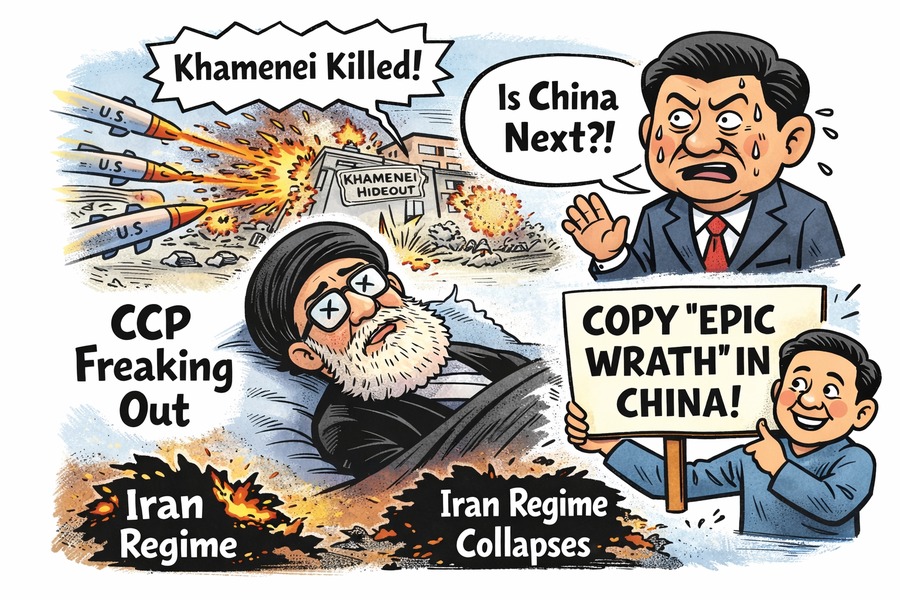
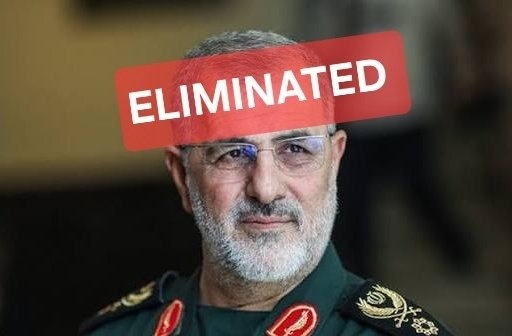
[People News] Iran's Supreme Leader Khamenei was killed on Saturday (February 28) during a joint airstrike conducted by the United States and Israel, which also resulted in the elimination of dozens of his senior aides. This military operation, codenamed 'Epic Fury' and 'Roaring Lion', was a meticulously orchestrated 'diplomatic trap' led by U.S. President Trump, who used two months of strategic ambiguity and false negotiations as a cover, ultimately achieving a precise strike in Tehran.
Recent insider information reveals that this shocking decapitation operation was not an impulsive act but had been in the works since Israeli Prime Minister Benjamin Netanyahu's visit to Trump at Mar-a-Lago in late December 2025. Although the military action was initially planned to begin in May 2026, the outbreak of large-scale anti-government protests and the regime's harsh crackdown in Iran prompted the U.S. and Israel to accelerate their military deployment in the Middle East.
To ensure that Hamini would not retreat to deep underground shelters, Trump employed a strategy of 'openly building roads while secretly crossing the enemy's camp.' On one hand, the U.S. amassed a significant military presence in the Middle East, while on the other, it dispatched presidential envoy **Kushner (Jared Corey Kushner)** and **Witkoff (Steve Witkoff)** to Geneva for nuclear negotiations. This negotiation was later confirmed to serve as a crucial smokescreen to stabilise Hamini's schedule, aiming to mislead the Iranian leadership into believing that diplomatic channels remained open, thereby lowering their guard and allowing them to hold meetings in ground-level buildings.
During the Geneva talks on February 26, the U.S. presented highly sincere conditions, including an offer to provide civilian nuclear fuel indefinitely and unconditionally for free, as long as Iran abandoned uranium enrichment. However, Iran not only outright rejected this proposal but also submitted a misleading 7-page document demanding uranium enrichment capabilities five times greater than those outlined in the 2015 nuclear agreement. U.S. intelligence indicated that Iran has long been secretly storing enriched uranium in Tehran under the pretence of 'medical research,' yet has never actually produced any medical drugs.
After the first round of meetings, Kuxuna and Weikefu promptly reported to Vice President Vance (JD Vance) via encrypted phone, asserting that Iran's proposal was merely 'nonsense' and a tactic to 'buy time.' At that point, Iran was still producing hundreds of ballistic missiles each month capable of breaching defence systems, and it refused to discuss any plans to limit its missile capabilities. This led the Trump team to conclude that Iran was entirely insincere in negotiations, culminating in a final decision for war on February 27.
The US-Israel coalition decided to launch an attack on February 28 (Saturday), mainly because Khamenei typically holds routine high-level meetings at his residence on Saturdays. On that morning, Khamenei was meeting with his aides at his residence, while two other high-level intelligence meeting locations in Tehran were also struck with devastating force.
This strike resulted in the immediate collapse of Iran's theocratic leadership core. Trump later warned that if Iran retaliated, the US would respond with 'unprecedented' military force.
Although Trump claimed that Iran was seeking peace and expressed concern over the high casualties among its leadership, the situation in the Middle East remains tense. Currently, Iran has announced a ban on flights over the Strait of Hormuz, and there are reports of oil tankers being attacked in the Gulf of Oman, putting global oil supply lines in a state of emergency.
△





News magazine bootstrap themes!
I like this themes, fast loading and look profesional
Thank you Carlos!
You're welcome!
Please support me with give positive rating!
Yes Sure!