

China's newly released 2023 edition of its standard map, which includes Taiwan and the South China Sea islands as part of its territory, has sparked protests from Taiwan, the Philippines, and other countries. (Photo reproduced from CNA/CNA graphic design)
[People News] On April 13, the Philippine National Security Council announced that laboratory analyses confirmed that bottles seized by the Philippine Navy last year near the Second Thomas Shoal contained cyanide, which was retrieved from a dinghy belonging to a Chinese fishing vessel. Navy spokesman Roy Vincent Trinidad reported that a total of 10 bottles of cyanide were confiscated... The National Security Council is expected to submit a report to the Philippine Department of Foreign Affairs next week, which may lead to a diplomatic protest from the Philippines. Additionally, they have ordered the Armed Forces of the Philippines (AFP) and the Philippine Coast Guard (PCG) to enhance monitoring in the area.
Philippine soldiers observed Chinese crew members engaging in poisoning activities in the relevant waters, and cyanide reactions were later detected in that area. The use of cyanide in seawater can lead to the poisoning and death of fish.
National Security Council spokesman Cornelio Valencia stated, "This is a destructive act aimed at killing local fish populations and depriving the stationed Navy troops of a vital food source." He further noted, "If this is intentional, it constitutes a blatant violation of Philippine environmental laws, international maritime norms, and the United Nations Convention on the Law of the Sea that various countries adhere to."
Both Valencia and Trinidad indicated that the mother ships of these Chinese fishermen serve the CCP Navy. This means that these vessels are dual-use ships, operating under civilian flags for military purposes, a concept referred to by the CCP as military-civil fusion.
It is understood that the strategic position of the Second Thomas Shoal is extremely significant and is also a focal point of the ongoing dispute between China and the Philippines. Over the years, there have been numerous conflicts between the two parties.
Shen Mingshi, a researcher at Taiwan's National Defence Security Research Institute, remarked: "If poison is released into the sea to kill fish, it means that Filipino fishermen will be unable to catch fish, effectively cutting off the food supply for the Philippine troops stationed there. This is a deeply malicious act that heightens the conflict between the Philippines and the Chinese Communist Party (CCP)."
On the 13th, during a regular press briefing at the CCP's Ministry of Foreign Affairs, a Bloomberg reporter asked the spokesperson to comment on the issue of "the Philippines acquiring cyanide." Spokesperson Guo Jiakun responded: "The Philippine side is illegally interfering with the normal fishing activities of Chinese fishing vessels, seizing the livelihood supplies of fishermen, and staging the so-called 'cyanide farce,' which is completely unbelievable..."
At a routine press conference held by the CCP's Ministry of National Defence in early April 2026, a reporter inquired: Reports indicate that the Philippine Navy claims that China (the CCP) may be exploiting the international community's focus on the Middle East conflict to escalate 'harassment' activities against the Philippines in the South China Sea. The Philippine Maritime Commission has stated that the Chinese side has recently engaged in 'dangerous operations' against Philippine vessels and personnel in the South China Sea. What is your comment on this?
Spokesperson Zhang Xiaogang replied: Recently, the Philippine side has intruded into China's Huangyan Island and Nansha Islands' air and sea space, deliberately breaching China's training area, and even dangerously approaching Chinese vessels, repeatedly infringing upon China's rights... China is unwavering in its determination to safeguard its territorial sovereignty and maritime rights, and it will continue to firmly counter any acts of infringement and provocation.
Zhang Xiaogang's remarks reveal that the Chinese Communist Party (CCP) and the Philippines have been facing ongoing friction in the maritime and airspace areas surrounding Huangyan Island and the Nansha Islands. This raises the question: why has the CCP intensified its conflict with the Philippines? Has the Philippines genuinely provoked the CCP with infringement? How is the CCP planning to respond decisively?
During a press conference at the Ministry of National Defence, a reporter referenced the Philippine perspective, suggesting one possible explanation: the CCP may be exploiting the international community's focus on the Middle East conflict. Essentially, while U.S. military forces are stretched thin in the Middle East and global attention is on the U.S.-Iran war, the CCP is taking the opportunity to create disturbances in the South China Sea, intimidating the smaller nation of the Philippines. This not only allows them to gain territorial advantages but also to exhaust and weaken the United States, thereby bolstering their own power.
Analysts online have pointed out that the U.S.-Iran war indeed presents the CCP with an opportunity to assert dominance in the South China Sea. This is because the U.S. has relocated some aircraft carriers, troops, and other military assets from the Asia-Pacific region to the Middle East, leaving the Asia-Pacific relatively vulnerable. A significant amount of U.S. artillery and military resources have been consumed in the conflict with Iran, and some resources even require companies to shift production and work overtime to replenish military stockpiles.
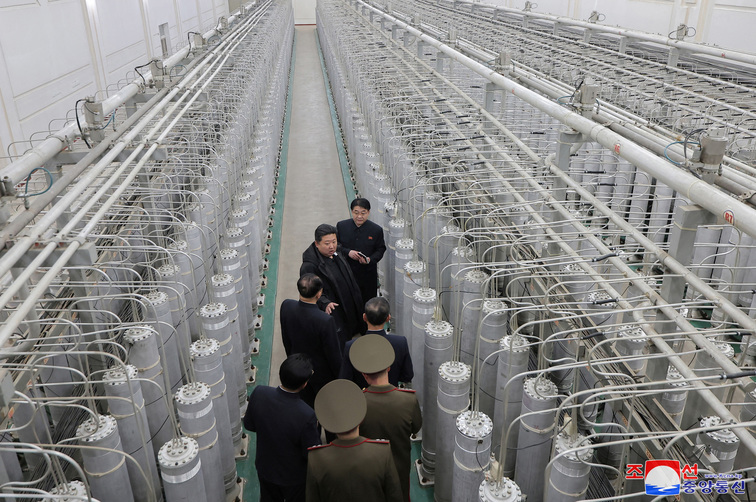
Moreover, the U.S. is currently contemplating potential military actions against Cuba. If the CCP collaborates with North Korea to stir up trouble from the Korean Peninsula to the South China Sea in the Philippines, the U.S. will indeed need to divert considerable attention and resources. This is something the CCP is likely to welcome.
Currently, the CCP's military intimidation towards Taiwan shows no signs of abating, despite the chairperson of the Kuomintang (KMT), Zheng Liwen, discussing topics in Beijing such as 'opposing Taiwan independence,' 'the 1992 Consensus,' and 'mainland economic development and poverty alleviation.' For the CCP, the KMT's rhetoric is seen as 'too naive and childish,' akin to the level of a kindergarten discussion.
The Chinese Communist Party (CCP) has never clearly identified who genuinely supports Taiwan independence. In the CCP's view, anyone in Taiwan who does not follow its directives is considered pro-independence, including the Republic of China itself. Can the Kuomintang (KMT) comprehend this? The '1992 Consensus' refers to the CCP's version of China; does the KMT understand the implications of this statement? Xi Jinping has remarked that while the systems on both sides of the Taiwan Strait differ, the economic development of the mainland is apparent. This suggests that Xi Jinping acknowledges the shortcomings of the CCP's system. So why does the CCP continue to label the Democratic Progressive Party (DPP) as pro-independence? Why did the CCP present Taiwan with ten policy proposals prior to Zheng Liwen's return?
The Mainland Affairs Council of Taiwan has accurately noted that the CCP has weaponised, instrumentalised, and politicised cross-strait exchanges. Various policies are subject to the 'uncertainty' of potential interruptions at any moment and are selectively available only to specific groups, all disguised as a 'big gift bag' that is, in fact, a poisoned pill.
The Mainland Affairs Council appears to indicate that the government has a duty to ensure that Taiwan is no longer exposed to such unfounded risks and to prevent infiltration and manipulation through political united front tactics and election interference. It warns against the CCP's attempts to 'Sinicise' cross-strait relations and to frame them within a 'One China' framework, aiming to prevent the CCP from deliberately 'differentiating treatment' towards Taiwan and engaging in united front tactics to create divisions.
This clearly demonstrates that the CCP has never eased its dual approach of both soft and hard tactics towards Taiwan. The soft tactics can be interrupted at any time, while the hard tactics can escalate at any moment. Will the Taiwan Strait ever be peaceful? It has never been peaceful.
(People News, first published) △





News magazine bootstrap themes!
I like this themes, fast loading and look profesional
Thank you Carlos!
You're welcome!
Please support me with give positive rating!
Yes Sure!