
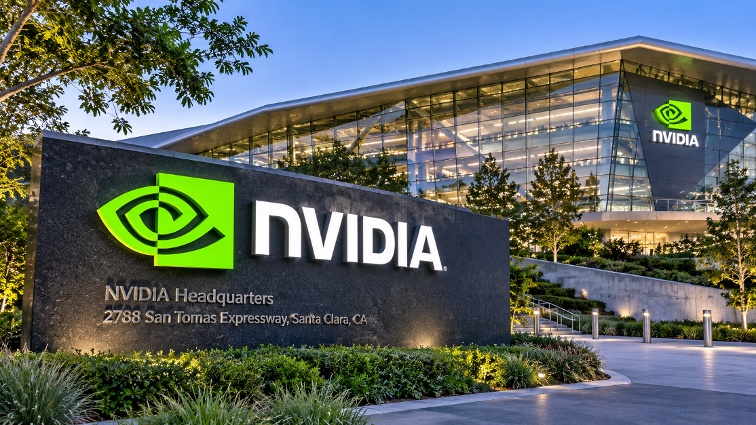
NVIDIA (People News/AI-generated image)
[People News] After former NVIDIA CEO Jensen Huang was implicated in extramarital affairs, including one with suspected Chinese Communist Party agent Huang Le, and faced accusations of facilitating the CCP's acquisition of high-end chips, which poses a threat to U.S. national security, a scandal involving American chip giant Advanced Micro Devices (AMD) emerged on November 19. Reports revealed that AMD's chip firmware was consistently found in products from Chinese server manufacturers that are under U.S. sanctions, involving several affiliated companies and technology licensing deals. Following this revelation, AMD's stock price dropped by approximately 11% during trading.
Interestingly, just two days earlier, on November 17, AMD announced that it had officially completed the acquisition of World Labs, owned by AI scientist Li Feifei. Li Feifei has now joined AMD as Executive Vice President and Chief Scientist, reporting directly to CEO Lisa Su.
It is worth noting that Lisa Su and Jensen Huang are distant relatives, with Lisa Su referring to Jensen Huang as 'cousin' according to their generational hierarchy. Furthermore, both are members of the U.S. President's Council of Advisors on Science and Technology and serve on the Advisory Board of the School of Economics and Management at Tsinghua University in Beijing, both having received the National Medal of Science from President Trump.
When these three events are considered together, they raise intriguing questions. First, why is AMD's chip firmware appearing in products from Chinese server manufacturers that are under U.S. sanctions? What channels facilitated this export? Was Lisa Su aware of these developments?
A report titled 'AMD Has Its Own China Problem,' published by Hunterbrook Media, a research outlet under the short-selling firm Hunterbrook, reveals that IEIT Systems, a Chinese Communist Party server manufacturer added to the U.S. Department of Commerce's Entity List in March 2025, continues to issue server software updates featuring new AMD firmware despite being sanctioned. The latest update was released on October 19, 2026. This firmware is essential for server booting and processor operation and is likely subject to U.S. export controls.
Three companies linked to IEIT—China's Maginfra, Singapore's Kaytus, and Aivres based in California—are all selling servers equipped with AMD chips. Their firmware versions closely resemble those used by IEIT, with some documents showing a similarity rate of up to 99.94%.
Founded in New York in 2023, Hunterbrook is a unique financial institution that merges investigative journalism with hedge fund operations. Its founders are former political speechwriters Sam Koppelman and investor Nathaniel Horwitz. Koppelman has a history of working with the Democratic Party and has frequently published articles advocating for actions against Trump.
The report also examined the financial ties between AMD and Chinese Communist Party (CCP) chip companies. AMD confirmed that it expects to generate approximately $67 million in technology licensing revenue for 2025, which includes two CCP joint ventures that were placed on the U.S. blacklist as early as 2019.
Regarding the supply chain, the packaging, assembly, and testing of most of AMD's chips are managed by two joint ventures linked to Tongfu Microelectronics Company, located in Nantong, Jiangsu. Tongfu Microelectronics owns 85% of these joint ventures, while AMD holds the remaining 15%.
This indicates that AMD's connection with the CCP encompasses not only chip sales but also technology licensing and the semiconductor production supply chain.
How close is AMD's relationship with the CCP? On May 20 of this year, Lisa Su personally attended the launch event for the second-phase factory of the relevant joint ventures in Suzhou, where Fan Bo, the then Secretary of the Suzhou Municipal Committee of the CCP, also participated in the ceremony. Could this suggest something significant?
In response to the Hunterbrook report, AMD stated that "the allegations in the investigation distort the company's business practices and relationships, emphasising that the company adheres to applicable U.S. export control regulations." The question remains: if AMD is indeed complying with U.S. export regulations, why are the firmware updates for chips from CCP server manufacturers still ongoing? Is there an undisclosed truth behind this?
Now, let's turn to the second topic. AMD's acquisition of World Labs, valued at approximately $8.2 billion in an all-stock transaction, was finalised on November 13. AMD issued around 14.98 million shares of common stock to the original shareholders of World Labs. The sight of Lisa Su and Li Feifei together has garnered significant attention across the internet.
World Labs, founded in 2024 by Li Feifei and others, focuses on research in spatial intelligence and world models, with areas of study including interactive 3D world generation, robotic learning, and simulation. While its business diverges significantly from AMD's product offerings, Lisa Su explained that the research conducted at World Labs will assist AMD in shaping future hardware, software, and systems.
Over the past few years, AMD has engaged in a series of acquisitions that have brought compilers, models, inference chips, server system design, and physical world modelling into its portfolio, as it aims to build a more comprehensive AI technology framework.
Beyond AMD's ambitions, the inclusion of Li Feifei in the company is noteworthy in itself.
In July 2019, billionaire tech investor Peter Thiel urged the U.S. intelligence community, including the FBI and CIA, to investigate whether the Chinese Communist Party's intelligence apparatus had fully infiltrated Google, particularly focusing on whether foreign intelligence agencies had penetrated Google's artificial intelligence initiative known as the 'Manhattan Project.'
At that time, Google was maintaining a cooperative relationship with Huawei, which has connections to the Chinese military, while simultaneously refusing to renew a contract with the U.S. Department of Defence for a project known as 'Project Maven.' This decision drew scepticism and criticism from members of the U.S. Congress and senior military officials.
The concerns raised by Thiel and U.S. lawmakers, as well as military leaders, were justified. This is largely due to the fact that the head of Google's artificial intelligence project in China is Li Fei-Fei. At the end of 2017, the Google Developer Conference was held in Shanghai, covering a wide range of topics including the Android system, machine learning, and cloud services. The final segment featured a speech by Li Fei-Fei, who serves as Google's Chief Scientist for AI and Machine Learning.
During her speech, Li Fei-Fei highlighted the profound impact of AI development on human society. She stated, 'AI has no borders, and the benefits of AI should also transcend borders.' She stressed that artificial intelligence should not be monopolised by any particular school, company, or country. Looking ahead, Google plans to promote and sponsor the development of AI through various initiatives.
Li Fei-Fei also announced the official launch of the Google AI China Centre, which she and Li Jia will oversee. The centre will initially be based in Beijing, with the aspiration that 'this will mark a significant step in our long-term commitment to AI research and development in China.'
Why should we support China's artificial intelligence research? According to Li Feifei, 'In recent years, China has shown incredible development capabilities. Throughout my upbringing, I often heard Napoleon's words: 'China is a sleeping lion.' In the realm of AI, China has already awakened and become one of the world's leaders. ... China is also my hometown; I was born and raised here, and I have many family and friends living and working here. My heart is always tied to this place.'
Whether due to excessive naivety or an inability to differentiate between democratic nations and authoritarian regimes, as well as between China and the Communist Party of China, Li Feifei, who believes that 'AI knows no borders,' has chosen to assist the Communist Party of China in developing artificial intelligence. Her influence on other senior executives at Google is also quite apparent.
Li Feifei has stated that she will not only oversee the research work at the centre but will also coordinate efforts across Google Cloud AI, Google Brain, and local teams in China. Her role is certainly significant.
However, as former U.S. Deputy Secretary of Defence Robert Work pointed out, Google's actions are hypocritical: 'Google has an AI centre in China, and any technology developed at that centre will ultimately be acquired by the Chinese (Communist) government and eventually by the Chinese (Communist) military.' Is Li Feifei genuinely unaware of this, or is she feigning ignorance? Or is she willingly serving the Communist regime under the banner of China?
Li Feifei's remarks regarding the so-called AI bubble may offer some insights: 'I think we should still 'not forget our original intention.' Our focus should be on 'what kind of technology and products can improve our lives.'
The phrase 'not forgetting our original intention' was introduced by Xi Jinping, the top leader of the Communist Party of China. It has become a popular 'buzzword' in Chinese Communist media and is frequently used by Communist officials when speaking and expressing loyalty. For Li Feifei, who graduated from an American university, teaches at Stanford University, and holds U.S. citizenship, her open and unabashed use of party language raises the question of whom she is loyal to, whether intentionally or not.
Interestingly, during the same conference, Google Engineering Director Francesco Nerieri introduced Firebase and began with a phrase in Chinese: 'Not forgetting our original intention, remembering our mission.' It is uncertain whether he fully grasps the implications of this phrase, but it raises the question: what mission does Google need to remember? What original intention should it not forget?
Additionally, it was revealed at this conference that the two products most closely associated with China at Google are Google Translate and TensorFlow. The primary role of the TensorFlow team is to support Chinese developers.
Li Feifei's representation of Google's collaboration with China has quickly borne fruit. From June 28 to 29, 2018, the 'Tsinghua-Google Artificial Intelligence Academic Symposium' took place at Tsinghua University. This event was organised by the Tsinghua Artificial Intelligence Research Institute and the Google Artificial Intelligence China Centre, which is led by Li Feifei. The symposium aimed 'to promote international cooperation in the field of artificial intelligence and collaboratively address key scientific issues.' It attracted numerous scholars from both domestic and international backgrounds in the artificial intelligence sector.
It is important to note that the Tsinghua artificial intelligence research project is a key initiative designated by the Central Military Commission of the Communist Party of China for 'military-civilian integration.'
The Tsinghua Artificial Intelligence Research Institute is directed by Zhang Ba, an academician of the Chinese Academy of Sciences, with Turing Award laureate Yao Qizhi serving as the chair of the academic committee. The institute is based on the National Key Laboratory of Intelligent Technology and Systems at Tsinghua University.
Zhang Ba is a professor in the Department of Computer Science and Technology at Tsinghua University and an academician of the Chinese Academy of Sciences. He is also one of the founders of the National Key Laboratory of Intelligent Technology and Systems at Tsinghua. His research encompasses artificial intelligence theory, neural network theory, genetic algorithms, and multimedia information retrieval. His contributions have advanced the integration of traditional information processing with artificial intelligence, specifically merging mathematically based approaches with cognition-based methods, which holds significant implications for the advancement of artificial intelligence. Consequently, his research findings have garnered attention from the Chinese military.
In September 2017, the "Third Military-Civilian Integration Development High-Tech Equipment Achievements Exhibition and Forum: Retrospect and Prospect" took place. Attendees included Li Qiang, Director of the Military-Civilian Integration Bureau of the Strategic Planning Office of the Central Military Commission, and Zhang Lin, Deputy Director of the Scientific Research Procurement Bureau of the Equipment Development Department of the Central Military Commission, along with other military officials. During the event, Zhang Ba remarked, "The key issue we need to address in military-civilian collaborative innovation is: how can artificial intelligence, grounded in big data and deep learning, be made explainable and understandable? How can we move beyond addressing specific issues to develop broader capabilities for application, and how can we proactively adapt to new situations?"
In July 2018, the first "Military Big Data Forum" was held in Beijing. Organized by the Academy of Military Sciences and co-hosted by various institutions including the China Society of Defense Science and Technology Information, the China Command and Control Society, the China Automation Society, the National University of Defense Technology, the Chinese Academy of Sciences, Tsinghua University, Peking University, and Beijing Institute of Technology, the forum aimed to "actively promote and enhance awareness of military big data, facilitate the effective implementation of big data strategies within the military, provide a high-level academic exchange platform for experts both inside and outside the military, foster mutual learning and exchange, build consensus on development, and accelerate the robust growth of military big data theory, technology, and applications."
The forum's theme was 'Military Big Data as a Booster for Military Modernisation.' More than 300 leaders, experts, and representatives attended, hailing from the Central Military Commission of the Communist Party of China, various military regions, different branches of the armed forces, the Military Academy of Sciences, National Defence University, National University of Defence Technology, the Ministry of Public Security, and other national functional departments, as well as military-industrial groups, big data research and application companies, and universities. Yang Xuejun, Mei Hong, Zhang Ba, and 19 other academicians and experts presented keynote reports and engaged in thematic discussions on strategies, theories, technologies, and applications related to military big data. The forum also provided attendees with a self-compiled document titled 'Compilation of Foreign Military Big Data Applications.'
The papers submitted to the forum addressed a wide range of topics, including theoretical methods of big data, standards and specifications, technical applications, construction practices, and security governance, covering military applications in various fields such as operational training, equipment development, logistical support, military-civilian integration, and talent cultivation.
In this context, the media affiliated with the Communist Party of China openly stated that the representatives present unanimously believed that big data is crucial to the nation's comprehensive strength and core competitiveness, as well as to the enhancement of military capabilities and preparation for successful warfare. Therefore, it is essential to 'accelerate the advancement of military big data, promote the integrated development of theory and technology, ensure the coordination of research and application, and foster collaborative development of military-civilian integration.' It is easy to envision the roles played by experts and scholars like Zhang Ba, who do not wear military uniforms, along with institutions such as Tsinghua University and Peking University.
So, did Li Feifei, who was collaborating with Tsinghua at that time, and Google, understand the intrinsic connections of the project with the military of the Communist Party of China?
After leaving Google, Li Feifei, who claims to 'remain true to her original aspiration,' founded a company that she sold to AMD—also linked to the Chinese Communist Party—just two years later. Is this merely a coincidence? Now that she has joined AMD, is Li Feifei still 'remaining true to her original aspiration'? The timing of the Hunterbrook report's release following her employment at AMD raises similar questions about coincidence.
Additionally, relatives Lisa Su and Jensen Huang were both recruited by the Chinese Communist Party to serve as advisors at Tsinghua University's School of Economics and Management. Is this just another coincidence?
As these coincidences accumulate, they inevitably lead to suspicion. While the author refrains from drawing conclusions about the connections between Li Feifei, AMD, NVIDIA, and the Chinese Communist Party, the facts presented are noteworthy. The U.S. intelligence community likely has access to much more information regarding these matters. It is clear that the U.S. will intensify export regulations on AMD and NVIDIA, tightening restrictions on advanced chip exports to the Chinese Communist Party. Those who serve the Chinese Communist Party, whether openly or covertly, should reconsider whether their actions are worthwhile.
(Originally published in People News) △





News magazine bootstrap themes!
I like this themes, fast loading and look profesional
Thank you Carlos!
You're welcome!
Please support me with give positive rating!
Yes Sure!