

Japanese singers Hamasaki Ayumi and Otsuki Maki(Composite image by People News)
[People News] The mood of Chinese Communist Party leader Xi Jinping has likely been terrible recently, because he has been embarrassed by two women. One is Japan’s Prime Minister Sanae Takashi; her “Taiwan protection theory” caused Xi to lose face, after which Beijing retaliated frantically—leading to the cancellation of Japanese pop star Hamasaki Ayumi’s concert in Shanghai. But this dedicated singer, facing 14,000 empty seats, still insisted on completing a “no-audience show,” causing the CCP to lose face internationally. In the context of China–Japan relations, Xi Jinping had no choice but to turn to U.S. President Trump for help, but the stubborn old man also refused to give Xi any face. In the past two days, he even signed a bill clearly showing that the United States supports Taiwan and stands with Japan.
After Takashi’s “Taiwan is in trouble” remarks and PRC Consul General in Osaka Xue Jian’s “decapitation theory” triggered a huge uproar, China–Japan relations have grown increasingly tense, and the storm has not subsided. On December 3, Takashi stated at a plenary meeting of the Japanese House of Councillors that regarding the 1972 China–Japan Joint Statement’s phrase “Taiwan is an inalienable part of China’s territory,” Japan understands and respects this wording, and Japan’s position will not change.
Some interpreted Takashi’s latest remarks as a concession to Beijing. But in fact, “understand and respect” Beijing’s stance does not equal recognition.
The 1972 Sino–U.S. Joint Communiqué used the term “acknowledges” (or “takes note of”) China’s position that Taiwan is part of the People’s Republic of China; it did not use the term “recognize.” Therefore, Japan would not use “recognize” either. Japan’s fundamental consideration when drafting the China–Japan Joint Statement was that Japan’s position could not differ from that of the United States.
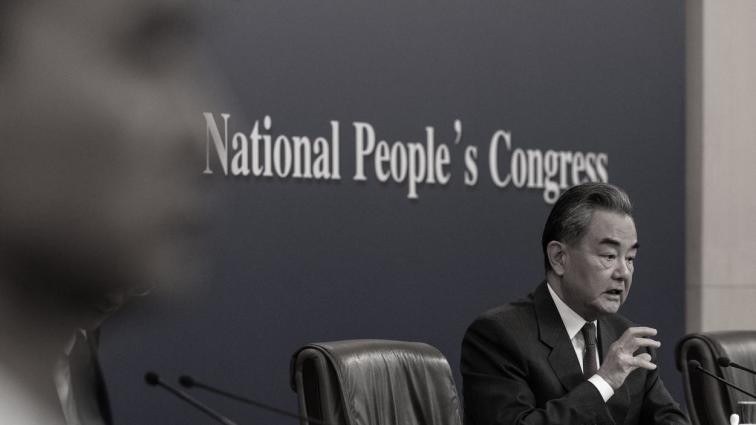
Immediately, China’s Foreign Ministry spokesperson Lin Jian once again “urged Japan to sincerely reflect and correct its mistakes” at the December 4 regular press conference, and demanded that Takashi withdraw her erroneous remarks.
Veteran Taiwanese journalist Akio Yaita posted on Facebook on December 3 that Takashi’s phrase “understand and respect” is the most commonly used incantation in Japanese diplomacy. It means, “I know your position, but it has nothing to do with me, and I don’t intend to argue with you.”
In other words, Takashi did not recognize that Taiwan belongs to China, nor did she retract her previous “Taiwan emergency theory.” She merely uttered a standard diplomatic line that avoids unnecessary conflict without sacrificing her position. Yaita said Japan has long mastered this rhetorical skill.
Yaita gave an example: many Japanese wives adore Takuya Kimura; their husbands usually say, “I understand and respect,” because Kimura will never walk into their home. This is Japan’s “understand and respect” toward Beijing—something that will not lead to actual consequences.
As the saying goes, when the city gate catches fire, the fish in the moat suffer. With Beijing tightening China–Japan exchanges across the board, numerous performances by Japanese artists in Shanghai, Beijing, Hangzhou, Guangzhou, Shenzhen, and other cities faced large-scale “last-minute cancellations.” These include performances by Hamasaki Ayumi, Minami, Kaf, Yoshimoto Kogyo artists, and anime composer Kaoru Wada. Organizers consistently cited “force majeure” as the cause.
The most unbelievable scene occurred on November 28: Japanese singer Otsuki Maki was performing “One Piece” at the Shanghai Bandai Carnival, and midway through the performance, the stage power was cut off, abruptly terminating the show. Otsuki Maki was forcibly taken off the stage, shocked. This was clearly the CCP’s deliberate humiliation. Xi Jinping had only recently met Takashi in Korea in late October, but was quickly humiliated by her “Taiwan emergency” remark, so he vented his anger on Japanese performers—though the method was extremely low.

Japanese singer Otsuki Maki having her performance forcibly cut mid-song at the Shanghai Bandai Carnival.(Video screenshot shows )
At first, the audience was confused, then they realized and began swearing loudly. Fans refused to direct their anger toward Japan; instead, they aimed at the authorities: “You can’t handle big things, so you take it out on ordinary people—despicable!” Another commenter mocked: “Like a drunk going home to beat his wife and kids to feel powerful.”
Even party loyalist Hu Xijin, former editor-in-chief of the Global Times, couldn’t stand it and expressed sympathy for Otsuki Maki. Hu said that cutting the power mid-performance “went too far.” If the content was acceptable, she should have been allowed to finish. Cutting the power and canceling the show on the spot created an overly shocking scene.
But the most moving scene involved singer Hamasaki Ayumi.
Before the performance, Hamasaki posted photos of her arrival in Shanghai, and in a social media post she prayed for Hong Kong after its deadly fire, announced the removal of flame effects from her Shanghai show, and urged fans not to wear red.
On November 28, the Shanghai concert organizer announced that the show originally scheduled for November 29 was canceled at the last minute, and more than 10,000 sold tickets would be fully refunded within 30 days. Hamasaki also announced the cancellation and apologized to staff and fans.
Unexpectedly, on November 29, Hamasaki and her team performed the entire concert with no audience, and released footage of this “no-audience concert.”
Videos circulated quickly on Douyin. In the video, Hamasaki stood alone under the spotlight on the stage, singing one song after another. The caption read: “She sang the entire concert alone.” Within hours, it was shared hundreds of thousands of times, filled with emotional comments: “Crying,” “This is a true diva.”

Hamasaki Ayumi performing on November 29 before 14,000 empty seats.(Composed image)
On November 30, Hamasaki posted on Facebook and other platforms: “Although I faced 14,000 empty seats, I felt the deep love from audiences all over the world. This was one of my most unforgettable performances.” She also posted several photos showing row after row of empty chairs.
After the “no-audience concert” went viral, a person claiming to be part of the photography team suddenly came out to “apologize,” saying the no-audience concert was fake and that Hamasaki had only been “rehearsing.” Mainland media then followed with similar reports. But Hamasaki’s personal beautician, Takahashi Mika, angrily refuted this, explaining that the stage had long been fully set up, and that Hamasaki—knowing there would be no audience—still “lowered her head and pleaded, ‘Please let us perform,’” before stepping onto the stage.
Takahashi said that before the stage lift rose for the opening, Hamasaki “quietly shed tears,” a moment that made all staff hold back their own tears as they sent her up.
The Hamasaki incident drew international attention. Radio France Internationale titled its report “Hamasaki Ayumi’s No-Audience Concert—Shanghai’s Problem Just Got Bigger,” praising Hamasaki’s professionalism as moving people worldwide. BBC criticized Beijing’s actions as “rude” and “extreme.”
On December 3, Hamasaki appeared on Fuji TV’s year-end music special, and boldly posted on social media: “I will always keep moving forward because I am Ayu.”
Seeing Beijing use this kind of method to retaliate against Japan, Trump could no longer stay silent. According to a White House announcement, on December 2 he officially signed the Taiwan Assurance Implementation Act into law. This measure forces the U.S. State Department to regularly review and evaluate U.S.–Taiwan engagement guidelines and propose plans to remove remaining restrictions on U.S.–Taiwan interactions.
Republican Representative Ann Wagner stated that the law strengthens U.S.–Taiwan relations and sends a clear message of America’s “firm resistance to the CCP’s dangerous ambition to dominate the region.”
Taiwan’s Presidential Office expressed sincere gratitude and welcome. Spokesperson Karen Kuo said the Act affirms the value of U.S.–Taiwan engagement, supports closer U.S.–Taiwan relations, and symbolizes the strong ties between the two countries based on shared values of democracy, freedom, and human rights—giving it special significance.
China’s Taiwan Affairs Office spokesperson Zhang Han immediately attacked the law, calling it a “gross interference in China’s internal affairs.” But Xi Jinping can do nothing about Trump and can only fume with anger.
(People News original)
△







News magazine bootstrap themes!
I like this themes, fast loading and look profesional
Thank you Carlos!
You're welcome!
Please support me with give positive rating!
Yes Sure!