
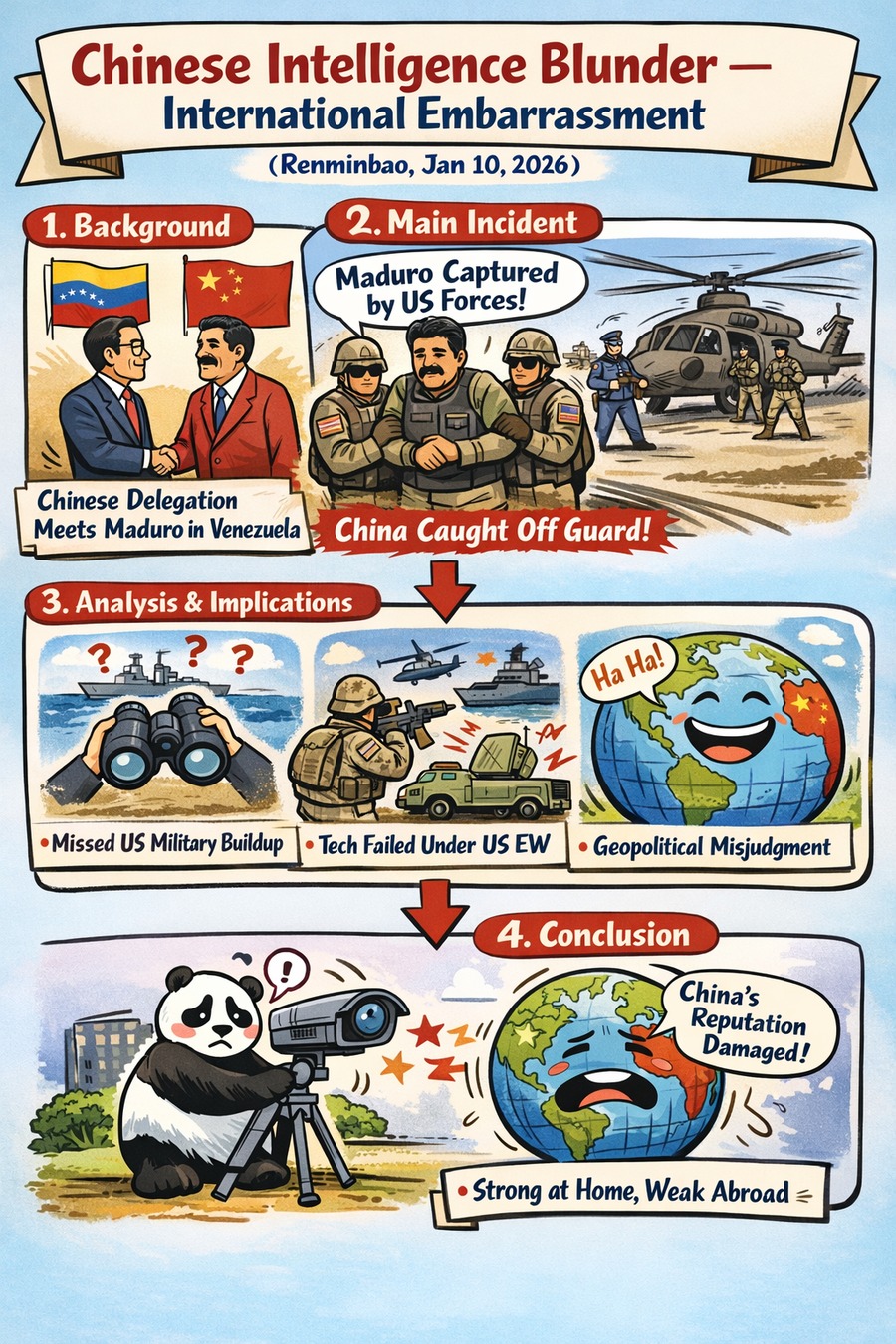
The CCP Intelligence System Makes a Huge Blunder, Turning It into an International Laughingstock
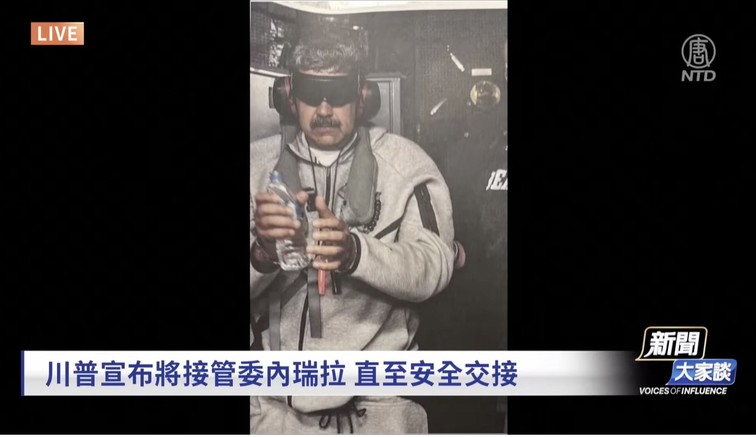
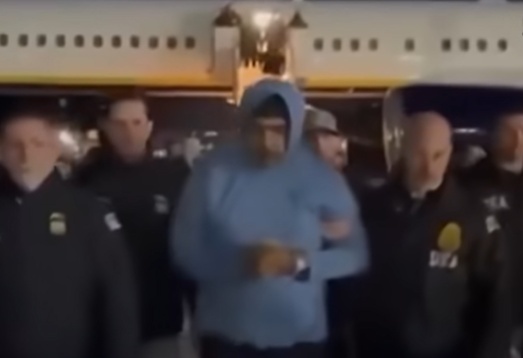
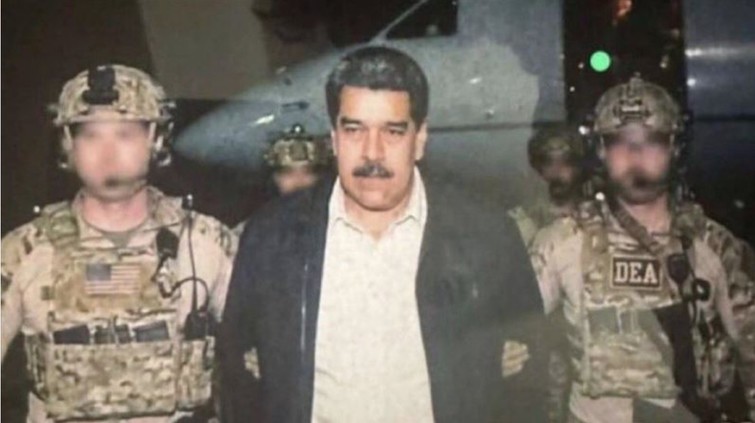
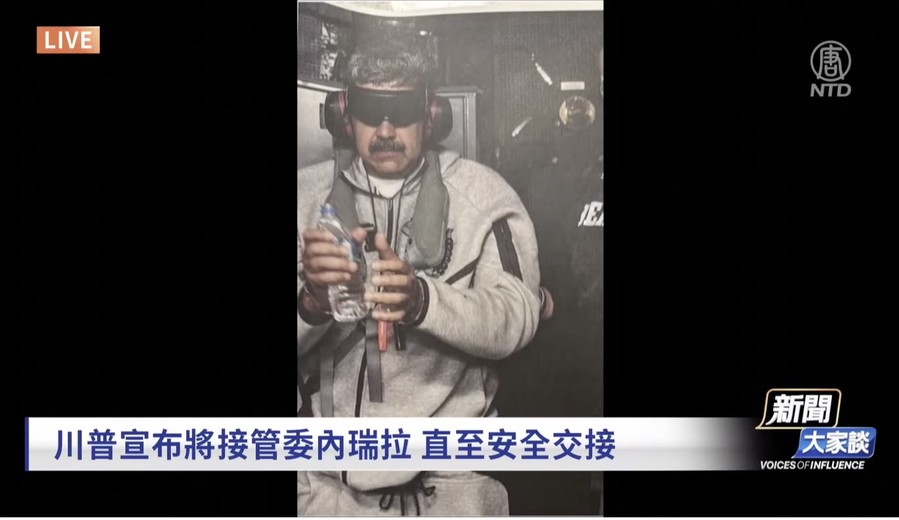
[People News] Only a few hours after Maduro met with a Chinese Communist Party (CCP) delegation, he was arrested. This highly dramatic historical moment not only punctured Beijing’s attempt to construct the illusion of global power projection capability, but also marked a devastating reputational collapse of the CCP’s intelligence system in international strategic competition.
This operation showed the world a cruel reality for the CCP: a regime that boasts of “guiding the direction of the world” saw its international strategic early-warning mechanism completely reduced to zero when faced with a truly modern military operation. This was not merely a tactical intelligence failure, but a farce that caused Beijing to lose face on the international diplomatic stage. At the very moment when Beijing was trying to consolidate its Latin American foothold through diplomacy, the U.S. military, with a pre-planned arrest operation, turned that diplomatic effort into an international joke—while ruthlessly exposing the fundamental incompetence of the CCP’s foreign intelligence system.
Intelligence Incompetence Leading to a Deadly Misjudged Visit
To understand the severity of this intelligence disaster, it is useful to reconstruct the details of the CCP delegation’s trip to Venezuela. According to media reports and official confirmation from Venezuela, just before the U.S. military launched the “Righteous Fury” operation, on January 2, 2026, a senior delegation led by Qiu Xiaoqi, the CCP’s Special Representative for Latin American Affairs, arrived in Caracas and held a lengthy meeting with Maduro at Miraflores Palace. The publicly stated agenda of this visit was to “implement the bilateral strategic partnership,” with specific content involving deepening cooperation in energy, mining, and infrastructure, and reiterating Beijing’s political support for the Maduro government in “opposing external interference.” During the meeting, both sides also discussed in depth how to ensure the continuity of oil trade through new financial payment mechanisms against the backdrop of intensified U.S. sanctions.
At 7:30 p.m. that evening, Maduro praised his meeting with Qiu Xiaoqi on Telegram, saying it reaffirmed the solid brotherly friendship between China and Venezuela and that such a relationship could stand the test of time. What should have been a routine diplomatic gesture to demonstrate China–Venezuela unity and convey the message that “Beijing will not abandon old friends” was instead frozen by subsequent events as the biggest diplomatic crash scene in Beijing’s diplomatic history.
The timing of this visit itself constituted a massive intelligence loophole. While Qiu and Maduro were shaking hands and chatting happily, the U.S. military had already completed large-scale operational deployments in the Caribbean region. More than 150 fighter jets, bombers, electronic warfare aircraft, and special operations support units had long since moved into attack positions. This meant that when the CCP delegation entered Caracas, all of Venezuela was already under the gun of the U.S. military.
Intelligence Incompetence Leading to a Catastrophic Geopolitical Misjudgment
There is ample geopolitical logic to define this visit as a “conspiracy” based on an intelligence blind spot. The meeting took place when U.S.–Venezuela relations were on the brink of collapse and in a quasi-war state, yet the Chinese side, completely unaware, attempted to exploit the U.S. power transition period to drive a wedge into Latin America. The substance of the deal involved sanction-evasion energy swaps and security commitments, essentially an attempt to push the strategic front line close to the U.S. homeland and challenge America’s strategic bottom line.
According to investigations by Venezuela’s anti-corruption organization Transparencia Venezuela, there has long been an opaque operating model between China and Venezuela based on the “Anti-Blockade Law.” This visit likely involved finalizing certain unspeakable “life-saving clauses” for times of crisis. Beijing tried, as the Maduro regime teetered on the brink, to exchange economic transfusions and military promises for control over Venezuela’s energy resources and a geopolitical strategic foothold against the United States.
However, the absurdity of this conspiracy lay in the CCP’s complete misjudgment of the Maduro regime’s predicament. While CCP officials were planning the future with Maduro at the conference table and promising “rock-solid” support, they had no idea that this “future” had only a few hours left. Such secret dealings on the edge of a volcano not only failed to save Maduro, but instead fully exposed Beijing’s strategic intentions and were immediately slapped in the face by U.S. military action.
If Beijing’s intelligence agencies had been able to detect signals of such massive U.S. military mobilization, or had foreseen that the collapse of the Maduro regime was imminent, they would never have dispatched senior officials for a meaningless diplomatic effort, nor risked entering a target area about to be destroyed. The appearance of the CCP delegation was not diplomatic courage, but the result of a comprehensive misjudgment of the overall situation. This behavior proves that the CCP leadership’s understanding of the geopolitical dynamics in Latin America has deviated catastrophically.
The Collapse of the CCP’s Military Aid Technology Bubble
The CCP’s vaunted “Made in China” was proven in real combat to be utterly ineffective. Beijing’s willingness to send a delegation at such a sensitive moment was likely tied in large part to its blind faith that the “air-defense early-warning systems it exported to Venezuela could provide sufficient security redundancy.”
The core of Venezuela’s air-defense network consisted of the JYL-1 long-range surveillance radar provided by the China Electronics Technology Group Corporation (CETC), and the JY-27A VHF radar touted as a “stealth-killer.” Yet at the very moment U.S. operations began, these myth-like pieces of equipment were paralyzed.
High-intensity broadband jamming carried out by U.S. EA-18G “Growler” electronic warfare aircraft directly severed the signal links of these radars, covering their screens with clutter and rendering them completely incapable of effective aerial surveillance—let alone detecting stealth aircraft. Reports indicate that because these sensors were “blinded,” the Venezuelan military failed to fire a single surface-to-air missile throughout the entire operation. Even when U.S. helicopters landed at the presidential palace, the command system remained in chaos. This means that the pair of “eyes” provided by the CCP to Venezuela never saw anything useful for air defense.
One-Way Transparency: The U.S. Military’s God’s-Eye View and a Strategic Humiliation for the CCP
The core of this operation lay in the “one-way transparent” battlefield environment constructed by the U.S. military intelligence system. President Trump observed the entire operation in real time via data links from the situation room at Mar-a-Lago. The U.S. military carried out the operation according to a preset timetable; the walls of Maduro’s residence were effectively meaningless, and internal activities were clearly displayed on the situation room screens.
The U.S. military’s decision to act during the CCP delegation’s visit may have been merely a coincidence of tactical timing, but objectively it produced an extreme psychological humiliation. Beijing’s “strategic conspiracy” appeared utterly insignificant in the face of the U.S. military’s predetermined agenda. The U.S. side did not even need to mention the Chinese delegation at all; this mere “disregard” and “dimensionality reduction strike” was enough to completely shatter Beijing’s global strategic credibility.
The Essence of CCP Secret-Police Politics: Ruthless at Home, Timid Abroad
This intelligence disaster more deeply exposed the fundamental characteristic of the CCP’s security apparatus: “adept at internal warfare, inept at external warfare”—an inevitable outcome of secret-police politics under a totalitarian system. For a long time, the CCP’s state security and intelligence agencies have concentrated the bulk of their resources, technology, and manpower on internal stability maintenance and social control. They have built a massive system based on big data, facial recognition, and internet surveillance, and in tracking dissidents, monitoring online public opinion, and suppressing unarmed civilians, they indeed display frightening efficiency and capability. Domestically, secret police swagger over the populace, able to locate the author of a social media post within minutes, demonstrating an all-pervasive control.
However, this asymmetrical “dictatorial tool” based on absolute power is helpless when faced with the U.S. military, which possesses top-tier counter-reconnaissance, electronic warfare, and stealth penetration capabilities. The CCP’s complete ignorance of such a large-scale U.S. operation shows the weakness of its foreign intelligence capabilities, which stand in stark contrast to its internal repression apparatus.
The farce of the CCP delegation mistakenly wandering into the site of a precise U.S. military strike shows that an intelligence system that only knows how to wield the big stick internally and rule through fear reveals its inherent incompetence once placed in the battlefield environment governed by the law of the international jungle. This functional misalignment and distorted capability doom the CCP to natural vulnerability when projecting influence abroad, exposing its true “paper tiger” nature.
Moreover, in order to cater to the leadership’s political narrative of “the East rising and the West declining,” CCP intelligence officials likely selectively filtered out negative signals of abnormal U.S. military movements when assessing the situation in Venezuela, or dared not report risk warnings that might lead to the failure of diplomatic policy. This institutionalized information-filtering mechanism causes CCP decision-makers to live long-term inside a beautified information cocoon, losing the ability to perceive real dangers in the outside world.
The U.S. military’s operation in Caracas, with cold precision, stripped away the façade of great-power strength carefully painted by the CCP’s propaganda machine. When the CCP delegation returned in embarrassment with nothing but empty words, what was left for Beijing—besides a massive bill—was a punctured myth of “miracle” air-defense equipment. This was an added humiliation piled onto the CCP’s South America policy.
△




News magazine bootstrap themes!
I like this themes, fast loading and look profesional
Thank you Carlos!
You're welcome!
Please support me with give positive rating!
Yes Sure!