
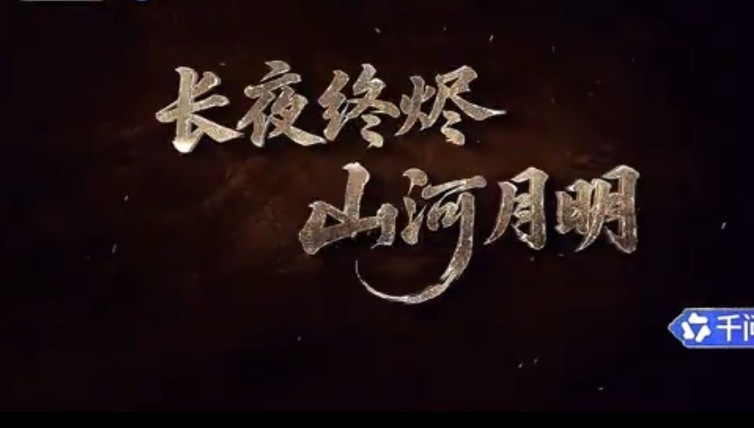
Video Screenshot
[People News] As the Year of the Horse commenced, a shocking incident known as the 'February 14 Broadcast Interruption' unfolded in mainland China. On February 14, the Spring Festival Gala organised by Henan TV was abruptly cut off during its live broadcast and subsequently removed from all online platforms. This left tens of millions of viewers in disbelief and sparked a wave of public discourse. What led to the disappearance of the Henan Spring Festival Gala? Reports circulating online indicate that there were large-scale complaints, and insiders disclosed that high-ranking officials in Zhongnanhai deemed this gala a 'political bomb' related to 'incitement to subversion.'
Cultural Feast or 'Political Bomb'?
On the evening of February 14, countless netizens in mainland China tuned into Douyin's live broadcast, eagerly anticipating the national style feast of the Henan TV Spring Festival Gala, only to be confronted with an unexpected 'black screen.'
At the peak moment when the live broadcast room's viewership reached 8 million, the screen was cut off without warning, leaving the audience bewildered. Following this, the program was filled with numerous advertisements, with only sporadic program content interspersed. The originally scheduled segments, such as 'Night Raid' and 'Dare to Ask Where the Road Is,' vanished, and the live broadcast ultimately concluded with a cessation of transmission.
This gala, themed 'Hoof Rising Before the Tide,' eliminated live hosts and physical stages, opting for AI virtual scenes to connect the programs throughout. It incorporated a wealth of exquisite elements from traditional Chinese culture and divine culture, including Hanfu dance, Yongle Palace mural backgrounds, and scenes depicting deities descending to the mortal realm.
For instance, 'Yongle Weiyang': Set against the backdrop of the Yongle Palace mural 'Chaoyuan Tu', dancers transform into various deities, presenting a grand scene of worshipping the Primordial Heavenly Sovereign, which the audience interprets as 'the return of the gods'.
In 'Feitian' and 'Jiaoshen': Female dancers embody the Feitian, scattering flowers in the air, while male dancers represent the masculine spirit of Chinese men through the 'Jiaoshen' imagery.
The dance 'Changye Zhongjin', led by dancer Zhang Aoyue, portrays a time-travelling figure who traverses a millennium of warfare, expressing the idea that 'the fire seed is eternal, and guardianship is unceasing' through movement. The line 'Changye Zhongjin, shanhua yue ming' has become a trending phrase online.
However, is this cultural celebration, which has instilled pride in countless Chinese people, truly 'actively stopped' by Douyin? The answer is no. Shortly after, the reason for the 'mass reporting' that led to the ban quickly became a trending topic. The audience is outraged by the 'malicious reporting'; why is Hanfu labelled as 'extreme' when it is also a display of ethnic attire?
Meanwhile, overseas netizens are questioning on social media: 'Why was it cut off?' 'What is the Communist Party afraid of?'
While the authorities maintain silence, public interpretations have erupted. Some netizens have pointed out that the 'divine transmission culture' showcased in the gala conflicts with the CCP's 'atheistic' stance. Others express that this gala aimed to awaken the children of China, but it has struck the most sensitive nerves of the authorities, resulting in harsh suppression from those in power.
Additionally, several overseas commentators have highlighted that the Henan Spring Festival Gala's performance may be heavily influenced by the Shen Yun performing arts troupe associated with the overseas Falun Gong. While this imitation cannot achieve a 'divine resemblance,' it could be one of the reasons behind the abrupt broadcast interruption ordered by the Chinese Communist Party (CCP).
Overseas pro-democracy activist Tang Baiqiao expressed on the X platform that the Henan Spring Festival Gala's attempt to mimic Shen Yun has 'good intentions,' and the AI technology employed is quite impressive. However, he noted that this post-production program cannot be compared to Shen Yun's live performances. Moreover, due to the CCP's erosion of traditional Chinese morals, the Henan Spring Festival Gala's program is evidently 'lacking in spirit and goodwill.'
Insider Information: High-Level Classification as 'Inciting Subversion'
According to revelations from former Inner Mongolia official Du Wen, the broadcast interruption was not due to a technical issue but rather a direct order from high-ranking officials in Beijing.
Du Wen revealed that shortly after the Henan 'Spring Festival Gala' aired, it was subjected to widespread reporting. The reports accused the gala of 'spreading feudal superstition.'
The most controversial segment was 'The Long Night Ends, the Mountains and Rivers Brighten.' The phrase 'The long night ends, the mountains and rivers brighten' was interpreted by high-level officials as a subtle reference to the eventual end of the 'long night' of CCP rule, with the motherland's landscapes poised to embrace brightness. Additionally, the segment 'Everyone Sings the Battle Song' raised suspicions of calling on the populace to 'resist.'
Du Wen remarked that, from the perspective of the authorities, what was once considered artistic creation has now transformed into a 'low-level red, high-level black' that poses a threat to national security. He disclosed that the order to suspend the broadcast was issued directly by the Central Cyberspace Administration based on directives from higher-ups, even circumventing the Henan Provincial Propaganda Department. This 'higher authority' has labelled the gala as 'inciting subversion,' 'hinting at the current situation,' and 'metaphorically suggesting the downfall of the Communist Party of China.'
Du Wen further revealed that the Ministry of State Security and other departments have already dispatched personnel to Henan to investigate this incident, with some individuals reported missing. In the future, it is possible that officials from the Henan propaganda department may be made scapegoats.
After a long night, will dawn finally break?
Recently, a series of unusual occurrences in China has been interpreted as signs of a 'dynasty collapse.' Even more thought-provoking is the interpretation of the mascot for the 2026 CCTV Spring Festival Gala, 'Four Horses,' by some as a biblical omen of the apocalypse. In the Bible's 'Four Horsemen of the Apocalypse,' the white horse symbolises 'plague,' the red horse represents 'war,' the black horse signifies 'famine,' and the pale (grey) horse points to 'death,' collectively seen as a prophecy of successive disasters.
In this social psychological context, the 'return to traditional China' and 'return of the gods' depicted in the Henan Spring Festival Gala, along with terms like 'light,' 'long night,' and 'dawn,' reflect the regime's profound fear while also resonating with the collective desire of the Chinese populace for 'cultural revival' and 'escaping the long night.'
(People News first published)
△







News magazine bootstrap themes!
I like this themes, fast loading and look profesional
Thank you Carlos!
You're welcome!
Please support me with give positive rating!
Yes Sure!