

U.S.-China Confrontation. (Video screenshot)
[People News] According to the Wall Street Journal, in 2005, on the eve of U.S. President George W. Bush's visit to Beijing, the Chinese government mobilised thousands of soldiers to urgently build a mountain biking trail to fulfil the requests of the U.S. President. It was in this context that then-President Bush met Xi Jinping, who had not yet ascended to power.
Years ago, a U.S. President made a request to his aides before his trip to China: he wanted to present himself as an ordinary person.
At that time, U.S.-China relations were relatively stable, and George W. Bush was an enthusiastic mountain biking fan. Consequently, Dennis Wilder, who was then the Senior Director for Asian Affairs at the National Security Council, proposed an idea: "Why not arrange for him to ride with the Chinese national mountain biking team?" Wilder stated.
During this period, Beijing was preparing for the 2008 Olympics, and Wilder reached out to the Central Intelligence Agency (CIA) to check if the mountain biking course for the Olympics had been completed. The CIA provided both good news and bad news: the good news was that they had satellite images of the site, while the bad news was that construction had not yet started.
Wei Dening reached out to the then U.S. Ambassador to China, Sandy Randt, with a phone call. The reply he received was straightforward: no problem. Just two days later, ten thousand soldiers from the Chinese People's Liberation Army were sent to the site to construct the track. Remarkably, the project was completed in just two weeks, with trees planted and all facilities in place.
"Whatever you want is fine," Wei Dening recounted in a recent interview. "You wanted a mountain bike track, so we built you one."
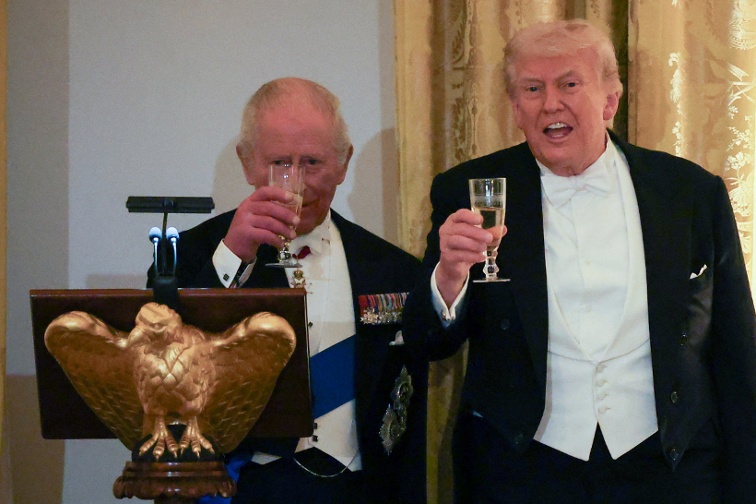
At present, U.S. President Trump is also preparing to visit Beijing for a summit with Xi Jinping scheduled for May 14 to 15. This will be the first state visit by a U.S. president to China in nearly a decade. Compared to twenty years ago, the mechanisms behind the summit preparations have undergone significant changes. While logistical challenges remain daunting, political trust has become increasingly hard to find.
Wei Dening later took on the responsibility for President George W. Bush's trip to the Beijing Olympics in 2008, which he described as "hellish torment." It was an exceptionally demanding logistical task, not only to host George W. Bush but also his father, George H.W. Bush, and former Secretary of State Henry Kissinger, who played a key role in normalising U.S.-China relations in 1972. Wei Dening characterised the summit preparation as an exercise in almost obsessive attention to detail.
Every action, every vehicle dispatch, and every handshake position must be meticulously planned in advance. Each venue is required to conduct a rehearsal. The floor will be marked to accurately indicate the positions of the leaders and their spouses. In theory, the entire process allows for not a single variable.
The 2008 Olympic trip also has a little-known historical context. It marked the first time in history that a sitting U.S. president directly interacted with Xi Jinping (Xi Jinping). At that time, Xi was not yet the highest leader of the Communist Party of China; he was in charge of overseeing the preparations for the Beijing Olympics. Wei Dening recalled that George W. Bush completely dismissed the significance of the meeting.
"He was absolutely bored," Wei Dening remarked about Xi Jinping, adding, "It was truly the most boring experience ever." In hindsight, the reason is clear: Xi Jinping was in a phase of concealing his strength and biding his time. He would never say anything that could potentially lead to trouble for himself.
After the meeting with Xi Jinping, George W. Bush approached Wei Dening. "Meeting with him was a complete waste of time," he said, "Why did you schedule this, Dennis?"
Eighteen years later, Xi Jinping has emerged as the most powerful leader of the Communist Party since the era of Mao Zedong.
Analysts note that the Communist Party has historically viewed diplomacy as a performance for a privileged elite, attempting to create an illusion of a prosperous era of 'all nations coming to pay homage' through extravagant receptions of foreign leaders, debt forgiveness, or substantial aid. However, the essence of this behaviour is to use national wealth as a political bargaining chip, aiming to enhance the legitimacy of its rule by exchanging economic benefits for recognition from the international community.
Some commentators argue that while hundreds of billions of dollars are directed towards overseas infrastructure projects, significant debt relief for other countries, or substantial funding for foreign students, the domestic education, healthcare, and pension systems in China remain chronically underfunded. This glaring disparity highlights the hypocritical nature of the Chinese Communist Party's regime, which exploits its own citizens while flattering foreign powers. When a government treats its own people as mere resources to be exploited, yet regards foreign entities as esteemed guests to be courted, it not only undermines the moral basis of its governance but also becomes, in reality, the main perpetrator of robbing the nation of its future and betraying national interests. Such actions, which masquerade under the banner of 'national rejuvenation' while continuously depleting public welfare and compromising the long-term interests of the populace, clearly demonstrate that in the current era, the Chinese Communist Party is the biggest 'traitor' to China. △





News magazine bootstrap themes!
I like this themes, fast loading and look profesional
Thank you Carlos!
You're welcome!
Please support me with give positive rating!
Yes Sure!