

Russia's Population Collapse and Nationwide Return to Poverty: Does the CCP Still Dare to Attack Taiwan? (Video)
[People News] Hello, dear audience, and welcome to 'Forbidden News Declassified'. I am Sun Ning.
If we rewind to 2022, when Putin sat at the massive long table in the Kremlin, confidently announcing the so-called 'special military operation' against Ukraine, he likely envisioned a lightning-fast war, expecting to capture Kyiv in three days and secure full access in seven. At that time, the elites in Moscow were probably already preparing caviar and champagne for a victory celebration.
However, history has a penchant for delivering darkly humorous twists.
What began as a war of 'powerful leaders overwhelming newcomers' has surprisingly dragged on for a full four years! The grand plans of the Kremlin have not served as a stepping stone for Russia's resurgence; instead, they have morphed into a colossal 'bone-crushing machine', relentlessly consuming the country's population, wealth, and future.
In today's episode, we will explore the Russia that is facing a collapse in living standards, a potential population extinction, and a complete return to poverty for its citizens, all against the backdrop of ongoing warfare.
The Crazy Meat Grinder
To grasp the internal collapse of Russia, we must first understand the grim reality on the frontline battlefield.
According to authoritative statistics from various Western intelligence agencies, by 2026, the cumulative casualties of the Russian army on the Ukrainian battlefield are projected to exceed 1.3 million! Among these, the confirmed deaths have already surpassed 500,000.
What is even more alarming is that as the battlefield becomes increasingly entrenched, the Russian military has resorted to the inhumane tactic of 'human wave assaults' to gain just a few kilometers. According to the latest NATO intelligence, the Russian military's monthly casualty figures have surged to a staggering 35,000!
During the Soviet Union's decade-long war in Afghanistan, around 15,000 soldiers lost their lives. And now? Under Putin's leadership in Ukraine, the number of lives lost every two weeks surpasses the total casualties from the Afghan conflict!
Stalin famously remarked, 'The death of one man is a tragedy; the death of millions is merely a statistic.' Putin has evidently embraced this chilling philosophy. For the Kremlin, these frontline soldiers are not fathers, sons, or husbands; they are simply 'expendable numbers.'
In a cruel twist, to sustain this 'meat grinder' rate of 35,000 casualties each month, Russia has even released robbers and death row inmates from prisons, provided they sign contracts to serve on the front lines for six months, after which they would receive amnesty. The outcome? These individuals acquire lethal skills on the battlefield and return to civilian life as ticking time bombs for public safety.
Is this truly about defending the homeland? This is treating the nation's future as fuel, throwing it into the furnace of Putin's personal obsession to burn brightly.
The Lament of the Daughter Nation
If you follow those adventurous travel bloggers and board an old train traversing Siberia to the remote ethnic regions of Russia, such as Buryatia or the Tuva Republic, you will feel an incredibly strange sense of time travel.
The villages here are eerily quiet. There is no roar of engines or laughter from young people, creating a silence that sends chills down one's spine.
This silence is a direct result of Russia's conscription policy.
During the conscription process, the Kremlin has shown a remarkable level of 'political emotional intelligence.' The children of officials in Moscow and St. Petersburg, along with financial elites and middle-class young men, are completely off-limits; if they are drafted, the stability of the regime would be jeopardized. What happens if the recruitment numbers fall short? They turn to the border regions to fill the gaps.
In the villages of Buryatia, conscription officers even drive large trucks at midnight to conduct a 'sweep' for able-bodied men. The rate at which young people from these remote areas are sent to the front lines as cannon fodder is 30 to 40 times higher than that of residents in Moscow!
This has led to a horrifying outcome. In the prime reproductive age group of 20-39 years in areas like Buryatia and Tuva, for every 100 girls, there are often fewer than 50 healthy males. This situation goes beyond the traditional 'more women than men'; demographically, it is referred to as the 'structural extermination of males in reproductive age'.
Today, the Siberian borderlands have effectively become a 'country of daughters'; bus drivers are women, school teachers are women, and even in temperatures as low as minus thirty degrees, it is still women who are repairing the heating pipes.
Adding to this tragedy, beyond the 500,000 who have perished on the front lines, Russia has another group of 'disappeared men.'
When the war first broke out, the most intelligent and productive segment of Russia's highly educated elite—comprising IT programmers, scientists, doctors, and financial executives—numbering around 1 to 1.5 million, packed their bags overnight and fled across the border to Georgia, Armenia, Kazakhstan, and even Europe.
Which country has ever willingly let go of hundreds of thousands of its best young people in just a few years? Putin has managed to do just that.
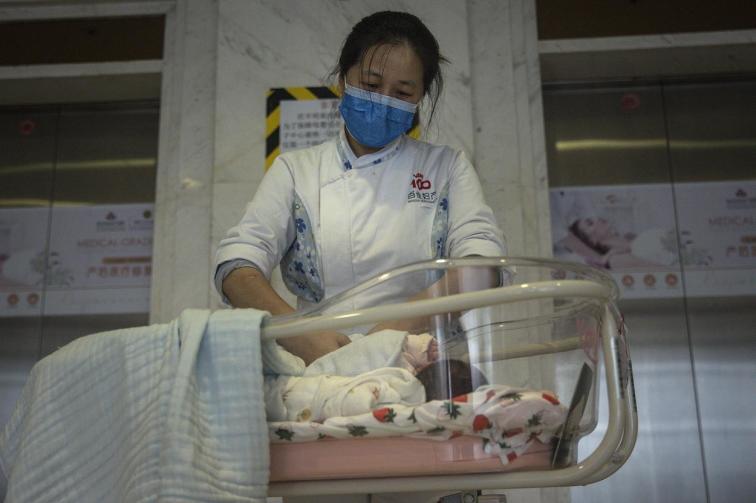
With so many men gone, the idea of having children has naturally become a distant dream. The Russian Federal State Statistics Service's attempts to conceal the truth have completely failed this time: the annual birth rate in Russia has now dropped below 1.2 million, hitting the lowest level in nearly thirty years. This situation is even worse than during the 1990s, when the Soviet Union had just collapsed and people struggled to afford even basic necessities like bread.
It’s not surprising, really; young women in Russia understand the situation well: rampant inflation has doubled the cost of baby formula, aggressive new tax laws have drained businesses, and there are constant calls for nationwide mobilization. Is it worth bringing a child into such a country, only for them to potentially receive a death notice from the front lines 18 years later, while also providing the family with a cheap Lada car?
War serves as the most effective form of “contraception” in the world. Putin often claims he wants to “revive great Russia,” but after four years of conflict, he has effectively extinguished Russia's future right in the cradle.
A comprehensive return to poverty
Having discussed the human aspect, let’s now turn our attention to finances.
Over the past two years, a narrative has emerged online: 'Look, the West's sanctions have been ineffective! Russia's GDP is still growing; Russia is holding strong!'
When faced with such claims, it is crucial for everyone to remain discerning and not be misled by the deceptive statistics of a 'war economy.'
The economic growth currently observed in Russia is referred to in economic terms as 'military Keynesianism.' Simply put, this means that the government diverts all available funds—such as citizens' pensions, education funds, and medical subsidies—into military factories to manufacture tanks and artillery shells.
As a result, military factories operate around the clock, offering high wages to workers. Tanks are produced, sent to the front lines, and then, with a bang, are destroyed by Ukrainian drones. In the reports from the Bureau of Statistics, does this count as GDP? Yes! And it counts twice! The production of tanks counts once, and their consumption at the front lines counts again.
But can this type of GDP be consumed? Can it be worn? Can it enhance the living standards of the populace? No! Aside from dissipating into smoke on the battlefield, it yields nothing.
This cannot be termed economic prosperity; it is more accurately described as 'drinking poison to quench thirst.' This approach of prioritizing military spending over civilian needs is leading to the most severe 'comprehensive return to poverty' in Russian history.
To address the staggering military expenditure deficit of up to 13.5 trillion rubles each year, the Russian government has enacted the most severe 'cutting leeks' legislation: corporate tax has surged from 20% to 25%, and personal income tax has also seen a sharp tiered increase.
Even more concerning is that Ukraine's long-range drones are now targeting and destroying Russian refineries and oil depots daily, as if there were no cost involved. When these refining facilities are incapacitated, gasoline prices skyrocket almost immediately. As oil prices increase, the costs of all vegetables, meat, and logistics also double.
In Russia's chain supermarkets, the prices of butter, milk, and frozen fish have already risen by over 20%. According to independent surveys, the number of people living below the poverty line, who can barely afford basic necessities like meat, eggs, and milk, has reached between 13.5 million and 20 million.
In this tsunami of widespread impoverishment, the most severely affected and least able to resist are Russia's 41 million retired elderly. The federal government provides a statutory minimum living allowance of 16,288 rubles per month to the elderly, which is equivalent to just over a thousand yuan. If your pension exceeds this amount by even a single ruble, congratulations, you are not counted as part of the impoverished population in official statistics. This is how Russia's official ultra-low poverty rate of 6.7% is constructed.
As Western sanctions against Russia intensify, life-saving medications for heart disease and insulin are unavailable in pharmacies, with black market prices tripling. After paying for utilities and purchasing medications, the elderly are often left with only a few hundred rubles in their pockets. Consequently, in Russia, every evening, you will see large groups of retired elderly waiting at the back doors of supermarkets.
They are not homeless; they were once teachers, railway workers, and nurses at public hospitals in a small town. Dressed in coats that have faded from washing but remain clean, they stand in the biting cold at minus twenty degrees, waiting for store clerks to discard the first batch of expired bread and rotten potatoes of the day.
In the depths of those forgotten Khrushchyovka buildings, many elderly individuals who are immobile, without children, or whose children have already died, are facing starvation and freezing in their cold, food-scarce apartments. This is due to budget cuts at the local civil affairs bureau and the loss of social workers. When these cold corpses are eventually carried out, local officials, in an effort to protect their performance records, will casually label the cause of death on the certificates as 'heart failure.'
As the cannons roar, military-industrial tycoons and corrupt bureaucrats are profiting immensely, while over 90% of ordinary families in Russia are paying for this seemingly endless illusion of empire with their own lives and livelihoods.
As the rabbit dies, the fox mourns; does the Chinese Communist Party still dare to attack Taiwan?
Now that we have discussed Russia, which is half-buried in the ground as the 'Big Brother,' let’s shift our focus back to Asia and address a key issue that everyone is equally concerned about, as mentioned in the title: what are the decision-makers in Zhongnanhai, who daily call for 'military unification with Taiwan,' really thinking at this moment? Do they still dare to take action easily?
Realistically speaking, the harsh reality that Russia has faced in Ukraine serves as a powerful warning, akin to a dimensionality-reducing strike, for the situation in the Taiwan Strait.
In recent years, both Russia and certain radical hawks within the Chinese Communist Party (CCP) have displayed a strange sense of confidence. They believe that modern warfare can be wrapped up in just two or three days through a combination of missile salvos, electronic warfare paralysis, and special forces decapitation strikes, leaving Western nations unable to respond in time and compelled to accept the new reality.
At that time, Putin shared this mindset; he launched a surprise attack on Kyiv with only three days' worth of supplies and a suit. What was the outcome? The blitzkrieg turned into a 'four-year lightning war.'
The CCP, observing from the sidelines as a seasoned 'exam taker,' watched in alarm as Russia, once considered the 'big brother,' failed the test.
With a land border connecting Russia and Ukraine, tanks could cross directly, and supply lines could be maintained by trucks. However, they faced logistical breakdowns and had to abandon their equipment, even calling in artillery shells and soldiers from North Korea for support. In contrast, the Taiwan Strait, averaging over 100 kilometers in width, is one of the most formidable natural barriers in military history. The challenges of conducting an amphibious landing are more than ten times greater than advancing on land.
Today, Taiwan is rapidly fortifying itself to become a more challenging 'steel porcupine.' Its air defense missile density ranks among the highest globally. Should the CCP's military decide to act, it will face a modern defensive stronghold supported by a populace ready to fight, highly transparent information, and substantial intelligence and logistical backing from the United States and Japan.
So, returning to the question: Does the CCP still dare to attack Taiwan?
The conclusion is quite straightforward: In the foreseeable future, the likelihood of the Chinese Communist Party initiating a full-scale maritime war has been drastically reduced to a historical low, largely due to the bloodshed and devastation witnessed on the Russo-Ukrainian battlefield.
In this 1578-day ordeal, Russia has played the role of an unfortunate 'big brother' who, with eyes closed, speeds recklessly ahead, only to crash into a ditch along with his vehicle. His severed limbs serve as a warning, drawing an unmistakable red line that the equally eager 'second brother' behind him must not cross.
That wraps up this video. If you enjoyed our program, please give us a thumbs up, subscribe, and hit the notification bell. We welcome your thoughts on the Russo-Ukrainian War in the comments section. See you in the next episode!
"Forbidden News Decoded"
△







News magazine bootstrap themes!
I like this themes, fast loading and look profesional
Thank you Carlos!
You're welcome!
Please support me with give positive rating!
Yes Sure!