
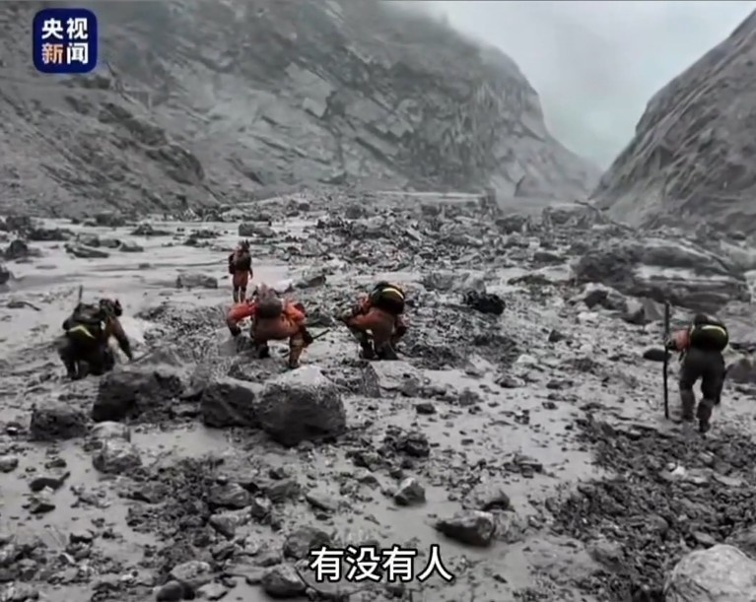
CCTV Footage: In the Jilong disaster area, rescue workers are heard shouting into the flat ground, "Is anyone there?" This is not a reflection of their intelligence, but rather a commentary on the director's lack of insight, described as "Too Low". (Video Screenshot)
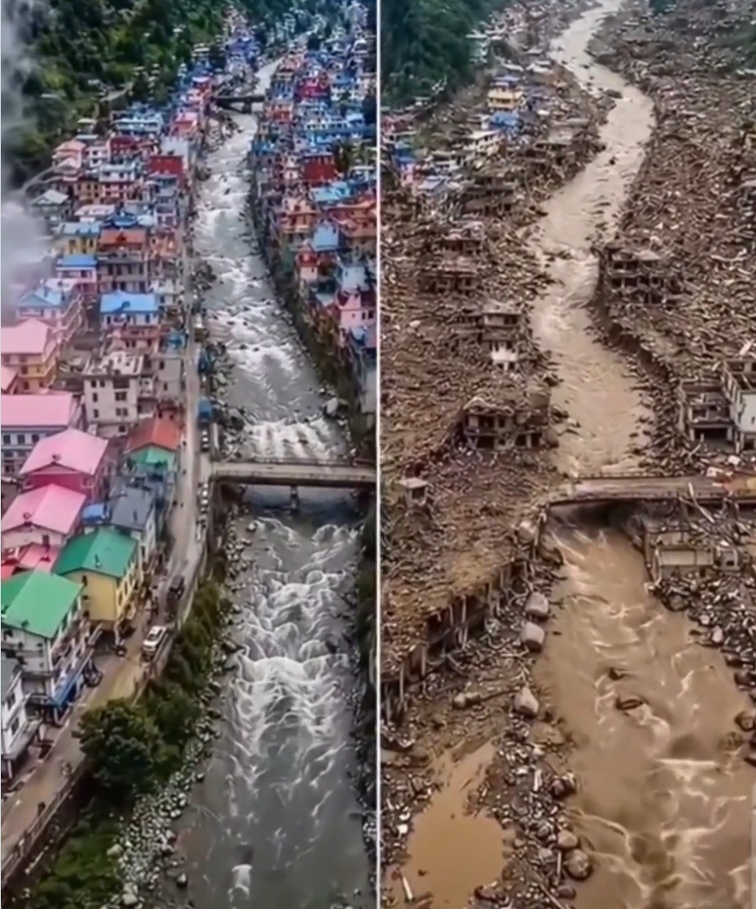
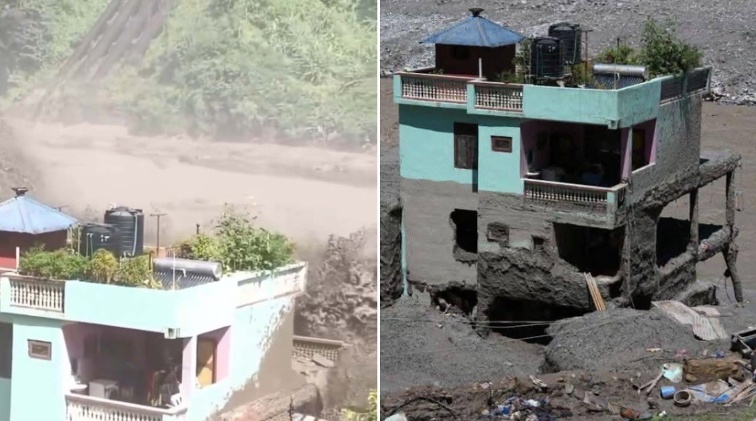
[People News] On August 26, following a catastrophic flood and landslide at the Nepal-Tibet border, rescue operations are still in progress. The severity of the disaster has led to numerous landslides flowing downstream, devastating villages, bridges, roads, and infrastructure, resulting in hundreds to thousands of casualties. Recently, Nepal announced that the death toll had exceeded 1,000 as of Tuesday, with 4,000 individuals reported missing. In contrast, the Chinese Communist Party has maintained a significantly lower death toll of 16, which has drawn criticism from the international community for allegedly concealing the true extent of the casualties.
Nepal: 1,204 Dead, 11,993 Rescued, 4,216 Missing
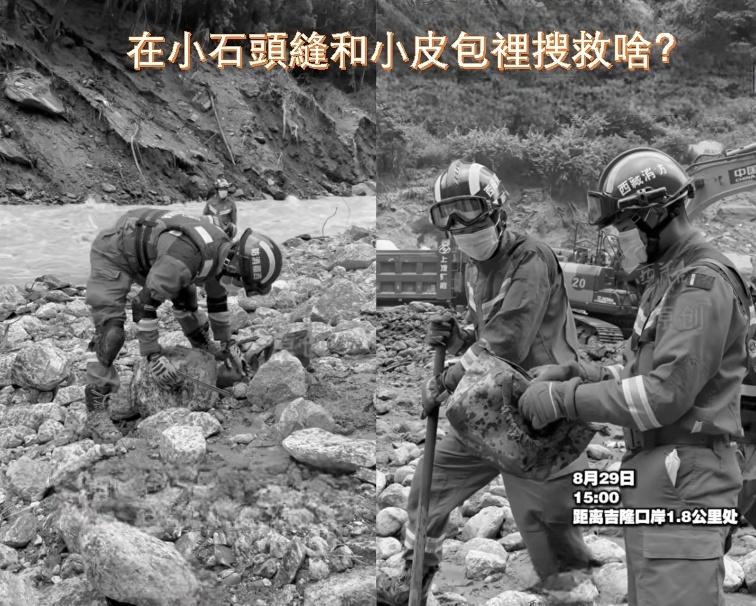
As reported by New Tang Dynasty Television, on Tuesday (September 1), Nepal's search and rescue teams utilized rubber boats to search for and recover the bodies of victims from the rapidly rising Narayani River, while other rescuers continued their efforts to find survivors amidst the mud and debris.
On September 2, Chinese media reported that the death toll from Tibet stood at 16, with 546 individuals missing, including 285 Chinese nationals and 261 foreigners.
However, exiled Tibetan communities and advocacy groups have raised concerns about the official figures, asserting that the actual death toll is significantly higher than what has been reported. Tibetan groups abroad are calling for the Chinese Communist Party to ensure transparency in information and to publicly disclose relevant data, as well as to hold the authorities accountable for their responsibilities.
The Nepal National Disaster Risk Reduction and Management Authority has released the latest figures, reporting that as of 6 PM local time on September 2, the death toll has reached 1,204, with 11,993 individuals rescued and 4,216 still missing.
The Nepalese Ministry of Foreign Affairs held a press conference at 2 PM local time on September 2. In the press release that followed, the Ministry stated: "Our search and rescue operations are ongoing, as many individuals remain trapped in tunnels along the riverbanks."
The briefing also mentioned that rescue teams from India, China, and South Korea have coordinated their efforts with the Nepalese army. Forensic teams from India, China, South Korea, and Singapore are engaged in testing, analyzing, and processing DNA samples.
Additionally, around 590 foreign nationals from 34 countries are still unaccounted for.
The briefing highlighted the situation on the Chinese side as understood by Nepal, noting that at the time of the disaster, approximately 3,000 people were either traveling to or departing from Mount Kailash, with about 2,500 having returned via Hilsa and Tatopani.
Approximately 1,500 Nepalese citizens are stranded in Jilong, which includes 176 Nepalese trucks and containers. Nepal is also coordinating with Chinese authorities to assist in rearranging routes through appropriate border crossings.
The briefing indicated that on the day of the incident, around 100 Nepalese citizens went missing in the border area on the Chinese side.
Netizens have commented that Tibet has constructed 193 dams, with the actual number potentially exceeding 300.
The X platform account 'Bodpa Warriors' released a video on September 2, highlighting that the Lhasa to Nyingchi railway crosses some of the most fragile and geologically complex regions on the planet, featuring 47 tunnels and over 120 bridges. The proposed route from Gyirong to Kathmandu has seen the completion of 75 drilling points, with 90% of the soil tests also finalized.
Simultaneously, since the year 2000, Tibet has either constructed or planned the construction of at least 193 hydropower plant dams, with the actual number likely exceeding 300.
In a recent episode of 'Fang Fei Time,' renowned water conservancy expert Wang Weilu confirmed that there were no reservoirs in Tibet prior to 1985. By 2025, as many as 150 reservoirs are expected to be built in Tibet, including at least 8 large reservoirs, with a total storage capacity estimated at around 4.3 to 4.4 billion cubic meters.
△






News magazine bootstrap themes!
I like this themes, fast loading and look profesional
Thank you Carlos!
You're welcome!
Please support me with give positive rating!
Yes Sure!