

A figure known as "Sister Xia" has recently been enticing Chinese individuals in groups across Los Angeles and other locations to welcome Xi Jinping. (Video screenshot)
[People News] Xi Jinping is set to visit the United States, making Sino-U.S. relations a renewed focus of international attention. Concurrently, information has been circulating within overseas Chinese communities regarding the Chinese embassy in the U.S. and business associations recruiting Chinese nationals to participate in a "Welcome Xi Jinping" event in Washington, D.C. This initiative reportedly includes charter flights, meals, accommodation, transportation, and even cash subsidies. If these arrangements are confirmed, it raises a sensitive question: Are Chinese diplomatic missions abroad genuinely representing the interests of the Chinese people, or are they utilizing taxpayer funds to stage a political spectacle of "mass adoration" for the top leader?
What is particularly concerning is that such practices may ultimately harm ordinary Chinese individuals living abroad.
Xi Jinping's visit to the U.S.: Political propaganda and image management
Xi Jinping's upcoming visit to the U.S. serves practical diplomatic and economic objectives.
Following prolonged tensions characterized by trade wars, technology restrictions, investment scrutiny, and "decoupling and supply chain disruptions," the Chinese economy has faced significant challenges. Signs suggest that Beijing is keen to prevent further deterioration in bilateral relations. Consequently, the recent narrative from the Chinese Communist Party emphasizes the need to establish a "constructive strategic stable relationship between China and the U.S.," with Xi Jinping himself reiterating that Sino-U.S. relations "can only be improved, not worsened."
Moreover, Xi's visit to the U.S. carries clear implications for domestic political propaganda.
For the top leader of the Chinese Communist Party, a visit that includes a direct meeting with the President of the United States and is received with the highest level of hospitality can be framed as evidence of 'the status of a leader of a major world power.' This is particularly significant given the current pressures on the Chinese economy, the low confidence among private enterprises, and the unprecedented challenges to the legitimacy of the Communist Party's rule. Xi Jinping needs to convey a message, even if it is misleading, to both the Party and the public: the Party leader can still exert influence on the world, and the initiative in China-U.S. relations remains firmly in Beijing's hands.
As a result, this visit to the U.S. serves as both a diplomatic maneuver and a political image-building exercise.
Consequently, Xi Jinping must adopt a conciliatory stance towards the U.S. while simultaneously presenting a picture of stability to the Chinese business community at home.
The challenge arises when, on one hand, he discusses 'stability and cooperation' with Trump, while on the other, he allows overseas institutions to spend money to generate enthusiastic support in the U.S. Does this not risk creating a contradictory diplomatic image that Xi aims to project?
The Chinese Communist Party's hospitality has regressed: they are now paying to recruit Chinese individuals to act as welcome 'performers.'
In light of media reports regarding the paid recruitment of Chinese 'actors' circulating within overseas Chinese communities, some commentators have criticized the practice of organizing compatriots to welcome Xi Jinping as rather outdated.
If such politically motivated activities are organized, even if the expenses are covered by businesses, chambers of commerce, or individuals in the U.S., it could be somewhat defensible. However, if it is ultimately revealed that the funds are being directly utilized by the Chinese Communist Party's institutions in the U.S. or by Chinese agents in the U.S. using state-owned financial resources, the situation becomes problematic.
It is widely accepted that the fundamental responsibilities of diplomatic institutions are to represent the country in diplomatic affairs, protect its citizens, and facilitate normal international exchanges, and they should not be spending money to hire overseas Chinese to act as crowd performers welcoming the Party leader.
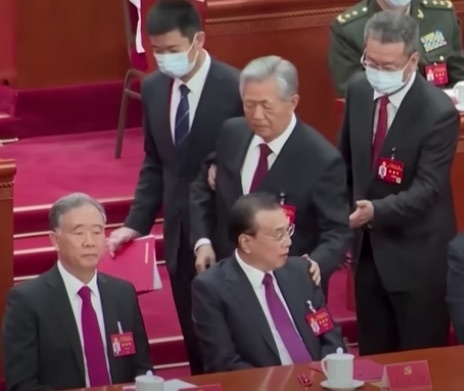
Recent observations have revealed that the practice of organizing overseas Chinese to 'welcome the top leader' is not a standard protocol in the diplomatic etiquette of the Chinese Communist Party (CCP). There is a notable historical contrast between the Xi Jinping administration and that of Hu Jintao, who had specifically implemented 'etiquette reforms'.
In April 2010, the Chinese embassy in Germany referenced a significant news release from Xinhua News Agency, announcing that President Hu Jintao was visiting the United States and other countries to attend the Nuclear Security Summit. During this visit, China pioneered new measures in etiquette reform: simplifying the arrangements for welcoming and sending off during arrivals and departures, and ceasing to organize local overseas Chinese, students, and representatives of Chinese-funded institutions to greet officials at the airport. This change was exemplified when the special aircraft landed at Andrews Air Force Base in Washington, where the entire process of arrival and departure was streamlined and efficient, lasting only about 5 minutes.
The article highlights that in the past, overseas Chinese would gather at the airport to welcome Chinese leaders, but following the reforms, there would be 'no arrangements for welcoming or sending off', allowing overseas students to express their patriotism in other ways.
The website of the Overseas Chinese Affairs Office of the State Council of the CCP later published an article summarizing the etiquette reform as 'no welcoming, no sending off'. It explicitly stated that visiting personnel would manage their own arrivals and departures, relieving overseas Chinese of any concerns; even if overseas Chinese offered to welcome or send off, such gestures would be 'politely declined'.
This has led to a rather ironic situation: if the authorities once believed that leaders' visits should decline the welcoming of overseas Chinese, why is there now a large-scale arrangement for overseas Chinese to gather and 'welcome Xi Jinping'?
Moreover, under the current management and disciplinary principles for diplomatic personnel of the Chinese Communist Party (CCP), if staff at overseas institutions utilize public resources for personal political campaigning, it inevitably raises concerns regarding the use of public resources, discipline, and the diplomatic image.
The CCP has consistently urged overseas Chinese to adhere to the laws of their host countries, respect local societies, and actively integrate into mainstream culture. During Xi Jinping's visit to the United States in 2015, he publicly emphasized that Chinese expatriates should follow American laws, respect local customs, and actively engage with American mainstream society.
If the 'welcome' event today is an effort by CCP officials stationed abroad to organize overseas Chinese for collective political support to demonstrate their loyalty to Xi, then their coercive approach towards the Chinese community contradicts the essence of genuine grassroots diplomacy.
They are insisting that overseas Chinese collectively wave flags to welcome Xi, even resorting to incentives such as food, accommodation, transportation, and cash to encourage participation. Is this truly aiding Chinese individuals in integrating into American civilized society, or is it merely transforming them into instruments of CCP political propaganda?
The Chinese consulate's vigorous efforts to welcome Xi, even at the expense of diplomatic protocol, likely stem from a pragmatic concern: the fear that an unsatisfactory reception could jeopardize their political prospects.
Why is it necessary to create a 'sea of red flags' at the welcome event?
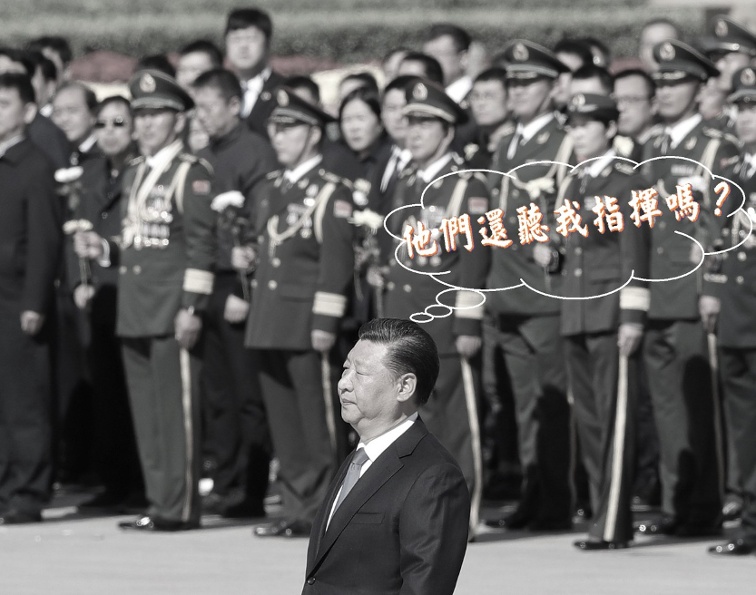
In a totalitarian regime, lower-level officials often prioritize not 'whether it is necessary' when confronted with the activities of the highest leader, but rather 'how it will be perceived from above.'
The rationale behind the CCP's institutions in the U.S. wanting Xi Jinping to see Chinese individuals waving red flags and holding red banners in his welcome is straightforward: political necessity and party propaganda requirements.
When television footage of a leader's overseas visit features a significant number of protesters and only a handful of supporters, it can not only lead to negative coverage by international media but may also be labeled by the domestic party propaganda system as 'diplomatic efforts falling short,' which amounts to a political misstep.
On the other hand, if the cameras capture a large crowd waving five-star flags, state media can spin this as 'overseas Chinese warmly welcoming Chairman Xi.'
Such awkward situations have indeed occurred. For instance, during Xi's visit to the U.S. in 2015, there were instances in Seattle and other locations where supporters and protesters appeared side by side.
Chinese organizations are cautioning that standing in support of the CCP carries potential legal risks in the U.S.
The approach taken by Chinese embassies and consulates in the U.S. to entice Chinese individuals to welcome Xi with small incentives could ultimately backfire on the Chinese community.
Firstly, there is the issue of social perception. Overseas Chinese are primarily members of their local communities. Organizing them into a highly politicized 'welcome team' can create the impression in American society that the Chinese community is not a diverse immigrant group but rather a politically mobilized entity directed by a foreign government.
This is not beneficial for the vast majority of Chinese individuals who wish to live, work, and conduct business quietly.
Furthermore, some Chinese organizations are advising the community that accepting the mobilization from the CCP's institutions in the U.S. and physically participating in rallies for the CCP leader should not only consider the availability of free tickets and accommodations but also the potential political and legal risks that may arise from such actions.
This does not imply that 'attending a welcome event for XXX will result in an FBI investigation.' The Federal Bureau of Investigation's primary concern is not whether someone has waved a five-star flag, but rather whether foreign governments are conducting illegal activities such as coercion, harassment, and surveillance of others through individuals and organizations within the United States.
The FBI has clearly stated that the use of overseas Chinese communities by foreign governments for transnational repression, recruitment, or exerting pressure is a significant issue of concern.
In recent years, the U.S. Department of Justice has dealt with several cases involving personnel or agents of the Chinese Communist Party (CCP).
According to publicly available FBI data, the U.S. has filed criminal charges against individuals suspected of acting on behalf of the CCP in monitoring, harassing, and threatening dissenters in the U.S.; in 2022, the Eastern District Court of New York even issued arrest warrants for these individuals.
Some Chinese community organizations have advised those interested in participating in welcome events to 'be cautious.' This is because the real issue to be wary of is not merely a simple welcome event, but whether one might unknowingly shift from being an ordinary participant to becoming an organizer, promoter, or even executor of political activities for a foreign government.
For ordinary Chinese individuals, the safest principle is quite straightforward: one can express personal political views, but should refrain from engaging in activities on behalf of any foreign government that may involve concealing identities, political lobbying, surveilling others, or coercing dissenters.
Ultimately, loving China and supporting Sino-U.S. friendship is entirely different from conducting political mobilization for the CCP.
If an individual is targeted by authorities merely for accepting a free plane ticket and attending a welcome event, and is suspected of being a 'political tool' for a foreign government, then how valuable is this so-called 'free benefit'?
In 'Romance of the Three Kingdoms', Cao Cao criticizes Yuan Shao for 'being overly cautious about his own safety while attempting great deeds, and forgetting his life for small gains' during a discussion about heroes over wine. The author believes that Chinese friends and international students should exercise caution in their words and actions, and not be misled by small favors. Given President Trump's current crackdown on foreign agents opposing the U.S., the potential costs of this situation are too high to ignore.
Chinese participants signing up for the welcome event: do they love their motherland, or do they love 'free plane tickets'?
Another question worth discussing is whether the Chinese compatriots who signed up for the welcome event genuinely love Xi Jinping. How much authentic public sentiment do they truly represent?
The answer may be far more complex than simply 'love Xi Jinping' or 'hate Xi Jinping'.
Some individuals may sincerely support Xi Jinping, believing he represents China and advocates for a strong nation, which motivates them to participate in the welcome event.
On the other hand, some may view it merely as an opportunity for a free trip. The provision of plane tickets, accommodation, transportation, and even cash subsidies serves as a tangible incentive for those with average economic means.
Moreover, some overseas Chinese have humorously commented while sharing messages that the current $80 subsidy is 'too low' due to inflation. In the past, enticing Chinese participants for roadshows, waving flags, holding banners, and chanting slogans cost between $100 and $200, but now Xi Jinping's funding has significantly decreased, effectively halving the amount.
Naturally, choices influenced by social pressure do exist. The size of overseas Chinese communities is limited, and the relationships within organizations such as overseas Chinese associations, chambers of commerce, and Chinese schools are quite complex. Some individuals may fear that not participating could negatively impact their relationships with these institutions.
The accusations of "spending money to hire people to create a spectacle" have been consistently denied by party media and various embassies and consulates abroad. They assert that these claims are part of a smear campaign by hostile overseas forces, and that the enthusiasm shown by overseas Chinese and international students towards the party leader is entirely spontaneous.
While the Chinese Communist Party's denials are not trustworthy, we cannot dismiss the mindset of some Chinese individuals. Even after many years abroad, they may not have fully integrated into the cultures of their host countries. They often rely heavily on social media from China and are accustomed to watching propaganda programs from CCTV, making it difficult for them to distinguish between "loving China," "loving the Chinese nation," and "supporting the CCP" and "supporting Xi Jinping."
If these individuals remain oblivious and are coerced into participating in CCP-organized activities, and subsequently come under the scrutiny of U.S. law enforcement and intelligence agencies, it could lead to serious repercussions, ultimately resulting in more harm than good.
True patriotism does not require spending money to create a spectacle.
Xi Jinping's visit to the United States was initially a diplomatic event between nations.
If overseas Chinese choose to welcome him spontaneously, that is their right; conversely, if others choose to protest, that is also their right.
A Chinese individual can cherish traditional culture, family, friends, their hometown, and the Chinese nation, while also having the right to criticize the CCP government. They can support friendly relations between China and the U.S. without feeling obligated to pledge allegiance to the CCP or its leader.
What is truly questionable is why a government with a vast propaganda machine and diplomatic system still feels the need to rely on free plane tickets, food, accommodation, and even cash to organize ordinary Chinese people into scenes of 'enthusiastic applause'.
If the welcome reflects genuine public sentiment, there should be no need to spend money to procure it; if the applause is heartfelt, there should be no need for organized efforts; if China is genuinely strong, it should not have to rely on mobilizing overseas Chinese for political performances to prove its strength.
Furthermore, Chinese Americans are primarily part of American society. They have their own careers, families, political beliefs, and values, and should not be treated as 'overseas crowd actors' that the Chinese Communist Party can call upon at will.
Thus, the central question is not 'should Chinese people welcome Xi Jinping', but rather: who is organizing this? Who is funding it? Where does the money originate? Are the participants willing? Is there any exclusion of Chinese individuals with differing opinions?
If the Chinese embassy can provide clear answers to these questions, the public will be able to discern whether this is a typical overseas expatriate event or a political rally orchestrated by agents of the Chinese Communist Party.
If it is ultimately confirmed that taxpayer money from China is being used to buy applause from overseas Chinese, then this ceases to be 'patriotism' and becomes a crass act of using national resources to flatter Xi Jinping.
For overseas Chinese, the most perilous outcome may not be merely being asked to wave a flag once, but rather the risk of the Chinese community being branded as a 'political tool of a foreign government'.
This is the true essence of 'loyalty that harms the Chinese'.
△




News magazine bootstrap themes!
I like this themes, fast loading and look profesional
Thank you Carlos!
You're welcome!
Please support me with give positive rating!
Yes Sure!