

Xi Jinping. (People News)
[People News] Unlike the health conditions of leaders in Western democratic nations, the health status of the "party and state leaders" of the Chinese Communist Party (CCP) remains a topic that the CCP authorities and official media cannot openly discuss. This is particularly true for the physical condition of the highest leader, which is treated as "top secret."
For example, Xi Jinping, the current leader of the CCP, has faced multiple reports of health issues over the past three years, yet the CCP steadfastly refuses to acknowledge these claims and instead works hard to cover them up. However, the truth is increasingly difficult to hide; numerous signs suggest that Xi's health has serious problems. Despite efforts to conceal this, the reality is becoming evident, raising significant concern among the Chinese public and governments worldwide.
What specific signs indicate that there are health issues?
1. Xi's Unusual Request for a Resting Room During His U.S. Visit
Recently, the U.S. Wall Street Journal reported, citing informed sources, that during Xi's visit to the U.S., the Chinese delegation requested to reserve five hours for Xi Jinping to rest and to arrange a dedicated resting room in the White House for him to use between activities. Only his wife, Peng Liyuan, was allowed to enter; other members of the Chinese delegation, including Director of the General Office Cai Qi, were not permitted.
Aside from Xi and Peng, the details of what occurred in the dedicated resting room remain unknown, but it is a fact that Xi struggles to endure long working hours.
Moreover, a previously scheduled working lunch was canceled, and reports indicate that the team must meticulously plan Xi's itinerary, taking into account how long he can stand, how far he can walk, and when he needs to rest.
Dennis Wilder, the former Senior Director for China Affairs at the White House National Security Council, remarked that the lounge arrangement is unprecedented: 'We have never done this before. This is unusual.'
2. Xi Jinping has required support from Peng Liyuan on multiple occasions when disembarking from planes.
Similar to his previous arrivals at the Shanghai Cooperation Organization summit and during his visit to Egypt, when Xi Jinping's special aircraft landed at Andrews Joint Base near Washington, D.C., he was seen gripping the handrail of the stairs with his right hand while holding onto Peng Liyuan with his left hand throughout the descent. Peng's right hand was clearly straining, and Xi appeared to be walking unsteadily, taking nearly 20 seconds to navigate a short flight of stairs, with his body frequently leaning to one side. On the return trip, Xi also tightly held Peng's hand as he boarded the plane.
Additionally, during a tour of the National Archives with the Trump couple, the visit was not only brief but also saw Xi and Peng maintaining a firm grip on each other's hands while descending the stairs.
3. Xi has been unable to meet foreign guests as scheduled at least three times, leading to 'diplomatic incidents.'
Since the beginning of this year, there have been several instances where diplomatic protocol was disregarded, with foreign guests only meeting Xi Jinping on the day of their departure, effectively turning welcome ceremonies into farewell ceremonies.
For instance, King Abdullah II of Jordan, who conducted a state visit to China from August 18 to 24, only met with Xi on the afternoon of the 24th. Footage broadcast by CCTV showed Xi walking slowly during the review, appearing somewhat limping as usual.
On April 21, Xi also held a welcome ceremony and met with Mozambique's President Chapo the day before Chapo's departure from Beijing on the 22nd, despite Chapo's visit to China occurring from April 16 to 22.
A similar situation occurred in mid-April when Spanish Prime Minister Sánchez visited China, where Xi's welcoming ceremony coincided with Sánchez's departure from Beijing on the same day.
4. There has been a noticeable decline in Xi's memory.
On April 10 of this year, Xi Jinping met with a delegation from the Kuomintang led by Chairman Zheng Liwen at the Great Hall of the People in Beijing. According to the live broadcast, Xi displayed clear signs of memory decline during his speech, nearly reading it line by line.
For example, during his opening remarks, after saying 'Chairman Zheng Liwen,' he immediately looked down at his notes and then stated, 'Fellow compatriots and friends of the Kuomintang delegation,' before looking down again. He then raised his head to say, 'Hello everyone,' looked down at his notes again to say, 'I am very happy,' and after looking down once more, raised his head to say, 'It is a pleasure to meet everyone in this beautiful spring season.' For such a simple opening statement, Xi Jinping looked down several times, which starkly contrasts with his previous confident and fluent speeches without notes. Isn't this clearly a cause for concern?
Perhaps in an effort to lighten the mood, Xi Jinping temporarily set aside his notes and improvised, saying, 'Yesterday was still the Qingming Festival with rain falling; today is a sunny day.' Cai Qi, who was beside Xi, smiled with satisfaction when he heard the previous somewhat sophisticated phrase, nodding frequently. However, when Xi concluded with the dry and clearly grammatically incorrect second half of the sentence, Cai Qi's smile vanished. 'A... a sunny day '- such a grammatical error would not typically be made by an ordinary Chinese Communist Party official in public speech, would it?
Following a minor slip during his speech, Xi Jinping quickly lowered his head to consult his notes, then looked up and repeated, 'I am very happy to meet everyone.' Is it standard for the leader of the Communist Party of China to make such a statement twice?
Since news of Xi's stroke surfaced during the Third Plenary Session of the Communist Party of China in July 2024, there have been rumors over the past year suggesting he may have suffered one or two additional strokes. The aftereffects of a stroke can include memory loss, speech difficulties, and diminished cognitive function.
5. Foreign leaders extend wishes for Xi's good health.
On March 9 of this year, North Korean leader Kim Jong-un replied to a congratulatory message from Chinese President Xi Jinping, thanking him for his congratulations on being re-elected as General Secretary of the Workers' Party of Korea, and 'wishing the Chinese leader good health.'
While Kim Jong-un's response appears to express concern for Xi's health, it actually reveals a significant secret about the Communist Party: Xi's health is poor, and it poses a serious issue.
In June 2025, Xi participated in the second China-Central Asia Summit held in Kazakhstan. The remarks made by the presidents of several Central Asian countries at the summit, particularly their 'high praise' for Xi, suggest they are aware of the shifts in Beijing's political landscape. For example, Kazakhstan's President Tokayev, during his discussions with Xi, unprecedentedly wished him 'good health, family happiness, and greater success in governance.'
Since the era of Mao Zedong, the health status of the Communist Party leader has been treated as a state secret. As long as the leader is not completely incapacitated, the Communist Party has employed various methods to conceal this information. However, while the Communist Party can mislead the Chinese populace, it cannot continuously deceive its so-called 'old friends.' Many of these 'old friends' are aware that Xi is seriously ill.
6. The mysterious death of Shang Aijia, the director of the surgery department at Beijing 301 Hospital.
Following the reports of Xi's stroke in July 2024, it was revealed in September that Professor Shang Aijia, the head of the spinal and spinal surgery department at the First Medical Center of the General Hospital of the Chinese Communist Party (Beijing 301 Hospital), had sadly passed away at the age of 51.
What is peculiar is that the obituary was not issued by the hospital but rather by the family in a personal capacity, signed personally. Furthermore, the phrase "Aogu Yongcun" in the obituary is intriguing. "Could it be that he was eliminated for leaking secrets? There are rumors suggesting a connection to recent gossip about the leader of the Communist Party. This possibility cannot be dismissed. Similar to the case of Dr. Li Wenliang, the whistleblower from Wuhan, being silenced under the shadowy operations of the Communist Party, anything is conceivable.
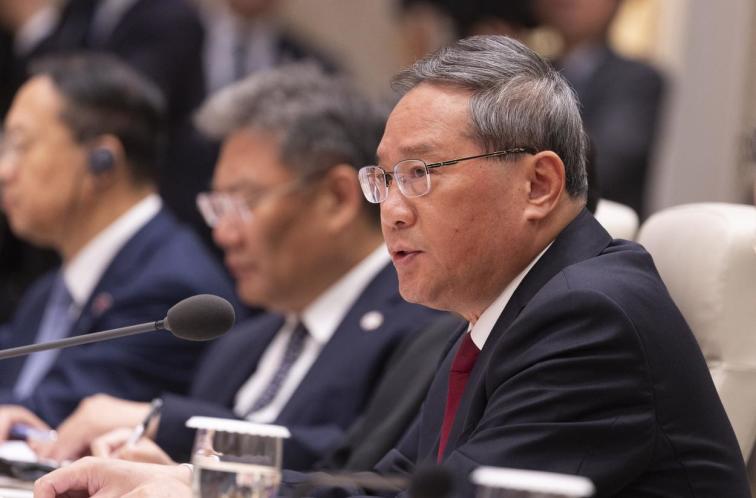
In addition to these signs, statements from the Chinese military, the removal of Xi's image from military publications, the unusual remarks from high-ranking officials like Li Qiang, and the significant reshuffling within the Communist Party all indirectly support the notion that Xi's power has greatly diminished, likely linked to serious health issues.
How much longer can Xi Jinping, who is grappling with serious health problems, maintain his position? Has the Communist Party made preparations for the post-Xi Jinping era?
(First published by People News) △





News magazine bootstrap themes!
I like this themes, fast loading and look profesional
Thank you Carlos!
You're welcome!
Please support me with give positive rating!
Yes Sure!