

The accompanying image shows the meeting venue, with a large painting in the background depicting a flood surging toward Xi Jinping. The floodwaters inundating the landscape symbolise great misfortune.
[People News] There are numerous commentators discussing the changes in the CCP's political landscape. Among them, the insights of Yu Maochun, the former chief advisor on China issues at the U.S. State Department, are particularly significant.
Yu Maochun presents two crucial viewpoints regarding China: First, the CCP could face a sudden collapse. In an article published on September 14 in the Washington Times, Yu pointed out that the West has long assumed the CCP regime will endure for the long term, yet has seldom seriously contemplated the potential problems and challenges that could arise from a sudden downfall of the CCP. However, historical precedents suggest that such a collapse is indeed possible. Second, it is essential to prepare for the CCP's sudden collapse. On July 16, 2025, the Hudson Institute's China Centre released a major report titled "China after Communism: Preparing for a Post-CCP China," authored by Yu Maochun. This report provides specific strategies for how the U.S. and its allies should respond in the event of a sudden CCP collapse.
Drawing from my observations of Xi Jinping's actions and rhetoric over the past 14 years, along with my analysis of the CCP's history and current realities, I believe that Yu Maochun's two viewpoints are highly pertinent and warrant serious reflection and proactive engagement from all descendants of Yan and Huang, as well as anyone concerned about China's future and destiny.
This article's title addresses 'Xi Jinping's high risk', which does not merely refer to Xi as an individual but connects him to the Chinese Communist Party (CCP). In previous writings, I have argued that Xi's mission is to bring an end to the CCP. Over the past 14 years since Xi took office, he has consistently created turmoil, leading the CCP to a state where the populace struggles to survive, officials are distressed, and the nation faces both internal and external crises, resulting in widespread anger and resentment. Thus, Xi's high risk is essentially the CCP's high risk.
1. Four Major Indicators of Xi's High Risk
First, Xi's health has raised serious concerns.
As the General Secretary of the Central Committee of the Communist Party, President of the State, and Chairman of the Central Military Commission, all held for three consecutive terms, Xi carries the burden of all the issues inherited from the eras of Mao Zedong, Deng Xiaoping, and Jiang Zemin. These represent three significant challenges. Additionally, the problems generated during Xi's 14 years in power contribute to a total of four major challenges.
These four challenges are not merely a couple of hundred pounds of wheat; they are burdens weighing thousands, tens of thousands, and even hundreds of millions of pounds. Can Xi bear this weight on his shoulders? He cannot.
In July 2024, reports emerged that Xi suddenly fell ill and was hospitalised. By September 2026, during Xi's visit to the United States, his health issues became a widely discussed topic around the globe.
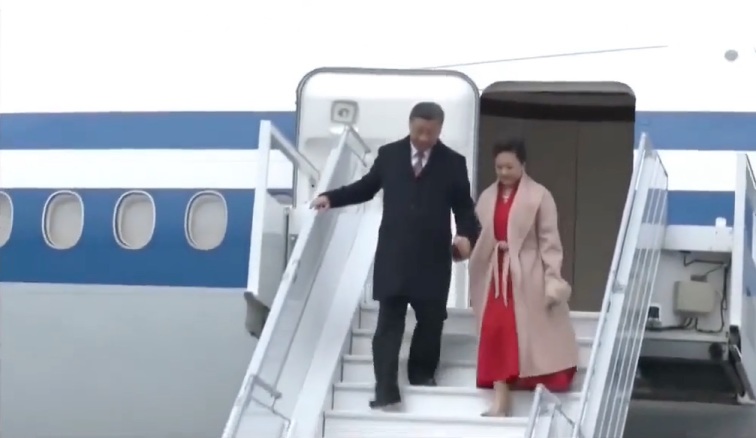
On October 5, senior American media figure Fang Wei posted on the X platform, revealing that the health issues highlighted during Xi's visit to the U.S. included: (1) Xi Jinping was unable to sustain meetings longer than two hours and required the White House to provide him with a rest room, not for a 15-minute or half-hour break, but for 4 to 5 hours; (2) Whether ascending or descending stairs, Xi needed support from Peng Liyuan; (3) From the dinner with the Indian Prime Minister to the lunch with the American President, Xi Jinping did not attend, indicating that his health issues are indeed considerable.
Fang Wei remarked that Xi Jinping is in a position where he has 'blocked all positions, offended everyone, and has no successor.' His risky visit to the United States has exposed his health issues to the public, turning him into a 'nuclear bomb' for both the CCP's political landscape and the future of the world.
How much longer can Xi's health endure? The possibility of him suddenly falling ill and passing away cannot be dismissed.
Furthermore, Xi's most significant crisis lies in the instability of military power.
Military power is Xi's lifeline. For the past 14 years since he took office, Xi has been striving to consolidate military authority, yet he has not genuinely managed to gain control over it.
Since the 20th National Congress of the CCP, Xi has been executing a major purge within the military. What has shocked the world is that among the seven members of the Central Military Commission, the highest command of the CCP military that Xi personally established, five members have already been removed.
These five members include: Zhang Youxia, a member of the CCP Politburo and Vice Chairman of the Central Military Commission; He Weidong, also a member of the Politburo and Vice Chairman of the Central Military Commission; Li Shangfu, a member of the Central Military Commission, State Councillor, and Minister of National Defence; Miao Hua, a member of the Central Military Commission and Director of the Political Work Department; and Liu Zhenli, a member of the Central Military Commission and Chief of Staff of the Joint Staff Department.
Among them, He Weidong is Xi's most trusted military confidant, who was personally and exceptionally promoted by Xi; Miao Hua is the personnel manager who assisted Xi in elevating senior generals throughout the military, the chief strategist behind Xi's 'political military building,' and the 'top political commissar among political commissars' overseeing senior military leaders, making him Xi's second trusted confidant in the military.
Zhang Youxia and Xi Jinping are both part of the 'red second generation'; they have served on the battlefield and earned military accolades. Zhang Youxia's father, Zhang Zongxun, and Xi Jinping's father, Xi Zhongxun, were long-time comrades, and their families have maintained a friendship for decades. Zhang Youxia played a crucial role in supporting Xi's bid for a 'third term'.
Liu Zhenli has also served on the battlefield and has received first-class honours. He was once the youngest group army commander in the entire military, the youngest lieutenant general, the youngest general, the youngest member of the Central Military Commission, and the youngest chief of staff of the Joint Staff Department of the Central Military Commission.
Xi has personally promoted Liu, but he has purged all five core members of the Central Military Commission whom he had elevated. This is unprecedented in the history of the Chinese Communist Party's military and extremely rare in global military history.
Now, who does Xi still trust within the Chinese Communist military?
Only two individuals remain in the Central Military Commission: Vice Chairman Zhang Shengmin and Chairman Xi Jinping. Xi has no trust in Zhang Shengmin whatsoever. Back in 2023, when Zhang Shengmin was tasked by Xi to investigate a major case in the Rocket Force, Xi secretly dispatched someone to investigate Zhang Shengmin.
Xi continues to assert that 'anti-corruption is a major struggle that cannot be lost and must not be lost, and it cannot stop for a moment or retreat half a step,' and he plans to carry on with the extensive purge within the military.
This ongoing purge has led Xi to distrust all senior generals, and conversely, all senior generals cannot genuinely pledge loyalty to Xi.
Since Xi's sudden offensive in late January of this year, when he used extraordinary means to remove Zhang Youxia and Liu Zhenli, has he commanded the troops even once? No. While instilling fear in all senior military leaders, Xi himself has also become a frightened figure.
The possibility of Xi being suddenly overthrown by a military coup cannot be dismissed.
Lastly, Xi has offended too many high-ranking officials.
Since Xi Jinping took office 14 years ago, he has been purging political rivals under the guise of an 'anti-corruption campaign'. As of October 19, 2026, the number of central management officials purged by Xi has reached 1,059, with over 430 of them being senior military generals.
These officials include members of the Standing Committee of the Political Bureau of the Communist Party of China, members of the Political Bureau, as well as the top leaders of various committees, ministries, bureaus, and offices under the Central Committee of the Communist Party and the State Council. They also encompass secretaries and deputy secretaries of provincial party committees, governors, deputy governors, and secretaries and deputy secretaries of provincial political and legal committees across 31 provinces, autonomous regions, and municipalities.
Xi's anti-corruption efforts are not genuine but rather selective, leading to a situation where none of the central management officials investigated by him truly support him; in fact, many harbour intense animosity towards him.
An open letter published by Xinjiang Wujie News Network on March 5, 2016, which called for Xi's resignation, included three explicit threats to Xi and his family's safety.
The forces behind the 1,059 high-ranking officials investigated by Xi represent one of the most powerful factions opposing him. They are the largest supporters and even direct participants in actions and rhetoric that are detrimental to Xi, including those who criticise, oppose, and demand his resignation, eagerly wishing for his downfall.
Now, when Xi looks around, he sees enemies everywhere. If an unfavourable incident were to occur, these individuals would unite to attack.
Lastly, the anger of the Chinese people, who have endured 77 years of oppression and deception by the Communist Party, is igniting.
On September 27, 1945, Mao Zedong, the leader of the Chinese Communist Party, responded to a question from Reuters reporter Gan Beier by stating: "A 'free and democratic China' will be a nation where all levels of government, including the central government, are elected through universal, equal, and secret ballots, and are accountable to the people who elect them. It will fulfil Mr Sun Yat-sen's Three Principles of the People, Lincoln's government of the people, by the people, for the people, and Roosevelt's Four Freedoms."
Eighty-one years after Mao made this promise to the world, not a single aspect has been realised. In fact, the opposite has occurred; the Chinese people have had their electoral rights taken away, leaving them to decide for themselves whom to elect. Their freedoms of belief, speech, freedom from fear, and freedom from want have been largely stripped away by the CCP.
What the CCP has established is party ownership, party governance, and party enjoyment. Party ownership means that all significant resources in China are controlled by the party; party governance signifies that "the party leads everything, including politics, military, education, and the populace, across all regions"; party enjoyment indicates that the most lucrative industries, professions, and sectors in China are dominated by party members, leading officials, and their families. The hard-earned money of Chinese taxpayers is extravagantly enjoyed and squandered by the party.
In the 14 years since Xi Jinping assumed power, the vast majority of the Chinese population has not benefited from his domestic and foreign policies. Currently, China is experiencing severe wealth disparity, with many people struggling with education, employment, marriage, housing, childbirth, medical care, and even funerals. Public discontent is rising, and incidents of protests are increasingly frequent.
Water can support a boat, but it can also capsize it. When the common people are pushed to their limits, they will rise up.
2. Reasons for Xi's High Risk
In those years, Mao Zedong established a dictatorship, autocracy, and totalitarian regime, which peaked during the ten years of the Cultural Revolution.
Mao's decade-long Cultural Revolution brought the Chinese Communist Party (CCP) to the brink of collapse. After the Cultural Revolution concluded, Deng Xiaoping initiated the reform and opening-up policy, which saved the CCP from disaster.
By 1986, Deng Xiaoping remarked: "If we only pursue economic system reform without political system reform, the economic reforms will also falter, as we will first encounter human obstacles. Tasks require people to execute them; if you advocate decentralisation while they centralise power, what can you do? From this perspective, the ultimate success of all our reforms still hinges on political system reform."
Consequently, starting in 1986, Deng began to emphasise political system reform, tasking then-Premier Zhao Ziyang with leading the research on this matter.
However, after Deng Xiaoping orchestrated the Tiananmen Square massacre on June 4, 1989, he effectively shut the door on political system reform for the CCP. Since then, the CCP's reform and opening-up has been a one-sided affair, focusing solely on economic system reform while neglecting political system reform.
What has been the outcome? Power has become the decisive factor in resource allocation; the CCP's officialdom has devolved into a marketplace for power, money, and sexual favours; corruption within the CCP has surged like a flood after a dam break; the CCP's military has become the most corrupt army in the world; and the CCP has emerged as the most corrupt party globally.
After Xi Jinping assumed power, the CCP's refusal to engage in political system reform has stalled reforms and hindered opening-up efforts.
What is to be done?
Xi's response has been to retrace his steps, returning to Marxist-Leninist fundamentalism, reverting to the Cultural Revolution, and embracing Mao Zedong's dictatorship, autocracy, and totalitarianism.
The ten years of the Cultural Revolution have clearly demonstrated that Mao's dictatorship, autocracy, and totalitarianism lead to a dead end.
Xi Jinping's embrace of dictatorship, autocracy, and totalitarianism has set him on a path of self-destruction.
3. What is the way out for China?
Why has the Chinese Communist Party (CCP) gone through so many upheavals only to arrive at the dead end of dictatorship, autocracy, and totalitarianism?
This discussion inevitably brings us to the CCP's ongoing persecution of Falun Gong, which has lasted for 27 years.
Falun Gong, also known as Falun Dafa, is a high-level Buddhist practice introduced by Mr Li Hongzhi from Changchun City in Northeast China on May 13, 1992.
Practitioners of Falun Gong strive to embody the principles of “Truthfulness, Compassion, Forbearance,” aiming to become better individuals and ultimately cultivating into selfless beings who prioritise others over themselves. They practice five sets of simple and easy-to-learn exercises—four sets of dynamic exercises and one set of meditation.
Through the cultivation of their hearts and the practice of these exercises, Falun Gong practitioners can achieve remarkable benefits in health and fitness, as well as purifying their minds and bodies.
As a result, once Falun Gong was introduced, it was quickly embraced by a large number of people, spreading rapidly across China’s 31 provinces, autonomous regions, and municipalities, reaching Hong Kong, Macau, and Taiwan, as well as many countries and regions in Europe, Asia, Australia, South America, and North America. It has become a practice that originated in China, flourished globally, and benefited people both domestically and abroad, gaining widespread popularity.
However, the then-dictator of the CCP, Jiang Zemin, became alarmed at the large number of people practising Falun Gong, fearing it would threaten his power. He refused to acknowledge any truths about Falun Gong and insisted on a crackdown.
On July 20, 1999, Jiang Zemin mobilised the entire state apparatus to initiate a persecution against Falun Gong.
Jiang believed that he had consolidated the highest political and military power of the Communist Party in his hands, controlling the 'gun barrel' (military power), 'knife handle' (dictatorial machinery), 'pen barrel' (propaganda machinery), and 'money bag' (financial resources), which he thought would enable him to eradicate Falun Gong swiftly.
However, despite employing every nefarious tactic known throughout history, Jiang was unable to defeat Falun Gong.
According to reports from Minghui.org, Falun Gong has now spread to over 170 countries and regions around the world.
Following the Communist Party of China's initiation of the persecution against Falun Gong, many practitioners found themselves bewildered. They had personally experienced the numerous benefits that Falun Dafa brings to both the nation and its people, leading them to question why the Communist Party would persecute it. Consequently, some began to reflect and trace the origins of this issue.
This reflection resulted in a series of significant research findings, including a collection of editorials published by the Dajiyuan, such as 'Nine Commentaries on the Communist Party,' 'The Ultimate Purpose of Communism,' and 'The Devil Rules Our World.'
It has become clear that the Communist Party is fundamentally evil. Regardless of how appealing its rhetoric may be, at its core, it embodies an evil spirit, a cult, and an evil party characterised by 'falsehood, evil, struggle, and opposition to heaven, earth, humanity, and divine beings.'
The essence of the Communist Party dictates that it must uphold its rule through oppression and deception. The political embodiment of this oppression and deception manifests as dictatorship, autocracy, and totalitarianism.
The extreme forms of dictatorship, autocracy, and totalitarianism create an environment where everyone lives in fear, leading to mutual destruction.
Why is the Communist Party unable to defeat Falun Gong? Because Falun Gong is not just an ordinary qigong practice; it is a form of Buddhist law.
Historically, those who have persecuted Buddhist law have committed grave sins.
The Chinese Communist Party (CCP) has been persecuting Falun Gong for 27 years, marking it as the most significant crime committed since the CCP's inception.
It is important to note that Xi Jinping's father, Xi Zhongxun, was a devout Buddhist and a supporter of the qigong movement in China, having served as the honorary chairman of the World Federation of Medical Qigong. Throughout his life, he faced persecution from the CCP three times, from his youth through middle age to his later years, and he advised his children that 'to provide timely help is my only wish.' In his later years, he frequently called for respect and protection of differing opinions. Furthermore, Xi Jinping is not the one who made the decisions to persecute Falun Gong. He has stated, 'Above our heads, there are deities; we must have a sense of awe.' Given that Xi's destiny is to end the CCP, Falun Gong practitioners have approached him with the utmost kindness, patience, and resilience, earnestly trying to convey the truth. They hope that he will align with heavenly principles, cease the persecution of Falun Gong, dismantle the CCP, and escape the vicious cycle of 'cleansing - insecurity - further cleansing - even more insecurity,' thereby achieving personal safety, family safety, and national safety, leading to a bright and promising future.
However, Xi has consistently refused to acknowledge the truth.
Since the beginning of Xi's second term, he has gradually become ensnared in the ideological trap of Marxist-Leninist fundamentalism, with the assistance of Wang Huning, known as the 'Master of the Three Dynasties.' This has led him to squander a good situation, making one major domestic and foreign policy blunder after another. Xi has not only continued Jiang Zemin's policy of persecuting Falun Gong but has also escalated the transnational suppression of Falun Gong abroad during a time of crisis, launching both a public opinion war and a legal war against the group.
As it stands today, Xi has effectively reached a dead end, and the CCP is on the brink of its final collapse.
If the CCP were to suddenly fall apart in the next year or two, I would not be surprised at all.
For those with insight into China, it is now time to seriously consider the unexpected events surrounding Xi Jinping and the potential downfall of the Chinese Communist Party (CCP).
Conclusion
Xi's primary strategy for maintaining his power and life is through anti-corruption efforts. The Fifth Plenary Session of the CCP is set to convene, during which Xi is expected to launch another extensive purge of high-ranking officials in the party, government, and military, thereby laying the groundwork for his bid for a 'fourth term' at the 21st National Congress of the CCP, scheduled for the latter half of next year.
However, human plans cannot compete with the plans of fate.
Considering the current precarious situation of both Xi and the CCP, it remains uncertain whether the 21st National Congress will occur or if Xi will achieve his 'fourth term'.
In light of this, I recommend that insightful individuals in China heed the two key perspectives shared by Yu Maochun at the beginning of this article regarding the current state of affairs in China, prepare proactively, and brace for the significant changes that lie ahead.
--Dajiyuan
△





News magazine bootstrap themes!
I like this themes, fast loading and look profesional
Thank you Carlos!
You're welcome!
Please support me with give positive rating!
Yes Sure!