

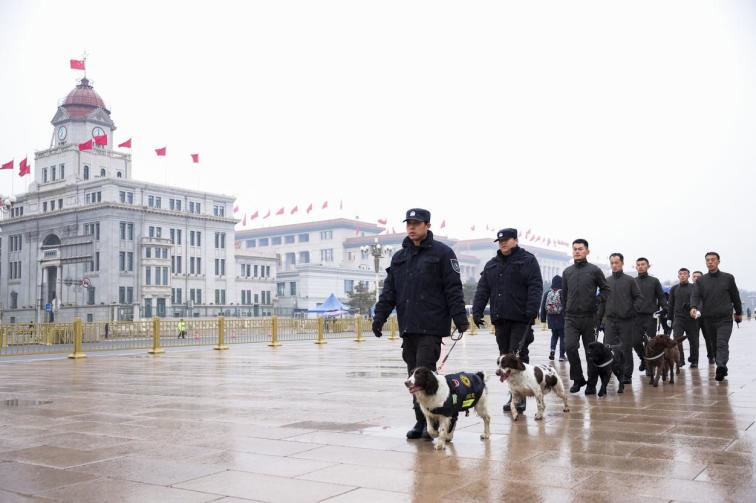
On March 11, 2025, the CCTV building located in the central district of Beijing was enveloped in smog. (Adek Berry/AFP via Getty Images)
[People News] "Don't just focus on appearances; the city is filled with cars and traffic jams everywhere. It seems like everyone is thriving, but in reality, many are under tremendous pressure... Often, it's not about earning hundreds of thousands annually, but rather being in debt for hundreds of thousands."
What is really happening in Beijing? This capital city of China still boasts towering skyscrapers and busy streets, but behind this bustling exterior, the lives of ordinary people are becoming more challenging.
Recently, a netizen who has lived in Beijing for many years shared the reality he has witnessed.
He mentioned that many people appear to have good incomes on the surface, but in reality, they are overwhelmed by mortgage payments, credit card bills, and various expenses, with monthly repayments alone exceeding ten thousand yuan. Some large companies are cutting salaries and laying off workers, while small businesses are struggling to stay afloat. There are also individuals who, to avoid credit card defaults, find themselves robbing Peter to pay Paul, relying on online loans and credit cards to manage their finances. While their lives may seem respectable, they are burdened by significant debt.
Another netizen shared the story of a local couple in Beijing who started a small factory. They work tirelessly from dawn until dusk, yet instead of making money, they have accumulated nearly one million yuan in debt.
Many people initially believed that through hard work, they could provide a better life for their families. Who would have thought that after years of effort, they would end up bankrupt and in debt?
Netizens express that today, some of the most indebted individuals are precisely those honest, hardworking people. This sentiment is truly heartbreaking.
Beijing, once seen by countless young people as a 'dream-building city', has experienced a dramatic decline in its resident population aged 20 to 29, which has nearly halved over the past decade. Ten years ago, Beijing was the only city in China with a young population exceeding 4 million. Now, that figure has fallen to just over 2 million.
A 54-year-old internet user shared that he moved to Beijing at 17 and has lived there for over thirty years, changing jobs multiple times and witnessing the city's rapid development. However, he now finds himself advising young people to leave as soon as possible.
Why is that?
The cost of living in Beijing has become prohibitively high, commuting times are excessively long, work pressure is mounting, and salaries are no longer as appealing as they once were.
In the past, many young people arrived in Beijing with dreams, hoping to establish their own paths. Today, even long-time residents who have lived there for decades are beginning to tell young people not to waste their time.
Additionally, the latest economic data released by Beijing indicates troubling trends.
On November 17, the Beijing Municipal Bureau of Statistics reported that in the first ten months of this year, the total retail sales of consumer goods in the city fell by 2.1% year-on-year, with automotive product sales plummeting by 20.7%.
What does this signify?
It indicates a decrease in the number of consumers and a reduction in spending. This decline is particularly pronounced in the sales of large items like cars.
Now, let’s examine the real estate sector.
In the first ten months of this year, the area of new residential construction in Beijing dropped by 28%, with new residential project areas decreasing by 33.3%. Developers are no longer willing to build houses in large quantities as they did in the past, and related industries such as construction, renovation, and building materials are also feeling the impact.
The general public is hesitant to spend money, which makes it challenging for businesses to thrive; when businesses struggle to earn profits, they may shut down and lay off workers. As jobs disappear and incomes shrink, people become even more reluctant to consume. If this trend continues, it will lead to a vicious cycle.
Beijing, as the capital of China and one of the cities with the highest concentration of resources, is now experiencing significant pressure on both consumption and real estate. How can the lives of ordinary citizens remain unaffected?
Previously, there were numerous reports from Shanghai about many businesses closing and a downturn in commerce. Now, looking at Beijing, both of China’s most vital cities are facing economic and livelihood challenges. What hope is there for the residents of other cities?
(People News first published)
△





News magazine bootstrap themes!
I like this themes, fast loading and look profesional
Thank you Carlos!
You're welcome!
Please support me with give positive rating!
Yes Sure!