
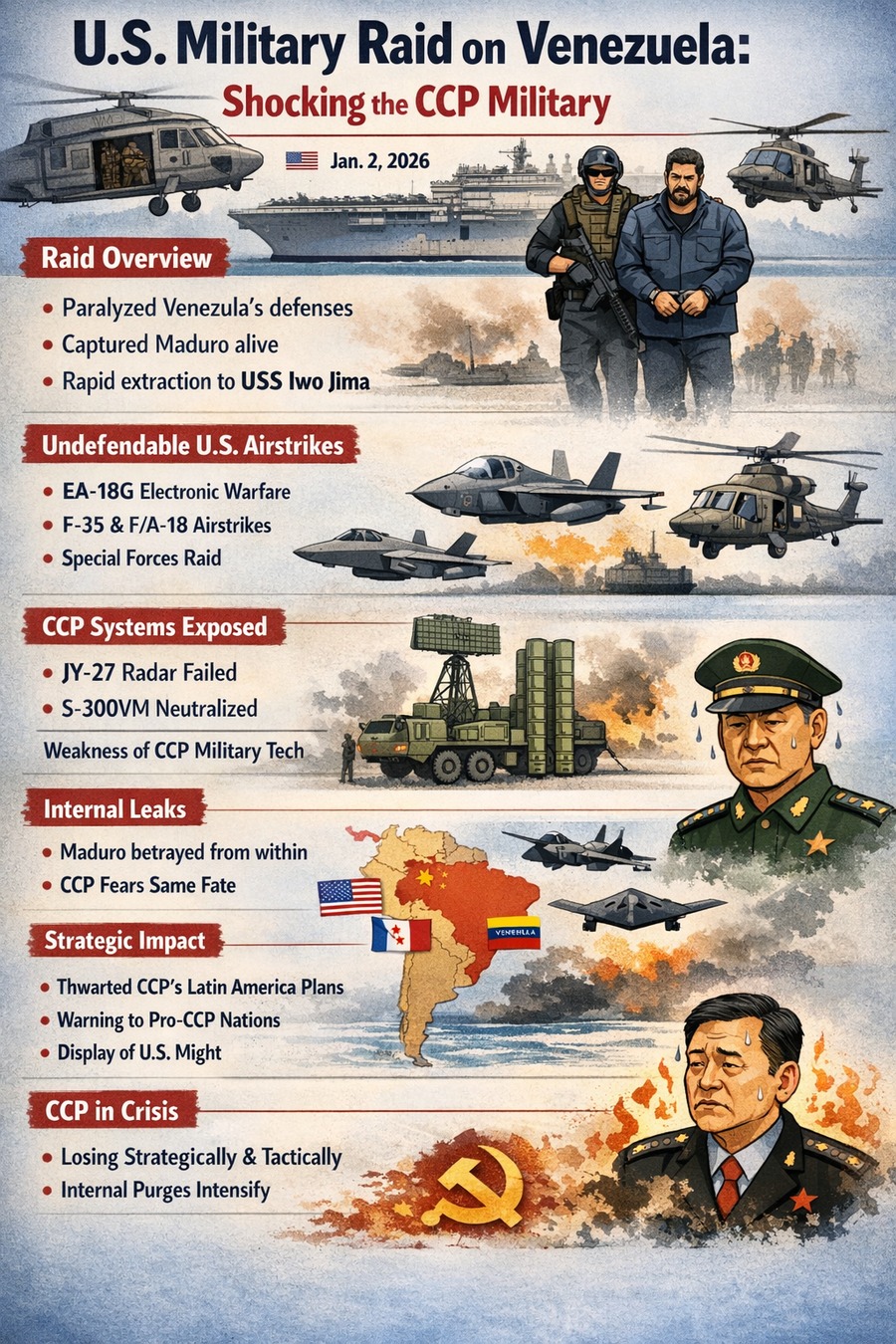
The Real Battle Situation Makes the CCP Military Gasp in Shock
[People News] The U.S. military’s nighttime “Operation Absolute Resolve” on January 2 was equivalent to a “black tiger ripping out the heart”: it first paralyzed or destroyed Venezuela’s defense systems and successfully captured Maduro. This made the CCP military gasp in shock once again. If the CCP were to start a war in the Taiwan Strait, the U.S. military would very likely paralyze most of the CCP’s combat capabilities and simultaneously carry out a decapitation strike. The CCP’s top leadership is not only facing yet another defeat in its confrontation with the United States, but also has to be even more worried about enemies from within.
Undefendable U.S. Airstrikes
Several days before the U.S. military’s surprise raid on Venezuela, on December 29 the CCP conducted an encirclement military exercise around Taiwan. As a result, the KJ-500 airborne early-warning aircraft, the Y-20 tanker, and the J-16D electronic warfare aircraft were all locked onto by Taiwan’s F-16 fighter jets and publicly exposed, revealing many vulnerabilities.
A few days later, U.S. EA-18G electronic warfare aircraft were deployed and likely paralyzed Venezuela’s radar and communications systems. F-35 and F/A-18 fighter jets likely carried out airstrikes on Venezuelan military targets, including air defense missile systems. U.S. helicopters carrying special operations forces raided Maduro’s residence, eliminated his guards, captured him alive, and rapidly returned to the USS Iwo Jima amphibious assault ship.
Venezuela’s military strength is limited and cannot contend with the U.S. military, but it does possess Russian-made Su-30 fighter jets and S-300VM air defense missiles. The CCP also provided JY-27 VHF radars, claiming they can detect stealth aircraft more than 350 kilometers away. If these systems had truly worked, the U.S. operation to capture Maduro could not have gone so smoothly.
However, not only may Maduro have been deceived by the CCP, the CCP itself may also have been deceived by its own propaganda. Facing the imminent arrival of U.S. forces, it still gambled that the U.S. operation would fail—or that the U.S. would not dare to act.
U.S. F-22 and F-35 fighter jets had been deployed in advance in Puerto Rico, less than 900 kilometers from Caracas, Venezuela. When the aircraft approached within 300 kilometers of Venezuela, the CCP’s JY-27 VHF radar should theoretically have been able to detect them. In reality, U.S. aircraft moved as if through unguarded territory.
Venezuela’s Russian-made S-300VM air defense system, which overall performs somewhat better than the earlier S-300PMU-1 imported by the CCP and the S-300PMU-2 imported by Iran, has a radar detection range of about 250 kilometers. Deployed inland, more than 100 kilometers from the coastline and Caracas, it should have been able to detect fourth-generation fighter jets within 150 kilometers of the coast. Yet it also failed to function and instead was paralyzed or destroyed.
CCP Equipment Exposed Again
The CCP’s JY-27 VHF radar, touted as being able to integrate with the S-300 air defense system, failed in real combat.
VHF radar is not particularly advanced—the earliest radars in the world were VHF radars, which later evolved into more precise systems with shorter wavelengths. The CCP’s revival of VHF radar can only be considered a reluctant measure to counter stealth aircraft, but its accuracy and reliability have been exposed in real combat.
This is not the first time CCP systems have been exposed in actual warfare. In June 2025, Israel carried out large-scale airstrikes on Iran and quickly paralyzed Iran’s S-300 air defense system. The CCP-provided JY-10 air defense command system supplied to Iran was also widely discussed. At the time, mainland Chinese media defended it, arguing that Iran lacked sufficiently efficient early-warning radar systems as its “eyes,” and that air defense missile responses were slow. The JY-10 was merely the “brain” that commanded and coordinated air defense missile systems and early-warning radars, and did not have the capability to directly intercept missiles or aircraft.
This time, Venezuela had the CCP’s JY-27 VHF radar, yet it still failed to serve as the “eyes” of an early-warning radar. This means that once the CCP starts a war in the Taiwan Strait and confronts the U.S. military, it will be difficult to defend against U.S. airstrikes. U.S. electronic warfare aircraft would paralyze the CCP’s radar and communications systems. Aircraft at CCP coastal airbases might be destroyed on the ground before even taking off, leaving them unable to contest air superiority around the Taiwan Strait. With fleets losing air support, the CCP’s Taiwan invasion operation would descend into chaos from the very beginning.
U.S. Military’s Integrated Warfare Capability at Full Throttle
According to U.S. Chairman of the Joint Chiefs of Staff Dan Caine, “Late Friday night, more than 150 aircraft took off from 20 different bases across land and sea in the Western Hemisphere,” including “helicopters carrying evacuation forces that flew to Venezuela at an altitude of only 100 feet (about 30 meters) above the water.”
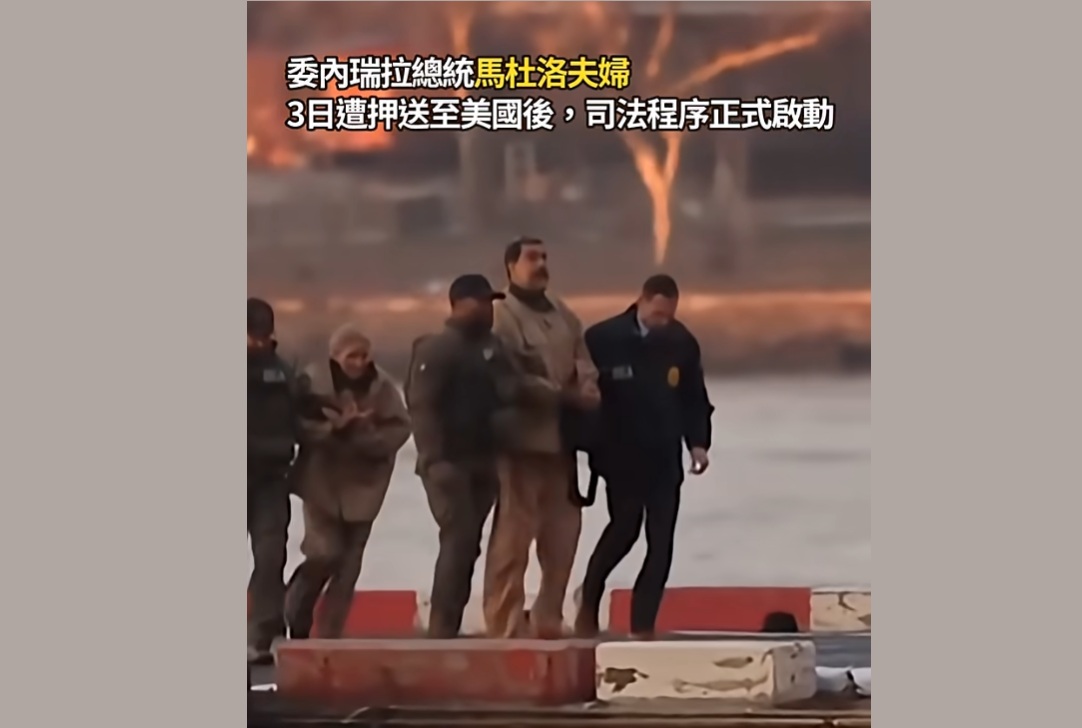
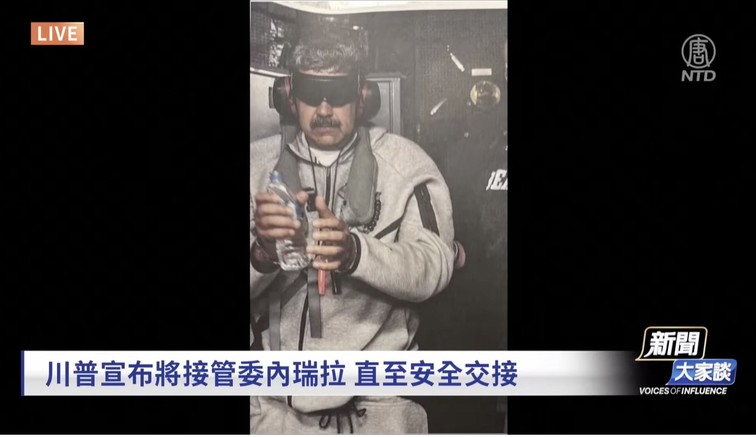
Although he did not reveal further details, it can be broadly inferred that EA-18G electronic warfare aircraft launched from the USS Gerald R. Ford first paralyzed Venezuela’s radar systems. F-35 and F/A-18 fighter jets then conducted precise point strikes, destroying air defense systems such as the S-300 and bombing barracks near Maduro’s residence. U.S. helicopters took off from the USS Iwo Jima amphibious assault ship, carrying special operations forces that flew into Caracas at ultra-low altitude, raided Maduro’s residence, killed the guarding forces, swiftly captured Maduro alive, and quickly returned to the amphibious assault ship. Maduro was then sent to Puerto Rico and transferred overnight by transport aircraft to New York.
F-22 fighter jets and E-2 early-warning aircraft likely maintained aerial patrols, while two B-1B bombers, each carrying 24 missiles or bombs, loitered in preparation for a second round of large-scale bombing, but ultimately did not participate. U.S. destroyers and submarines may also have been ready to launch Tomahawk cruise missiles, but as the operation progressed smoothly, further attacks were canceled.
On January 3, 2026, at La Carlota Air Force Base in Caracas, Venezuela’s capital, a burned-out missile interceptor vehicle was seen. (Juan Barreto/AFP via Getty Images)
The U.S. military likely also carried out cyberattacks, cutting off Caracas’s power supply and communications, leaving most residential areas in darkness. Military facilities and key departments that activated backup power supplies instead became more easily identifiable targets in the night.
U.S. special operations forces are estimated to have infiltrated Venezuela earlier, gathering intelligence, confirming Maduro’s whereabouts, guiding targets for airstrikes and raids, possibly participating in cutting power grids and communications, and finally assessing battle results.
The raid on Maduro’s residence may have been jointly carried out by special forces that had infiltrated earlier and those inserted by helicopters that night. Before the helicopters landed, advance teams likely breached the doors first. Maduro’s guards had no time to issue warnings and were eliminated. The helicopters provided additional fire support and rapidly completed the extraction.
Chairman of the Joint Chiefs of Staff Caine said, “This was a mission involving coordination among all military services and intelligence agencies.”
Compared with the U.S. airstrikes on Iran’s nuclear facilities in June 2025, this raid on Venezuela was far more complex, demonstrating an unmatched level of integrated warfare capability.
Internal Leaks
U.S. special operations forces built a mock-up of Maduro’s residence months in advance for training, indicating that someone close to Maduro betrayed him—reportedly most likely guards from Cuba, or possibly even his vice president.
This undoubtedly makes the CCP leadership even more alarmed. The greatest threat to a dictatorship actually comes from within. Personnel from the Central Guard Bureau or staff within Zhongnanhai could provide intelligence to the United States, and political rivals might also use others to eliminate opponents. As a result, purges within the CCP military will further intensify, and Zhongnanhai will be gripped by panic.
The United States captured Maduro under the pretext of anti-drug enforcement and did not declare war on Venezuela, and the Venezuelan regime subsequently bowed its head quickly. If the CCP were to recklessly start a war against Taiwan and make the U.S. its enemy, then U.S. decapitation strikes against the CCP would become a wartime method. This has deterred the CCP leadership and likewise represents a form of strategic clarity.
Far More Than Just Drugs and Oil
The CCP’s use of Latin America to traffic drugs into the United States is one form of its unrestricted warfare against the U.S. The United States naturally seeks to block this, and after capturing Maduro, is also prosecuting him under anti-drug charges.
Venezuela has the world’s largest oil reserves, and the United States likewise does not want them to fall under CCP control. However, less than a year after Trump took office, the U.S. had already successfully lowered oil prices by easing domestic oil production. What the U.S. needs more is that Venezuela not fall under the control of hostile forces—this was clearly stated in the U.S. National Security Strategy released by the White House at the end of 2025.
The CCP does not urgently need Venezuela’s oil, and it knows that once a war breaks out, supply routes from Venezuela could easily be cut off. The CCP’s goal is to turn Venezuela into a major base in South America that could, in the future, militarily threaten the U.S. mainland.
The CCP has already deployed air defense radars in Venezuela and supplied large quantities of weapons, but so far it has not dared to provide medium-range missiles, fighter jets, or bombers—systems that could directly threaten the U.S. mainland. The United States clearly understands the CCP’s ultimate objective and does not want to wait until a Cuban Missile Crisis–like scenario occurs before responding. Capturing Maduro was meant to reverse Venezuela’s pro-CCP, anti-U.S. policy.
To capture Maduro, the U.S. military carried out only limited, precise airstrikes. It did not actually want to plunge Venezuela into chaos, but rather to force Venezuela to change course by eliminating the CCP’s top proxy there, ensuring it does not become an anti-U.S. base for the CCP in the future. Judging from current developments, the effect appears immediate. The U.S. military did not withdraw quickly but continues to press close. If the current Venezuelan regime refuses to comply, further strikes remain possible.
On January 4, 2026, a U.S. F-35B fighter jet carrying external weapons took off from José Aponte de la Torre Airport in Puerto Rico. (Miguel J. Rodriguez Carrillo/AFP via Getty Images)
The U.S. military’s “Operation Absolute Resolve” shattered the CCP’s fantasy of strategic布局 in South America and also warned countries that align with the CCP. They not only saw America’s resolve and military strength, but also saw the CCP’s weakness beneath a strong exterior.
The CCP lacks the strength to challenge the United States and does not dare to do so openly. This will undoubtedly dishearten some countries that are unfriendly toward the U.S. If politicians in those countries choose to side with the CCP and oppose the U.S., their fate will be the same as Maduro’s. At critical moments, the CCP will fail to deliver, capable at most of belated verbal bravado.
The CCP has lost both strategically and tactically. What the CCP leadership now worries about most is how to clean up the mess, how to save their own lives, and how to carry out further internal purges.
(The Dajiyuan) △




News magazine bootstrap themes!
I like this themes, fast loading and look profesional
Thank you Carlos!
You're welcome!
Please support me with give positive rating!
Yes Sure!