

The latest photos of Iran’s resistance, resembling a battlefield, with fires blazing in many places. (Image source: X screenshot)
[People News] The wave of protests by the Iranian people, sparked by economic demands, has now evolved into a comprehensive challenge to theocratic rule, pushing this “thorny nation” in the Middle East—long anti-American for decades—to the brink of regime change. The Iranian government’s violent crackdown on protesters has drawn widespread international condemnation. In contrast, the Chinese Communist Party (CCP) has repeatedly emphasized “non-interference in internal affairs,” has not condemned the Iranian authorities’ bloody repression, and has not expressed support for the demonstrators. So what exactly is the relationship between the CCP and Iran? Will the CCP intervene in Iran’s situation?
On January 13, Iranian protests entered their 17th day. Iran International reported that, based on a review of various information sources and medical data, at least 12,000 people were killed in the Iranian massacre that occurred over two consecutive nights on January 8 and 9. This was the largest massacre in Iran’s contemporary history.
Nio Berg, an Iranian Jew, posted the latest resistance photos on the X platform, showing that Iran resembles a battlefield, with fires blazing in many areas.
Berg also reposted a message from a doctor in Mashhad, Iran. The doctor said the situation was extremely critical; they had set up a temporary operating room in a garden and performed emergency surgeries on many injured revolutionaries.
The Iranian government’s massacre of civilians has drawn strong international condemnation. German Chancellor Merz, who is visiting India, stated, “We are witnessing the last days and weeks of this regime.”
European Commission President Ursula von der Leyen stated on January 12 that the entire Islamic Revolutionary Guard Corps had been placed on the human rights sanctions list. In countries such as France, Germany, and the United Kingdom, marches appeared in support of Iranian protesters, calling for international intervention to promote regime change.
On January 12 local time, Iranian authorities announced that beginning January 14 they would carry out S sentences on those involved in recent protests. The Iranian government hopes to quell the protests within two days, and therefore is using such brutal measures to force demonstrators to stop protesting.
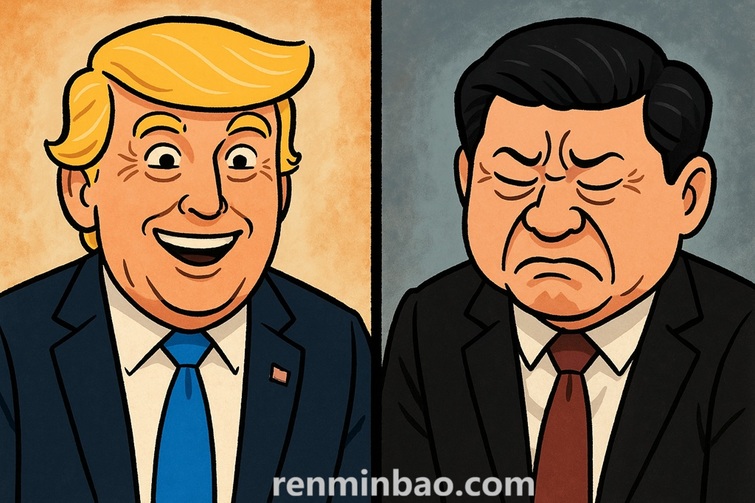
That afternoon, Trump announced on Truth Social that, effective immediately, any country that conducts commercial dealings with Iran will be subject to a 25% tariff on any and all commercial activities with the United States. China will be the first to be affected. The CCP Ministry of Foreign Affairs responded the same day, stating it would “defend its legitimate rights.”
The Wall Street Journal pointed out that these latest sanctions could jeopardize the trade truce reached by Trump and Xi Jinping in South Korea last October, and could even affect the planned Trump–Xi meeting scheduled for this spring.
The U.S. State Department and the Virtual Embassy issued a comprehensive warning to U.S. citizens in Iran, demanding that they “evacuate immediately.”
Does the issuance of the U.S. evacuation order mean that military strikes will soon follow?
On January 13, Trump posted on Truth Social encouraging the brave Iranian protesters. He wrote: “Iranian patriots, keep protesting—take back your regime. Remember the names of those murderers and abusers. They will pay a heavy price. Before the senseless killings stop, I have canceled all meetings with Iranian officials. Aid is on the way.”
U.S. Senator Lindsey Graham stated that behind President Trump’s message lies large-scale military, cyber, and psychological warfare. In other words, before the Iranian government continues its mass killings of demonstrators, the window for U.S. military strikes on Iran is already very short.
As Trump plans to use force against Iran, Foreign Ministry spokesperson Mao Ning once again repeated the familiar line of “opposing interference in other countries’ internal affairs and opposing the use of force or the threat of force in international relations,” yet has never opposed the Iranian government’s use of force against its own people.
The CCP does not condemn Iran because it has a close cooperative relationship with it. Let us take a look at just how solid their friendship really is.
In fact, the CCP has been laying out a long-term strategy in Iran for nearly a decade. In 2016, after a 14-year gap, a Chinese leader again visited Iran, and Xi Jinping met with Khamenei. At that time, the two sides were not yet strategic partners, but Beijing wanted to make a major move in Iran. By April 2021, China and Iran signed a 25-year cooperation plan worth $400 billion. Beijing not only promoted Iran’s entry into the “BRICS” bloc despite its international isolation, but also assisted Iran in joining the Shanghai Cooperation Organization. Beijing has become Iran’s largest trading partner and is estimated to purchase about 90% of Iran’s oil. In return, Beijing supplies this country—sanctioned for its nuclear program—with goods that other countries no longer export, such as automobiles, consumer goods, and electronic products, including “dual-use items” that can be used for both civilian and military purposes. In 2024, bilateral trade reached $13.37 billion.
If Khamenei were to step down, it would not only mean that Beijing loses an important energy partner; more crucially, China’s oil imports from Iran are settled in renminbi. Once a pro-American government takes power, the strengthening of the petrodollar system would also weaken the process of renminbi internationalization.
So, would Beijing therefore militarily intervene in Iran’s turmoil? Associate Professor Cheng Chin-mu of the Department of Diplomacy and International Relations at Tamkang University told Taiwan’s Central Broadcasting System that, from an overall geopolitical perspective, Iran is extremely important to China. The CCP cannot tolerate the emergence of a pro-Western regime along the Middle East–Central Asia corridor, and therefore the CCP will definitely take action.
Cheng Chin-mu also observed that after the U.S. “Midnight Hammer” operation bombing Iranian nuclear facilities last June, the CCP had already transported large quantities of related materials to Iran. The mercenaries and drones used by the Iranian government to suppress the people this time are likely inseparable from the CCP.
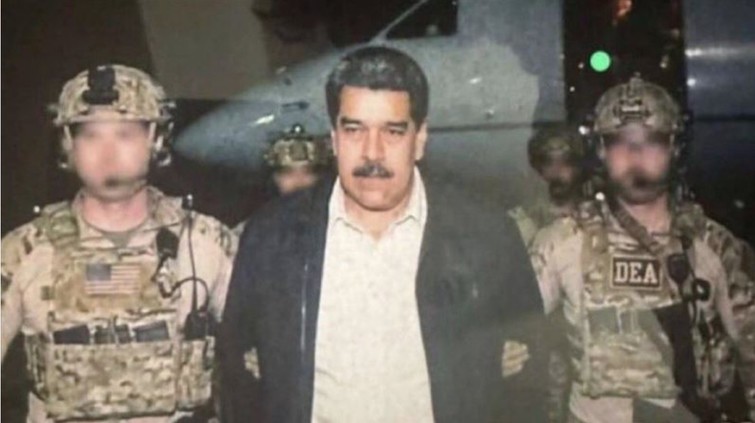
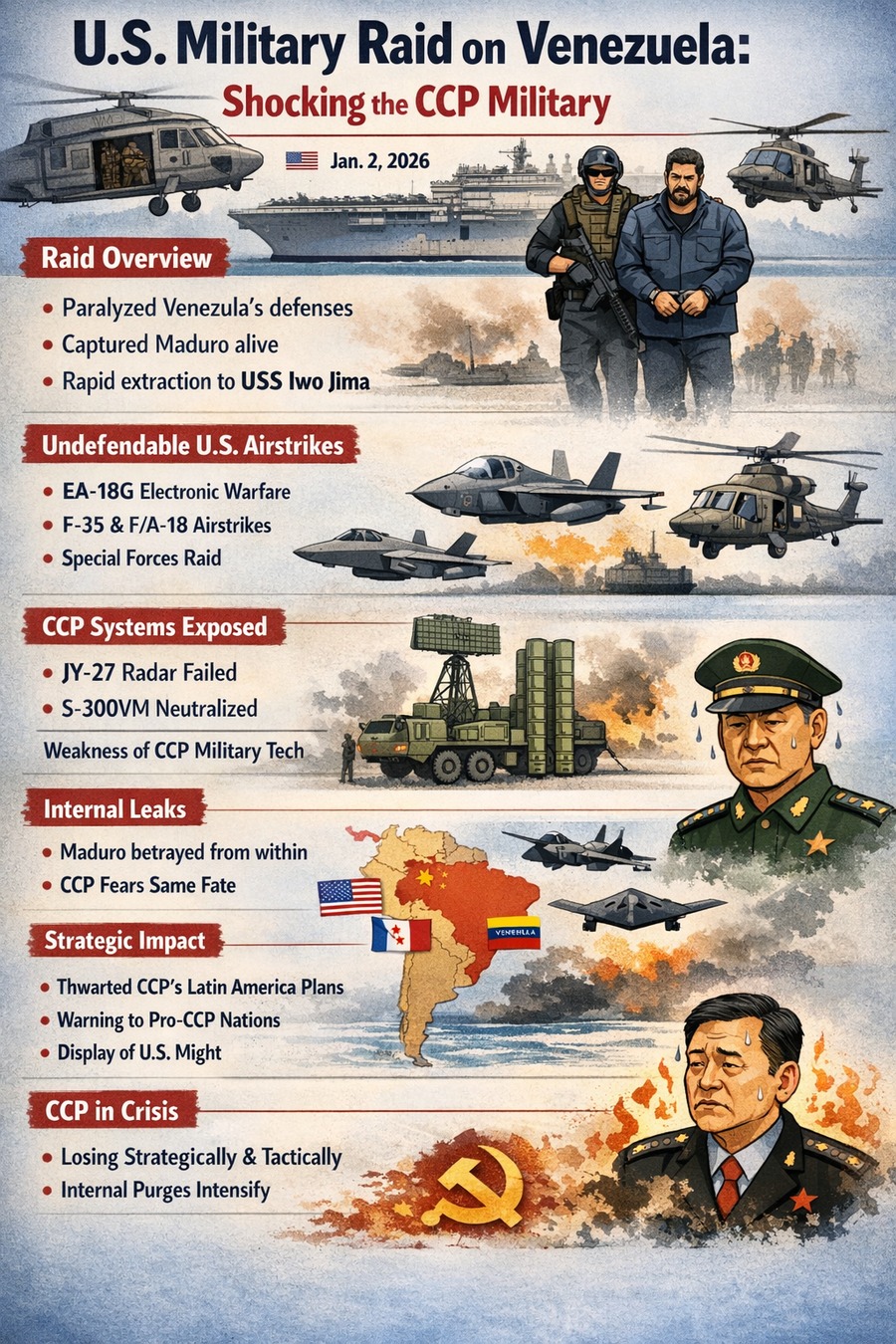
Just like three hours before Venezuelan President Maduro was arrested, Beijing’s special envoy had just met with him to express support. January 8 marked the 10th anniversary of the establishment of the comprehensive strategic partnership between China and Iran. An Iranian delegation led by the Supreme Leader’s economic adviser came to Beijing, where Peng Qinghua, Vice Chairman of the Standing Committee of the National People’s Congress, and Liu Haixing, Minister of the CCP’s International Department, met with the delegation.
According to CCP party media reports, “the two sides exchanged views on jointly implementing the consensus reached by the two countries’ leaders, deepening exchanges and cooperation in various fields, and promoting the development of China–Iran relations.”
At a time when Iran is engulfed in chaos and the regime is teetering, the two countries have not forgotten to maintain ties and deepen relations. Is Iran really here to talk about the economy? The Iranian delegation’s visit to Beijing was more likely to seek experience and support from the CCP on how to suppress the people. But can the CCP really protect its good friend Khamenei?
The X social media account “Wall Country Absurd Characters” recently released a satirical children’s song mocking Xi Jinping, titled Xi the Cook Looks for Friends, which has been spreading widely online.
The lyrics say:
“Looking, looking for friends,
Found a ‘good friend,’
Venezuela’s Maduro,
Just got arrested recently, goodbye!”
“Looking, looking for friends,
Found a ‘good friend,’
Assad and Hasina,
Both have already fled, goodbye!”
“Looking, looking for friends,
Found a ‘good friend,’
Sinwar and Haniyeh,
They’ve already been beheaded, goodbye!”
“Xi the Cook looks for friends,
All fox friends and dog friends,
Take photos and drink some wine,
Not a single true friend. Goodbye!”
“Xi the Cook looks for friends,
All bad guys and harmful friends,
Beheading, fleeing, and arrest,
None can last long. Goodbye!”
The “good friends” of Xi Jinping mentioned in this children’s song—Maduro, former Bangladeshi Prime Minister Hasina, former Syrian President Assad, Hamas terrorist leaders Haniyeh and Sinwar—have all encountered major trouble one after another. It seems that “whoever gets close to the CCP dies” has become a kind of curse. By this logic, will the next one to fall be Khamenei?
(People News exclusive)
△




News magazine bootstrap themes!
I like this themes, fast loading and look profesional
Thank you Carlos!
You're welcome!
Please support me with give positive rating!
Yes Sure!