

[People News]I hadn’t posted in the “Defense Zone” before; I came here because I’d heard of it. Long ago I saw some very classic comments about Premier Wen here, and I couldn’t help but sigh: sure enough, even overseas, the majority of people who grew up under the CCP’s one-dimensional information model still lack the ability to discern news sources and also lack news sensitivity. Under long-term propaganda brainwashing (as well as self-brainwashing and mutual brainwashing), they gradually become assimilated, parroting the same old clichés and repeating what others say, losing the vigilance and motivation to examine and think critically about the “source” of the information that has been poured into their minds.
Usually when people talk about him it’s always the same few things: “best actor,” family corruption, the four-trillion stimulus, the so-called betrayal of Zhao Ziyang and Hu Yaobang, and that calling for reform was just acting.
In fact, not only can I refute every single one of the above with a large amount of material, I can also knock down the so-called “best actor” claim with the simplest logical inconsistency—an inconsistency that is precisely developed out of the labels above: if the degree of his family’s corruption were really, as some people claim, among the CCP’s greatest mega-corrupt figures, then calling for reform would be equivalent to sending himself and his family into the tiger’s mouth; and if he were a fake reformist, he could have simply joined others in corrupt dealings, colluding and covering for each other—why would he still bother calling for any reform?
The content below may not follow a clear order; I’ll write as thoughts come, but I’ll try to add small subheadings.
Wen’s power was severely constrained
First of all, he was the only high-level figure after 1989/June 4 who openly advocated political system reform. You must know that under the strong obstruction of Jiang’s faction and conservative forces such as the “red second generation” at the time, making such statements so openly (even if it were just for show) would mean touching the Party’s unified line and immediately being isolated. In fact, as someone with absolutely no faction, he was isolated from his first term onward; there were even reports that before he took office he was attacked to the point of nearly resigning and leaving politics. One common misconception is that he and Hu Jintao were both from the Communist Youth League faction—this is not the case. His career began in the Gansu Geological Bureau; he never worked in the Youth League system, and was later promoted by Song Ping, Sun Daguang, Hu Yaobang, and others—Sun Daguang was his true benefactor. Hu Jintao was Deng Xiaoping’s designated successor across generations; Wen Jiabao was not. Wen was someone without a faction, and he never formed cliques. Later, when discussing why he survived three administrations without falling, I’ll expand on this topic again.
Jiang Zemin held the chairmanship of the Central Military Commission, and also expanded the Standing Committee from seven to nine members, further spreading power around and weakening Hu and Wen’s authority. Wen was the weakest premier in terms of power at the time. Since Zhu Rongji offended bureaucratic interest groups, the premier’s real power had been gradually shrinking (and Zhu was endorsed by figures like Deng and Chen, meaning his backing was much stronger than Wen’s). The military, diplomacy, finance, security, education, etc. could not be directly managed, and in other areas he could intervene in, the power to appoint and remove personnel was mostly not fully in his hands either. Apart from Hu and Wen, almost all were Jiang’s people or had connections to him. Even in the second term, with Youth League figures like Li Keqiang joining, Wen still belonged to a tiny minority; the military (Jiang), politics-and-law (Zhou Yongkang), propaganda (Li Changchun) were all Jiang’s confidants【As an aside: think about it—during the Hu-Wen era, Yu Jie could actually write two books attacking the top two leaders of the day, and still not be dealt with, then swagger off to the U.S. It’s impossible that no one was protecting him behind the scenes. In fact, people had long suspected his identity: was Yu Jie a combination of Fu Zhigao plus Yu Zecheng? One can only say it’s not unreasonable. I guess many people only know “Best Actor,” but don’t know he also wrote “Rivercrab Emperor Hu Jintao” and a book about Xi. When he wrote about Xi he was already in the U.S.; otherwise his end would have been tragic. These three also happened to be the ones Western media exposed and attacked during the anti–Bo Xilai affair, while Yu never wrote books criticizing Jiang, Bo, Zhou, etc., which shows how odd his stance is—on this issue he mysteriously aligned his gun barrel with far-left figures like Zhang Hongliang and Li Yang】.
Wen dared to raise political reform and dared to be out of tune with all other high-level figures within the system because he was relatively confident in his own cleanliness. In fact, for several years before the 2012 New York Times revelations, Wen repeatedly and sternly criticized and emphasized the corruption problem in meetings; as soon as he took office he forcefully launched an “audit storm,” and at the time Li Jinhua’s line—“Even the premier cannot interfere with audits”—exposed Wen as the biggest backing behind the audit storm. Political reform and anti-corruption were extremely difficult in the Hu-Wen years also because vested interest groups had long become entrenched; as soon as Wen made even small reform or anti-corruption moves, he was hit back. Right after taking office he pushed the “36 Articles for the Non-Public Sector,” yet conservative forces within the Party colluded with leftist forces to promote “protecting state-owned assets” and “the state advances, the private retreats,” launching a fierce attack in the arena of public opinion against economic reform, until the 2007 Property Law came out and market-oriented reform only then showed a weak victory. Monarchist forces within the Party, princelings, vested interest groups, old leftists, plus Mao-left strongholds like Utopia, together with the propaganda apparatus, continuously attacked Wen. He frequently fought with the aristocratic-bureaucratic groups, but because of his weak position—no faction and no backing—he was isolated and obstructed. On the eve of the 18th Party Congress, 1,644 far-left retired cadres and scholars even cooked up a ten-thousand-word anti-reform memorial demanding Wen Jiabao’s removal: the far-left “bombarding” the 18th Congress. The earliest rumors that could be found about his family’s corruption actually started when he hadn’t even become premier yet; throwing out those materials then was precisely to block his promotion—and already included the widely circulated rumors that his “wife bought jewelry in Taiwan for several million” and that “Xu Ming is his son-in-law.” During the Hu-Wen era they tried three times to push an “Sunshine Act” and couldn’t; WikiLeaks shows Hu and Wen strongly advocated asset disclosure but were blocked by the vast majority of the top Standing Committee. Interestingly, in the era dubbed the most “dark and corrupt” in officialdom, news media still kept reporting progress on the Sunshine Act and asset declaration system; yet after Xi took over, there was suddenly no sound at all. The densest online discussions of asset disclosure are from the first ten years; 2013–2014 became the last echoes. Southern Weekly once reported, guessing there would be a full breakthrough in 2014; the result was not only that officials never mentioned asset disclosure again, but Southern-media outlets also declined under high-pressure censorship.
Why Wen could become premier
Let me add: back then, he could become premier mainly because his own abilities were outstanding and his achievements made other candidates look inferior, plus Zhu Rongji strongly protected him—there is material to support this. Zong Hairen has a book, “The Fourth Generation,” written using Organization Department materials to analyze CCP top figures; and there are also many old online news items that can corroborate this. The “four transformations” cadre mechanism in the Deng–Hu new era allowed a technically competent, practical doer like Wen to stand out; he was one of the rare graduate-degree holders in the Party, genuinely so before the Cultural Revolution. At the 16th Congress, Jiang’s man Wu Bangguo competed with Wen for the premiership; Wen, because of his low-key steadiness, diligence, and excellent performance, as the fourth vice premier in Zhu’s cabinet, was assigned the most projects by Zhu—agriculture, rural affairs, environment, assisting with development planning and financial reform, poverty alleviation, etc., about ten to twenty departments or institutions. From that time Wen was responsible for agriculture; during Wen’s premiership, the agricultural tax was abolished and agriculture achieved nine consecutive years of bumper harvests. Wen also gradually shifted from initial Party affairs work to self-studying agriculture and finance, assisting Zhu with WTO accession; the book also mentions Zhu’s high regard for Wen.
Recommended some media articles from before Wen took office: “Wen Jiabao: An Outlier in China’s Political Arena,” “Premier Candidate Wen Jiabao Takes the Baton—A Cautious Career,” “American Scholars Talk About Wen Jiabao,” and especially this: Zhang Weiguo: “Why the ‘Consensus’ of Optimism About Wen Jiabao?” (published in 2002). These were all published before Wen took office; a quick browse shows that even before becoming premier, Wen had already been treated as an outlier in CCP politics, with assertions such as:
“Unlike Hu Jintao and other CCP political leaders, it was not Wen Jiabao looking for the premiership; it was the premiership that found Wen Jiabao,” “Wen Jiabao not only has long experience in wielding core power, but for nearly 10 years has been known for solving tough problems; apart from Deng Xiaoping’s personal designation, he possesses almost all of Hu Jintao’s advantages, and where Hu is weak, Wen’s ability to handle affairs has been fully tested by practice—his ‘tumbler’ (always-upright) experience proves that the top leader he ‘served’ actually could not do without him!” “In the CCP’s reverse-selection talent mechanism, Wen’s ability to stand out is truly an outlier.”
“Wen has the ability to see the essence through phenomena and to command a vast bureaucratic system. When convening cabinet meetings, Zhu Rongji would always have Wen Jiabao deliver the concluding summary before the meeting ended. Few can match his ability to turn complex problems into clear policy recommendations.”
“Wen Jiabao’s talent is deeply appreciated by Zhu Rongji, so after becoming a State Council vice premier in 1998, Zhu quickly placed him in charge of the two toughest areas, finance and agriculture. Because Wen is approachable and unlike Zhu’s ‘irascible’ temperament, his prestige within the State Council was even higher than Zhu’s.”
Democracy activists and current-affairs commentators such as Wu Jiaxiang and Gao Xin also wrote about Zhu’s praise for Wen’s talent and character: “When Zhu steps down he will strongly push Wen Jiabao to succeed, because Zhu trusts Wen’s character even more than his talent. Zhu always felt great pressure from financial work, but after Zhu had Wen concurrently serve as head of the Central Financial Work Commission, China’s financial situation continued to improve. In 2000, global stock markets were weak, yet China’s stock market seemed unhurt. Therefore, no matter which faction is in charge, everyone knows this: Wen is harmless to people and useful for affairs.” Hong Kong’s “Wen Biography” believes Wen is gentle in temperament as a person and tough and forceful in doing things.
Li Cheng, research director at the Brookings Institution, also wrote in “China’s Leadership Midterm Contest”: “Before becoming premier, Wen already had extensive administrative management experience: coordinating power transitions, commanding the 1998 flood-fighting actions, overseeing nationwide rural affairs, supervising financial and banking reforms. Wen’s ability as an excellent manager and his role as a coordinator of political alliances explain his legendary survival and success.”
At the same time, Wen’s becoming premier also involved factional compromise: after Deng’s death, all sides hoped for a weak premier who would be easier to balance. At that time Wen was actually suppressed by Jiang Zemin and Li Peng (Li Peng disliked Wen, thinking he was Zhao Ziyang’s “lackey”; because of Li’s one-sentence suppression, Wen spent five extra years as an alternate member; moreover, Jiang’s ingratitude is revealed in many places in the books of Zhao Ziyang and Li Rui—after Jiang came from Shanghai to the center, it was Wen who guided him in getting familiar with various elders and affairs; Zong Hairen even wrote: “Wen Jiabao, as far as Jiang Zemin is concerned, even if he had no merit he had toil—Wen was Jiang’s guide into Zhongnanhai”); in addition, there is material showing Zhu Rongji appreciated Wen, saying he would only serve one term and then retire but the next term must be Wen. This shows how absurd the online rumor that “Zhu criticized Wen as the Party’s biggest hypocrite” is—upon verification it came from a certain Hong Kong tabloid and is a lone source.
During his vice-premier term Wen had already visited more than 1,800 of China’s 2,500 counties, and WikiLeaks shows that when inspecting, he often did not take the routes arranged by local officials, but tried every way to go into farmers’ homes to talk with them and ask about the real situation—something that greatly troubled local officials. WikiLeaks has quite a bit of information from the Hu-Wen years; once you’ve read a bit of it, you won’t doubt Wen’s sincerity and political character at all—he quietly did the most, took the most scolding, yet never talked back: “From WikiLeaks, who among CCP leaders truly cared about the country and the people.” Wen was a practical doer. In “The Fourth Generation” and many old news items, officials at all levels often mention Wen being modest and without airs, rarely hanging “the Party,” “Jiang core,” and other eight-legged jargon on his lips; after becoming premier he still kept that style, speaking in plain words and real talk, always mentioning democracy and freedom and respect for the individual, and when talking to children he would speak only of loving the country and never of loving the Party. Cai Xia once mentioned in a video that the CCP is good at wrapping itself in Marx and Engels but rarely mentions the Communist Manifesto’s emphasis on the spirit of individual freedom: “The free development of each is the condition for the free development of all.” The only time it seems this line was fully spoken aloud by a top leader is Wen—namely in his 2006 talk with writers and artists, where he quoted it in full: “Talking Heart-to-Heart with Writers and Artists.” This was an off-the-cuff speech without a script, clearly structured, widely referenced, broad in thought, far-sighted, giving a glimpse of Wen’s learning—especially his literary ability. Writer Sha Yexin praised the sincerity of Wen’s speech and Wen’s deep reading, saying even he, a man of letters, was impressed, in a talk at the Hong Kong International PEN. Wen was genuinely friends with many intellectuals and often corresponded with them; many writers and artists also knew Wen loved reading and often gifted him their works.
For decades Wen had almost no rest days, worked fifteen or sixteen hours a day and slept only four hours. Almost everyone who talked about him mentioned he was a workaholic. The author of the recently published “Red Roulette” also wrote that Wen buried himself in work and had almost no demands in life; whatever the chef cooked he would eat, and many recollections also say his meals were very simple and he didn’t want people accompanying him. Hu and Wen were indeed relatively open on some issues: WikiLeaks: Hu and Wen really planned to disclose assets but were opposed by seven Standing Committee members; a Hu office secretary revealed: Hu and Wen were tolerant toward the internet, especially Wen—if the previous term hadn’t had an open-minded figure like Wen maneuvering at the top, the folk liberal camp wouldn’t have had as much space, and public intellectuals (in a positive sense here) wouldn’t have grown so quickly, because just look at what kinds of people were at the top: besides Hu, who also leaned somewhat left and was what Zhao Ziyang called a “system-tamed person,” the rest were almost all left or far-left. Wu Bangguo’s “Five No’s” and today Li Zhanshu’s “Five Firm Oppositions” (opposing Western “constitutionalism,” multi-party competition, separation of powers, a bicameral system, judicial independence) have exactly the same wording—so the real level of freedom of speech in that era wasn’t very different from now. Every time Wen called for reform, far-left websites and the Propaganda Department would publish articles attacking him loudly. Yet Wen still spared no effort to push media freedom, including marketization and promoting online governance (back then people could even ask questions like “When will June Fourth be rehabilitated?”), directly engaging with the public to absorb opinions, and broadly listening to grassroots voices.
Wen’s personality
If you read a few Wen biographies and a large amount of news and interview material, you’ll find Wen was always consistent in word and deed; from childhood he had a caring, warm, gentle personality, and in the Geological Bureau he had already started his people-friendly style. The “best actor” claim is not even worth rebutting; rather, it shows that today’s China can no longer accommodate sincere idealists. “The Fourth Generation” also analyzes his personality thoroughly: “needle hidden in cotton, lifting heavy as though light.” The author believes Wen was a strategic figure—suited to being either the top leader or the second-in-command; with no ambition, able to assist with peace of mind, yet when needed to stand alone, he did not retreat, but was brave and decisive.
This is not false. Many people don’t know that in the 1998 flood-fighting and disaster relief, Wen was the national commander-in-chief of flood control and drought relief; Jiang merely went to the front line to give encouragement, but the one doing real work was Wen. At that time neither Jiang nor Zhu dared order the Jingjiang flood diversion, and they threw the hot potato to Wen. Wen took the command in crisis, staying up for days carefully working through it with water conservancy experts. At night he couldn’t sleep, got up and went door to door in Gong’an County to check whether there were still villagers who hadn’t evacuated the flood diversion area. In the end, under pressure that could have ended his political life, he issued the decision not to divert floodwaters and not to blow the dike, preserving the people’s homes: a professional long article by a Zhihu geography big-V depicts the thrills of the 1998 flood control and Wen’s command. Afterward he told Sun Daguang that at the time he had decided that if the dike collapsed, he would jump into the river and die in office. Many people don’t know these things because he was extremely low-key and didn’t like self-promotion. Now one can only occasionally see locals online mentioning that year and expressing nostalgia and gratitude to him.
Many other things also show his personality of being even more courageous in crises—daring to fight, daring to gamble, daring to take responsibility:
When SARS broke out, both Hu and Wen went to the front line. With the epidemic not yet over, and with no protective gear or security measures, Wen directly interacted with ordinary people; to ease public fear he chose not to wear a mask. He fought on the front line the whole time and even visited Hong Kong. Hong Kong Wen Wei Po reported Wen set “eight firsts” for a central leader’s Hong Kong visit: first time visiting residential homes, visiting hospitals, attending commendation ceremonies, visiting universities, staying in a business suite, visiting the Liaison Office, signing autographs for citizens, and leaving by land route (compare with today—where can you still see Xi’s figure? Not only did he disappear during COVID, he also bragged about personally commanding; after things stabilized he came out wearing a mask, and when people wanted to shake hands he said: special circumstances, so no handshake);
In 1989, when Hu Yaobang died and his ashes were moved out of Beijing to be buried in Jiangxi, Jiang feared being scolded by Deng and ordered no reporting, demanding all Hu’s subordinates not see him off—yet Wen escorted the remains all the way and supported the casket to the burial; in 2011, Wen personally met petitioners in the reception hall of the State Bureau for Letters and Calls and asked ministries and commissions to supervise follow-up, setting a precedent in the 60 years since the founding of the PRC; he even invited petitioners to his own home, and as a result was criticized by the Politburo—someone in the Propaganda Department once angrily denounced Wen as a “maker of trouble,” preferring to protect the people at the expense of the propaganda system;
In the 2008 Wenchuan earthquake he flew to the scene within two hours. He was trained in geology, and from his vice-premier days he also concurrently managed disaster relief; his disaster-survey expertise was second to none. He went to the front line to stabilize morale, mobilize resources, and coordinate unity—he was a true expert and also the spiritual pillar at the quake site. Many reports about him during the quake were suppressed by him; now one can only glimpse his toil in scattered materials. His close photographer and some reporters recorded that during the earthquake he rested only four hours a day for four or five consecutive days; on the first day he barely ate a single bite. At night, despite everyone’s efforts to stop him, he vowed not to leave the disaster area, resting temporarily in the back row of a bus—falling asleep at 2 a.m. and getting up at 6 a.m. to work again, until Hu Jintao came days later to replace him. Wen flew back to Beijing, got an IV drip, and then flew back to the disaster area again. At the quake site Wen demanded to enter the core area no matter what, asking people to airdrop him in; eyewitnesses said Wen expressed dissatisfaction with Jiang’s military and its chief Guo Boxiong. “Selected Works of Hu Jintao” also mentions Hu flew to the scene to support Wen but couldn’t mobilize the main troops, so he could only pull a few thousand from the Chengdu Military Region to walk in and dig by hand, missing the golden rescue window. A WikiLeaks document shows Wen’s criticism of the military enraged the military leadership, who felt he meddled too much (this also fully shows Hu’s weakness, and also explains why Wen couldn’t move political reform—because politics and economics were deeply bound together, and Hu lacked military power; in the CCP, the gun actually commands the Party. Hu and Wen fought back-to-back, and because Hu was politically weak, Wen’s economic reforms were also weak. The State Council is an administrative body, not a legislative one, and cannot independently amend the constitution; for example, a land expropriation law couldn’t pass for seven or eight years—move even a little and vested interests hit back. So how did the four-trillion policy come about, and how much responsibility should Wen bear? An article writes very objectively: FT Chinese—“Revisiting the merits and faults of the ‘four trillion’ ”—in one sentence, politically established goals and politically correct framing always come before consideration of economic risks; as the head of government, the premier must obey the Party).
After becoming premier, the various reform measures Wen promulgated offended many factions within the Party, but the reason he had previously survived three administrations without falling was precisely that he historically did not offend people, had a friendly and democratic style, worked extremely hard, did not form cliques, treated everyone in the Party the same; even toward subordinates he never scolded, and toward superiors he never flattered—he kept a distance, neither too close nor too far. His ability to balance skillfully also shows high political intelligence. I once saw an evaluation of Wen from an insider, who greatly admired him, saying he did things watertight and near-perfect, leaving people unable to find a handle on him.
Wen survived June Fourth and did not fall across multiple administrations
Regarding why he did not fall after June Fourth, there is a lot of material that can corroborate together. Wikipedia can be edited by anyone and is extremely unreliable. Now most people’s “betrayed Hu and Zhao” accusations—one part probably comes from Wikipedia’s adoption of the Li Peng Diary narrative, and another part comes from He Pin’s Mingjing publishing empire’s dozens of magazines and books repeatedly fabricating rumors. Li Peng’s diary contains too much self-whitewashing and smearing of others; Chen Ziming said that the parts about him in that book are all false.
Why Wen did not fall—“The Fourth Generation” uses a detailed six-page analysis of the causes and consequences. The book uses a considerable amount of internal Organization Department materials; the author read Wen’s speech records from various meetings. In short, Wen’s behavior has nothing that can be criticized, and the author’s final conclusion is: “A person who has never made enemies in ordinary times, has a deep mass base, and whose work has never been caught with a handle, is hard to knock down… Wen’s distinctive character traits—needle hidden in cotton, holding back without revealing, lifting heavy as though light, dutiful to the end—enabled him to stand firm across three general secretaries.” In addition, Wu Jiaxiang, who had worked with Wen and was imprisoned after Zhao Ziyang’s fall in June Fourth, analyzed why Wen didn’t fall even before Wen took office; his conclusion was likewise: made fewer mistakes than others, formed no alliances, yet was steady and diligent. There is also a WikiLeaks piece, “Wen’s Art of Political Survival,” which analyzes Wen’s political balancing ability in detail.
In Zhao Ziyang’s conversation record with Zong Fengming, Zhao personally said Wen was a good person, and also said that Wen told him the General Office was no longer controlled through Wen but had been taken over by Deng Xiaoping, Li Peng, Yang Shangkun, and others. I recommend reading Zhao Ziyang’s memoir “The Reform Path.” If you compare that book with the records in Li Peng’s diary, you can see that what is now claimed—that Wen did not help Zhao Ziyang send a telegram—was actually Hu Qili’s private request, which was already outside Wen’s duties; moreover, Wen was not Zhao’s secretary (Zhao’s secretary was Bao Tong) but the director of the General Office. Wen told Zhao, “I can send it, but the consequences will be very serious,” which was actually a well-intentioned warning, and he left the decision to send the telegram to Zhao himself. According to Zhao’s memoir, the telegram to Wan Li was indeed ultimately sent (via Wu Xueqian), but Li Peng sent another telegram telling Wan Li not to return; afterward Wan did not return because after receiving the telegram he judged the situation and decided not to—entirely his own decision; this had nothing to do with Wen. “The June Fourth Telegram Rashomon,” this article analyzes in much more detailed and thorough fashion the words and actions of Zhao, Li, Wan, Wen, etc., refuting the rumors surrounding Wen. It is now generally believed that Wen’s benefactors Sun Daguang and Song Ping, including Deng Xiaoping, protected Wen. In addition, the authenticity of Li Peng’s diary remains to be verified; the nature of that book is similar to Qi Benyu’s memoir.
“The Fourth Generation” also details how, at an internal Party “democratic life meeting” when Hu Yaobang lost power, while Hu’s close associates overwhelmingly turned against Hu, Wen did not attack Hu but instead made self-criticism—this fully matches information revealed in Wu Jiaxiang’s Zhongnanhai diary. Wu also mentions in his book why, after Zhao came up, he did not replace Wen and continued to use him: because it was better to keep someone already familiar with the work than to replace him and relearn everything; and Wen was loyal, so Zhao trusted him—“In the days following Zhao, Wen had sharp insight, a steady style, was diligent in work, approachable, and his interest in economic work and natural science never waned; he often thought about macro and long-term political-economic issues, captured, analyzed, and fed back major information. All of this greatly satisfied Zhao.”
Wen accompanying Zhao to the Square is also not, as many conspiracy- and gossip-lovers say, some kind of “Deng sent him to monitor” thing. Even if you say Wen was simply fulfilling his duty as director of the General Office, he nonetheless went under great pressure. Wen was promoted by Song Ping and others; speaking of factional roots, he was actually closer to the Chen Yun line. Later, some materials analyze that Deng believed Wen was not loyal to Hu or Zhao personally and therefore kept him; he was someone harmless to all factions and capable—there was no point in removing him. Wen indeed respected Hu and Zhao greatly because of admiration for their personal style and reform thinking, but Hu Yaobang’s son Hu Deping also said Wen cannot be counted as his father’s “man,” because the person who first promoted Wen was not Hu; same for Zhao—so how can there be “betrayal.” In recent years, Wu Wei, one of the pioneers recommended into the Central Political Reform Office led by Zhao Ziyang’s aides to research China’s political reform plan, also said that interpreting Wen’s accompanying Zhao to the Square as “monitoring” or “betrayal” is purely baseless. (“Wu Wei: My Bits of Impression of Premier Wen.”)
The enormous quantity of rumors about Wen
In addition, overseas rumors about Wen are enormous. Hu Deping even wrote an article specifically to refute them: Hu Deping coldly laughs at the truth behind Wen Jiabao commemorating Hu Yaobang—targeting the fact that right after Wen wrote a commemorative piece about Hu, someone immediately started spreading rumors about Wen; also, Mao-leftist Li Yang attacked Wen as a descendant of traitors, but in fact Wen Shilin’s family and Wen Yingshi’s family (Wen Jiabao’s grandfather) have no blood kinship—only a formal “adopted household/adopted lineage” relationship; “saving America is saving China” wasn’t said by him either—he only said “helping Europe is helping ourselves,” and the “save America” claim was made by air force general Qiao Liang; furthermore, I previously found on Duowei some three-no (no author, no source, no verification) articles fabricating that Wen fought Bo Yibo during the Cultural Revolution—absurd rumors. There is ample material proving Hu and Wen were “xiaoyao pai” (stay-out-of-it) during the Cultural Revolution (and Wen was once, out of sympathy for someone being struggled against, unable to bear seeing them beaten, and tried to stop it, then was labeled as sympathizing with a “counterrevolutionary” and was sent to a remote farm to do hard labor for a year). Thus, especially through decades of word-of-mouth, embellishment and snowballing, plus the New York Times’ heavy hit of a “rumor compilation,” Wen’s image was largely destroyed. This also shows how lacking overseas democracy activists are in media observation ability and in the literacy to analyze news and sort out a clear thread—how easily they repeat others and fall into the CCP’s trap, and even overseas cannot avoid being confused and brainwashed by a flood of information.
In fact, the “best actor” label probably began around 2008. After the Wenchuan earthquake in 2008, his personal reputation peaked, and then the actions of various forces stirring muddy waters visibly increased. Yu Jie’s book “Best Actor” was published in 2010. If Wen had stepped down in 2008 or stopped touching reform topics and just muddled through, his popular image would have been quite good—yet because he held ideals, trying to save the country and enlighten minds, he was attacked from all sides; especially ordinary people also attacked along with it, which is probably what hurt him most. Wen cried dozens or even scores of times (whether in the countryside or in meetings) because he saw or spoke of people’s suffering; many think it was acting, but if you look through books and newspapers from before he became premier—for example, in several documentary accounts or news reports about the 1998 flood—he also cried multiple times because soldiers and ordinary people suffered. He once said: every time he lay in bed thinking of poor ordinary people, he couldn’t help but burst into tears. Perhaps it was this belief that made him forget himself in work—only four hours a day belonged to himself, and almost all other time was work. This strong will and gentle heart forged a leader who combined hardness and softness and was full of human feeling. No matter how outsiders mocked him for acting, he still firmly remained himself. Sha Yexin has a famous article: “Wen’s words are brave and sincere—how can there be suspicion of acting?” sincerely supporting Wen.
The “best actor” label was originally deliberately leaked by his political enemies within the Party to smear him, with the intention of preventing the public from liking him, from believing he was clean, and from recognizing him as a real reformist (because in fact the source of his prestige inside and outside the Party came precisely from the people; Zhou Xiaozheng once said in a lecture that Wen only had one card to play: the people-friendly card). This was to make people give up on reform and reformists—since even the one calling for reform is also a “mega-corrupt,” then his words are lies and his calls for political reform are just for show. Waves of “topple Wen” sentiment within the Party appeared three or four times after he took office; attacks and rumors never stopped. Political enemies even repeatedly released information that Wen intended to resign—see: “Will Wen Jiabao Become a Victim of CCP Power Struggle?” Another article (“The Most Dim Figure at the 17th Party Congress: Wen Jiabao”) pointed out: “Wen’s team was continuously purged—some cabinet members died or were investigated by the discipline inspection commission; more were swiftly arranged to retire. The magnitude was such that even Western diplomatic circles felt something abnormal,” and “even Zhu Rongji back then also suffered criticism and Jiang Zemin’s suppression, but his team was still more stable than Wen’s.”
Wen accepted CNN interviews twice; interested friends can find the videos or the text transcripts. Over an hour of impromptu Q&A, Wen’s logic was rigorous and his data detailed. Journalist Zakaria said he was more like a politician under a Western democratic system than a CCP technocrat. So I’ve always found it hard to understand why Chinese people who hope for democratization cannot understand that in a democratic system one must “perform”—presidential elections and debates are the biggest show; whereas in the CCP system, “performing” is meaningless. If Wen did not do any people-friendly gestures, he could have been scolded less and lived more easily. And from the Wenzhou high-speed rail incident you can also see: the reason he rushed to the scene each time was precisely to avoid tragedies like grassroots officials killing without blinking—this is the sorrow of a rule-of-man society. Also, comparing with this article “Why Li Keqiang Was Eager to Withdraw from Sichuan” shows the gap between Li and Wen in pragmatism even more, highlighting Wen’s far-sightedness of “personally attending to everything” in disaster surveying. There is an audio recording on YouTube of Wen visiting the families after the Wenzhou train crash; his sincere apology and his fearlessness in talking with the people—after that, there may never again be a CCP leader able to do this. You can see how diligent and exhaustedly devoted he was, hoping through his words and deeds of personal example to bring China onto a normal national track—only unfortunately, an individual could not reverse a system already deeply ill beyond rescue.
One more mention of Mingjing: they fabricated a large batch of rumors, many related to Wen, and some Hu Jintao-related rumors have been verified to have sources from Mingjing as well. The “inside story” claim that Wen’s people-friendly image was created by Lu Wei was also Mingjing fabrication. Through their publishing houses they would submit one稿 to n outlets and self-plagiarize, producing大量所谓内幕著作—different authors and different titles, yet heavily overlapping content—making “outstanding contributions” to toppling Wen. He Pin toppled Wen because he bet on Bo Xilai; later in the text it will also mention how much Bo manipulated in toppling Wen. Gao Xin, an old acquaintance of He Pin and one of the authors of Mingjing’s earliest breakout books, specifically wrote to refute the rumor that “Wen’s people-friendly image was created by Lu Wei” in detail (see: “Compare Xi Jinping, Say a Good Word for Wen Jiabao!”). Gao is a democracy advocate, one of the “Four Gentlemen of Hunger Strike” at Tiananmen; he wrote a Wen biography and interviewed many insiders in Zhongnanhai; Radio Free Asia has many Gao Xin articles about Wen, all praising him. Compared to Gao Xin’s articles commenting on other CCP top figures, his evaluation of Wen is quite high. Before and after Wen took office, many Wen biographies were already published overseas; the common conclusion of several authors was: Wen is an almost perfect person—when interviewing his colleagues and acquaintances, no one could name any shortcomings.
Wen’s advocacy of reform was gradual, trying to pry open even the slightest bit of a rotten system through dripping water wearing through stone
Some say Wen only talks and doesn’t do; that’s laughable. Not to mention that while in office he made more than a dozen political reform statements—politicians’ “words” are themselves a kind of “action.” In fact, his awareness of political reform existed even before taking office; a Hu Jintao biography wrote that Deng originally chose the successor from among Hu Jintao, Wen Jiabao, and Wang Zhaoguo, and not choosing Wen was because they feared his political reform awareness. In his first term he spoke less about political reform than in his second term, but he still repeatedly raised it—for example, in a 2005 interview with the deputy editor-in-chief of France’s Le Figaro, he already said: “Without political system reform as a guarantee, economic system reform cannot ultimately succeed.” In addition, at the 2007 National People’s Congress press conference, he again spoke repeatedly of political system reform, saying democratic institutions are the effective means to reduce excessive concentration of power, prevent officials’ corruption, and build a fair and just society.
In his second term he spoke of political reform even more frequently; at the 2011 Davos forum he revisited the “separation of Party and government” idea from the Hu–Zhao era more than 20 years earlier, especially the issues of “absolute power and excessive concentration of power” and “the Party substituting for government,” emphasizing four or five key points such as rule of law, judicial independence, and democratic oversight. A reform version the BBC once provided that he proposed internally in the Politburo even included ending one-party dictatorship and establishing party competition, establishing an independent judiciary, lifting the party ban and implementing open party competition in elections, and having National People’s Congress deputies directly elected by citizens, etc. His report at the 18th Party Congress, “Advancing Reform of the Party and State Leadership System,” already spoke concretely about leaders’ retirement and cadre evaluation systems, but it was withheld and not released; Xinhua published it only the next day. The specificity and detail of his multiple political reform proposals already exceeded those of Hu and Zhao back then.
Moreover, among the nine Politburo Standing Committee members, seven were Jiang’s people; Wen was a tiny minority, and Hu Jintao leaned center-left and always acted in a moderate way—he didn’t deliberately suppress Wen but also didn’t express support. The Shenzhen speech was still those Party clichés; the Propaganda Department ordered that Wen’s speeches not be used, only Hu’s. To casually erase what Wen did and said just because political reform didn’t succeed is very unconscionable. Many people who long for reform elders Hu and Zhao were only recognized as reformists after stepping down; in other words, while in office, as soon as they showed even a little liberal consciousness, they were cut off, and it was hard to do anything truly advancing political reform. Zhao Ziyang only fully refined his political reform ideas after being placed under house arrest. They did not do more than Wen in pushing political reform. If even two general secretaries couldn’t do it, expecting a premier to accomplish political reform is fantasy. Moreover, in his later years Zhao admitted in an interview that he also could not complete political reform under the existing system. But reform-minded elders within the Party such as Du Daozheng had extremely high evaluations of Wen (once using three “very outstanding” in a row: “Who Protects Wen Jiabao? (Toppling Wen vs. Protecting Wen).”
His greatest contribution should be that, using the power he had over the administrative system, he issued various reform policies that promoted social progress and transformation—pushing progressive ideas such as democracy, rule of law, fairness and justice, and human rights in education, media, science, environmental protection, economy, and people’s livelihood—prying open cracks in the system under constricted conditions. Wen was a step-by-step, logically meticulous person; Rather, he already felt he had to speak out, or had to take an all-in gamble and take risks; meanwhile within the Party he gradually cultivated and placed a group of reformist people, feeling his camp’s strength was growing and his prestige inside and outside the Party was high enough to engage conservatives head-on for a round (the 18th Congress “turn” was engineered—see Wen Jiabao’s gradual democratization efforts).
A retired high-ranking CCP official once revealed that he believed if Wen’s chance for political reform was missed, to realize political reform again would have to wait at least ten years (in fact, far more than ten). “Miss Wen Jiabao, Then Wait Another Ten Years”: “Wen raising political system reform was not acting; he also made deployments. Earliest he proposed personnel reform and expanding elections; recently his tenth mention spoke of inner-Party democracy and separating Party and government—each time the concrete content was not said casually, but carefully considered, planned, and purposeful. Many people including intellectuals only care that he called for political reform, but don’t study the content of his ten speeches.” He sighed: “Wen’s tragedy is not that he got support from no faction within the Party, but that outside the Party and among the people, he also got no response. He said this is Wen’s tragedy, and even more China’s tragedy, and the Chinese people’s tragedy. He said if Wen had gained support, whether within the Party or outside it, China’s political system reform would have gotten underway.”
Regarding The New York Times and Various Corruption Reports
We are in an era in which news media monitor our brains. Our worldview is basically shaped by the media. In short, whoever occupies the commanding heights of the propaganda system can declare victory. Bo Xilai was like this (he graduated in international journalism and was first-rate at using media to package himself). Jiang Zemin was actually the same (the book He Changed China altered China’s external propaganda model—just think about it: if He Changed China and China’s Best Actor were placed in front of you, after reading them, whom would you like?).
Wen was exactly the opposite. He was an extremely low-profile person. Many reports mentioned that when he was working in Gansu, he forbade excessive media coverage of himself. The reporting on the Wenchuan earthquake especially reflects the media’s different treatment of Hu and Wen. Reporting on Wen was almost without embellishment, while reporting on Hu was edited and polished, filled with grand and formulaic Party rhetoric. After becoming premier, he emphasized to the local media in his hometown of Tianjin not to make a fuss over him. Because he was too kind and too tolerant and submissive, and because under CCP rule public resentment runs deep, people like to pick on the “soft persimmon.” Wen, who frequently appeared in public and behaved very differently from other CCP officials, became the target of attacks. (If he had a worse temper or a more ferocious appearance, there would have been far fewer attacks against him. People like to bully those who seem easy to bully. One might ask oneself whether one has ever attacked other Politburo Standing Committee members—one probably does not even know what they have done. As for how certain people commit evil behind the scenes and harm the people, many know nothing.)
The Wenzhou high-speed rail accident is one example. Wen cleaned up the mess for the Ministry of Railways. After some bureaucrats ordered the burial of train cars and aroused public anger, they pulled out Wen, with his pro-people image, to take the blame. He was then heavily attacked by people who did not know the full truth. At the time, he was indeed ill for more than ten days (his father also passed away during those days). Yet his inability to sit idle led him to participate in work within his capacity despite illness. After media exposure, people assumed he was lying. The translator Zhang Lu recorded that day’s press conference on Weibo. Wen stood under the blazing sun for fifty minutes without eating lunch or resting. “Facing victims’ families and dozens of domestic and foreign media outlets, who else could bear such pressure and dare to take such responsibility?” Bai Yansong wrote in his book that as the train accident continued to ferment and public opinion surged, it was only after Wen rushed to the scene and held a press conference that online search volume about the accident began to drop sharply, indicating that public emotions were eased. Regarding Wen’s courage to face the public and the media, someone at the time wrote an article titled: How Many Wen Jiabao Does China Need?
Regarding the cases of Liu Xiaobo and Chen Guangcheng, many also attacked Wen for inaction. They did not know that the previous administration operated under a collective decision-making system with divided powers. Hu and Wen’s votes were only one-ninth; they could not make decisions alone. The political-legal apparatus and the 610 Office were deeply bound together and were the domain of Jiang faction confidant Zhou Yongkang.
Yet in the face of various accusations and criticisms, Wen often said: “I deeply understand that the fate of the nation lies in the hearts of the people. To resolve public grievances and fulfill the people’s wishes, we must create conditions for the people to criticize and supervise the government.”
I wonder how many have read the writings of journalist Jiang Weiping, known as a “professional Bo critic.” He had deep understanding of how Bo bought overseas media to whitewash himself and conceal his rampant cunning, decadence, and corruption. He wrote many articles and published a biography of Bo Xilai (and was imprisoned by Bo for first reporting on him). Many do not know that the New York Times reporter David Barboza, who reported on Wen family corruption, once wrote praise and whitewashing articles for Bo. In one article, Zhang wrote that Bo did not hit Wang Lijun, that his wife did not murder Neil Heywood, that Bo Guagua did not drive a red Ferrari, and that the family was clean—lying without hesitation. Some people constantly cite the so-called $2.7 billion figure, repeating a single number as if that reveals the whole truth. If one arranges the timeline of the Bo downfall, it becomes clear that the article was merely a weapon used by the Bo faction to attack Wen. There were already reports that Western media such as the NYT were deeply involved in elite political infighting.
Now look at Bo’s own corruption. How many were misled by his so-called “clean” image? “On the 21st, Caijing magazine reporter Yang Haipeng posted on Weibo: Today’s front page of Japan’s Asahi Shimbun: ‘The Bo couple transferred $6 billion (about RMB 38 billion) overseas.’ The amount is huge beyond imagination, far exceeding the previously reported RMB 8 billion.” (Global Times: “The Central Authorities’ Handling of Bo Xilai Has Nothing to Do with His Merits and Demerits.”)
At the time, not only Wen but also Hu Jintao and Xi Jinping were exposed by Bloomberg and certain British media regarding alleged family corruption (Bo also used media to attack Li Keqiang). The smearing methods were identical. Yet today, no one remembers that Hu and Xi were also exposed—only Wen’s alleged corruption remains widely remembered. Either Wen was indeed “too important” and unforgettable to the public, or external propaganda forces stirred the waters—likely both. After stepping down, Wen was repeatedly “whipped” as a “dead tiger,” which speaks for itself. For example, Mingjing under He Pin frequently attacked Wen. The NYT article on Wen was published in both Chinese and English; the speed and intensity of its circulation back into China were explosive. Hu and Xi did not receive such “special treatment”; their exposés were in English only. One can see clearly where the spear was aimed.
Later, there were multiple further exposés targeting Wen’s family, including by the International Consortium of Investigative Journalists (ICIJ). Again, overseas-targeted revelations, again Wen (and Xi) were hit—but never Jiang or Bo faction “giant corrupt figures.” Again, Chinese-language reports on English websites were used to “export and then re-import.” Wen’s extended family was thoroughly scrutinized (many details were rumor upon rumor). Yet why have the truly massive corrupt family clans within the CCP remained hidden in silence? The CCP has always strictly blocked any negative information about sitting leaders.
Some analysts note that corruption in the CCP’s top ranks reaching hundreds of billions is common. Even if Wen’s family had $2.7 billion, converted into RMB it would still be small compared to hundreds of billions. Shen Dong once told Radio Free Asia: “The CCP spends 100 million per year on each Politburo Standing Committee member.” Interested readers may watch VOA’s reports on the Li Peng family and Taiwanese political programs exposing the Jiang family’s three generations of corruption. The eight major elite families and the hundreds of princeling or red aristocrat families that rose since Jiang’s era of “getting rich quietly” are the real silent yet greedy parasites. Interestingly, on Wikipedia’s “princeling” entry, the longest CCP family entry listed is Wen’s; details about his wife and children are exhaustively described, while the far greater corruption of the Jiang family is summarized vaguely as “descendants engaged in business as entrepreneurs.” Wen’s own Wikipedia entry is filled with overseas media rumors and questionable evaluations.
In fact, it is difficult for the West to obtain material about factions such as the telecommunications group (Jiang family), the power sector (Li Peng family), the petroleum group (Zhou Yongkang, Zeng Qinghong), and the eight families controlling state-owned enterprises. State Grid, telecommunications networks, the Three Gorges Dam—any one project is immensely valuable. By contrast, Wen’s family allegedly engaged mostly in financial leverage operations, with relatively few tangible assets. In a system where corruption is widespread, discussions of corruption should distinguish degrees: whether the official actively participated, the scale of corruption, the type of projects involved, and who truly did substantive work for the people. Those who are corrupt and inactive are the most shameful parasites. Wen’s talk of political reform offended the interests of these truly massive corrupt groups; princeling conservatives hated him deeply. Wang Juntao once said on a program that some red second-generation elites were furious at Wen for bringing down Bo and vowed to deal with him. Behind the NYT article may well have been red second-generation forces led by Bo. Wen was merely a scapegoat pushed out by factions to be besieged.
Within the Party, Wen was extremely weak. After Bo’s downfall, the NYT exposé prevented several figures Wen had strongly supported, such as Li Yuanchao and Wang Yang, from entering the Standing Committee at the 18th Party Congress.
Wen had no faction. After retirement he became even more isolated; even previous clarifications had to be voiced through Hong Kong friend Ng Kang-man. In April this year, he wrote a memorial essay about his mother and had to publish it in the obscure Macau Herald. If he had his own propaganda team, would he have been bullied like this?
There is still much material about how Bo and the NYT attacked. For example: “Bo Xilai’s ‘May First’ Project Launches a Three-Dimensional Media Offensive Against CCP High-Level Leadership; Wen Jiabao Suddenly Attacked; CCP Factions Publicly Showdown.” (See especially the section analyzing that NYT materials likely came from pro-Bo sources.) Red Roulette also mentions that Wen’s wife believed the NYT report was material leaked overseas by Shanghai allies aligned with Bo, having seen boxes of materials delivered to Bo’s associates. Wikipedia once cited He Qinglian to rebut the “Bo faction leak” theory, claiming Wen’s earliest corruption evidence came from 21st Century Business Herald. Yet other analyses suggest that report was also likely linked to the Bo faction—or at least to certain high-level actors aiming to strike Wen. “It is almost unimaginable for a local newspaper to target the premier unless during the Cultural Revolution.” Bo also bought far-left figures such as Sima Nan and Zhang Hongliang; Sima Nan and Yu Jie continue attacking Wen to this day.
Some details from the NYT report are worth excerpting:
“Wen Jiabao had previously pushed for stricter asset disclosure requirements for civil servants, urging senior officials to disclose family assets. Since the CCP does not publish such information, it is unclear whether Wen disclosed his own family assets. Nevertheless, many of the assets discovered by The New York Times may not have required disclosure, because they were not held in Wen Jiabao’s, his wife’s, or his children’s names. Of the $2.7 billion in assets identified and verified through external auditors, about 80% were held by Wen’s mother, younger brother and sister-in-law, his wife’s siblings, daughter-in-law, and in-laws. They are not subject to the CCP’s disclosure rules.”
Hu Ping, when analyzing this report, stated:
“Regarding whether Wen Jiabao’s family wealth involved illegality or corruption: The New York Times article only said that Wen Jiabao’s family possessed enormous hidden wealth; it did not say that it involved embezzlement or corruption. This is different from articles exposing Bo Xilai’s corruption, which involved bribery and other illegal acts. This article merely stated that Wen Jiabao’s family held large amounts of assets through company shares. As for whether these assets were legally obtained, the article itself did not address that. Later, in response to reader questions, the author David Barboza explicitly said: ‘My reporting did not find evidence of illegal activity or corruption.’”
(“Wen Jiabao Is Going to Disclose His Personal Assets”)
After the New York Times article was published, many questioning voices also emerged. Some Taiwanese magazines disclosed internal investigations and details about corruption among high-level families. One can see that in reporting on Wen, the New York Times presented both supportive and skeptical materials regarding its own revelations. However, in exposing other senior CCP officials, there was generally no questioning; rather, their wealth was directly analyzed as corruption. The smear tactic used in the New York Times article was to blur information.
Rumors and their sources mentioned in the Taiwanese magazine disclosures regarding the NYT report:
Regarding the rumor that Wen Jiabao’s wife, Zhang Peili, purchased expensive jewelry in Taiwan: repeated investigations found that Zhang Peili had not purchased any jewelry in Taiwan; she was merely invited to appraise it. After her appraisal, someone “deliberately purchased jewelry” intending to give it to Zhang Peili, but she refused. However, the store involved, for business purposes, deliberately claimed that Zhang herself had purchased expensive jewelry, thus creating the rumor.
Regarding the rumor that Wen’s family amassed wealth through Ping An Insurance: sources stated that first, Ping An Insurance operated completely legally; second, Wen’s relatives had long since had no relationship with Ping An Insurance. Therefore, the claim that Wen’s family profited through Ping An Insurance is difficult to sustain.
The rumor that Wen’s son used the alias Zheng Jianyuan to amass wealth is even more absurd, because Zheng Jianyuan publicly clarified long ago that he is not Wen Yunsong and has no relation to him.
The New York Times report was mainly based on these three rumors.
The strongest rebuttal came from Peter Lee in an Asia Times Online article: of the $2.7 billion figure, $2.2 billion was inferred from shares that Wen’s relatives might have held in Ping An Insurance. These shares were purchased in 2002 by a partner company for $65 million, and later surged in value after the public offering. However, regarding these partner companies, unfortunately The New York Times did not clearly explain whether they were shell companies used by the Wen family for fraud, or simply special channels that provided Chinese and overseas elites—including Wen’s relatives—with opportunities to create wealth.
Another article analyzed:
If we carefully examine the information about “Wen Jiabao family corruption,” we can find many doubts and problems. It is well known that among current CCP officials, those who are not corrupt are indeed few, and the higher the position, the greater the corruption. On this basis, we of course have reason to suspect that Wen’s family might also have engaged in corruption. However, judging from the rumors spread by Wen’s political opponents, these rumors are difficult to sustain.
The two main claims were: first, that Wen’s wife Zhang Peili served as president of Beijing Diamond Gem Group, the only publicly listed jewelry enterprise in China; second, that Wen’s son Wen Yunsong, under the alias Zheng Jianyuan, received shares worth HK$7.36 billion from Ping An chairman Ma Mingzhe.
Yet the predecessor of Daimengde Jewelry Co., Ltd. was Beijing Daimengde Gem Company founded in 1993. Although Zhongbao Daimengde Co., Ltd. was listed in 1996, in the jewelry industry it was far from a market leader (nearly ten companies ranked ahead of it), and it mainly operated mid- to low-end products. More importantly, the company’s president was not Wen Jiabao’s wife.
As for the claim that Wen’s son used the alias Zheng Jianyuan, this is fabrication—Hong Kong’s Ming Pao reported as early as November 4, 2004, that Zheng Jianyuan was chairman of Hong Kong Baohua Investment and had no relation to Wen Jiabao’s son.
(“The Origins and Development of the Rumors of Wen Jiabao ‘Family Corruption’”)
Analysts pointed out that the NYT and others’ reporting on Wen Jiabao’s alleged corruption contained nothing new; it merely repeated rumors long circulated online and already proven untenable. The timing of using The New York Times—given its limited understanding of China’s internal politics—to launch such an attack was not accidental. It aimed to strike at reformists within the CCP at a critical moment. Wen Jiabao could be said to be another major reform promoter after Hu Yaobang and Zhao Ziyang. He firmly opposed Bo Xilai’s “sing red, strike black” campaign and strongly supported reformist figures entering the next Politburo Standing Committee. As the CCP leadership was engaged in fierce final struggles over the 18th Party Congress lineup, attacking Wen under the pretext of corruption had an obvious purpose.
I am absolutely not saying the Wen family was clean. Rather, relatively speaking, those who are attacked and publicly paraded may be more likely to be those who refused to go along with certain factions. The Soviet and CCP systems were similar in this respect. After the Soviet collapse, declassified documents restored reputations of those most severely smeared—who were often the truly conscientious ones.
Perhaps his wife and children did at times use his title to profit, but that is difficult to prevent. After Reform and Opening, whose family was not in business, entangled with officials and extended relatives? Hu Yaobang’s son appeared in the Panama Papers. Zhao Ziyang was accused of his son engaging in profiteering (later proven fabricated). The smearing of Wen and Zhao was strikingly similar: once labeled corrupt, nothing they say will be believed. It exploits the public’s hatred of corruption under CCP rule to destroy Wen’s image.
At such high rank, officials do not lack subordinates flattering them or opportunists seeking proximity. Red Roulette described how Jiang Zemin, Zeng Qinghong, Jia Qinglin and others directly reminded subordinates to facilitate business for their descendants. With Wen’s position, money would come automatically without introductions. His wife and children are adults with independent careers; Wen could not personally monitor all their dealings. If they indeed leveraged his position for wealth, I would not deny it—the root of official-business collusion lies in the system itself.
After the NYT report, Bao Tong, former secretary to Zhao Ziyang, told VOA: “I have always had a good impression of Mr. Wen Jiabao. At that time he was my colleague, and I respected him.” He added: “China’s system is a corrupt system, so whoever is corrupt is not surprising. I believe if I were still an official in this system, I would certainly be a corrupt element—not possibly, but certainly.”
He gave an example: “If you are within this system, they will tell you your son should become a CEO. If you refuse, they will ask why. If your son does not become a CEO, then none of our sons can. Then they will push you off the boat. So as long as you are on the boat, you will definitely be corrupt. Everyone has villas; they will give you one in Beijing, one in Hangzhou, one in Shanghai. You say you don’t want them—why not? Even provincial leaders have villas; can you refuse? It’s all legal—just take it.”
WikiLeaks also disclosed that Wen was “disgusted” by his wife and children’s profiteering, but found it difficult to stop behind-the-scenes dealings. In such a system, being less corrupt may even become a form of self-protection—otherwise how would other Party elites feel secure letting you govern? If you alone are clean, does that not highlight their greed?
In South Korea, Roh Moo-hyun fought corruption, later found his wife implicated, and in anger jumped off a cliff. Those closest to you may not share the same intentions. Wen was merely pulled out by Bo and Jiang’s faction to take the bullets. When the CCP finally produced someone relatively clean, would the major corrupt forces let him go? Even if he did not want to be corrupt, others would make sure he was—promoting his son, binding him tightly to the thieves’ boat so all would sink together.
Within such a system, grievances cannot be voiced. Wen reportedly wrote to the Politburo five times requesting investigation of his family’s alleged corruption and disclosure of his personal assets, but the Politburo would not permit it. Moreover, the public has long lost trust in the CCP; even if Hu and Wen announced disclosure, people would assume money was hidden overseas. They could not clear themselves even by jumping into the Yellow River. Using the belief that “there is not a single good person in the CCP,” public disillusionment was turned against Wen with tenfold or hundredfold hatred compared to others. With enough voices, gold can melt—public opinion can completely reverse a person’s image.
Finally, a few words about Red Roulette.
Red Roulette is a book worth reading. Some people say the book represents Xi attacking Wen, but anyone who has truly read it would not think so. It involves many high-level political figures.
The book explains many issues in detail: how Wen’s wife conducted business, Wen’s children, and the so-called 100 million yuan in shares under Wen’s mother’s name. It writes that the transfer of shares into Wen’s mother’s name was at the request of Wen’s wife, essentially out of a sense of greed—she felt it was unsafe to keep them under Shen’s wife’s name. Initially, before Ping An Insurance’s IPO in 2002, Shen Dong’s wife informed Wen’s wife that China Ocean Shipping Group was going to sell 3% of Ping An’s shares. However, there is also a New York Times rumor here. In Shen’s book, he wrote that his wife and Wen’s wife purchased Ping An shares at exactly the same price as other buyers; there was no unfair low-price acquisition as claimed by the NYT. He repeatedly pointed out the NYT’s subtle narrative distortions and misattributions, and even defended Wen’s son: “Those people did not distinguish between the money Wen Yunsong’s company earned and his personal wealth. If his fund made 500 million on an investment, those people would say he earned 500 million, when in fact his personal share was only a small portion.”
In Wen’s memorial essay about his mother this April, he was defending his mother. He was not lying—his mother truly did not have that money, and she could not possibly have used it.
The portions of the book concerning the Wen family mainly focus not on Wen himself but on his wife and children, because Shen Dong’s wife was a close friend of Wen’s wife. Wen himself is mentioned relatively few times, and when mentioned, mostly positively—for example, that he genuinely had ideas about advancing reform and making China more democratic, though he was unwilling to act outside the framework of the system. The book also says Wen lived very frugally, was a workaholic, and after the NYT exposé was so angry that he talked about divorcing his wife and even said he would become a monk after retirement.
Many people who read the book still remain trapped in the mindset of labeling everything as “acting” and mocking Wen’s image in the book as “performance” or “showmanship.” (Where is the basic logic? These accounts come from inside the family; without Shen Dong’s disclosure, no one would have known. To whom was he “performing”? What would be the point?) Upon reflection, such determination reveals how tragic and desperate he must have felt. At his last press conference, he said he hoped people would forget him. His wife and children not only failed to bring him positive benefit, but also exhausted him and held him back. A man with no faction or power base had to balance family and work while guarding against internal Party pressure and attacks from political enemies.
If Wen had not been premier, could his wife and children have fully exercised their business talents without being constrained by his position as husband or father? It must be said that this is a tragedy of a high official’s family under the CCP system. Reading Red Roulette without prejudice shows that the author Shen Dong appears relatively objective and sincere. Many political analysts have considered the book to have relatively high credibility.
If one is interested in the book, one should read it personally, rather than watching Mingjing-affiliated videos or certain commentary programs, which heavily insert bias. Shen Dong’s defenses of Wen and his family are often omitted, replaced by exaggeration and speculation. Shen repeatedly said that in their dealings with Wen’s family, Wen never endorsed or supported their business ventures, nor did he ever appear at business gatherings involving Shen’s wife and others. These details are omitted by agenda-driven media, which instead mock the book as lying and “whitewashing” Wen.
Shen describes multiple times whether Wen was aware of the family business activities. Even in the photo section at the end of the book, it states:
“Wen was viewed as a hardworking man of the people. After news broke of his family’s wealth, he was much criticized but seemed, to us, not entirely aware of what had been going on.”
He repeatedly wrote that Wen was not fully aware of the situation. Wen’s wife was indeed a strong-willed woman who wanted to build her own career in business. However, from memoirs by colleagues from the Ministry of Geology where Wen and his wife once worked, Wen’s wife had a relatively good reputation and lived simply. She also had a geological background, specializing in ores and gemstones, and authored Systematic Gemology. Her negative image has been greatly exaggerated. Red Roulette portrays Wen’s wife in a relatively less objectionable light—though depicting her as shrewd, the book presents the Wen family as a normal family, with various domestic conflicts and perhaps less-than-glamorous stories.
After the book’s publication, Shen Dong did not choose to accept interviews from overseas Chinese-language media (supplement: on February 4, 2022, Shen accepted an interview with Radio Free Asia), but instead accepted an interview with David Barboza, the same NYT reporter whose exposé had led to Shen’s ex-wife’s imprisonment. During the interview, Barboza again questioned Shen about Wen (perhaps finding it hard to believe the claim that Wen was not fully aware of his family’s business). Shen responded again that Wen was definitely not an “actor,” nor did he endorse family business. At least in the business activities Shen and his wife participated in, Wen never appeared. Wen’s wife was actually in a difficult position, unable to obtain her husband’s full support, and her business dealings with Shen’s family were often constrained.
From the interview Desmond Shum on the Cost of Doing Business in China:
BARBOZA: In the book, you say that you do not believe Wen Jiabao was aware of these dealings with his family. Many people find that hard to believe. Can you explain why you think that’s the case?
Shum: I think a lot of people, especially on the mainland, have this idea that the entire system is corrupt and Wen Jiabao is a great actor, he won the Oscar, right? It’s not the case. The reason I said that, in some cases the politicians would come to a business dinner with their relatives or whoever was doing business with, and say, “Do that for me.” But in our situation, we could never lean on him. Wen Jiabao never came once. Whitney and I sometimes complained about it. Auntie Zhang never had that backing. He never came out and said support these guys. Auntie Zhang would just drop hints, “These are good business people.” One reason is she doesn’t have the full backing of her husband. So she always dropped hints but she never came out directly and said things.
BARBOZA: In the book, you write about the piece I wrote for the New York Times on the wealth of the prime minister’s relatives. Take us back to that period, in October 2012. What happened after the Times published the story? And what was the reaction of the Premier?
SHUM: Of course, it was a big story at the time. Everybody knew about it. And Wen Jiabao was extremely upset. He was talking about divorce, and talking about going to a monastery after retirement, and all that. He’s a person who cares about his reputation. And so when it got out there he was really, really upset with the family.
BARBOZA: And it was said that in the aftermath, the family returned some of the money back to the state. Is that true?
SHUM: That’s what I heard.
…
The above analysis is merely intended to serve as a starting point for discussion, sharing my observations on current affairs, and attempting as much as possible to restore Premier Wen’s real image, which has been obscured by rumors. I sincerely hope that all overseas pro-democracy activists can keep their eyes open and refrain from casually attacking those within the system who are genuinely decent. One must not become so anti-CCP that one condemns everyone indiscriminately. Just as we commend Hu Yaobang and Zhao Ziyang, Wen’s efforts also deserve recognition. He is indeed one of the key figures that anyone seeking to understand contemporary CCP politics must seriously examine. Truly understanding Wen also helps us reflect on why democratization efforts during the previous administration failed. At that time, both inside and outside the Party, left and right factions united to bring Wen down—truly a strange phenomenon.
I have always believed that Wen was a genuinely enlightened reformer within the CCP, the most capable, farsighted, and morally distinguished leader within the Party over the past twenty years. Unfortunately, the system severely limited what he could accomplish. He was misunderstood and mocked as an “actor,” attacked from all sides until he was mentally and physically exhausted.
We should understand and restore his real position in promoting political reform. Do not judge a hero solely by success or failure. Do not wait until reformers truly sacrifice their lives before realizing their value. The mistake of the June Fourth students launching radical attacks against Zhao Ziyang, which contributed to his downfall—are we not still repeating that error? Fortunately, Wen’s political wisdom enabled him, as a “commoner,” to bring down the then-ascendant Bo and reverse the Party-state’s sharp turn toward the far left, while still managing to retire relatively safely. This shows that he possessed greater political survival wisdom than Hu and Zhao. He may also represent a high-level force that, should democratization in China arrive one day, we could unite with or make use of.
Some people question whether it is inappropriate for pro-democracy activists outside the Party to express goodwill toward CCP leaders. But consider that within the Party there have been reformist platforms such as Yanhuang Chunqiu, which exposed Party history and promoted democracy and constitutionalism. There were reformist or enlightened figures such as Hu and Zhao who struggled throughout their lives or remained steadfast. There was also Li Shenzhi, a senior CCP official hailed as “a leading figure among China’s liberal intellectuals,” who publicly promoted liberalism in official mainland publications, becoming “the first voice of liberalism on the mainland in fifty years” (as Zhu Xueqin put it). Moreover, most of the veteran reformers who gathered around the Yanhuang Chunqiu platform began openly praising liberal democracy only after leaving office, remaining silent while in power. This alone demonstrates Wen’s remarkable courage. The pressure and resistance involved in expressing dissent within the system, while in office, are unimaginable to ordinary people. Some insiders once analyzed that “Wen is broadly knowledgeable, astute, hardworking, self-disciplined, and eloquent. In one-on-one high-level confrontations of personality, he often had the upper hand. Combined with his image advantage among the public, this made other CCP oligarchs wary of him.” This may well have been the source of his confidence in fighting alone.
Writer Xiao Shu once said:
“I do not believe China’s problems can be solved by a single force. It certainly requires combined efforts. An extremely important force within that combination is the force within the system. It is difficult to imagine solving China’s problems while bypassing an organization of seventy million people. Therefore, any positive signs within the system should be welcomed and encouraged, and possibilities for cooperation should be sought—rather than simply cursing and condemning everything. But if even Wen cannot be tolerated, how can we talk about cooperation and combined efforts?”
Hu Ping also said:
“Wen Jiabao’s recognition of universal values has already surpassed all his predecessors and colleagues (Hu Yaobang and Zhao Ziyang may have expressed clearer views in private speeches or after stepping down, which are not part of our comparison here). For this, we have no reason not to give him affirmation.”
I also strongly agree with the statement of the well-known democracy activist Guo Feixiong:
“In handling Bo Xilai, Wen clearly took the initiative and rendered great service to the nation. This is evident to the world and will be recorded in history. When a person performs good deeds, others can feel it. When a person harbors good intentions, others can perceive it. In the eyes of many moderate liberals, Mr. Wen Jiabao has demonstrated that he is also a sincere believer in liberal democracy. In his position, amid entangled predicaments, words themselves were actions. For many years, despite internal suppression, he persistently called for political reform—this is rare and precious. Supporting Mr. Wen Jiabao, supporting reformists, accepting reformists, and helping reformists is the duty of civil society and the proper meaning of constitutional democracy. There is little worth repeatedly debating here. For those advancing liberal democracy, this is also a display of humanity, political realism, and a sense of the overall situation. Other reformers will be inspired by this example.”
On the question of advancing democratization, unity, cooperation, understanding, and tolerance between forces inside and outside the Party are clearly far more meaningful than suspicion, slander, and mutual distrust.
Here is your English translation (faithful to the original meaning, without abridgment or rewriting):
Supplement on December 15:
Someone in the comments mentioned the relationship between Hu and Wen. There are always people spreading fallacies such as “Hu was reforming while Wen was not.” It would be better first to read the article Is There Still a Glimmer of Hope for Political Reform?, which clearly records the number of times Wen raised political reform and compares how Wen expressed reform demands with the greatest urgency and thoroughness, while Hu was cautious in his wording. Below I will briefly discuss the Hu–Wen relationship and how Wen promoted reform. He was by no means merely shouting slogans.
I.
After Hu Yaobang’s death, although there were relatively enlightened figures within the Communist Youth League faction, many of them came from ordinary backgrounds without strong patronage. They were more inclined to protect themselves, cautious and reserved, hardly daring to breathe loudly when problems arose, lacking Wen’s political courage. None among them publicly called for political reform more than a dozen times as Wen did. This shows how long Wen was isolated and how weak his position was.
Zhao Ziyang once commented that Hu Jintao was “a tamer of the system,” believing Hu unlikely to pursue reform, and judging Wen’s reform consciousness to be stronger than Hu’s. In reality, those who constrained Wen were not only the leftists and interest groups at the top level, but also Hu himself. Hu always maintained a centrist stance and could not truly stand on the same front line as Wen. Some say Hu secretly supported Wen but could not speak out. Leaving aside whether that view is speculation, even if Hu had offered slightly more open and bolder support, Wen’s strength would have been enhanced—after all, that support would have come from the top leader. Essentially, Hu did not support political reform in his heart, or at least believed the timing was inappropriate.
Another theory claims Hu and Wen were two sides of the same coin, playing “good cop and bad cop.” Hu Ping once refuted this absurd view:
“Some say this was a double act: Wen Jiabao plays the good cop, others play the bad cop. Nothing could be more ridiculous. Can you imagine? The nine Politburo Standing Committee members secretly meet and decide that Wen will speak kindly and leave a good name in history, while the other eight will speak harshly and leave a bad name. If such a thing existed, those eight would be extraordinarily noble in character.”
(Wen Jiabao’s Speeches Should Be Affirmed)
At the time, many articles analyzed that the Hu–Wen alliance had effectively broken down. Essentially, Hu and Wen were not the same type of person. As time went on, their outward harmony and inner divergence became more obvious. The book The Fourth Generation vividly describes Hu’s moderate, agreeable personality. He lacked political ambition, a somewhat reluctant figure who controlled politics for ten years like a puppet, walking on thin ice, seeking only a smooth transition. As a result, he allowed corruption to run rampant, social injustice to spread, and class divisions to worsen. He maintained a stance of neither supporting nor opposing dissent. Not expressing political demands is itself an expression; having no position is also a position—one that invisibly supports maintaining the status quo.
Strictly speaking, Hu was not a particularly qualified statesman. His “naked retirement” at the 18th Party Congress was less noble selflessness than a necessity arising from factional struggles. He indeed was not power-hungry, and his stepping down was seen as his greatest political legacy. But judging from the lineup decisions before and after the 18th Congress, Hu appeared relatively weak and lacking political acumen. Though he held military authority, Jiang’s faction maintained dominance, and the Youth League figures expected to enter the Standing Committee did not make it.
Because of Hu’s “moderation” and hidden positions, his true image is harder to grasp and criticize, leading to relatively favorable evaluations. Yet the failure of reform bears more responsibility on Hu than on Wen. Hu was the top leader; Wen ranked even below Wu Bangguo and could only manage government administration. Hu was a technical official raised under the red flag, once serving as a political instructor at Tsinghua University—far more left-leaning than Wen. See, for example: “Comrade Jintao Is Chairman Mao’s Good Student — On Why the 18th Party Congress Will Not ‘De-Maoize.’” On one visit to Russia, when asked what Russian classics he had read, he answered Zoya and Shura, a Soviet wartime propaganda piece. Zhao Ziyang therefore called Hu an official educated under CCP ideological “taming,” and did not expect him to initiate reform. The CCP itself understands that bureaucrats trained by its system often lack independent vision.
The differences between Hu and Wen also reflect the importance of exposure to Western thought and culture. Though neither studied abroad and both were educated within the system, their reading breadth differed markedly. Hu, who once called Zoya and Shura a Russian classic, pales in comparison to Wen. Wen came from a Republican-era educational family and received traditional education. At press conferences, he frequently quoted classical poetry. He also read widely and admired Western classics.
In a 2003 interview with The Washington Post, Wen shared an anecdote:
“My greatest hobby is reading. Reading has accompanied my entire life. Speaking of American books, I can tell you a story. When I met South Korean President Roh Moo-hyun, he said his inaugural address quoted a passage from Lincoln’s 1861 speech. I went back and looked up my Lincoln books, and found that under that same passage, I had filled the margins with red pencil lines.”
(Interview with Washington Post editor Donnie)
His familiarity with Western classics broadened his perspective and brought him closer to democratic ideals. He once said his favorite books included The Wealth of Nations, The Theory of Moral Sentiments, and Meditations. He reportedly read Meditations more than a hundred times. From this one glimpses his style of governance—Stoic self-discipline, introspection, returning to inner calm amid the noise and temptation of officialdom. Stoicism abandons worldly fashion and public opinion, acting according to inner moral law: “I seek nothing, only to practice myself.” They are ascetic practitioners within society. Wen often quoted: “Look at those so-called great figures—where are they now? All have vanished into smoke. Some became stories; some not even half a story.” He did not want worship, but asked people to forget him.
It may sound sentimental, but fittingly so: Wen was one of the extremely rare CCP leaders who could be called “a friend of intellectuals.” Before him, perhaps Hu Yaobang. (Jiang Weiping once said while Wen was still in office that Wen was a living Hu and Zhao, though appeals by intellectuals supporting Wen failed to gain broader public support.)
There are many handwritten letters from Wen to scientists, writers, artists, educators, and students. His respect, humility, and care for intellectuals and younger generations come through naturally. One example is his relationship with Nobel laureate Lee Tsung-Dao.
He treated journalists similarly. Hong Kong Wen Wei Po reporter Kai Lei compared Zhu Rongji and Wen’s attitudes:
“From afar, Premier Zhu seemed amiable; up close, quite stern. On stage he smiled warmly, but never initiated greetings with reporters, and none dared approach. From afar, Premier Wen seemed worried; up close, quite approachable. After the first 2003 session, he suddenly walked into the reporters’ seats and reached out to shake hands with a Hong Kong journalist who had asked a question. She was startled and stepped back; I behind her got the first handshake.”
“Premier Zhu never had zero-distance contact after press conferences. In 2003, Premier Wen actively walked into the reporters’ seats, greatly increasing post-session enthusiasm. I will never forget reporters rushing forward for handshakes and autographs. Some famous journalists mocked them, but unless one has repeatedly experienced the aloof style of senior officials, it is hard to empathize.”
Privately, he was similarly open toward media. Investigative journalist Liu Jianfeng mentioned several cases where Wen quietly supported or helped persecuted journalists (see “Xiao Shu: Is There Such an Actor?”). Wu Wei also wrote that Wen not only called for reform but practiced it where possible—for example, during the Wenchuan earthquake, when he flew to the disaster zone immediately. The month of relief he led was the most open and free since 1949, allowing unprecedented media reporting and NGO participation. “This itself reflects his temperament.”
My praise for Wen comes from the heart. I retain a certain goodwill toward both Hu and Wen (especially after extensive reading, my understanding of Wen has completely changed). At the time, those disappointed with Hu wrote articles like “If Wen Jiabao Had Been General Secretary.” Hu visited Mao’s mausoleum early in his tenure; Wen never did. Far-left figures like Zhang Hongliang attacked Wen for not paying homage to Mao or singing red songs. Hu’s comments on Mao, Cuba, and North Korea also reveal deeper ideological constraints.
The same applied in the Bo Xilai affair. Wen clearly recognized the flaws of the system and believed reform must begin by repudiating Mao and the Cultural Revolution. Compared with the timid Youth League faction, Wen bore nearly all the attacks alone in bringing down Bo. That is why Hu was not attacked; those who do not step forward do not become targets. Whoever speaks first is attacked first.
II.
Wen not only continuously called for reform, but also personally advanced it through the administrative system he oversaw. His greatest contribution was using the authority he held over government affairs to promulgate reform policies that promoted social progress and transformation. In fields such as education, media, science, environmental protection, the economy, and people’s livelihoods, he sought to plant seeds of progressive ideas—democracy, rule of law, fairness and justice, and human rights. In international diplomacy, he pursued peaceful engagement. Step by step, he worked to push forward social transformation. Those who say he merely shouted slogans without taking action are deeply ignorant.
Two months ago, a revised “negative list” for market access was introduced, including six provisions such as prohibiting non-public capital from engaging in news gathering, editing, and broadcasting. This effectively overturned Wen’s State Council–led reforms that had allowed non-public capital to enter the news publishing industry in an orderly manner and encouraged market-oriented financing through listings. One must understand that media and freedom of expression are key entry points for initiating democratization.
I have long agreed with Yu Jianrong’s view on how China’s political reform should proceed: begin with livelihood policies, protect civil rights, gradually cultivate civil society, then reform the judicial system, media system, and management of social organizations, ultimately achieving systemic transformation.
Yu Jianrong argued:
“Solving any social or political problem, especially structural ones, follows a time sequence. China’s social problems are sharp and complex, and conflicts arising from unequal distribution are the most prominent. Choosing livelihood issues as a breakthrough point can alleviate social tensions to some extent, create the necessary social environment for political reform, and is more easily accepted by both the public and those in power.”
During the Jiang–Zhu era, “after the forceful promotion of reform by Deng and Jiang’s generations of CCP reformists, Chinese society developed severe inequality, official–civilian confrontation, widening wealth gaps, rampant corruption, and deepening public resentment. Problems in employment, social security, education, healthcare, housing, and public security worsened and became entrenched.” (Mou Chuanheng: Hu Jintao Breaking Through the Mao–Deng Line)
The Jiang–Zhu period was harsh for ordinary citizens and especially peasants. Jiang initiated the malignant development of police-state governance. State-owned enterprise reforms led to tens of millions of urban layoffs and 200 million rural unemployed; many resorted to selling blood, selling organs, prostitution, or suicide. “Getting rich quietly” fostered corruption and patronage networks. Rural taxation expanded from seven or eight categories in the 1980s to over thirty, intensifying urban–rural tensions. The tax-sharing reform, land finance, commercialization of healthcare and education, the “new three mountains” of housing, the shift from manufacturing to real estate as a high-profit growth model, and the establishment of the Great Firewall all originated in the Jiang era (key supporters included Jiang ally Li Changchun, Jiang’s son Jiang Mianheng, the Ministry of Public Security and Political-Legal system, and the 610 Office).
Zhu Rongji’s reforms were also controversial. The tax-sharing system gave rise to land finance, the root cause of high housing prices, burdening successors Wen and Li (see: The Traps Left by Zhu Rongji’s Economic Reforms). Jiang and Zhu provided too little support to the grassroots and even deprived many of basic livelihood rights. Yan Jiaqi harshly criticized the Jiang era’s “political negative assets”: cultivating “crony capitalism,” building a “police state,” initiating “malignant development,” and signing the “May 16 Agreement” that harmed national interests (The Three Represents of China’s Crony Capitalism).
By the Hu–Wen era, these “tumors” had grown further. Hu and Wen bear responsibility, but they were constrained by factional checks and divided powers, unable to undertake sweeping reforms. Wen understood these problems clearly. “Wen Jiabao is deeply worried: Chinese society is a ticking bomb.” His sense of responsibility was stronger than Hu’s, but his power was limited. I believe his repeated calls for political reform stemmed from recognizing the extreme corruption, bloating, and rigidity of the divided Party–government system; the structural issues exposed by the four-trillion-yuan stimulus, which relied on bank credit yet led to cycles of “loosening brings chaos, tightening brings stagnation”; and the shift in central–local interest structures that reduced policy implementation effectiveness. Unlike Zhu’s era, when local interest groups were not yet fully formed, by Wen’s time they had matured and hindered central authority. Hence his persistent appeals for systemic reform.
Despite many issues, the Hu–Wen era focused more on alleviating livelihood problems. Public memory likely associates Wen more than Hu with policies such as abolishing agricultural taxes, ending the custody-and-repatriation system, launching rural cooperative healthcare, eliminating tuition fees, raising pensions, building high-speed rail, and implementing nutrition programs. He also advanced administrative approval reforms, government transparency, and controls on official vehicles and expenses.
Because of emphasis on agriculture and pro-grassroots policies, rural–urban tensions were somewhat eased. Social security systems were established, education spending expanded, public-service-oriented and accountability-based governance promoted, human rights written into the Constitution, and the Property Law passed with high approval. The early forms of civil society gradually emerged.
Wen achieved notable accomplishments in both domestic and foreign policy. Since the late 1980s he oversaw science and technology, and in the early 1990s agriculture—making him one of the major contributors to China’s agricultural and technological development over the past 30 years. He prioritized livelihoods and education, rebuilding healthcare and social security systems, and drafting long-term education development plans. As vice premier, he helped design the Western Development Strategy. As premier, he advanced new rural construction and regional balance strategies, reducing regional inequality and lowering the absolute poverty population from 400 million to 15 million. Although the 2008 stimulus had side effects, its benefits outweighed its costs: it spurred high-speed rail, subways, rural connectivity, and integrated regional economies. Infrastructure development indirectly triggered the mobile internet revolution.
Two recommended articles on Wen’s livelihood contributions:
“This Is Premier Wen—The ‘Actor’ You Speak Of—Nine Years”
“Wen Is Truly the Premier of the Peasants.”
“Ten Years of Hu–Wen” were in reality “Ten Years of Wen–Hu.” As one blogger wrote:
“From the beginning of 2002, Wen Jiabao always stood at the forefront of domestic and foreign policy, leading the CCP through complex Party–people governance dilemmas and global struggles. Amid both public acclaim and criticism, he alone bore the glory and slander. Wen was the epitome of the CCP in those ten years—the embodiment of its words and deeds. When people felt the benefits of state power, Wen was first by their side; when people were harmed by public authority, Wen stepped forward to console them, because he was the administrative head. Thus Wen was the complex companion of that decade, bearing within himself all the CCP’s contradictions, struggles, helplessness, and attempts at breakthrough.”
Some believe that if Wen had simply broken with the CCP, democratization would have followed. They expect dramatic gestures to prove reformist resolve. Such naïve political understanding is frustrating. These critiques ignore institutional complexity, fantasizing that Wen could have stood on a tank like Yeltsin. Had he done so, he would have become another Zhao Ziyang—either under decades of house arrest or in Qincheng Prison. Reform within the system must be gradual and policy-supported. After Deng sidelined Hu Yaobang and Zhao Ziyang, conditions for a Gorbachev no longer existed, nor was there civil soil for such success. Even in the late previous administration, the environment differed greatly from Yeltsin’s Soviet context, where media were relatively open and public anti-communist sentiment strong. The CCP’s comprehensive control makes that impossible.
There will likely never again be a high-level figure like Wen. His rise to premier resulted from personal effort and circumstance: a technocrat who excelled professionally, decisive and pragmatic, open-minded and tolerant. His talent for political balancing, lack of factional ties, diligence, low-profile style, and post–Reform and Opening cadre selection mechanisms allowed capable technocrats to rise. Mentors aided his ascent. Raised in an educational family influenced by Republican traditions, though educated within the system, he experienced the Cultural Revolution and the relative intellectual openness of early reform. Timing, fate, fortune, and ability all converged.
Finally, I recommend an interesting article: Runtao Yan: Wen Jiabao’s Successor Has Big Trouble Ahead.
(Source: https://yibaochina.com/?p=257484)△

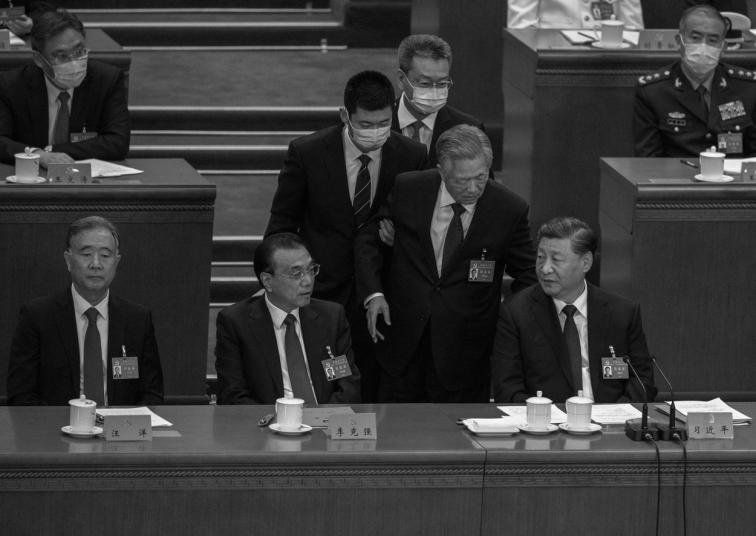


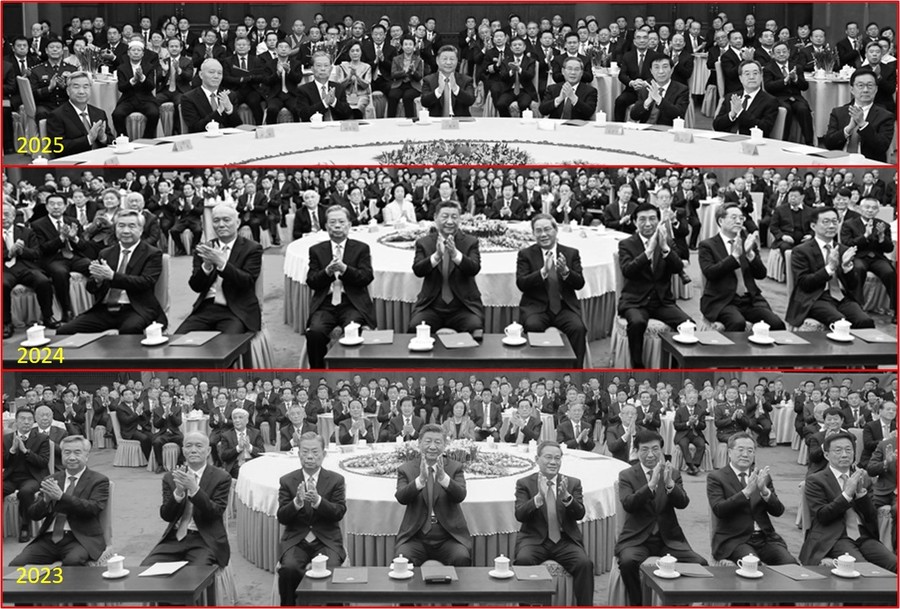

News magazine bootstrap themes!
I like this themes, fast loading and look profesional
Thank you Carlos!
You're welcome!
Please support me with give positive rating!
Yes Sure!