

Taiwan/Flag of the Republic of China. On January 11, 2023, at a military base in Kaohsiung, Taiwan‘s armed forces conducted a two-day routine exercise. (Annabelle Chih/Getty Images)
[People News] On February 24, Radio France Internationale reported, citing U.S. media, that in July 2023, then-CIA Director William Burns and National Intelligence Director Avril Haines held a confidential briefing in a secure room in Silicon Valley. They warned top executives from major tech companies, including Apple CEO Tim Cook, NVIDIA CEO Jensen Huang, and AMD CEO Lisa Su, about the potential for the CCP to take military action against Taiwan around 2027. During the briefing, they emphasised that the CCP's military spending is continuously increasing and the intensity of military training is on the rise, making the risks associated with the '2027 timeline' significant and concerning.
For many years, U.S. officials have repeatedly stated that CCP leader Xi Jinping has instructed the People's Liberation Army to be prepared to attack Taiwan by 2027. Last year, U.S. Secretary of Defence Pete Hegseth also cautioned at the Shangri-La Dialogue in Singapore that Beijing is 'actively building, training, and conducting real combat exercises for this purpose every day.'
Trump May Face Off Against Xi on the Taiwan Issue
Recently, White House officials confirmed that U.S. President Trump is scheduled to visit Beijing from March 31 to April 2, where he will hold talks with Xi Jinping. The last phone conversation between Xi Jinping and Trump occurred on February 4, during which Chinese state media reported that the Taiwan issue is a core topic and 'the most important issue in China-U.S. relations.' Xi Jinping stressed to Trump the importance of the U.S. handling arms sales to Taiwan with care.
In light of Trump's support for Taiwan's national defence since taking office, the Chinese Communist Party has shown increasing impatience and dissatisfaction. During the call, Xi Jinping noted that Taiwan has a distinctly 'targeted and very tough' approach. Analysts suggest that 'Xi is setting the stage, indicating to President Trump that during his visit in April, they need to have a serious discussion about the Taiwan issue.'
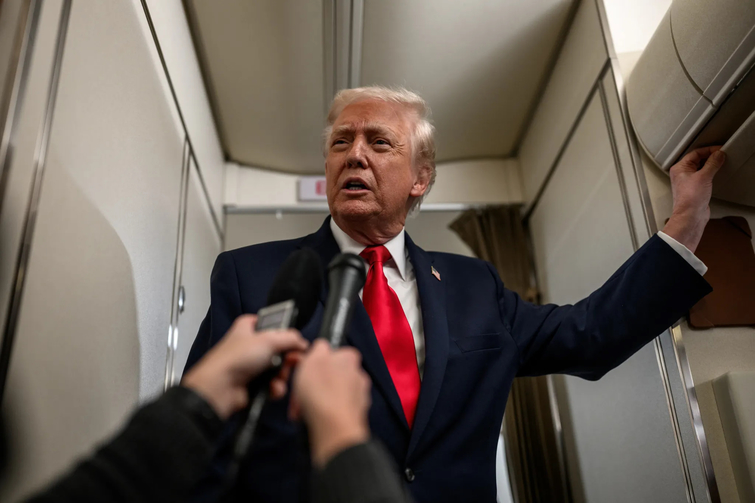
According to a report by Voice of America on February 18, Trump, when asked about U.S. arms sales to Taiwan aboard Air Force One, stated that he had discussed the matter with Xi Jinping. 'I am in discussions with him about this issue. We had a very good conversation,' Trump remarked.
As a result, when Trump visits Beijing at the end of March, the Taiwan issue will be an unavoidable topic of conversation alongside trade and tariff matters. Analysts suggest that if the Chinese Communist Party has secretly resolved to take military action around 2027, Xi Jinping will likely make explicit or implicit comments to Trump, urging the United States and other nations not to interfere. Xi Jinping will also probably offer concessions to the United States, such as relinquishing control over rare earth resources and increasing purchases of American agricultural products. He may particularly promise that once Taiwan is under CCP control, the 'one country, two systems' framework for Taiwan will remain unchanged, that international freedom of navigation in the Taiwan Strait will be maintained, and that Taiwan will serve as a trade base for international markets, especially for the United States.
However, it is highly unlikely that the United States will compromise Taiwan's interests for its own gain. The differences between the United States and the CCP extend beyond mere economic interests; they are fundamentally rooted in differing beliefs and values. The United States, founded on Christian principles, is inherently at odds with the atheistic ideology of the CCP. Furthermore, the United States aligns with the Republic of China on values such as democracy, freedom, and human rights. Therefore, with Trump in office, support for Taiwan is expected to remain robust.
At the end of last year, the United States approved a military sales package to Taiwan worth over $11 billion. This package includes advanced weaponry such as the 'HIMARS' long-range precision strike system, anti-tank drone missile systems, and Javelin anti-tank missiles.
Additionally, the U.S. is contemplating further arms sales. A report from the British Financial Times indicates that the United States is actively compiling a military sales package for Taiwan that includes a significant number of 'Patriot' missiles and other weaponry. Several sources familiar with the matter have disclosed that the total value of this military sales package, which encompasses four systems, could reach as much as $20 billion. Besides the 'Patriot' system designed for intercepting incoming missiles, the U.S. will also permit Taiwan to acquire more advanced Norwegian air defence missile systems (NASAMS), among others.
On the Taiwanese side, there are plans to advance the deployment of the 'HIMARS' system to Penghu and Dongyin prior to its official rollout, with a strike range capable of covering PLA positions in Fujian and Zhejiang. The Defence Department has proposed a strategy for 'preemptive strikes' against the Chinese military.
The U.S.'s robust arms sales to Taiwan, along with the Republic of China's defence strategies, suggest that both the U.S. and the Republic of China may be aware of certain movements by the Chinese Communist Party, prompting them to intensify efforts to bolster the Republic of China's defence.
So, is there a possibility that the Chinese Communist Party will launch an attack on Taiwan around 2027?
Will the Chinese Communist Party attack Taiwan in 2027?
The CIA issued warnings to several tech giants with business interests in Taiwan two years ago. On January 24 of this year, Xi Jinping announced the arrests of Zhang Youxia and Liu Zhenli. Following these arrests, including that of another former vice chairman of the Military Commission, He Weidong, and the director of the Political Work Department, Miao Hua, only Zhang Shengmin remains among the seven members of the Military Commission. This indicates that before any potential attack on Taiwan, Xi Jinping has effectively purged the Military Commission of the Chinese Communist Party. Consequently, any plans to attack Taiwan could be subject to unforeseen variables.
It is noteworthy that following the arrest of Zhang Youxia, the Zhurihe training base in Inner Mongolia, which he managed and is touted as the most advanced military facility of the Chinese Communist Party (CCP) aimed at Taiwan, has reportedly ceased its training exercises. This development raises questions about its connection to the recent personnel changes at the upper echelons of the military.
On October 1, 2025, Japan's Sankei Shimbun reported that the latest satellite images released by a Japanese think tank reveal that at the Zhurihe base, in addition to the existing 'simulated (Taiwan) Presidential Office' and 'simulated Ministry of Foreign Affairs,' a new 'simulated Judicial Yuan' building has emerged, linked to the Presidential Office model via an underground tunnel. This organised simulation suggests that the CCP's threat to Taiwan has escalated from mere military intimidation to operational drills for 'decapitation actions,' with the intent to incapacitate Taiwan's decision-making centre.
With the Zhurihe training base now halting its exercises, it is difficult to assert that the CCP's actions towards Taiwan are unaffected by the recent changes in military commission personnel.
According to a report by Voice of America in November 2023 titled 'Xi Jinping Tells Biden He Knows Nothing About 2027 or 2035 Plans to Attack Taiwan, Sparking Controversy in Taiwan's Elections,' Xi Jinping stated during the summit in San Francisco with then U.S. President Biden that he had not been informed about any plans to attack Taiwan in 2027 or 2035.
The Financial Times also referenced information from informed sources, reporting that during a meeting in April 2023 with European Commission President Ursula von der Leyen, Xi Jinping indicated that the U.S. was attempting to entice the CCP into attacking Taiwan, but he would not be deceived.
Analysts, however, believe that Xi's statements are rather vague and somewhat ambiguous; he does not outright deny the possibility of attacking Taiwan in 2027 or 2035, but he has not been informed of such plans. If he is tempted by the United States, he will not take the bait; if he is not tempted, then the situation could be different. There is speculation that Zhang Youxia was removed from his position specifically because he opposed a military strike on Taiwan. Thus, if Xi Jinping decides to launch an attack in 2027 or 2035, that would represent a different scenario.
When would the Chinese Communist Party (CCP) under Xi choose to attack Taiwan?
The most likely scenario for a CCP attack on Taiwan
Analysts suggest that the CCP is set to convene its 21st National Congress next year, and Xi Jinping is highly likely to seek re-election. This is indicated by the recent downfall of several officials at the ministerial level and above, as well as the CCP's personnel strategies at the local level. If Xi Jinping perceives significant resistance to his re-election and wishes to mitigate it, the likelihood of an attack on Taiwan could increase. Once war breaks out, the question of who becomes General Secretary becomes irrelevant; the party congress may not even take place, and the succession of the General Secretary would naturally fall to Xi, who would then decide when or if meetings would resume. In other words, if the CCP genuinely intends to attack Taiwan, the most probable timing would be before the 21st National Congress in 2027.
Nevertheless, the American business community appears to be relatively indifferent to this possibility. Despite warnings from the CIA to executives at companies like Apple, they have not taken any significant new actions and have not promptly shifted orders to domestic semiconductor manufacturers in the United States.
A confidential briefing from the Central Intelligence Agency underscores a looming risk: Taiwan holds approximately 90% of the world's advanced chip production capacity, particularly high-end processors made by TSMC, which serve as the core source for Apple's self-developed chips used in the iPhone, iPad, and Mac. Should a conflict arise in the Taiwan Strait or if Taiwan faces a blockade, the repercussions would extend beyond individual corporate supply chains, potentially leading to the most severe global economic crisis since the Great Depression.
American technology companies may find themselves constrained by costs and production capacity, leaving them with no option but to depend on Taiwan. Industry estimates indicate that chips manufactured in the United States are roughly 25% more expensive than those produced in Taiwan. Furthermore, the U.S. continues to grapple with challenges such as a shortage of skilled technical workers, inadequate supplies of rare earth minerals, and structural issues within the labour market.
(First published by People News)
△





News magazine bootstrap themes!
I like this themes, fast loading and look profesional
Thank you Carlos!
You're welcome!
Please support me with give positive rating!
Yes Sure!