
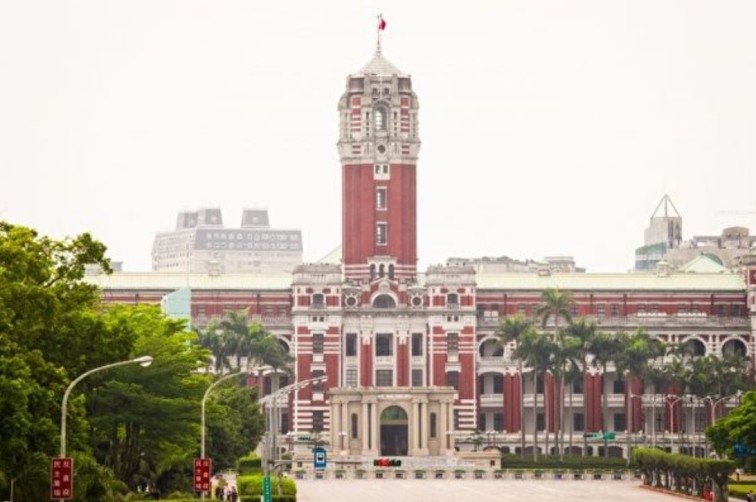
Taiwan Presidential Office. (Chen Bozhou / Dajiyuan)
[People News] On March 17, an international seminar held in Taipei garnered significant attention. This event, known as the "Yushan Forum," was organised by the Taiwan Asia Exchange Foundation. A prominent figure at the conference was Nobel Peace Prize winner and former Polish President Lech Wałęsa. His statement that generated the most discussion was: "In this great change, China should unify, but it should be led by Taiwan."
Who is Wałęsa?
Wałęsa believes that Taiwan's achievements in economic and political realms have provided a compelling "model" for Chinese people around the world. Additionally, former Fijian Prime Minister Frank Bainimarama, who was also present, noted that Taiwan, through its "New Southbound Policy," is emerging as a moderate and stable force in the Indo-Pacific region.
For those who may not be familiar with Wałęsa, a brief introduction is in order. When people think of Wałęsa, they often recall the "Solidarity" movement he spearheaded in the 1980s. At that time, Poland was still under Soviet control, and Wałęsa, an electrician, led workers in a strike at a shipyard. His strategy was clear: to advocate for non-violence and to engage in dialogue. This approach left the Soviet regime, which relied on oppressive rule, without a justification for using force against peaceful protests, ultimately leading to the peaceful transformation of Poland and Eastern Europe.
His experience highlights a crucial truth: when a regime becomes a hindrance to the people's development, no amount of force or intimidation can ultimately suppress the people's will. Wałęsa employed a 'soft overcoming hard' strategy to create a significant breach in the seemingly impenetrable Iron Curtain. Thus, during his recent discussions in Taipei regarding the current situation in the Taiwan Strait, he emphasised that the Communist Party's reliance on 'force and coercion' has already been proven ineffective since Poland's transition years ago.
However, we must recognise that the path to civilizational transformation is bound to be turbulent. In today's unpredictable global landscape, with rising oil prices and inflation, we are all facing immense pressure in our daily lives. If we are to uncover the truth and uphold our conscience, we must first safeguard our most vital asset: our health. Regardless of how chaotic the situation may become, we cannot afford to neglect our well-being. A small daily intake of Puritan black ginseng acts as a support for us, the aware individuals, in combating anxiety. By taking care of our health, we can collectively witness a pivotal moment in history. Please click the link below... Next, we will delve into a critical legal analysis to explore why the so-called claims of sovereignty are fundamentally unfounded.
Why do we assert that Taiwan's sovereignty has never been transferred to the CCP?
When discussing 'unification,' we are confronted with an age-old question: what type of 'unification' holds true value?
The Chinese Communist Party frequently asserts that 'Taiwan is a part of China,' which many people take as a definitive conclusion. However, a closer examination of international treaties following World War II, particularly the authoritative 'San Francisco Peace Treaty,' reveals a stark contrast to Beijing's narrative.
To put it simply, the 'San Francisco Peace Treaty,' signed in 1951, clearly states that Japan 'renounces' all rights to Taiwan and the Penghu Islands. However, the crucial point is that it only mentions 'renounce' without specifying 'to whom.' This is what the legal community refers to as the 'undetermined status of Taiwan.'
In the official narrative of the Chinese Communist Party, the 'Cairo Declaration' and the 'Potsdam Proclamation' are frequently cited. Doesn't it claim that Taiwan should be returned to China? This is the falsehood we need to dismantle. At an international law forum in July 2025, Taiwan's Foreign Minister Lin Jialong publicly challenged this misconception.
He stated unequivocally: 'The 'Cairo Declaration' is legally just a 'news release'; it cannot and has never altered Taiwan's territorial sovereignty. In the genuinely binding 'San Francisco Peace Treaty,' Japan merely renounced sovereignty without designating a recipient.' Lin Jialong emphasised that the Chinese Communist Party is attempting to obscure the facts of international treaties with a wartime press release, and this kind of 'legal grafting' is entirely untenable in a modern, civilised society.
Some individuals refer to the 1952 "Sino-Japanese Peace Treaty," which mentions the "Chinese nationality of the Taiwanese people," believing that this indicates Japan's formal return of Taiwan's sovereignty to the government at that time. However, a closer examination of the treaty's logic reveals a crucial distinction. What Japan acknowledges in the treaty is actually the "administrative jurisdiction" of the Republic of China (ROC) government over Taiwan. In simpler terms, Japan recognises that you are currently managing and maintaining order here, but this does not mean that the "ultimate ownership" of this land has been transferred to you.
Consequently, many mainstream media outlets, including the BBC, have discussed the fact that while the U.S. government has been quite diplomatic on this issue for decades, its core stance has remained unchanged: Taiwan is not part of the People's Republic of China (PRC).
Given that Taiwan's sovereignty has never been legally transferred to the Chinese Communist Party (CCP), Beijing's claims of "recovery" or "unification" represent a complete "paradox" in international law—how can one talk about recovery when they have never possessed it?
As Hualesha pointed out earlier, the reason Taiwan can stand confidently today is not due to any formal recognition on paper, but because it has undergone a remarkable transformation through "democratisation." Since the start of direct presidential elections in 1996, the people of Taiwan have used their votes to demonstrate to the world that the sovereignty of this land belongs to the 23 million residents here, not to a regime that has never governed Taiwan.
As Hualesha noted, Taiwan's development achievements serve as a 'model' for Chinese people around the globe. The influence of this model is far more compelling than the distorted historical documents and threats of military force.
Why do we assert that the Chinese Communist Party (CCP) has lost its legitimacy to govern?
Hualesha's proposal of 'led by Taiwan' in Taipei reveals a significant truth: a regime that prioritises power over the well-being of its citizens will ultimately deplete its legitimacy.
Since last year, international media have been actively discussing the CCP's '14th Five-Year Plan.' This marks the country's 15th five-year development blueprint, a management framework inherited from the Soviet era. The current '14th Five-Year Plan' outlines development goals for the period from 2026 to 2030. Ideally, such planning should focus on ensuring that ordinary citizens have money in their pockets. However, observers have noted that over the past few decades, the emphasis has been on 'GDP growth'; yet in the '14th Five-Year Plan,' the focus has shifted to 'security framework.'
Professor Xia Ming from the City University of New York pointed out to the BBC that this indicates the economy is no longer the central focus but has become a 'supporting role' and 'servant' to politics. In this mindset of 'only considering political accounts and ignoring economic accounts,' when an economic crisis occurs, the government does not seek market-based solutions but instead resorts to the national security apparatus to obscure the issues. This arrogance of power is the fundamental cause of the erosion of public confidence.
As Mr Liu Mengxiong, a former member of the National Committee of the Chinese People's Political Consultative Conference and a seasoned commentator, has observed, China's economy is currently facing a series of 'tides'—the wave of private enterprise closures, the wave of foreign enterprise withdrawals, and even a dramatic decline in the birth rate. This widespread social contraction is, in fact, a sign of the breakdown of the social contract.
All these chaotic phenomena indicate that this is not merely a simple fluctuation in the economic cycle; the root of the problem lies in a power that refuses to be supervised, which inevitably leads to corruption and eventual downfall. In any civilised society, the government must be subject to oversight. Democratic nations rely on the separation of powers, checks and balances, freedom of the press, and moral beliefs to restrain authority. In contrast, the Communist Party promotes atheism, which lacks divine constraints on morality, and enforces a centralised autocracy without legal checks on power.
To deceive the populace, the Communist Party of China has coined an absurd term: 'self-supervision.' This has evolved from early 'self-criticism' to later 'self-improvement,' and now to the so-called 'self-enhancement of governance capabilities.' This is akin to a doctor performing surgery on himself or a thief acting as his own judge. Although various institutions such as the 'Central Commission for Discipline Inspection' (Zhongjiwei) and the 'Petition Office' (Xinfangban) have been established, these entities serve merely as decorative 'vases' without lifting the bans on party and press.
'Self-improvement' without external constraints is simply a ruse by the Communist Party to protect its own interests and refuse to return power to the people. The burden of such tactics ultimately falls on the lives of ordinary citizens.
Let us examine a health account. The autocracy and corruption of the Communist Party have inflicted significant damage on the living environment of the Chinese people. While the official narrative proclaims 'governance,' the long-term 'political accounting' by governments at all levels turns a blind eye to pollution in order to safeguard political achievements and maintain growth. In numerous rural areas surrounding industrial parks, the contamination of groundwater with heavy metals has long been an open secret.
Zhang Lijun, the deputy director of the Ministry of Environmental Protection of the Communist Party of China, acknowledged as early as 2005 that 90% of China's groundwater is polluted. The long-term consumption of this water, contaminated with industrial wastewater and heavy metal toxins, has resulted in over 200 million people in China facing a drinking water safety crisis each year.
This is why Wala Sha has a clear perspective: in the current context of competition for global status among the U.S., Russia, and China, if the Chinese nation is to pursue unification, it must be led by Taiwan.
Why is that? Because Taiwan has demonstrated to the world that political systems have a direct impact on economic development and ultimately shape cultural character. Taiwan's success stems from its democratisation, which has unleashed the creativity of its people and maintained the standards of civilisation; conversely, the challenges faced across the strait arise from a political system that binds the economy and erodes the people's spirit.
Thus, regardless of how cross-strait relations may evolve in the future, one thing is certain: a regime that lacks legitimacy and undermines the foundation of the nation cannot legitimately discuss 'unification' with a mature democratic system. This is not only illegitimate in the context of a civilised society but also represents a historical regression.
Orthodox Culture: Who are the true heirs of five thousand years of civilisation?
We previously discussed 'name and position'—that is, from a legal and historical standpoint, Taiwan's sovereignty has never belonged to the Communist Party of China; we also touched on 'governing legitimacy'—indicating that the Communist Party does not operate as a regime that seeks the welfare of the common people.
There is an even deeper and more profound aspect that touches the national soul: culture. The Chinese value the principle that 'the name must be right and the words must be in order'; this 'name' signifies not only a legal identity but also a cultural legacy.
People can compare the attitudes towards traditional culture on both sides of the Taiwan Strait. A clear example is Shen Yun Performing Arts. In recent years, Shen Yun has been touring the world, showcasing the authentic 5,000-year-old Chinese divine culture.
In Taiwan, this event is celebrated as a significant cultural occasion. Ahead of the Shen Yun tour scheduled for late 2025 to early 2026, President Lai Ching-te sent a special congratulatory message, expressing hope that this grand event would foster cultural and artistic appreciation. Additionally, Legislative Yuan President Han Kuo-yu lauded its achievements as 'unparalleled throughout history,' while over a hundred political figures from various parties, including Foreign Minister Lin Chia-lung and Mainland Affairs Council Chairperson Qiu Chui-zheng, also offered their congratulations. This reflects that in Taiwan, traditional culture is viewed as a 'lifeline' that deserves protection.
In contrast, what happens on the other side of the Strait? The same group of people and the same art face suppression and defamation. This irony raises a question: why would a regime that claims to represent China fear its own nation's most authentic cultural heritage?
The underlying issue is that the 'theism' and 'mandate of heaven' embedded in traditional culture inherently challenge the ruling logic of the Chinese Communist Party (CCP). Traditional culture calls for gentlemen to 'act in accordance with heaven's will' and emphasises moral constraints, while the CCP advocates for 'struggling against heaven and earth.' Thus, recognising divine culture directly undermines the CCP's legitimacy, which is based on 'political supremacy.'
The bloodlines across the Taiwan Strait are interconnected, yet their cultural foundations have diverged. Some even say, 'What the mainland has lost, Taiwan has preserved.' A prime example of this is the written language.
Taiwan has preserved traditional Chinese characters, a cultural legacy believed to be divinely transmitted. For instance, the traditional character for 'love' (愛) includes the character for 'heart' (心) at its centre, symbolising a heartfelt love; in contrast, the simplified character (爱) omits the heart. This absence leads to a superficial understanding of 'love,' which can negatively impact social values. A scholar from the mainland, upon visiting Taiwan, praised its rich cultural heritage after observing that young students could easily read and comprehend ancient texts.
Traditional Chinese characters encapsulate five millennia of cultural tradition. They represent a divine culture, with each character infused with a range of feelings, thoughts, emotions, perceptions, and imaginations, alongside the unique humanity, divinity, and poetic essence of the Chinese people. This energy subtly influences people's psychology and thought processes. However, the simplification of these characters results in a loss of the cultural roots and meanings that traditional characters convey.
Examining some details, it has been observed that mainland Chinese often use rhetorical questions in conversation, such as 'Don't you know this?', which implies that the other person is lacking in understanding. An experiment illustrated this: in a hot classroom that required the windows to be opened, Taiwanese individuals might say, 'It's too hot; do you mind if I open the window?' In contrast, mainland Chinese might express it as, 'It's so hot; why haven't we opened the window yet?'
While these two statements may appear similar and convey the same message, rhetorical questions can place the listener in a passive role, suggesting that not opening the window is unusual or inappropriate.
Mainland Chinese often speak thoughtlessly, not realising that their discourse reflects the deeply ingrained culture of party struggle. The Communist Party has stripped the essence of traditional Chinese culture from language and has regulated people's positive energy. As the saying goes: 'If the name is not correct, then the words will not flow; if the words do not flow, then the matter will not succeed.' The Communist Party has destroyed culture, traditional virtues, trust among individuals, faith, and consensus.
Beyond the Unifying 'Model Power'
Let us return to the impactful statement made by Wa Le Sha in Taipei: 'China should be unified, but it should be led by Taiwan.'
This statement resonated widely because it challenges the 'power logic' that the Chinese Communist Party has built over decades through military might and extensive propaganda. As someone who has lived through these experiences, Wa Le Sha understands the deeper historical truth: the strength of a regime is not measured by the number of missiles it possesses, but by its moral authority to lead civilisation.
The question of whether Taiwan will ultimately unify with China is not the most pressing issue at this moment; history has its own course, and public sentiment will find its timing.
The most significant takeaway is that the path Taiwan has taken over the past few decades has provided all Chinese people with a valuable 'peaceful transition' blueprint. It demonstrates that violence and coercion are unnecessary; the Chinese can establish a highly advanced and internationally respected democratic society. This is what Wa Le Sha refers to as the 'model'—Taiwan has successfully navigated extreme geopolitical challenges, preserved the roots of Chinese civilisation, and sparked the flame of freedom from the ashes.
As Hua Lasha stated, the use of force and intimidation will eventually prove ineffective. If China aspires to genuinely progress towards civilisation in the future, it requires not tanks, but the resilience of Taiwan, which upholds traditional values, respects democratic institutions, and cherishes life.
Taiwan is more than just an island; it serves as a guiding light for China in achieving institutional transformation and a peaceful shift. Its democratic and advanced characteristics position it as a genuine role model for the future.
(First published in People News)
△




News magazine bootstrap themes!
I like this themes, fast loading and look profesional
Thank you Carlos!
You're welcome!
Please support me with give positive rating!
Yes Sure!