

A Scene from a CCP Meeting: The Chairperson on Stage Speaks in a Droning Buzz, Perfect for Helping Me Fall Asleep. (Guang Niu/Getty Images)
[People News] On April 28, the Chinese Communist Party held a Political Bureau meeting to analyse the current economic situation and outline economic work. The meeting, chaired by General Secretary Xi Jinping, featured an official statement that boldly proclaimed a "strong start" to the economy this year, with major indicators surpassing expectations and showcasing significant resilience and vitality. However, it also casually acknowledged that "we are facing some difficulties and challenges, and the foundation for the economy to continue stabilising and improving needs further consolidation."
While this sounds encouraging, there is an increasingly noticeable gap between the grand narrative of propaganda and the everyday experiences of ordinary citizens.
GDP Growth of 5%: A Strong Start Amidst Chilling Consumer and Employment Realities
According to data from the National Bureau of Statistics, GDP in the first quarter of 2026 grew by 5.0% year-on-year, surpassing some market expectations, and increased by 1.3% compared to the previous quarter, showing an acceleration from the fourth quarter of last year.
However, a closer look reveals a starkly different scenario. The total retail sales of consumer goods only increased by 2.4% year-on-year, significantly lagging behind the GDP growth rate, with March recording a mere 1.7% rise. The actual growth rate of per capita consumer spending is even lower, with notable declines in durable goods such as automobiles due to the reduction of subsidies. Real estate development investment has dropped by 11.2% year-on-year, with the sales area of new commercial housing decreasing by 10.4% and sales revenue falling by 16.7%. Private investment continues to experience negative growth.
This situation exemplifies the classic temperature difference effect, where many young people express frustration over their inability to keep up and choose to 'lie flat', while business owners lament the challenges of securing orders, thin profit margins, and ongoing financing difficulties. While the 5% GDP growth seems coherent, it actually reflects a continuation of the outdated investment-driven model, with the absence of consumption and endogenous momentum temporarily obscured by appealing aggregate figures.
Ironically, when the public opts for cautious consumption or 'lying flat' due to shrinking wealth (as housing prices continue to adjust) and unstable employment, the response from Xi Jinping and the Communist Party is not to address the issues directly, but rather to quickly deflect blame, even invoking foreign forces, which can be seen as a series of misguided strategies.
The Ministry of National Security's Position on Foreign Forces: All Responsibility Lies with the U.S.
On the same day as the Politburo meeting, the Ministry of National Security published an article on its WeChat public account titled "Those Who Incite 'Lying Flat' Are Busy as Bees." The article directly accuses "a certain foreign organisation of heavily funding 'lying flat internet celebrities,'" systematically engaging in "lying flat brainwashing" and fabricating narratives such as "struggle equals exploitation" and "class solidification equals effort being useless." The goal is to erode the ideological foundation of Chinese youth and undermine the social value system.
This situation can be described as darkly humorous. Is the root cause of youth 'lying flat' or 'slacking off' really the remote manipulation by foreign anti-China forces? Is it not due to the sharp decline in housing prices leading to the evaporation of family wealth, not because of chaotic competition under the pressure of involution, not due to local debt pressures straining grassroots livelihood guarantees, not because repeated stimulus policies are ineffective, and not because of the long-term low confidence among businesses and residents? Instead, it is all attributed to the existence of a Western country that is better than the U.S.
Even more absurdly, the Ministry of National Security's article mocks those who "incite lying flat" for being "busy as bees" themselves—implying that while Western countries strive for development, they hope Chinese youth will lie flat, allowing China to willingly relinquish its development dividends. This logic externalises domestic structural contradictions and completely sidesteps policy errors and systemic obstacles.
Netizens couldn't hold back and began to respond with sarcastic comments about the Communist Party, saying things like, "Marx is also a foreign force," "I don't want to lie flat; I want to work in tobacco, telecommunications, and taxation," "It's not that we don't struggle; it's that we struggle slowly, gradually, and in an orderly manner," and "Let's all lie flat together and empty the wallets of foreign forces"…
The Perfect Policy Trap: Active Fiscal Policy + Moderate Monetary Easing = Difficult to Address Internal Competition
The Politburo meeting reiterated the need for the "precise and effective implementation of a more active fiscal policy and moderately loose monetary policy," with goals to "optimise incremental growth, revitalise existing assets," "advance the construction of a unified national market," and "thoroughly address 'involutionary' competition." This rhetoric is familiar; similar phrases have been repeated over the past few years: increasing counter-cyclical adjustments, expanding domestic demand, stabilising expectations...
Fiscal policy is taking the lead, with special bonds and ultra-long-term special government bonds being issued more rapidly. However, the transmission to the real economy, particularly to private enterprises and households, often encounters obstacles. The liquidity released through monetary easing largely remains trapped within the financial system or flows to state-owned platforms, and the challenges of financing difficulties and high costs for small and medium-sized enterprises have not been fundamentally alleviated. The marginal effectiveness of consumption stimulus policies is decreasing, and their impact is limited.
The initiative to "address involution" is a classic example of political correctness in action. The root cause of involution stems from insufficient demand rather than merely excessive competition. While administrative measures may temporarily alleviate price declines, they cannot resolve the underlying supply-demand imbalance; instead, they risk distorting market signals and creating new inefficiencies.
The meeting acknowledged that "the foundation still needs to be further consolidated," which subtly admits that traditional methods are becoming less effective, yet no genuine reform measures to break the cycle have been proposed.
The Dual Shackles of Real Estate and Local Debt
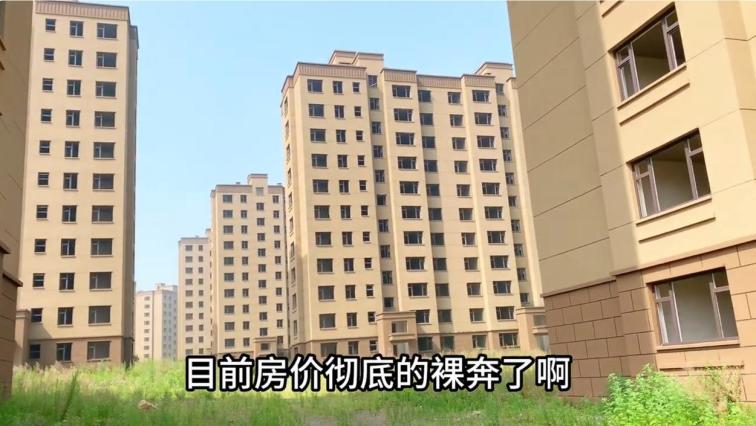
Real estate continues to be the most significant grey rhino burdening the economy. In the first quarter, development investment dropped by 11.2%, sales remained persistently weak, and the adjustment in housing prices has eroded household wealth. This has turned the wealth effect into negative feedback, which in turn suppresses consumption and private investment. The meeting underscored the importance of 'striving to stabilise the real estate market,' yet after years of adjustments, the industry remains deeply entrenched in a contraction phase. The decline in land transfer revenue has a direct impact on local finances, and the pressure on the grassroots 'three guarantees' is considerable.
Local government debt consumes a significant amount of fiscal and financial resources, thereby squeezing funds that could be utilised to boost domestic demand and enhance living standards. The sluggishness in private investment stems from weak expectation signals. Under these dual shackles, the economy finds it challenging to establish an endogenous growth cycle. The meeting's proposal to 'activate existing stock and optimise incremental growth' may sound comprehensive, but it fundamentally fails to resolve the underlying issues.
Xi Jinping's Latest Misstep: The Manus Acquisition Case
On April 27, the National Development and Reform Commission's foreign investment security review mechanism blocked Meta's $2 billion acquisition of the Chinese AI company Manus, demanding the cancellation of the deal. This marks the first foreign acquisition in the AI sector to be publicly halted, and the severity of the review's conclusion is unprecedented.
From a purely economic standpoint, this situation represents a typical market behaviour. Foreign investors are optimistic about China's AI technology and are willing to pay a premium for acquisitions, which can lead to funding, technological collaboration, and global market opportunities. This creates a wealth-generating opportunity for companies and serves as an internationalisation window for the industry. However, under the national security framework of 'coordinating development and security', 'technological self-reliance and self-improvement', and 'independent and controllable industrial chains', any cross-border transactions involving core technologies are prioritised as potential risks—regardless of whether such transactions could accelerate technology commercialisation and enhance corporate value.
This reflects a typical irony and negative outcome of guiding economic policy with a security-first mindset aimed at preserving the party and the regime. When 'security' becomes the highest priority, economic development must take a back seat. Consequently, private tech companies face obstacles, innovation is stifled, foreign investment is deterred, and the concept of 'high-level opening up' turns into an empty slogan.
The meeting stressed the need to 'resolutely deepen reform and opening up' and 'promote technological self-reliance and self-improvement', yet in practice, market opportunities are suffocated by security reviews. This contradiction highlights the inherent flaws within the system, where economic development is shackled to the 'national security' agenda, ultimately harming the overall economy and the welfare of the populace.
The Politburo finds itself unable to counter the looming risk of economic recession.
During the Politburo meeting in April 2026, there was much empty rhetoric, but the underlying logic was to maintain confidence through appealing to GDP figures and policy slogans, to divert attention from contradictions with politicised narratives, and to guide economic decisions through a security-focused lens.
However, the reality is stark: consumer sentiment is weak, employment conditions are poor, the dual burdens of real estate and local debt persist, policy transmission is ineffective, and internal competition remains difficult to manage—these structural issues are far from being resolved.
The Chinese Communist Party's '15th Five-Year Plan' has just commenced. If they persist in their boasting and continue to employ deceptive strategies, the statistics may be artificially enhanced for some time. However, the underlying discontent will grow increasingly acute, the risks will continue to mount, and a collapse may be imminent.
(First published by People News) △



News magazine bootstrap themes!
I like this themes, fast loading and look profesional
Thank you Carlos!
You're welcome!
Please support me with give positive rating!
Yes Sure!