

The CIA's efforts to recruit Chinese informants have yielded significant results. A video released by the CIA on February 12, 2026, highlights these recruitment efforts. (Video screenshot)
[People News] For many years, the prevailing perception in society regarding the military dynamics across the Taiwan Strait has been that the Chinese Communist Party (CCP) acts as the aggressive 'bully,' constantly drawing red lines and making incremental advances, while Taiwan is seen as the 'passive recipient,' struggling to defend itself amid various constraints and enduring in silence. The CCP has engaged in verbal and military intimidation, sent military aircraft around Taiwan, poached diplomatic allies, and exerted political pressure on Taiwanese businesses. In response, Taiwan has typically issued statements of condemnation after the fact or passively attempted to 'patch the net' within its defensive lines.
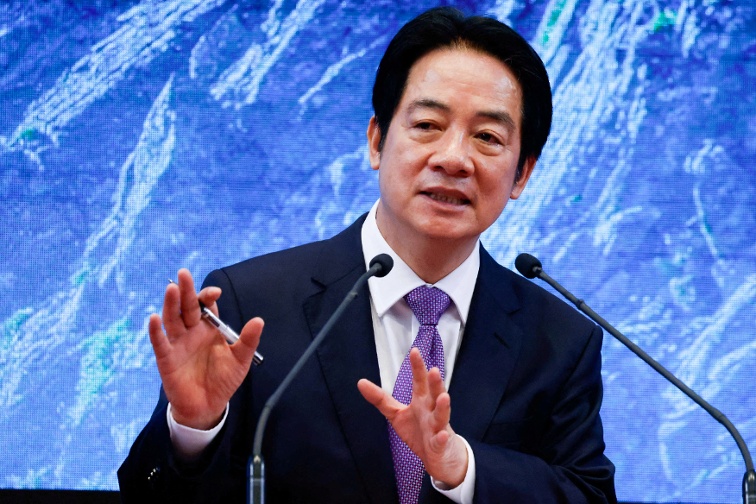
However, recently, President Lai Ching-te of the Republic of China made a notable shift by adopting the CIA's strategy of actively recruiting Chinese intelligence personnel. On June 14, Taiwan's National Security Bureau announced the creation of a 'Contact Window for the Chinese People,' encouraging individuals both within China and abroad to actively provide intelligence on mainland politics, military, economy, and social issues. This move has not only shocked the international community but also earned Taiwan newfound respect, with many commentators suggesting it signifies a departure from Taiwan's previous passive approach of 'only defending and not attacking' in the information warfare against China.
High-pressure rule alienates the populace
On June 14, Taiwan's National Security Bureau indicated that in recent years, China's economic development has encountered challenges, political repression remains severe, and social issues are widespread, resulting in an increasing number of individuals proactively reaching out to Taiwanese authorities to provide various types of intelligence.
The National Security Bureau has announced that due to the Chinese Communist Party's extensive network surveillance and mobile security risks, when citizens from mainland China access the contact window webpage for the Chinese public, the system will identify whether they are located within mainland China or abroad. It will then guide them to complete the login process according to six security guidelines. These security measures include: using foreign brand mobile phones or tablets, restoring factory settings, connecting to wireless networks that do not require real-name registration, utilising virtual private network (VPN) software to access overseas networks, and enabling incognito or private browsing modes.
The National Security Bureau indicated that it will rigorously screen the intelligence gathered through technological means, and after evaluation and verification by a professional team, will reach out. However, Reuters has reported that this webpage has already been blocked in mainland China.
Netizens: Taiwan should reclaim the mainland
Many Chinese netizens have commented, "Thank you to the US and Taiwan governments for creating a second career opportunity in mining for people." Some netizens humorously noted that in China, even delivering takeout requires effort, and they feel constantly exploited like work animals. Now, they finally have a legitimate way to "directly sell the boss (the system) for a good price."
Numerous Chinese stock investors and unemployed young people have self-deprecatingly remarked that since they have been cut in the A-shares and faced rejection in job searches, they might as well rummage through various organisations' trash or take photos of the bills for leaders' daily consumption of Maotai with public funds and send them out, "leveraging the absurdity of selling the system to achieve financial freedom."
Many Chinese netizens have left comments praising Taiwan, saying, "Well done, Taiwan has not forgotten the people in the mainland's occupied areas." Another commented, "Taiwan did the right thing this time; we don't want independence, we want to reclaim the mainland." One user expressed, "Aha, this is a good move. Taiwan can really seize the opportunity to unite with our compatriots in the mainland. Many people are already dissatisfied with the regime and can't hold on for much longer." Another stated, "When the Communist bandits attack Taiwan, I will report all valuable information I come across to Taiwan's national army." One user noted, "Seeing the 50-cent army frantically typing on their keyboards yet feeling helpless reassures me."
Other netizens remarked, "Taiwan has only opened a window for Chinese people to provide information anonymously. Why is the Communist Party so eager to block it? Are they afraid of infiltration, or are they worried that the people will awaken?"
Letting the Communist Party fall into a trap of fear
The greatest vulnerability of the Communist Party has never been external military power, but rather the legitimacy of its regime and the resistance of a billion citizens against tyranny. When Taiwan shifts its focus from 'military confrontation' to 'public sentiment and internal systems', it is leveraging its core advantages—freedom, democracy, openness, and empathy for human nature—thus gaining the upper hand in winning the hearts of the people. This is precisely what the dictatorial Communist Party fears the most; they are afraid of being abandoned by the Chinese people.
While traditional missile defence systems require spending billions or even hundreds of billions, establishing a secure 'intelligence and whistleblowing window' could yield information that is worth more than a thousand troops, at a very low cost. Regardless of how effective this intelligence window opened to all Chinese people may be, it can cause the rulers in Zhongnanhai to fall into a daily trap of suspicion regarding the loyalty of those around them.
Xi Jinping, who is deeply suspicious, is currently in a painful situation because, even though he is aware that Taiwan is poaching talent, he has no effective countermeasures. His only option is to escalate the crackdown and continue making arrests. However, the more he arrests, the greater the fear within society and the military becomes; consequently, more individuals are inclined to jump ship and reach out to Taiwan.
At present, every general in the People's Liberation Army has a metaphorical noose around their neck, and no one knows when Xi Jinping will pull it tighter. At a time when the morale of the PLA is at its lowest, and everyone feels insecure, the government of Lai Ching-te and Taiwan's National Security Bureau have opened a recruitment window. This is not just an ordinary intelligence operation; it is a 'political invitation to jump ship' directed at the Chinese.
Changed the defensive stance of the people of Taiwan
This proactive strategy has also acted as a morale booster for the Taiwanese people and enhanced their international image. It conveys a clear message to the global community: Taiwan is employing a novel, softer tactic to inform the Chinese Communist Party (CCP) that if they wish to turn the Taiwan Strait into a battlefield, Taiwan will leverage the internal politics and sentiments within the CCP to create a new front. Taiwan is no longer passively waiting for the CCP to act; instead, it is actively generating challenges for the CCP, compelling Zhongnanhai to allocate more resources to 'preventing internal spies and addressing vulnerabilities' domestically.
At last, Taiwan is no longer the passive victim that stands still and awaits blows. This proactive initiative represents not only an escalation in the intelligence war but also a monumental shift for Taiwan in psychological warfare and strategic dominance.
Citizens of the mainland: I am the guiding party!
Mainland dissident Yang Shan (pseudonym) told The Dajiyuan that many Chinese people wish to have a channel to connect with the outside world. "From my observations, many people around me share this mindset, similar to what is said online, 'I am a guide party.'" Taiwan's provision of this channel increases the suspicion of the Chinese Communist Party (CCP) authorities towards its members. Currently, everyone around Xi Jinping is feeling anxious, and when the pressure becomes unbearable, these individuals will genuinely consider alternative paths.
Yang Shan noted that the CCP's Ministry of State Security has long been focused on "catching spies," employing a high-pressure tactic to intimidate the populace. However, this approach has also produced another effect: it creates the impression that there are many such individuals, and that numerous people have already succeeded in this endeavour.
Mainland anti-communist activist Yun Long (pseudonym) informed The Dajiyuan that if individuals from the mainland take the risk to provide intelligence to the other side, it is believed that the vast majority do so out of idealistic convictions. "The minimum threshold is that after being unable to tolerate the system's evil, one must seek an outlet."
Mainland observer Mei Lan (pseudonym) expressed that the CCP authorities will likely intensify intimidation, surveillance, and countermeasures in the future, but these actions will also motivate dissatisfied mainland citizens to send intelligence abroad.
Countering the CCP's control through openness
Zhong Zhidong, an assistant researcher at the Taiwan National Defence Security Research Institute, stated to The Dajiyuan that Taiwan's recent actions have a significant effect: they can create and heighten the insecurity of the CCP regime itself. The CCP maintains control over internal dissatisfaction, including political struggles and other information, through stringent political and technological measures. Now, Taiwan and other countries are employing openness as a means to counter the CCP's control.
Certainly, the actions of the Taiwan National Security Bureau are not merely psychological warfare; they are also expected to yield tangible results. Zhong Zhidong stated, 'If out of a hundred pieces of false intelligence, there is one true piece; or if among a thousand or ten thousand pieces of intelligence, we can find one or two genuinely valuable pieces, I believe that would already be quite worthwhile. After all, gathering intelligence is inherently a very challenging task.'
Establishing a 'legal defection' lifeline
This initiative goes beyond simple intelligence propaganda; it represents a direct effort by both the U.S. and Taiwan to mobilise 'cognition and counter-espionage' among the Chinese populace amid the current high geopolitical tensions.
Targeted actions against the CCP initiate a 'national whistleblowing' campaign
Some international intelligence experts and multinational security analysts suggest that the unconventional strategy of the U.S. and Taiwan to publicly recruit intelligence agents is a response to the unprecedented 'end-stage anxiety' within the CCP system. Since 2023, the Chinese military (including the Rocket Force and the Equipment Development Department) and the diplomatic corps have experienced a massive purge, with numerous high-ranking officials and generals disappearing without warning. The CIA and the Taiwan National Security Bureau's high-profile establishment of communication channels at this time effectively provides a 'legal defection and asset transfer' lifeline for those high-ranking officials and military personnel within the system who are 'feeling insecure, dissatisfied with Xi Jinping's policies, or seeking to secure a way out for themselves and their families.'
The Taiwan National Security Bureau has specifically addressed 'both domestic and overseas citizens', highlighting that modern information warfare has transitioned from traditional 'single-line espionage' to the 'mass exposure' characteristic of the big data era. A microchip, authentic data on local debt, or a casual snapshot of a military port could all serve as crucial pieces in assembling core intelligence.
Taiwan Offers Counterattack Channels for Chinese Citizens
According to some Taiwanese strategic scholars, the intelligence window announced by the National Security Bureau signifies a major shift in Taiwan's intelligence strategy against China. Previously, Taiwan was primarily in a defensive and investigative mode when confronting the infiltration of the Chinese Communist Party (CCP) in information warfare. The recent proactive establishment of the 'Chinese Citizens Contact Window' directly extends the front line to local and overseas communities on the other side, actively seeking to uncover the CCP's vulnerabilities.
Scholars have noted that in recent years, a significant number of Chinese dissidents, international students, and entrepreneurs who have chosen to 'escape' overseas harbour deep grievances against the regime, while maintaining numerous connections with the domestic situation. This green channel in Taiwan provides a tangible means for the substantial discontent against the CCP abroad to mount a counteroffensive.
As dissatisfaction among the Chinese populace towards the CCP's tyranny continues to escalate, the number of individuals hoping to overthrow the CCP is expected to grow. What does the future hold for Taiwan's 'Chinese Citizens Contact Window'? Strategic and intelligence experts from outside assess that this window is likely to 'create a storm in the short term', generating considerable anticipation.
(First published by People News)
△







News magazine bootstrap themes!
I like this themes, fast loading and look profesional
Thank you Carlos!
You're welcome!
Please support me with give positive rating!
Yes Sure!