

Xi Jinping and Kim Jong-un have put on a remarkable performance of 'Tail Wags the Dog' (video)
[People News] Hello, dear viewers, and welcome to the June 15th episode of 'Hotspot Frontline'. I am Xiaokun.
Have you heard of a well-known theoretical model in international relations and high-level geopolitics called 'Tail Wags the Dog'? This model is typically used to describe a weaker party that manages to restrain and dominate a stronger party or the dominant side.
Is North Korea the 'tail'? Is the Chinese Communist Party (CCP) the 'dog'?
For decades, the CCP has viewed North Korea as a 'watchdog' to counter the US, Japan, and South Korea, while positioning itself at the 'main table' of the Six-Party Talks. It has used the guise of 'denuclearisation' as a strategic bargaining chip to negotiate with the US, assert its presence in great power diplomacy, and showcase its status as a 'responsible major power'.
However, leveraging the international shifts caused by the Russia-Ukraine conflict, Kim Jong-un has executed a remarkable 'turning the tables', successfully rendering the CCP the passive party.
We can analyse how North Korea has successfully transformed its role from three perspectives.
1. Kim San-pang has eliminated the CCP's 'diplomatic entry ticket'
For a long time, the CCP's most significant 'security trump card' in East Asia and in the China-US rivalry has been its monopolistic influence over North Korea. The US, Japan, and South Korea have had to rely on the CCP to 'persuade or pressure North Korea to abandon nuclear weapons' during every negotiation (as seen in the past Six-Party Talks). As long as this 'persuasion drama' continues, the CCP remains an indispensable player in the negotiations.
On June 7, Kim Yo-jong made a resolute declaration, one day before Xi Jinping's visit to North Korea, stating that 'North Korea's status as a nuclear-armed state is a core sovereignty enshrined in the constitution, an indisputable reality and an unyielding bottom line, and we will never discuss denuclearisation with anyone.'
This statement was not only aimed at the United States but also served as a warning to Xi Jinping, who was about to arrive, in front of the entire world.
The underlying message from Kim Yo-jong was clear: 'The commitments you (Beijing) made in front of Trump are your concern; do not think of using North Korea as a bargaining chip in your negotiations with the United States.' This effectively cut off any escape route for the Chinese Communist Party.
By completely sealing off the possibility of 'denuclearisation,' North Korea eliminated the need for the United States to seek the Chinese Communist Party's mediation on the 'North Korean nuclear issue,' causing the 'bargaining space' between China and the U.S. regarding North Korea to drop to zero.
Through this blunt approach, Kim Jong-un directly removed the Chinese Communist Party's role on the international security stage, allowing Xi Jinping to bring significant economic aid but leaving him with no negotiation outcomes to present to Trump.
2. 'Little Kim' seizes the opportunity to align with another powerful ally
While China and North Korea publicly proclaim a 'friendship forged in blood,' the historical distrust of North Korea's leadership towards Beijing has never faded.
When Kim Jong-un purged his uncle Jang Song-thaek (a pro-China figure), he showed a strong resolve to free himself from Beijing's control. From Pyongyang's viewpoint, Beijing could sell out North Korea at any moment for its own interests in the U.S.-China relationship.
South Korean media has reported multiple times that Kim Jong-un, in the early years of his leadership (for instance, early 2015), referred to China as a 'five-thousand-year-old enemy' when issuing directives to internal officials. He characterised the United States and Japan as 'century-old enemies,' while emphasising that China is the 'five-thousand-year-old enemy.'
Historically, North Korea was entirely dependent on China for its economic and security needs, enduring Beijing's domineering behaviour and being perceived by the international community as the 'little brother' of the Chinese Communist Party. However, the Russia-Ukraine conflict has presented Kim Jong-un with a historic opportunity, as North Korea has supplied millions of artillery shells to Russia in exchange for critical technologies related to nuclear missiles, satellites, submarines, and oil raw materials that circumvent United Nations sanctions.
Taking advantage of this situation, Kim Jong-un has successfully aligned with Russia, marking a significant strategic shift.
With Russia acting as the 'new big brother' providing military strength, Kim Jong-un now has the confidence to confront Beijing, the 'thousand-year-old enemy.' This action signals to the Chinese Communist Party that North Korea and the Kim family have ascended to the status of a nation with genuine long-range nuclear deterrent capabilities. The relationship between China and North Korea has transformed from an 'affiliated relationship' of an older brother to a younger brother into an alliance of nuclear powers on equal terms. Kim no longer needs to seek Beijing's approval and can even use the Russia-North Korea alliance to pressure Beijing for more economic support without political strings attached.
3. Forcing Beijing to face the consequences
The Chinese Communist Party is fully aware that Kim Jong-un is not accommodating on nuclear weapons issues, has removed its own representation from the diplomatic arena, and has even deepened its secret alliance with Russia. Yet, Beijing finds itself powerless against North Korea and can only endure the situation.
In light of the current comprehensive confrontation between China and the United States, the escalating tensions surrounding Taiwan, and the immense pressure of '300 million flexible employment' on the domestic economy, Beijing cannot afford the collapse of the Northeast Asian foundation.
For decades, Kim Jong-un has been seen as a subordinate to the Chinese Communist Party. If Beijing were to cut off supplies or turn against North Korea now, it would be akin to self-sabotage, pushing Pyongyang entirely into Russia's arms and potentially forcing Kim Jong-un into even more reckless military actions, which could trigger security crises in the region surrounding China.
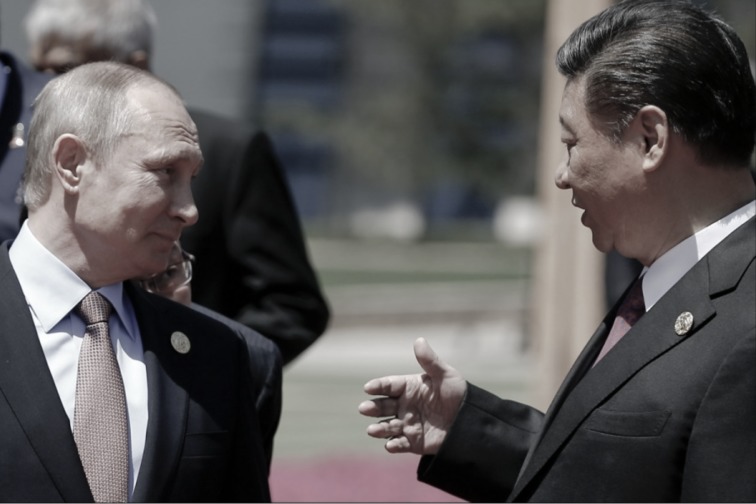
Xi Jinping's recent visit to North Korea was intended to use the North Korean regime to 'shake' the United States, but instead, he found himself being vigorously shaken by Kim Jong-un, the 'tail'.
Kim Jong-un has discerned Beijing's weaknesses in both foreign and domestic affairs, as well as its strategic anxieties, and has acted decisively, stripping away Beijing's diplomatic facade in a blunt manner. This situation illustrates that the three critical elements of 'timing, location, and harmony' are completely absent for the Chinese Communist Party.
What topics are trending among Chinese netizens?
During Xi Jinping's visit to North Korea, Chinese netizens mocked the situation, suggesting that Xi's trip to Pyongyang resembled 'the big brother comforting the little brother', with comments like 'Beijing cannot afford to lose North Korea, but Pyongyang is also aware that Beijing cannot do without it'.
The discussions and humorous interpretations among Chinese netizens primarily revolve around three key aspects:
Is the party leader flying to Pyongyang to 'find the source'?
As Xinhua News Agency and CCTV released live photos and videos showcasing a sea of flowers and the cheers of the crowd, depicting a grand welcome at Pyongyang's airport with tens of thousands of people, many Chinese netizens expressed nostalgia, saying, 'It feels like travelling through a time tunnel back to the 1970s and 1980s.'
A significant number of young people facing graduation, job hunting, and exam pressures have gathered on Weibo and Xiaohongshu, where they mockingly state: "In North Korea, employment anxiety is nonexistent because the state takes care of everything, and everyone has a formal position (even if they are paid in grain coupons)."
The recently concluded National II卷 college entrance examination essay topic, which referenced the saying, "The sun and moon do not lose their form, hence they obscure and then become bright again; the rivers and lakes do not lose their source, hence they become exhausted and then reconnect again," to discuss how to cope with difficulties, is currently trending online. Following the announcement of Xi Jinping's visit to North Korea, netizens quickly employed dark humor to connect these two events. One user quipped: "The 'state' has personally demonstrated what it means to 'find the source'—learning from North Korea how to 'not lose its form.'"
Others joked that in the context of over 300 million people engaged in flexible employment and severe competition, Xi's visit to a country that lacks ride-hailing services and food delivery, and fully implements a distribution system, is merely a 'leading version of experience exchange.'
In the triangular relationship, 'competing for affection'
Netizens and financial bloggers with a keen political awareness are particularly focused on the 'triangular intimate relationship' behind this visit involving China, Russia, and North Korea.
Since the onset of the Russia-Ukraine conflict, the relationship between Russia and North Korea has grown increasingly close, with more interactions between their leaders, suggesting that the 'little brother' that the Chinese Communist Party has supported for decades is clearly becoming closer to Moscow.
Chinese netizens humorously commented: 'Big Brother (Xi Jinping) can't sit still anymore; after 7 years, he rushed over to assert sovereignty and ensure that the little brother doesn't completely align with Russia.' 'Now Beijing has demands of Pyongyang.' 'Let's not get it twisted; it's the older brother going to comfort the little brother.'
Netizens are actively discussing how Kim Jong-un manages to balance between the two major powers, the Chinese Communist Party and Russia. They note that "Beijing cannot afford to lose North Korea, but Pyongyang is also aware that Beijing cannot do without it." Kim Jong-un is leveraging Russia to "secure more economic concessions and aid from Beijing," and it is said that "Kim Jong-un's bargaining power is now stronger than before."
Following U.S. President Trump's recent visit to Beijing, Xi Jinping quickly travelled to North Korea to meet with Kim Jong-un. Many netizens believe that Beijing is increasingly concerned that Kim Jong-un may not fully adhere to the Communist Party's directives, prompting Xi to rush to reaffirm the strategic relationship with Pyongyang. Some humorously remarked: "On the surface, it looks like an older brother meeting a younger brother, but in reality, it's more like an older brother trying to maintain the relationship," and "the older brother is trying to stabilise a younger brother who is becoming harder to manage."
Is it time to extend a helping hand again?
When North Korea is mentioned, nearly every Chinese person immediately thinks of the substantial material and financial aid that the Communist Party provides to North Korea each year. Some netizens have sarcastically commented that Kim Jong-un treats the Communist Party like an ATM.
During his visit to North Korea, Xi Jinping highlighted in a signed article published in the North Korean "Rodong Sinmun" the need to "deepen practical cooperation and enhance the well-being of the two peoples." In response, many netizens expressed their resignation, suggesting that this indicates a new round of food, oil, material, or financial aid to North Korea.
On platforms like NetEase News (in the comment section) and Toutiao, many users have connected this issue to the current economic situation in China, lamenting: "In our country, three people are competing for one job, everyone is seeking flexible employment and taking care of their health, yet we are turning around to generously support our neighbours. This truly reflects a grand strategic resolve."
Chinese netizens are using this stark contrast to criticise the current harsh employment landscape in the country, the trend of 'involution', the wave of business closures, and the increasingly unattainable nature of stable jobs for ordinary people, alongside their anxiety about the future. They also express their dissatisfaction with the Chinese Communist Party's approach of generously providing aid to foreign governments while neglecting or exploiting the rights and interests of domestic citizens, encapsulated in the saying 'better to give to allies than to domestic servants'.
That wraps up today's program. If you have any opinions on Xi Jinping's visit to North Korea, please feel free to share your thoughts in the comments section.
We’ll see you next time!
"Hotspot Frontline"
△






News magazine bootstrap themes!
I like this themes, fast loading and look profesional
Thank you Carlos!
You're welcome!
Please support me with give positive rating!
Yes Sure!