
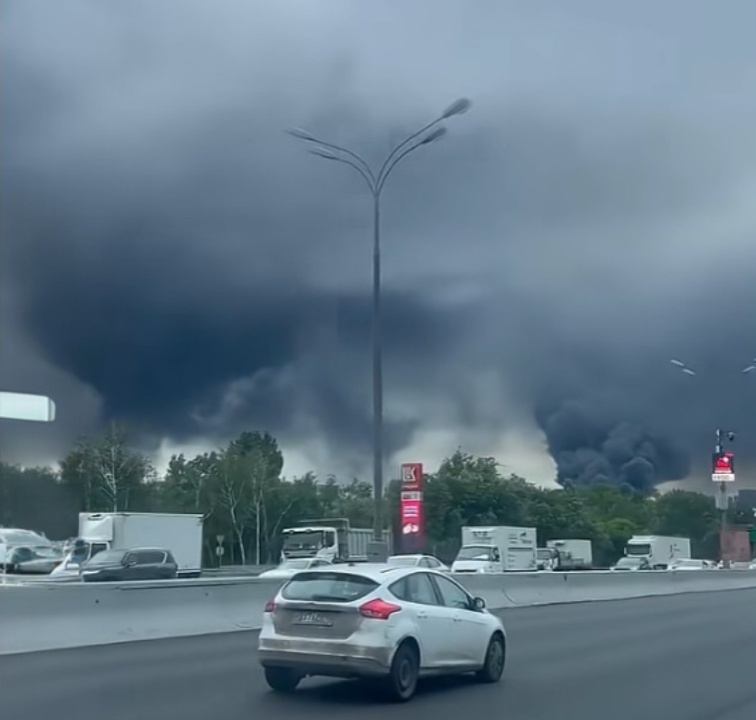
Ukrainian drones have been frequently penetrating deep into Russian territory to attack oil refineries. (Video screenshot)
[People News] Authoritative statistics from various Western intelligence agencies indicate that by 2026, the cumulative number of casualties among Russian troops on the Ukrainian battlefield has surpassed 1.3 million, with confirmed deaths exceeding 500,000. NATO's latest intelligence reveals that the monthly casualty rate for Russian forces has now surged to an astonishing 35,000. These revelations have caused significant shockwaves in Beijing.
The Russia-Ukraine War Strengthens Beijing's Dependence on Cognitive Warfare
The Chinese Communist Party's analysis of the Russia-Ukraine war does not merely focus on territorial gains, but rather examines the actual costs of great power aggression, the duration that modern defensive forces can withstand with external support, the likelihood of the aggressor becoming mired in a prolonged war of attrition, the impact of sanctions and international isolation, and the capacity of domestic society to endure long-term high casualties and economic burdens. In these areas, Russia has provided examples that are quite uncomfortable for Beijing.
It can be said that the Russia-Ukraine war has significantly reinforced Beijing's reliance on cognitive warfare strategies.
The conflict has illustrated to the CCP that aggressive military action may not yield quick results and could devolve into a bloody stalemate. Initially, Beijing may have believed that if it ever needed to use force against Taiwan, the firepower of the People's Liberation Army, along with its missile and air-sea superiority, would quickly overwhelm Taiwan. However, the Russia-Ukraine war serves as a harsh reminder: a conflict that the invaded party anticipated could be resolved swiftly may instead evolve into a high-intensity, protracted war of attrition with staggering casualties.
The costs associated with a potential Taiwan Strait conflict are even more challenging to control.
Furthermore, Ukraine represents a land conflict, while Taiwan faces an amphibious invasion scenario. From a military standpoint, the challenges of launching an attack on Taiwan across the sea are significantly greater than those encountered by Russia in its war against Ukraine.
This suggests that Beijing, observing the substantial casualties inflicted on the Russian military in Ukraine, might conclude: 'If Russia's engagement in Ukraine has resulted in such heavy losses, then should the People's Liberation Army take action against Taiwan—especially with the potential involvement of the U.S. and Japan, and the increasing resilience of Taiwan's local defenses—the costs could be uncontrollable.'
Research from the MIT Security Studies Program in 2023 explicitly indicates that the overall consequences of the Russia-Ukraine war have heightened Beijing's assessments of the political, military, and economic costs associated with using force against Taiwan, leading to a more cautious approach from Beijing, at least in the short to medium term.
External support can empower weaker nations.
Moreover, the Russia-Ukraine conflict has demonstrated that external assistance can effectively bolster a party that is initially weaker, which serves as another significant impetus for Beijing.
In the context of the Russia-Ukraine war, Ukraine's ability to withstand the conflict was not solely reliant on its own resources; it also benefited from military aid, intelligence support, training and logistics, international public opinion and diplomatic backing, as well as economic assistance from the United States and Europe. For Beijing, if Taiwan can establish confidence in U.S. commitments prior to any conflict and secure political backing from the U.S., Japan, and Europe, the costs for Beijing to engage in military action against Taiwan in the future will be even higher.
Eroding Taiwanese confidence in the U.S.
Thus, Beijing's most instinctive response may not be to prepare for war immediately, but rather to seek ways to undermine the first link in this chain: to instill doubt among the Taiwanese about whether the U.S. will actually come to their aid. Is it worth placing their bets on the U.S.?
If this confidence is partially shaken, it could impact Taiwan's resolve to prepare for war, its social resilience, support for military purchases and defense spending, and even its political determination to stand against Beijing.
The Chinese Communist Party (CCP) has long utilized strategies such as the three wars (public opinion warfare, psychological warfare, and legal warfare) and united front tactics, aimed at psychologically undermining enemy forces and the societies of rival nations, encapsulated in the narrative of 'defeating the enemy without fighting.' Thus, the ideas of 'weakening the opponent's will, dividing the enemy's society, and eroding external support' are not new concepts for the CCP and the People's Liberation Army (PLA).
The Russia-Ukraine conflict has significantly altered the CCP's strategic calculations regarding military actions against Taiwan. Beijing has drawn lessons from this, recognizing that the challenges of conducting landing operations are much greater than advancing along land borders. To avoid repeating the Russian military's mistakes, the CCP's strategy towards Taiwan has become more cautious, emphasizing the need for a 'quick victory' approach, and has greatly increased investments in asymmetric warfare capabilities, cognitive operations, and Anti-Access/Area Denial (A2/AD) capabilities.
The term 'Anti-Access/Area Denial' (A2/AD) primarily refers to the strategy of deploying formidable firepower, missiles, and defense systems to prevent third-party external powers (such as the United States) from entering specific operational areas (anti-access) and to limit the enemy's freedom of action within those areas (area denial).
It is evident that the Chinese Communist Party (CCP) is most afraid not only of the high number of military casualties but also of the United States potentially supporting Taiwan. The significant casualties suffered by the Russian military, the prolonged unsuccessful assaults, and the high costs associated with aggressive warfare likely reinforce an existing belief in Beijing: if it can weaken Taiwan's confidence in U.S. security commitments and undermine the will of Taiwanese society to resist without resorting to war—or at least without hastily engaging in a full-scale conflict—it would be far less risky and more cost-effective than directly emulating a Russian-style military assault.
For Taiwan, engaging in 'psychological warfare, sowing doubts about the U.S., and cognitive warfare' is significantly more advantageous than launching a 'Normandy-style invasion.'
Analysis: Beijing's Latest Strategies for Taiwan
According to a commentary published on the 22nd in the authoritative American journal Foreign Affairs, as reported by the Liberty Times, Chinese (CCP) leader Xi Jinping has called for the People's Liberation Army to be capable of attacking Taiwan by 2027. However, Beijing appears more inclined to enhance its influence over Taiwan by undermining Taiwan's trust in U.S. security commitments without initiating military conflict.
The author notes that Beijing is currently focusing on gradually altering the trust relationship between Taiwanese society and the United States through political, diplomatic, and psychological pressures. If Beijing can continue to postpone arms sales and reduce the frequency of official interactions between the U.S. and Taiwan, it may further erode Taiwanese society's trust in U.S. security commitments.
The author references a poll from 2026, which shows that only 34% of Taiwanese respondents view the United States as a 'trustworthy country,' marking a decline of over 10 percentage points from five years ago. The author suggests that if this trend persists, political factions advocating for improved relations with Beijing may stand to gain.
In conclusion, the article argues that the United States should promptly advance the announced arms sales to Taiwan and continue to support Taiwan in strengthening its self-defense capabilities. Should Taiwan eventually come under Beijing's control, the U.S. strategic positioning in the first island chain would face significant repercussions, and regional allies like Japan and South Korea might also reconsider their security arrangements. Thus, the U.S. should not diminish its commitments to Taiwan to preserve the current security architecture in the Indo-Pacific region.
(Originally published in People News)
△





News magazine bootstrap themes!
I like this themes, fast loading and look profesional
Thank you Carlos!
You're welcome!
Please support me with give positive rating!
Yes Sure!