

Zhang Youxia Shockingly Accused of Corruption Exceeding 10 Billion; Father and Son Detained in Beidaihe (Video)
[People News] Hello, dear audience, and welcome to "Decoding Zhongnanhai." I am Sun Ning.
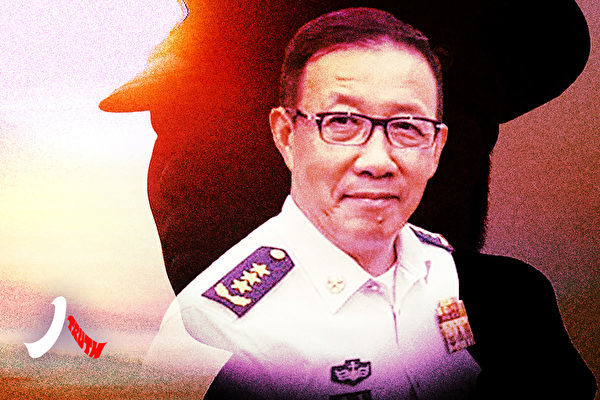
Recently, a significant political reshuffle has occurred at the upper echelons of Zhongnanhai. According to revelations by renowned overseas commentator Jiang Wangzheng on X, Zhang Youxia, the former Vice Chairman of the Central Military Commission, who was previously placed under investigation for serious disciplinary violations, has seen his corruption and related assets exceed "100 billion" after liquidation. Notably, the amount of overseas assets, excluding deferred income from assets, has reached over 9 billion. Currently, both Zhang Youxia and his son Zhang Xin are facing coercive measures and are detained at the No. 1 villa of the Central Commission for Discipline Inspection's training center in Beidaihe.
Simultaneously, a major upheaval has also taken place at the highest levels of the civil service system. Chen Xi, a former classmate of Xi Jinping at Tsinghua University and the head of the Organization Department of the Communist Party of China for over a decade, was unexpectedly removed from all his positions, including President of the Central Party School and President of the National School of Administration, in mid-June. Reports suggest that he was involved in a major scandal concerning the buying and selling of official positions linked to Beijing's Political Consultative Conference Chairman Wei Xiaodong, resulting in a "dramatic demotion" to the level of deputy department head.
In light of the dual shocks to military and personnel authority, the 20th Central Committee's fifth plenary session, originally scheduled for the fall, is rumored to be convened urgently in July.
With the military's top figure embroiled in massive corruption exceeding 10 billion, a father and son imprisoned, and the organization’s chief unexpectedly falling from grace, the important plenary session is being held earlier than usual. In today’s program, we will analyze the causal relationships behind these three events, drawing on the latest revelations from both domestic and overseas sources, as well as their significant impact on the Communist Party's officialdom.
Corruption Exceeds 10 Billion, Father and Son Both Imprisoned
Let us first examine the latest developments in the Zhang Youxia case. According to disclosures by Jiang Wangzheng, the corruption amount linked to Zhang Youxia has exceeded 10 billion, with overseas assets making up as much as 9 billion.
Zhang Youxia, who has served as the head of the General Equipment Department and the Equipment Development Department of the Central Military Commission for over a decade, has managed a defense budget and weapon research and development funds totaling trillions. In significant military projects such as aircraft carrier construction, missile system development by the Rocket Force, and nuclear arsenal expansion, Zhang Youxia exploited his position to accept kickbacks from the military-industrial sector, showcasing a high degree of practical logic in the realm of black box politics.
Furthermore, the bribery tactics used by interest groups have evolved beyond traditional cash and real estate, now utilizing complex offshore financial networks and trusts to directly transfer substantial kickbacks into Zhang's family's foreign accounts, thereby completing this power-money transaction unnoticed abroad.
This situation is particularly alarming to the highest levels of Zhongnanhai; as the vice chairman of the Military Commission, Zhang has concealed wealth amounting to 9 billion overseas, which is equivalent to treason in terms of political loyalty.
Another crucial detail revealed by Jiang Wangzheng is that both Zhang Youxia and his son are currently detained together in Villa No. 1 at the training center of the Central Commission for Discipline Inspection in Beidaihe.
In the corruption cases within the Chinese Communist Party, nearly all major cases that have crossed the 'billion red line' are associated with a common theme—'the father wields power in the front, while the son collects money in the back.' Former vice chairmen of the Military Commission, such as Guo Boxiong and Xu Caihou, as well as later figures like Zhou Yongkang, often have the core of corruption within their families involving their children or secretaries.
The detention of Zhang Youxia and his son Zhang Xin in the same location represents the most extreme psychological pressure tactic employed by the Central Commission for Discipline Inspection (CCDI) and the Military Commission's Discipline Inspection Commission.
Firstly, this strategy effectively disrupts their offensive and defensive alliance. By imposing coercive measures on both father and son simultaneously, it can swiftly dismantle their family's capacity to operate in the outside world, preventing them from leveraging any remaining military connections to express opinions online or engage in covert coordination.
Secondly, this tactic is designed to exploit familial bonds to force Zhang to capitulate. For an individual like Zhang Youxia, a prominent red second-generation official in his 70s, the threat of personal physical annihilation may not be a concern. However, witnessing his son also imprisoned and facing the grim realities of a death sentence, suspended death sentence, or life imprisonment could lead to a rapid collapse of his psychological defenses.
The primary goal of the CCP's special task force is to compel Zhang Youxia to fully submit politically, acknowledging his failures in personnel management and his indulgence of his son's business activities during his time at the Military Commission. Additionally, he is expected to relinquish control over the 9 billion in overseas black funds and conduct a thorough public self-criticism at the upcoming plenary session.
During this process, it was reported that political veterans, including former National Committee of the Chinese People's Political Consultative Conference Chairman Jia Qinglin, were dispatched to Villa No. 1 to persuade and influence Zhang Youxia. They aimed to pressure him into cooperating for the sake of his family's and son's future, in exchange for a lighter sentence of removal from office and life imprisonment. This psychological operation, which combines familial coercion with political reckoning at Villa No. 1, serves as a critical tool for high-ranking officials in Zhongnanhai to dismantle Zhang Youxia's faction.
The organization’s chief steward was rapidly demoted.
Jiang Wangzheng's recent disclosures regarding Zhang Youxia's relentless pursuit at Villa No. 1 highlight a significant fracture within the military's leadership. Almost concurrently, Chen Xi, the former chief steward of the civil service system, faced a similarly catastrophic fate. These two high-profile cases, one military and one civil, create a complete closed loop in the ongoing major rectification at Zhongnanhai.
In mid-June 2026, the State Council released a seemingly calm yet significant announcement regarding personnel changes: Cai Qi, a member of the Standing Committee of the Central Political Bureau, was appointed as the president of the National Academy of Administration. Simultaneously, it was officially confirmed that Chen Xi would no longer hold the positions of president of the Central Party School and the National Academy of Administration.
Historically, Chen Xi was recognized by the public as a close ally of the highest leader for fifty years, boasting an exceptionally strong background. Following the 20th National Congress, although he stepped down as Minister of the Organization Department, he was uniquely allowed to continue as president of both the Central Party School and the National Academy of Administration, which are key institutions for training senior cadres across the party. Initially, many believed this was a 'comfortable retirement position' for this most trusted old classmate, signifying the highest endorsement of his approach to cadre selection.
However, within just a few days in June, Chen Xi was abruptly stripped of these two remaining roles, which were swiftly taken over by Cai Qi, with a very rushed handover process. Concurrently, overseas sources revealed shocking news: Chen Xi had been 'dramatically demoted,' going from his previous retirement status as a vice-state-level official to a vice-department-level position. This former 'emperor' of the Organization Department found himself reduced overnight to the rank he held 26 years ago when he served as the Party Secretary at Tsinghua University.
Why would even a staunch supporter like Chen Xi experience a 'loss of integrity' at this late stage? This situation is connected to another significant ministerial-level official who unexpectedly fell from grace on June 6, 2026—Wei Xiaodong, Chairman of the Beijing Municipal Political Consultative Conference.
At first glance, Wei Xiaodong's downfall appeared to be just a local official's purge. However, those familiar with the personnel dynamics in Beijing understand that while Wei Xiaodong was publicly the chairman of the Political Consultative Conference, he was actually one of the largest 'political brokers' within the party behind the scenes. He exploited his special relationships with Chen Xi and others to aggressively orchestrate the 'buying and selling of official positions' among provincial and ministerial-level cadres over the past few years. During the investigation into Wei Xiaodong, the Central Commission for Discipline Inspection uncovered substantial evidence linking him to the transfer of benefits to high-ranking officials like Chen Xi in exchange for promotions.
Furthermore, the 'Tsinghua Gang,' which Chen Xi has meticulously nurtured for decades and regarded as his power bastion, has also suffered devastating and successive setbacks over the past year. From the downfall of former Deputy Minister of the Organization Department Zhang Jianchun to the covert reckoning of several ministerial-level officials with Tsinghua backgrounds in the higher education and technology sectors, the cadres that Chen Xi carefully selected and placed throughout China's officialdom have been found to be widely involved in political disloyalty and economic corruption.
In the political logic of the Chinese Communist Party, 'whoever promotes corrupt officials must bear joint responsibility.' As the de facto operator of the CCP's governance over the past decade, Chen Xi has recommended numerous officials who profess 'absolute loyalty' to the top leader. However, now even the Tsinghua Gang, which Chen Xi confidently endorsed, is beginning to collapse en masse, leading to understandable anger and suspicion from the top leader.
Zhang Youxia is embroiled in a corruption scandal involving 10 billion, and Chen Xi's defense line has crumbled. The troubles faced by these two key officials signify a complete breakdown of the traditional trust networks within Zhongnanhai, which were built on relationships among 'alumni, classmates, fellow townsmen, and the second generation of red elites.' When even Chen Xi, who has shared bunk beds and weathered storms together for fifty years, becomes implicated in 'buying and selling official positions' and is labeled a criminal, the highest leader of the Communist Party of China finds himself politically isolated in a state of 'absolute solitude.' Xi Jinping may now be astonished to discover that within this vast bureaucratic apparatus, he can no longer find anyone he can trust completely without any reservations. This profound sense of insecurity serves as the strongest catalyst for him to escalate political turmoil repeatedly.
Why was the Fifth Plenary Session forced to convene early?
By linking the revelations from Jiang Wangzheng regarding 'Zhang Youxia's 9 billion overseas assets and the psychological pressure surrounding Beidaihe No. 1 villa' with 'the chain reaction of buying and selling official positions involving Chen Xi and Wei Xiaodong,' we can understand the widespread speculation that the 20th Central Committee's Fifth Plenary Session of the Communist Party must be held early in July.
This situation is underpinned by a highly intricate political counterattack logic.
The first point of this logic is that the Zhang Youxia case must reach a 'definitive conclusion' in July.
Zhang Youxia has been under investigation for nearly six months, and the revelations of his corruption exceeding 10 billion yuan, along with the detention of both him and his son, have sparked a serious crisis of confidence within the system. The military leadership has been in an awkward position without a formal first vice chairman to manage affairs. If this situation continues into the autumn, it will not only create unrest within the military but also lead to significant strategic risks due to the chaotic command structure at the top, especially given the complex situations in the Taiwan Strait and the South China Sea. The Chinese Communist Party (CCP) has convened the Fifth Plenary Session ahead of schedule, primarily to officially announce the crimes of Zhang Youxia, Liu Zhenli, and a series of other fallen generals during the session. This will complete the legal procedures for their dismissal and expulsion from the party, effectively putting an end to their political careers.
Logic Two: The aim is to completely eliminate any potential backlash before the August Beidaihe meeting.
Every August, current high-ranking officials of the CCP and retired elders gather in Beidaihe. If the Fifth Plenary Session is held in the fall as usual, then during the informal meeting in Beidaihe in August, Zhang Youxia's former subordinates from the Northwest Army, the second-generation red generals from various military regions, and the disillusioned officials from the Tsinghua faction promoted by Chen Xi are likely to seize this opportunity to privately coordinate in Beidaihe and collectively challenge the top leadership.
The top leadership must 'act first' before their vacation meeting. In July, the Fifth Plenary Session was convened early, leveraging the absolute majority of Xi's faction within the Central Committee to solidify Zhang Youxia's multi-billion dollar case and Chen Xi's personnel corruption into an unalterable resolution of the plenary session. When the communiqué from this session was released to the entire party at the end of July, the veterans and generals heading to Beidaihe in August would confront a thoroughly defined deadlock. Anyone who dares to speak in favor of Zhang Youxia or Chen Xi at Beidaihe would essentially be 'opposing the resolution of the Central Committee plenary session.'
Logic Three: This concerns the positioning of individuals and the restructuring of leadership on the eve of the 21st National Congress.
The deeper rationale for the early convening of the Fifth Plenary Session is to set the tone for the forthcoming 21st National Congress and to pre-position personnel.
With Zhang Youxia and Liu Zhenli having vacated the top positions in the Military Commission, and Chen Xi's influence at the Party School and the National School of Administration having been purged, the most significant substantive issue at this early plenary session is the by-election of Politburo members and the restructuring of the Central Military Commission's leadership.
Given the current situation, all positions previously held by Chen Xi after his resignation have been assumed by Cai Qi, signaling that the 'Fujian Gang' is gaining unprecedented power during this latest round of purges. The top leadership needs to leverage this plenary session to swiftly appoint younger officials and military leaders from the young faction, who have recently passed political reviews and demonstrated 'absolute loyalty', into key roles within the Central Military Commission and the State Council. By planning ahead, they will have one to two years to acclimate to their roles and solidify their power, ensuring that the entire personnel transition and even the continuation of the highest authority at the 21st National Congress in 2027 can unfold entirely according to the supreme leader's intentions and the predetermined script.
Escalating Turmoil in the Bureaucracy
Zhang Youxia, Chen Xi, the Fifth Plenary Session... these seemingly high-stakes maneuvers at the top, when they intersect with China's vast bureaucratic system, have triggered an unprecedented psychological upheaval. This recent series of changes has resulted in at least three critical impacts on the current Chinese officialdom:
The first is that the 'loyalty to the highest level has effectively returned to zero' across the entire party.
Historically, officials adhered to the highest leadership, believing that aligning with the right people and demonstrating absolute loyalty would secure their positions and reputations. However, with the recent purging of figures like Zhang Youxia and the marginalization of loyalists such as Chen Xi from Tsinghua University, a stark political lesson has emerged: in today’s system, no one is truly safe, and the notion of 'loyalty' is merely a blank check that can be revoked at any moment. As insecurity spreads, the superficial 'two safeguards' have devolved into an unspoken act, and the genuine loyalty within the party has plummeted to a historical low.
The second critical consequence is the profound fear among officials that they could swiftly transition from the 'privileged class' to 'prisoners.'
As the anti-corruption campaign targets local and political figures like Wei Xiaodong and Jiang Youwei, officials are coming to terms with the reality that the positions they painstakingly acquired and the wealth they accumulated are fragile in the face of the disciplinary committee's 'detention' notices. Incidents of officials jumping from buildings, sudden deaths, and mysterious disappearances have become common occurrences in the Chinese Communist Party's landscape in 2026. Being an official is no longer a secure and rewarding role; it has transformed into a high-risk job, akin to sitting on a volcano.
The third significant impact is that the trend of 'comprehensive lying flat' has resulted in a total paralysis of local economies and governance models.
Officials are uncertain about the political direction tomorrow may take, and they are unsure whether their mentors might suddenly be taken by the Central Commission for Discipline Inspection to Beidaihe. As a result, the phrase 'do more, make more mistakes; do less, make fewer mistakes; do nothing, make no mistakes' has become the most popular saying among governors, mayors, and county heads throughout China. Faced with the withdrawal of foreign capital, local debt crises, and rising unemployment rates, the bureaucratic system has collectively opted to 'lie flat.' Everyone is waiting for the direction of the Fifth Plenary Session, and no one wants to be the one to stick their neck out before the impending storm.
An early convening of the Fifth Plenary Session might allow for a public announcement that the highest leadership has 'once again achieved an overwhelming victory,' and on paper, a seemingly more pure and loyal new team could be established. However, considering the bureaucratic 'lying flat,' the collapse of military morale, and the trust vacuum among the cadre ranks, how many true cornerstones remain within this seemingly indestructible red wall to withstand the storm? History often plants the most astonishing foreshadowing in the calmest of times.
Thank you for watching today's program. We will continue to follow the developments regarding the Zhang Youxia case and the final direction of the Fifth Plenary Session. If you enjoy our content, please remember to like, subscribe, and turn on the notification bell. We look forward to seeing you in the next episode!
'Zhongnanhai Decoded'
△




News magazine bootstrap themes!
I like this themes, fast loading and look profesional
Thank you Carlos!
You're welcome!
Please support me with give positive rating!
Yes Sure!