

In the 2026 World Cup, the South Korean team, which was considered a favorite, faced an unexpected exit, leaving fans in shock and despair (Video screenshot).
[People News] The strongest dark horse in the 2026 World Cup hosted by the USA, Canada, and Mexico is undoubtedly the African team 'Cape Verde,' which advanced to the knockout stage for the first time with an unbeaten record of three draws. In contrast, the biggest upset was the South Korean team, a favorite to win the championship, which was eliminated despite high expectations before the tournament, thus missing the finals. Additionally, the Asian powerhouse Iran also failed to advance from the group stage.
South Korean football, known as the 'Taeguk Warriors,' is not just a strong team; over the past few decades, they have established themselves as one of the undisputed top dominators in Asian football history. Whether in terms of World Cup appearances or their tenacious and indomitable 'iron-blood spirit,' the South Korean team has consistently set the standard for Asian football.
Unmatched 'Asian record' in the World Cup
The World Cup stage serves as the best benchmark for measuring the strength of regional teams. In this regard, the South Korean team boasts an unparalleled record in Asia: they hold the record for the most World Cup final appearances among Asian teams. Since the 1986 World Cup in Mexico, they have qualified for the finals 12 times and achieved an impressive record of qualifying for 11 consecutive tournaments, a feat that is only surpassed by top traditional powerhouses like Brazil and Germany in the fiercely competitive world of football.
During the 2002 Korea-Japan World Cup, the South Korean team made history by reaching the semifinals, thanks to their home advantage, high-intensity pressing, and a performance that, while controversial, was filled with determination. This achievement marked the highest ranking for any Asian team in World Cup history.
Dominance in the Asian Cup and Other Asian Competitions
Despite being frequently mocked in recent decades for suffering from 'Asian Cup Champion Immunity'—having not won the Asian Cup since their victories in 1956 and 1960, which means it has been over 60 years since they last held the trophy—this does not diminish South Korea's strength in Asia. They have finished as runners-up in the Asian Cup four times and are consistently among the top favorites to win in every tournament.
In the men's football event at the Asian Games (Asiad), the South Korean team has secured gold medals on multiple occasions. Particularly in recent years, to allow key players to avoid military service, they often field a very strong lineup, successfully winning the championship at the Asian Games.
What Led to This Year's Upset Elimination?
In this year's World Cup, the South Korean team achieved 1 win and 1 loss in their first two matches (defeating the Czech Republic and losing to Mexico). In the final round, they faced the relatively weaker South African team and only needed a draw to advance. However, in a surprising turn of events, despite dominating the match with high possession and relentless attacks, the South Korean team was unable to score in the second half and was unexpectedly countered by South Africa, resulting in a 0-1 loss.
This unexpected defeat has plunged the South Korean team into a deep crisis: not only did they fail to finish in the top two of their group for direct qualification, but their goal difference also turned negative (-1) due to the loss. Consequently, after the completion of other groups on June 28 (including a comeback by the Democratic Republic of the Congo), South Korea was eliminated from the top eight in the 'Best Third Place' comparison, completely missing out on the round of 32.
This year's World Cup featured 48 teams, and South Korea's final official ranking was a disappointing 34th, marking the lowest position in the history of their World Cup participation.
The current tournament has eerily echoed the nightmare of 2014: head coach Hong Myung-bo, who led the team to a dismal exit in the 2014 Brazil World Cup (with 0 wins, 1 draw, and 2 losses), returned to the World Cup stage after 12 years, only to see his team exit the group stage in an equally embarrassing manner, provoking outrage among the South Korean public.
External analyses suggest that this year's South Korean team suffered from internal conflicts regarding tactics and systems. Recent management issues within the Korea Football Association, along with frequent changes in head coaches (notably the chaos during Jürgen Klinsmann's tenure and subsequent interim coaching transitions), have resulted in an unstable tactical framework. On the pitch, there was an over-reliance on the individual brilliance of stars like Son Heung-min and Lee Kang-in, leading to a lack of cohesive teamwork.
Additionally, the rise of Asian rivals has been notable. Historically, Asia was dominated by the 'Japan, South Korea, Iran, and Australia' quartet, but now West Asian teams (such as Saudi Arabia, Qatar, and Jordan) have significantly strengthened their capabilities through financial investment in football and youth training, while Central Asian and Southeast Asian teams have also made strides, closing the gap with traditional powerhouses.
The South Korean team's unexpected exit has taken many by surprise. A netizen commented on the Epoch Times, noting that many of the current government's national policies are 'pro-China.' President Lee Jae-myung even admitted to the media on a special flight, 'If you think I am pro-China, then I am pro-China.' This has inevitably led to South Korea being 'tainted by the misfortunes of the red regime' in various respects.
For instance, on the Taiwan issue and military defense, Lee Jae-myung's positions have frequently conflicted with the strategic guidelines of the US-South Korea alliance, aligning closely with Beijing's stance. He has opposed the deployment of the US THAAD missile defense system in South Korea, openly stating, 'The US is deploying THAAD to block China's maritime access and spy on China's secrets, which is entirely for America's own interests.'

According to Wu Shilie, the Secretary-General of the Korean Falun Dafa Association, which organizes Shen Yun performances, he stated to the media in March 2025 that for the past 18 years, the Chinese embassy has consistently interfered with Shen Yun's performances in South Korea, particularly regarding the leasing of performance venues.
Furthermore, the globally acclaimed Shen Yun Performing Arts has faced numerous obstacles in its performances in Seoul and other areas due to pressure from the Chinese embassy in South Korea on various government agencies and theaters. The Chinese Communist Party often resorts to tactics such as threatening to disrupt the economic interests of Korean businesses in China or using student exchanges to coerce South Korean organizers into canceling venue leases. Remarkably, these threats from the Chinese Communist Party have succeeded multiple times.
In March 2025, Wu Shilie, the Secretary-General of the Korean Falun Dafa Association, which organizes Shen Yun performances, told the media: 'For the past 18 years, the Chinese embassy has consistently interfered with the Shen Yun Performing Arts' shows in South Korea, especially regarding the rental of performance venues. The embassy has pressured KBS TV's music hall, threatening that if they host Shen Yun, it would negatively impact KBS's relationship with China and significantly affect KBS's exports of television dramas to China. This pressure forced KBS's music hall to comply, blacklisting Shen Yun and refusing to rent them a venue.'
Such interventions by the Chinese Communist Party (CCP) into cultural sovereignty have repeatedly sparked strong condemnation from the Korean public and the event organizers.
This year, due to the CCP's high-pressure tactics, Shen Yun has only two cities left in South Korea with scheduled performances.
The Shen Yun gala has been widely acclaimed as a performance that is 'pure, kind, and beautiful,' capable of bringing light and happiness to humanity. Over the past decade, the Shen Yun Performing Arts has received extensive and high praise for its shows in South Korea.
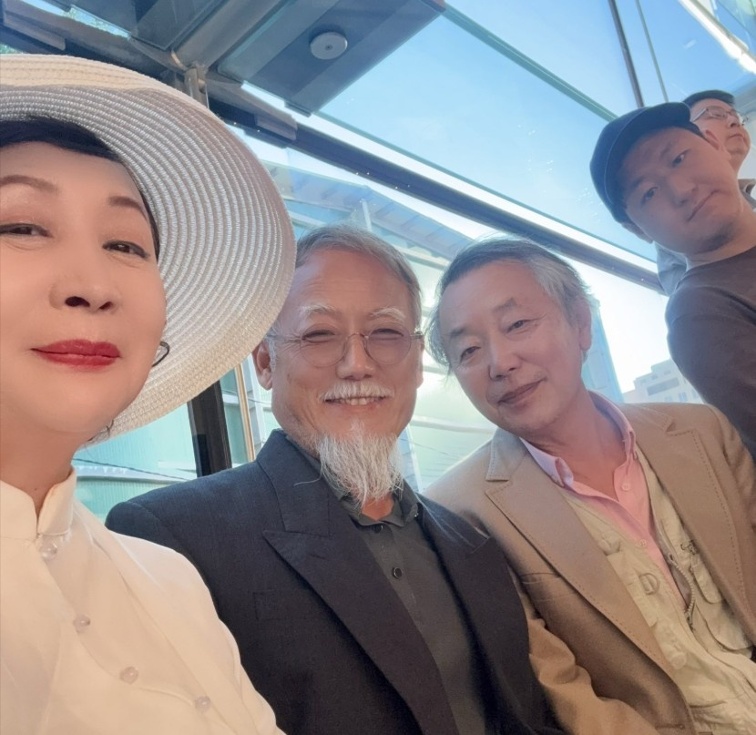
For example, Choi Gun-deok, the former director of Sungkyunkwan University and an honorary professor, has publicly lauded Shen Yun for perfectly reviving the 'lost 5,000 years of divine culture.' He believes that communism has destroyed tradition, while Shen Yun restores the truly beautiful, divine, and moral aspects of Chinese culture, representing a significant initiative that benefits humanity and helps people find light and a way out of confusion.
Cui Gende's remarks reveal that turning down Shen Yun performances essentially means rejecting a significant opportunity that could 'benefit humanity.' It is clear that individuals who have overly close connections with the Chinese Communist Party are likely to become confused and, as a result, inevitably 'fall victim to the misfortunes of the red era.'
(Originally published in the People News)
△



News magazine bootstrap themes!
I like this themes, fast loading and look profesional
Thank you Carlos!
You're welcome!
Please support me with give positive rating!
Yes Sure!