

Dark clouds loom over Beijing’s Tiananmen Square. (Feng Li/Getty Images)
[People News] On June 30, 2026, the Political Bureau of the Central Committee of the Communist Party of China convened a meeting specifically to 'study and deploy flood prevention and drought relief efforts.' Xi Jinping presided over the meeting, stressing the increasing occurrence of extreme weather and the need to address both drought and flooding, urging the establishment of a 'bottom-line thinking and extreme thinking.' On the same day, Xi Jinping and the 7 Standing Committee members attended a concert celebrating the Party's 105th anniversary. Ironically, just before the anniversary, Beijing experienced a series of disasters, including the 'China Zun' being struck by a small aircraft and a fire near Dawang Road. The capital's security is severely compromised, with floods looming, yet high-ranking officials are preoccupied with political maneuvering in the meeting room. The so-called extreme thinking is not aimed at preventing floodwaters during the flood season, but rather at guarding against public anger and resentment, preventing internal fractures from erupting, and countering international encirclement. Recently, the Communist Party has been grappling with numerous persistent issues. This 105th anniversary is not a celebration of victory, but rather a collective moment of mourning.
In recent years, it has not been uncommon for the Political Bureau to hold meetings specifically focused on flood prevention. In August 2023 and July 2024, similar meetings were held, emphasizing disaster relief and post-disaster reconstruction. The Political Bureau meeting on June 30, 2025, primarily reviewed the 'Regulations on the Work of the Party Central Committee's Decision-Making and Coordination Institutions.' At that time, Xi Jinping was engaged in a life-and-death struggle with political elders. Although Zhang Youxia was arrested in January this year, at the Political Bureau meeting on June 30, 2026, Xi Jinping appeared to have stabilized his power, yet a barrage of bad news continued to emerge.
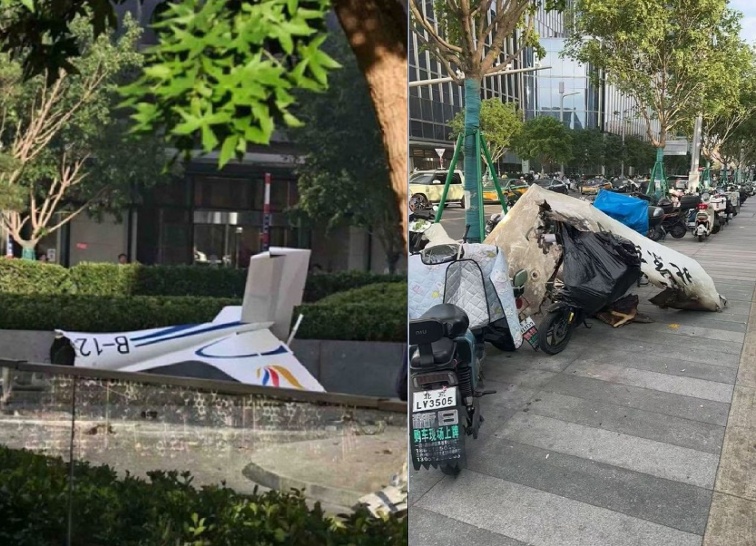
The conference communiqué proclaimed: 'Enhance vigilance, command from the front, and mobilize the masses to fully engage in disaster prevention, reduction, and relief efforts.' However, the reality of the Beijing version of the 911 incident has left Xi Jinping in a state of unease. On June 26, a small aircraft struck the China Zun building in Beijing's CBD, creating a significant hole, and it took the authorities a full day to acknowledge the casualties. The following day, a large fire erupted again in the Dawang Road and Huamao Bridge area, with thick smoke billowing and reports of explosions circulating. With sensitive areas experiencing a series of incidents, the capital's security measures seemed ineffective. Even with increased vigilance and front-line command, the situation could not withstand the internal collapse of the fortress. Yuan Hongbin, a law scholar from Peking University residing abroad, disclosed that the incident involved Cai Qi's son, Cai Erjin, and Peng Liyuan. During the incident, Beijing's security personnel were too intimidated to take emergency actions, fearing they might offend higher authorities if they shot down the small sports aircraft. This security breach represents a political accident that the Communist Party cannot rectify. The security system was flawed from the outset, possessing systemic defects and structural weaknesses that cannot be addressed at the execution level of security measures.
In a more absurd turn of events, the seven members of the Standing Committee celebrated the party's anniversary at the concert 'People First' on June 30, yet each appeared lost in thought, forcing smiles like actors. CCTV footage revealed the seven standing side by side, with Zhao Leji and Wang Huning displaying tense and unappealing expressions, resembling a state of mourning. Han Zheng wore a forced smile, while Cai Qi's smile seemed the most reluctant, akin to swallowing a broken tooth. Li Xi had a bitter smile, Ding Xuexiang's expression was ambiguous, and Xi Jinping exhibited a yin-yang demeanor, alternating between laughter and tears. Only Li Qiang appeared genuinely amused, secretly chuckling that Cai Qi was in for trouble, as political rivals were poised to lose without a fight. This was not a celebration of the 105th anniversary; it resembled the last revelry before a doomsday party, with a superficial display of joy and dance while everyone beneath felt insecure.
The Communist Party of China was founded in 1921, and the 105th anniversary will occur in 2026, with party membership claimed to exceed 100 million, singing the people's epic at the concert. However, the reality is stark and fragile, with various 'funeral events' converging: planes crashing into landmarks, fires engulfing the capital, flood warnings, trade blockades, and technological choke points. Officials are adopting a 'lying flat' approach, youth unemployment rates are soaring, local government debt poses hidden concerns, and the real estate market continues to decline.
Consumption is sluggish, domestic demand is weak, and exports are facing international blockades. The four major photoresist manufacturers in Japan—Tokyo Ohka, JSR, Shin-Etsu Chemical, and Fujifilm Electronic Materials—have recently tightened their supply of high-end ArF/EUV products to China, with on-site engineers withdrawing and import volumes plummeting by over 95%. China's semiconductor industry chain has suffered a significant blow from these 'choke points.' Despite progress in domestic alternatives, the reliance on high-end processes remains challenging to resolve in the short term, and the aspiration for self-sufficiency in the chip industry has once again been harshly confronted by reality.
On the international stage, the EU is intensifying its trade war efforts. In 2025, the EU's trade deficit with China hit a record high of 360 billion euros. At last, Europe could no longer tolerate the situation, prompting Brussels to push for risk reduction and supply chain diversification. As a result, tariffs and restrictions on Chinese electric vehicles, batteries, steel, and other products are being implemented one after another. The relationship between China and Europe has swiftly transitioned from partnership to 'competitor and even adversary.' While dialogue continues on the surface, the reality is that the era of European compromise has ended, and the escalation of friction between the two sides is now inevitable.
In the United States, alongside the significant blow dealt by the wealth report, the Trump administration has been active in investigating China's overcapacity, arms sales to Taiwan, and imposing technology export controls. Recently, Trump publicly condemned communism on social media, with Musk supporting this by stating that Marxist philosophy is responsible for the highest number of deaths in history. The idea of 'constructive strategic stability' between China and the U.S. may sound appealing, but beneath the surface, tensions are still simmering. Zhongnanhai is burdened with both old wounds and new pains.
Compounding the situation, U.S. intelligence agencies are preparing to publicly release reports on the overseas assets of members of the Chinese Communist Party's Politburo, including 21 members and standing committee members, in accordance with the Fiscal Year 2026 Intelligence Authorization Act before the year's end. These reports will detail personal wealth, financial assets, business interests, holdings of immediate family members, and control of overseas entities. Xi Jinping is particularly vulnerable; this could be a devastating blow! While the top leaders of the Chinese Communist Party advocate for common prosperity, anti-corruption, and institutional confidence, they are simultaneously hiding vast fortunes overseas and aggressively pursuing their 'sinking ship' strategy. The demand for 'wealth transparency' from the leaders of Zhongnanhai is what keeps them awake at night. A storm is brewing, and the grim scenario of being besieged both internally and externally is becoming increasingly apparent.
The year 2026 is set to be a tumultuous one for the Chinese Communist Party (CCP). The grim expressions of the seven members of the Standing Committee are not just a fleeting display; they reflect a deep-seated anxiety that has persisted over time. As the CCP approaches its 105th anniversary, the ominous tolling of the bell has already begun, with the leadership lost in self-promotion under the slogan of 'people first.' In this surreal moment, we are not witnessing a confident party celebrating a century of existence, but rather a carefully orchestrated yet fundamentally flawed doomsday celebration. The smiles of the Standing Committee members will serve as a lasting irony in the historical record. As the CCP marks its 105th year, it is burdened with numerous transgressions, and it seems that its time is running out.
(Originally published by People News) △





News magazine bootstrap themes!
I like this themes, fast loading and look profesional
Thank you Carlos!
You're welcome!
Please support me with give positive rating!
Yes Sure!