

The image shows a representation of China Airlines.
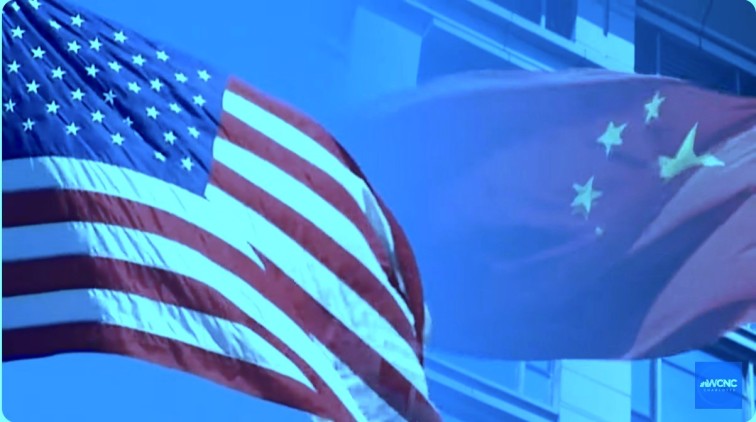
[People News] The CCP has introduced new regulations that broaden the scope of exit restrictions to encompass export control, industrial security, and technological security. This implies that researchers and engineers with access to controlled technologies will also fall under administrative exit controls. These regulations are set to take effect on September 15, and several scholars interviewed have expressed concerns that administrative bodies may widen the range of these restrictions.
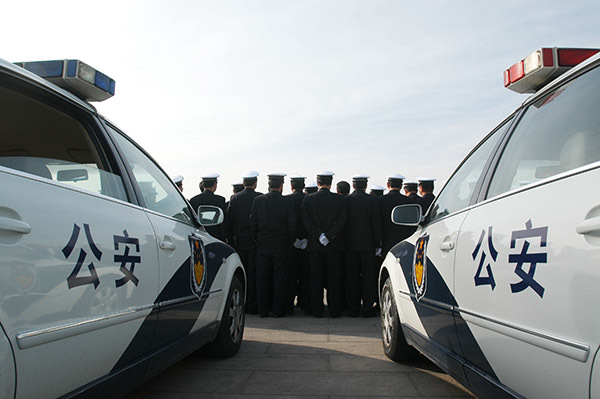
As reported by Radio Free Asia, the State Council of the CCP released the 'Regulations on Exit and Entry Management' on July 31. Article 4 specifies that if Chinese citizens violate export control and technology import and export management regulations that 'may endanger national industrial security and technological security,' relevant authorities, such as the Ministry of Commerce, can decide to prohibit their exit. Notably, Article 4 does not require criminal charges or court rulings as prerequisites for imposing exit restrictions, although related provisions are already established in criminal law and exit and entry management law.
In an interview with Radio Free Asia on August 2, Mr. Meng, a senior editor at a Beijing media outlet, remarked that the new regulations provide considerable administrative discretion for restricting citizens' exit, enabling authorities to tighten enforcement based on policy needs. He suggested that the authorities might be motivated by concerns over capital flight, preventing technology outflow, and addressing wartime conditions. However, he noted that simply restricting the departure of technology personnel cannot stop technological advancements from reaching foreign shores via the internet or anonymous channels. If exit restrictions are tightened comprehensively, it could signal the approach of a significant event. He stated, 'So what is this major event? I believe the Taiwan Strait issue could be one point, especially in the context of localized conflicts.'
Technology personnel subject to administrative restrictions
While the new regulations do not explicitly mention 'technical personnel' and do not generally prohibit scientific researchers from leaving the country, the authorities retain significant discretion in determining what constitutes a 'potential threat to national industrial security and technological security.' The decision on whether scientific researchers, engineers, or corporate technical personnel will face restrictions on leaving the country will depend on whether their actions violate export control and technology import and export management regulations, as well as whether the authorities assess that they may pose a threat to national industrial and technological security.
According to Article 12 of the 'Exit and Entry Administration Law,' if Chinese citizens are identified as 'potentially harming national security and interests,' the relevant authorities of the State Council can decide to prohibit their departure; laws and administrative regulations may also outline other scenarios in which departure is not allowed. This new regulation takes advantage of the flexibility provided by this principle to extend the specific circumstances of departure restrictions into the areas of export control, industrial security, and technological security.
In an interview, independent scholar Xin Hao remarked that the Chinese Communist Party is effectively reconstructing a 'Berlin Wall,' as the authorities are increasingly worried about citizens fleeing abroad. He stated: 'The newly issued exit and entry management regulations formalize the tightening and strict border control measures that have been in place over the past few years, indicating that while the CCP government publicly claims to promote openness, it has been reinforcing a closed system. From internet restrictions to financial and travel limitations, these measures curtail and revoke the freedoms that Chinese citizens have painstakingly acquired over the past thirty years since the market economy reform and opening up. Furthermore, this latest travel restriction is alarmingly reminiscent of the authoritarian controls seen in the Soviet Union and East Germany during the Cold War, serving as a troubling signal of the accelerating authoritarian shift in China's political landscape.'
Administrative decisions are enforced by border inspection authorities.
The "Exit and Entry Administration Law," which came into effect in 2013, specifies that for unresolved civil cases, the court is responsible for deciding on exit prohibitions; in cases involving "national security and interests," the relevant departments of the State Council are tasked with making such decisions. Once the competent department issues a prohibition on exit and notifies border inspection, individuals may be barred from leaving at the port, even if they possess valid passports, visas, and tickets.
In an interview, Si Ling, a scholar from Shandong University, explained that the legislative practice of the Communist Party of China (CPC) involves the State Council formulating supporting administrative regulations after national laws are passed, thereby converting general legal principles into specific enforcement guidelines. He stated, "The CPC's legislative approach indicates that having a law alone is insufficient. The State Council must also issue new regulations to complement it, which further refines the legal provisions and enhances their operational feasibility at the execution level."
Si Ling further noted that once the new regulations are officially implemented, the extent to which law enforcement agencies will broaden their application, as well as how they will identify restricted subjects and establish criteria, will depend on the strategic and policy needs of the CPC government at that time. In the event of war, these administrative regulations could be utilized to tighten control over personnel and technology.
△







News magazine bootstrap themes!
I like this themes, fast loading and look profesional
Thank you Carlos!
You're welcome!
Please support me with give positive rating!
Yes Sure!