

[People News] After news emerged in July 2024, following the CCP’s Third Plenum, that Xi Jinping had suffered a stroke, more and more signs over the past year have suggested that Xi has lost control over the military and that his authority within the Party has weakened. One key sign of this weakening is the CCP leadership’s return to the Hu Jintao–era emphasis on “centralized and unified leadership,” with Xi’s status as the singular “core” diminished. Not only state media but also the speeches of many senior officials increasingly stress “upholding the authority of the Party Central Committee and centralized and unified leadership,” a phrase even Xi himself has echoed. The Fourth Plenum held in October 2025 further underscored the importance of this collective leadership principle. Over the past year, Xi has reportedly shown considerable restraint regarding changes to his status.
However, after the official January 24 announcement that CMC Vice Chairman Zhang Youxia and Joint Staff Chief Liu Zhenli were under investigation, Xi’s year of restraint seemed to give way to an attempt to reclaim his position as the unchallenged “core.” In reality, Xi’s rash move—bypassing normal Party procedures—sparked dissatisfaction not only within the military but also among Party elders, princelings, and many Politburo officials.
What troubled Xi most was that after the announcement, the military did not immediately declare loyalty to him as CMC chairman. Instead, reports suggested passive resistance to the arrests of Zhang and Liu. Rumors circulated that some mid-level officers applied for retirement or transfer, and there were signs that units sympathetic to Zhang might be moving toward Beijing. Even the PLA Daily’s toned-down criticism of Zhang and Liu was seen as unusual.
Having failed so far to bring the military fully under control, Xi now needs to secure the loyalty of Politburo Standing Committee members and Politburo members who had previously aligned with the idea of “centralized and unified leadership.” How, then, have they responded?
After January 26, Premier Li Qiang attended two important meetings in addition to meeting foreign guests. On January 26, he chaired a symposium with leaders of non-Communist parties, the All-China Federation of Industry and Commerce, and representatives of non-affiliated individuals. On January 27, he presided over the State Council’s fourth clean government work conference, focusing on anti-corruption.
At the January 26 meeting, Li and participants referred to “the Party Central Committee with Comrade Xi Jinping at its core.” The January 27 meeting can be viewed as a collective statement by senior State Council officials regarding Xi’s removal of Zhang and Liu. Attendees included Politburo Standing Committee member and Vice Premier Ding Xuexiang; Vice Premiers He Lifeng, Zhang Guoqing, and Liu Guozhong; State Councilors Wang Xiaohong, Wu Zhenglong, and Chen Yiqin; Politburo Standing Committee member and CCDI Secretary Li Xi; and Secretary of the Secretariat and National Supervisory Commission Director Liu Jingguo.
Compared with many speeches over the past year, Li Qiang’s remarks shifted again, returning to pre-stroke rhetoric emphasizing loyalty to Xi. He spoke of “upholding Xi Jinping Thought,” “deeply studying and implementing Xi’s important speech at the Fifth Plenary Session of the 20th Central Commission for Discipline Inspection,” and “unifying thought and action with Xi’s important instructions.” He also mentioned the “Two Establishes” and “Two Upholds.” By contrast, “implementing the Party Central Committee’s decisions” was placed after expressions of loyalty to Xi, and the phrase “resolutely upholding the authority of the Party Central Committee and centralized and unified leadership” disappeared.
Clearly, Li’s speech reflected the stance of all senior officials present. Yet notably, official reports did not mention Zhang or Liu at all, suggesting that this level of support for anti-corruption was insufficient to restore Xi’s supreme authority. Many of these officials likely understand that openly backing Xi in today’s volatile political environment carries risks, and not all may be willing to continue as his loyal followers.
The response of Zhao Leji, China’s third-ranking leader and head of the National People’s Congress, shifted rapidly. On January 14, at an NPC Party leadership meeting, Zhao had placed “resolutely upholding the authority of the Party Central Committee and centralized and unified leadership” ahead of phrases about unifying thought under Xi Jinping Thought. But on January 24, during an inspection trip in Hubei, he dropped that phrase and retained only loyalty expressions toward Xi. This adaptation to circumstances may be Zhao’s way of surviving politically.
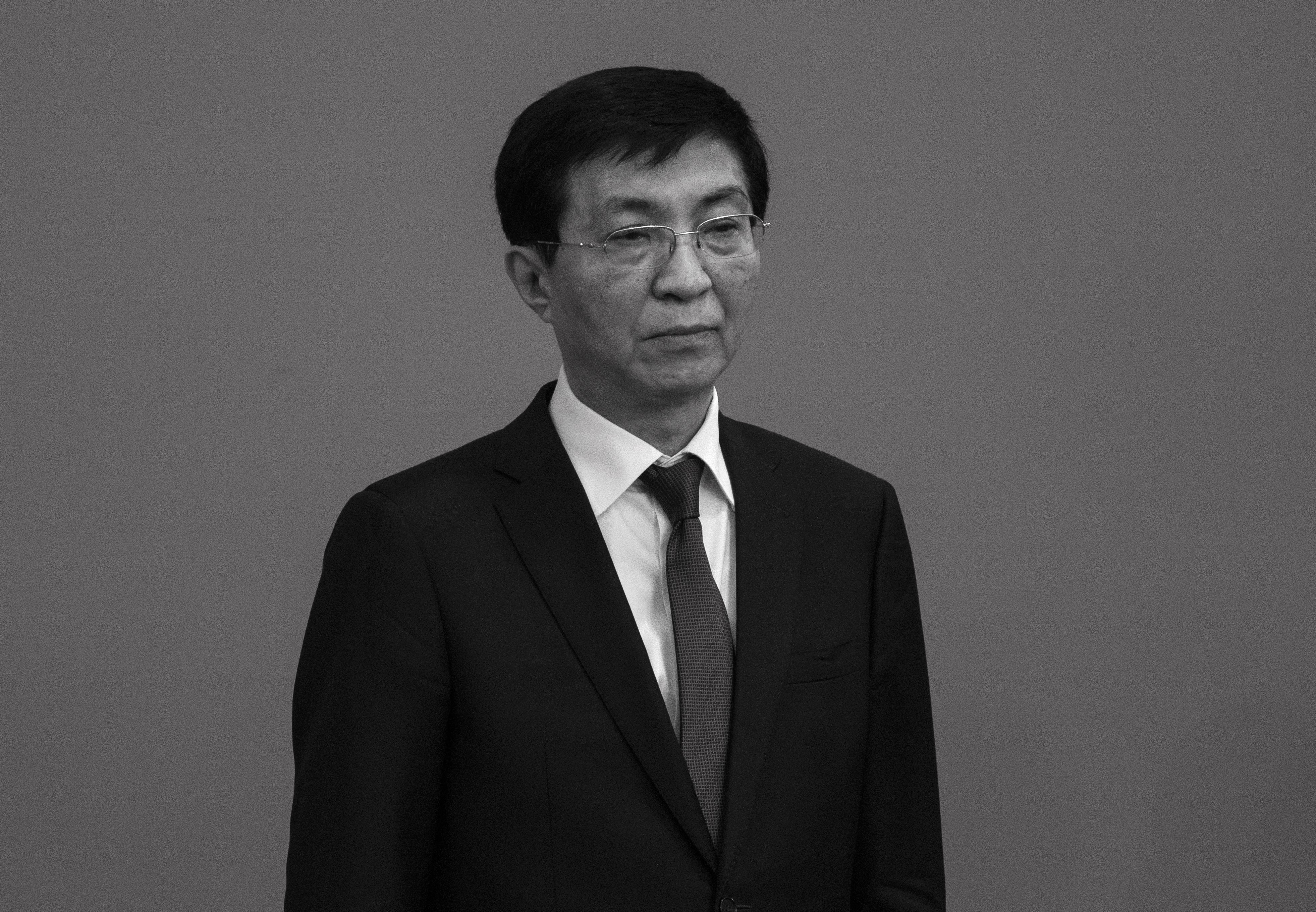
More intriguing is Wang Huning, the fourth-ranking leader and chairman of the Chinese People’s Political Consultative Conference. On January 28, at a national united front work conference—his first public appearance after Zhang and Liu’s cases—Wang mentioned “Xi Jinping Thought” and the “Two Establishes” and “Two Upholds,” but also emphasized “fully grasping the political requirement of upholding the Party’s comprehensive leadership over united front work, especially the centralized and unified leadership of the Party Central Committee,” and “aligning thought and action with the spirit of the Party Central Committee.” This differed from the State Council officials who avoided the phrase “centralized and unified leadership.” Li Ganjie, the Politburo member and head of the United Front Work Department who presided over the meeting, mentioned only implementing Xi’s united front thought.
Perhaps for this reason, reports of Wang Huning’s attendance did not appear prominently on Xinhua’s homepage and were only published on the CPPCC website the next afternoon, suggesting internal hesitation within the propaganda system and eventual approval by Xi ally Cai Qi. This indicates that dissatisfaction with Xi’s actions exists within the Politburo, or at least reluctance to shift loyalties too quickly.
After the Politburo Standing Committee members made their moves, attention turned to Politburo members. On January 29, at a joint conference on petition work, Politburo member and head of the Central Political and Legal Affairs Commission Chen Wenqing pledged loyalty by emphasizing “fully implementing Xi Jinping Thought on the rule of law.” The same day, Politburo member and propaganda chief Li Shulei spoke at a national anti-pornography and illegal publications conference, mentioning “Xi Jinping Thought” and “fully implementing Xi Jinping Thought on culture and rule of law.”
From the responses of Standing Committee and Politburo members, support for Xi appears limited compared with the fervent loyalty expressions seen at the peak of his power after the 19th Party Congress. The unpredictability of CCP politics, Xi’s unpopularity at home and abroad, his perceived ruthlessness, and especially the military’s reaction may have made these officials both fearful and cautious, prompting them to keep options open while watching the outcome of the Xi–Zhang struggle.
Whether these reactions have temporarily restrained Xi is unclear. However, the January 30 Politburo meeting again mentioned “resolutely upholding the authority of the Party Central Committee and centralized and unified leadership.” This may represent a compromise by Xi—or a delaying tactic. It may also reflect that after removing Zhang and Liu, Xi has not regained military control and is facing renewed challenges to his already weakened authority within the Party.
(First published by People News) △






News magazine bootstrap themes!
I like this themes, fast loading and look profesional
Thank you Carlos!
You're welcome!
Please support me with give positive rating!
Yes Sure!