

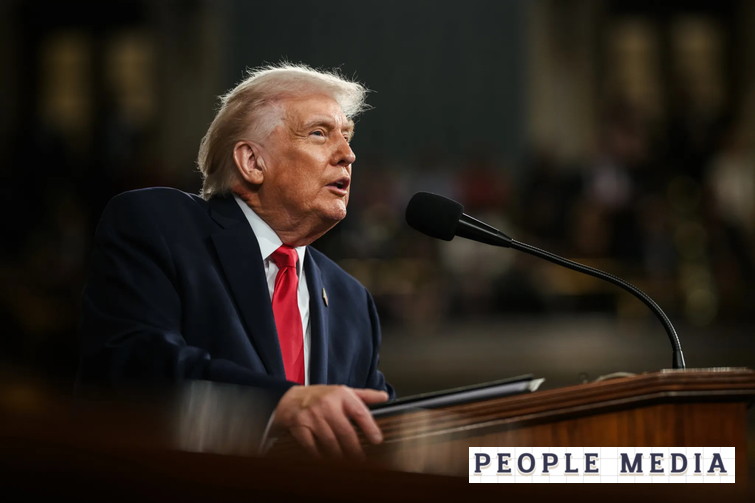
He is the General Accelerator, known for his ability to reverse. (People News AI-generated image)
[People News] On May 22, a significant gas explosion occurred underground at the Shanxi Tongzhou Group Liushenyu Coal Industry Co., Ltd. in Qinyuan County, Changzhi City, Shanxi. At the time of the explosion, there were 247 workers on duty underground, but over a hundred were unaccounted for in the system. The official report initially stated that at least 90 people had died, which was later revised to 82, raising suspicions about potential undisclosed circumstances surrounding the incident.
According to a report from the Chinese Communist Party's Xinhua News Agency, following the incident, Party leader Xi Jinping "attached great importance and issued important instructions," demanding "full efforts to treat the injured, scientifically organise search and rescue operations, and properly manage the aftermath. The cause of the accident must be determined, and accountability must be rigorously pursued according to the law," and that "all regions and departments must learn from the lessons of the accident, ... and resolutely prevent and curb the occurrence of major accidents," among other directives.
As is often the case, Xi Jinping's instructions reflect a leader who lacks warmth and self-reflection. In light of the numerous casualties, Xi not only failed to express any condolences for the victims but also did not offer any sympathy to the families of the deceased miners, wishing them strength to overcome this difficult time. He also did not show any sense of guilt for his own negligence, instead shifting all blame onto the coal mine company and local officials.
Ancient wisdom speaks of the connection between heaven and humanity, where disasters and anomalies are interpreted as divine retribution and warnings. The root causes of such calamities are often attributed to governance failures and a lack of moral integrity among the populace. In the history of ancient Chinese dynasties, during times of natural disasters or political crises, emperors would engage in fasting and purification rituals, worship the deities of heaven and earth, reflect on their own 'sins', and repent for their mistakes. Occasionally, they would issue a 'self-reproach edict' to the nation, a verbal or written declaration aimed at seeking forgiveness from heaven and averting disasters through self-criticism and reflection.
Yet, where is the slightest sign of genuine concern for the people in their lofty 'instructions'? This is a stark contrast to the Chinese Communist Party's persistent claims of 'everything for the people' and 'the people are the foundation of the nation', revealing a deep irony.
This may also shed light on why the Communist Party's official media refrains from reporting on the condolences sent by leaders from friendly nations, including Putin and Kim Jong-un, regarding the explosion in Shanxi. Their messages of sympathy could potentially embarrass Xi Jinping.
Russian President Putin, who recently departed from Beijing, is likely the first foreign leader to express condolences. According to a message published on the Kremlin's website on May 23, Putin extended his heartfelt condolences to Xi Jinping regarding the tragedy at the coal mine in Shanxi Province, China, and requested Xi to convey his sympathy and support to the families of the deceased miners, wishing a swift recovery to all those injured.
Putin's condolence message is likely to leave Xi Jinping feeling quite uncomfortable. While offering condolences is one thing, suggesting that Xi should convey his sympathy and support to the families of the deceased miners adds an extra layer of embarrassment for him. This is because Xi has not publicly expressed such sentiments towards the families of the miners, making it awkward for him to relay them on Putin's behalf. The author speculates that this could be a deliberate move by Putin, possibly as a way to express his frustration over being overshadowed by Xi during their interactions in Beijing.
It is worth noting that Putin's condolence message was only released through the Russian embassy's Weibo account and did not make it to state media. In contrast, previous condolences from Putin regarding disasters in China have been reported multiple times by Xinhua News Agency. For example, on January 8, 2025, Putin expressed condolences to Xi for the earthquake in Dingri County; in May 2014, he sent a condolence message to Xi regarding the violent terrorist incident in Urumqi; and in April 2013, he expressed condolences for the Sichuan earthquake...
In addition to the cold reception of Putin's message by the Chinese Communist Party, Kim Jong-un's condolence message to Xi Jinping also did not appear in official Chinese media, but was instead highlighted by the Russian news agency. This raises interesting questions about the dynamics between Russia and North Korea.
In contrast to Putin, Kim Jong-un's message is distinctly North Korean in tone. Besides offering
The Chinese Communist Party (CCP) has chosen to remain silent regarding the condolences sent by the leaders of friendly nations, Putin and Kim Jong-un. In stark contrast, the CCP has completely ignored the condolences expressed by the Japanese Prime Minister and the Indian Prime Minister, both of whom have a strained relationship with China.
On the same day, the 23rd, Japanese Prime Minister Koizumi Sanae posted on the X platform in Chinese, Japanese, and English, stating, 'A gas explosion occurred in a coal mine in Shanxi, China, resulting in serious casualties, which deeply saddens me. I extend my heartfelt condolences to the victims and sincere sympathies to their families. I also express my heartfelt condolences to the affected disaster victims.'
Indian Prime Minister Modi also posted in both Chinese and English on X, offering deep condolences and sincere sympathies to Xi and the Chinese people, wishing for the families of the victims to remain strong during this difficult time, and hoping that the missing individuals can be rescued safely as soon as possible.
The words of Koizumi and Modi, expressing condolences for the victims and sympathies for their families, reflect what a truly compassionate leader should convey. Their expressions of grief and sympathy stand in stark contrast to Xi's indifference. Is Xi not embarrassed?
Is it that Xi does not understand how to express condolences for the victims? Clearly not. In June 2022, Xi Jinping had previously sent condolences to Brazilian President Bolsonaro and South African President Ramaphosa regarding the severe losses caused by floods in their countries, expressing deep condolences for the victims and sincere sympathies to the families of the deceased and the people in the disaster-stricken areas.
The only explanation is that Xi Jinping and the Chinese Communist Party have never regarded the Chinese people as a priority. Phrases like 'urgent for the people's needs' and 'the people above all' are merely deceptive rhetoric. With repeated man-made disasters and constant warnings from above, can the Chinese people still fail to recognise the true source of their suffering?
(Published first by People News) △





News magazine bootstrap themes!
I like this themes, fast loading and look profesional
Thank you Carlos!
You're welcome!
Please support me with give positive rating!
Yes Sure!