
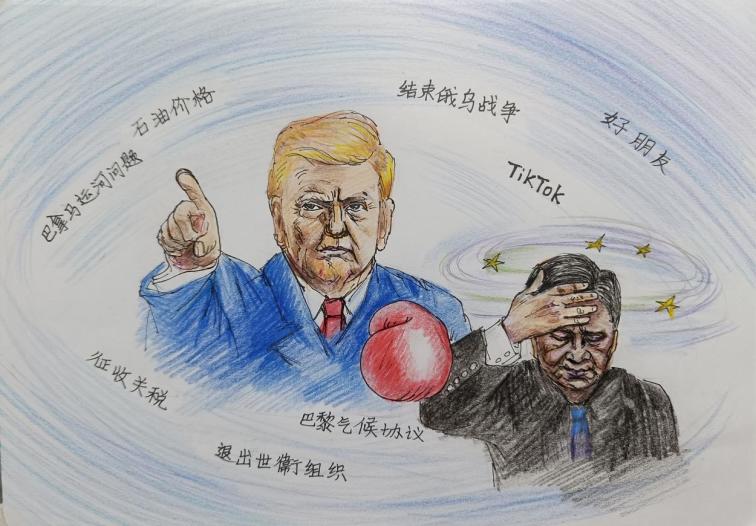
Trump's soft and hard tactics leave the CCP disoriented. (Image by Qing Yu / People News)
[People News] Amid the ongoing conflict in the Middle East, there were speculations about whether U.S. President Trump's planned visit to Beijing at the end of March would change. During the Two Sessions, Wang Yi called for a ceasefire regarding the Iran issue but refrained from directly naming the United States and Israel. He also made it clear that Beijing is fully prepared for the upcoming Xi-Trump meeting at the end of the month. However, this meeting appears to be more about the United States 'settling accounts' and 'establishing rules' with Beijing.
Initially, many believed that Trump would follow the pattern of other leaders by visiting Shanghai after Beijing. However, according to exclusive information from the South China Morning Post, Trump's itinerary will be confined to Beijing. The U.S. side cited a tight schedule and significant security concerns as reasons for this decision. From Washington's perspective, this indicates a clear reality: the visit is not for tourism or relationship-building, but rather for practical negotiations.
As reported by Radio France Internationale, citing Reuters, the U.S. Trade Representative's office has made its stance very clear; they do not intend to organise a high-profile business delegation to sign attractive contracts. Our goal is straightforward: to ensure that Beijing purchases the necessary soybeans and Boeing aeroplanes, and to guarantee that rare earth supplies are not used as a tool for threats.
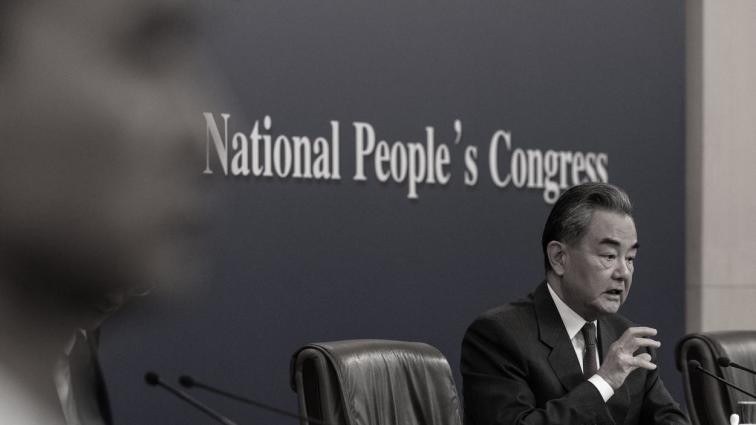
Beijing is increasingly unsettled by the United States' assertiveness on the international stage. The disappearance of Khamenei and the arrest of Maduro have left Beijing with little more than issuing statements of 'strong condemnation,' revealing its actual powerlessness. At a press conference, Wang Yi elaborated on the idea that 'a hard fist does not equate to a hard argument,' asserting that we cannot revert to the 'law of the jungle.' However, from the perspective of the United States, this is simply Beijing attempting to uphold a facade for regimes that pose threats to global security.
Additionally, the Chinese Communist Party highlighted in its report to the National People's Congress the necessity of 'using legal means to combat Taiwan independence.' This tendency to resort to legal warfare to intimidate democratic societies will only serve to clarify Beijing's true nature in the eyes of Washington. While there are rumours that military sales may be paused prior to the meeting, this does not imply that the United States will compromise on its bottom line regarding peace in the Taiwan Strait.
In conclusion, Trump's visit to Beijing was not intended for friendly handshakes; it was more akin to 'defensive diplomacy.' The United States' bottom line is unequivocal: Beijing must honour its commitments, but it should not expect to trade a few orders for concessions from the United States on security or values.
(Originally published by People News)
△





News magazine bootstrap themes!
I like this themes, fast loading and look profesional
Thank you Carlos!
You're welcome!
Please support me with give positive rating!
Yes Sure!