

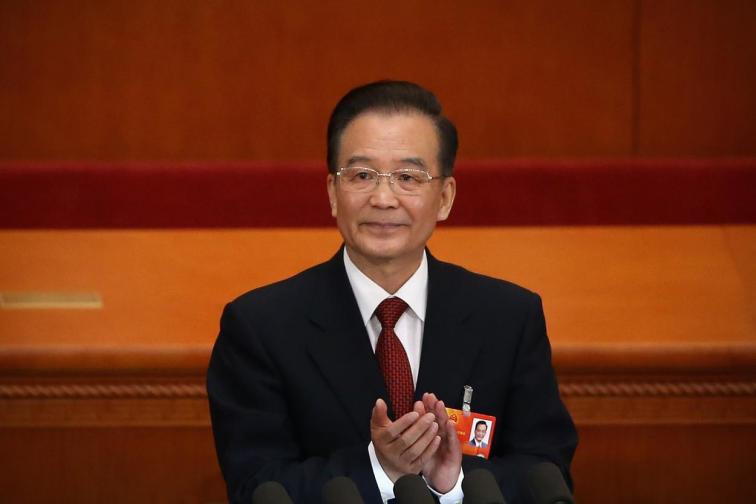
Zhang Xuefeng, a Chinese internet celebrity known as the exam preparation humorist, has tragically passed away. (Image / sourced from Weibo / Zhang Xuefeng)
[People News] On March 28, in Suzhou, a nearly two-kilometre-long line quietly stretches out in the chilly spring air. This is not a queue for a new smartphone release, nor is it for a farewell match of a top celebrity; it is ordinary people coming together to bid farewell to someone named Zhang Xuefeng.
From a purely professional perspective, this scene seems quite absurd. Who is Zhang Xuefeng? He is neither a political figure who alters the course of the nation nor an academic expert with extensive knowledge. In the eyes of many elites, he is not even regarded as a serious intellectual; at best, he is seen as a 'high-end information broker,' someone who earns a living by advising people on college applications and career planning.
Yet, this 'advice seller' has drawn thousands to come and see him off, even earning the grassroots title of 'sending off Xuefeng on a ten-mile-long street.'
Zhang Xuefeng helps ordinary people avoid mistakes.
Why did tens of thousands come to send off Zhang Xuefeng? For those tens of thousands of ordinary people holding chrysanthemums, Zhang Xuefeng is not just an internet celebrity; he is a 'survival mentor.' Through him, they have discovered the 'survival code' necessary for 'staying alive.'
Zhang Xuefeng's well-known saying, 'Children from ordinary families do not have the privilege to discuss interests; your priority should be to ensure your survival first,' is harsh but undeniably true. In a society where ordinary people often do not even know 'how to choose wisely without falling into a trap,' Zhang Xuefeng is the only one willing to lay bare the unspoken rules and teach you how to 'survive' within this system.
In the digital age, information is abundant. You can easily find out which jobs are profitable and which majors are in demand online. So why do parents still spend thousands or even tens of thousands of yuan on courses from Zhang Xuefeng? Because information does not equate to certainty.
Have you observed a phenomenon in mainland China? The more critical a turning point in one's fate, the more grandiose and vague the official narrative tends to be.
When applying for college, the official handbook outlines the 'training objectives' for each major; when job hunting, the news reports that 'the employment situation is stable and improving'; when facing an industry downturn, experts advise 'transformation and upgrading'.
Are these statements helpful? For the average person, they are nearly useless.
This is because official regulations are designed for the 'system', which prioritises overall stability over individual lives. The system requires individuals to pursue those tedious yet essential majors and to fill low-paying but necessary roles.
When an 18-year-old must decide their future for the next several decades, they confront vast uncertainty. Officials assure you that 'the future is bright', while schools promote 'comprehensive development'.
Then, Zhang Xuefeng steps in. What does he do? He warns: 'Don’t be misled by the impressive title of this major; graduation often leads to unemployment.' 'This industry may appear prestigious, but it’s really a factory that drains youth.' 'If you lack connections, steer clear of majors that require resource exchanges.'
This encapsulates the value of Zhang Xuefeng's presence. He distils complex, ambiguous, and often misleading information into stark, realistic conclusions: if you choose this major, you might find yourself unable to pay rent five years down the line.
It's crucial to understand that in China, ordinary families have an astonishingly low tolerance for error. A rural child, whose family sacrifices everything to fund his education, risks not only wasting four years of youth if he chooses the wrong major but also jeopardizes the last opportunity for the entire family to improve their circumstances.
When society grants individuals the 'freedom of choice,' it sounds liberating, yet it is profoundly cruel. This implies that if you make a wrong choice, you have only yourself to blame. Zhang Xuefeng helps you steer clear of such mistakes.
Some argue that the difficulty medical schools face in attracting students is largely due to Zhang Xuefeng's lectures. He identifies which majors are pitfalls, which industries operate under unspoken rules, and which paths will lead to quicker paychecks. In the current social climate, this is akin to providing a 'survival guide.'
Are his words harsh? They are indeed harsh but undeniably true. He does not use the official 'correct phrases'; instead, he speaks the 'survival logic' of the streets. Zhang Xuefeng does not paint a beautiful picture of distant horizons; he warns you of the 'mines' that lie ahead.
When someone can help you navigate the complexities of the world and alleviate some of the pressure of decision-making, he transforms from merely a businessman into a saviour in your eyes.
This explains why so many people on the streets of Suzhou shed tears for him. They are not mourning a corporate owner; they are grieving for someone who once offered them a helping hand and provided a sliver of 'certainty' during their most bewildering times.
What accounts for Zhang Xuefeng's market appeal?
Zhang Xuefeng's teachings have sparked significant controversy. At their core, he instructs people on how to 'live on a low budget.' He promotes pragmatism, warns against pitfalls, and encourages individuals to accept reality. However, many critics argue that he is fostering a utilitarian mindset among young people, causing them to abandon their dreams.
Yet, in a society where survival is a challenge for many, is it not a cruel luxury to discuss dreams?
For those from affluent backgrounds, making a wrong choice in their major or decisions may simply be a life experience. In contrast, for students from impoverished families, such choices represent a gamble that affects three generations. A single misstep could result in a lifetime of struggle at the bottom of the social ladder; this is the harsh reality of the fight for survival.
Zhang Xuefeng's popularity stems from his ability to provide access to the interpretation of rules that have traditionally been monopolized by the elite in power and resources. He offers this knowledge to the lower class at an incredibly low cost, with courses priced at just a few thousand yuan or even free live streams.
He has dismantled the information monopoly. He has informed a child from a remote area that pursuing a degree in computer science may offer better chances of remaining in the city than studying civil engineering. This small piece of information serves as a 'lifeline' for the child's survival.
There is a deeper logic at play here. Have we considered that if the education system and public institutions in mainland China could clearly and transparently communicate the true rules of social operation, Zhang Xuefeng would still have a market?
The answer is no.
When the path is clear, intermediaries lose their significance. When the rules are evident, everyone can see the way forward. It is only when the rules become murky and individuals feel utterly powerless against the system that this unhealthy dependence on 'mentors' emerges.
The authorities often focus on the broader picture and promote positive energy, yet they fail to address the specific anxieties faced by individuals. This anxiety builds up within society and requires an outlet. Zhang Xuefeng (张雪峰) has emerged as that outlet. He serves as a 'buffer valve' between the system and the individual, instilling in anxious grassroots individuals the belief that, with the right techniques and guides to avoid pitfalls, they can still find a narrow path to upward mobility.
This dynamic also sheds light on why mainstream media often presents a nuanced perspective on him. On one hand, he does not conform to the grand narrative of 'poetry and distant horizons'; on the other hand, the system relies on him to calm those anxious individuals, enabling them to continue working diligently and following the established path.
Many perceive Zhang Xuefeng as anti-establishment because he frequently critiques the system, discussing its 'unwritten rules.' However, the reality may be quite the opposite: Zhang Xuefeng is perhaps the most knowledgeable about the system from the outside and even plays a role in maintaining its functionality.
Why is this the case? Because what he teaches is not about 'rebellion,' but rather 'adaptation.' He instructs individuals on how to steer clear of collapsing industries and how to navigate into those narrow paths that still offer opportunities. He shows them how to leverage the system's rules to secure a ticket for survival.
He understands that this system operates like a massive meat grinder; if you charge in blindly, you risk being crushed. What Zhang Xuefeng does is teach you how to sidestep and lower your head to pass through safely. His lessons on 'endurance' are aimed at ensuring your survival, as only by surviving can you earn the right to discuss the future.
With the disappearance of Zhang Xuefeng, the 'folk interpreter', the authority over the interpretation of survival will revert to that invisible hand. The authorities will continue to assert that every profession has its value and every job deserves respect. However, the harsh reality will remind us that some values cannot provide sustenance, and some so-called 'respect' cannot cover the rent.
The tears shed on Chang Street in Suzhou reflect a collective anxiety: 'In the future, who will tell us what is true?' This encapsulates the underlying truth behind the phrase 'Ten Miles of Long Street to Bid Farewell to Xuefeng'.
Why did tens of thousands gather, and why did the authorities unusually allow this?
The Chinese Communist Party (CCP), which has historically been extremely wary of collective gatherings—evidenced by their swift removal of flowers following Premier Li Keqiang's death—has surprisingly permitted tens of thousands to attend Zhang Xuefeng's funeral this time.
Firstly, as previously analysed, the CCP leadership did not initially perceive Zhang Xuefeng as a threat. They assessed him as a figure beneficial to the party and the state.
Why is that? Because Zhang Xuefeng's primary role was to assist students in applying for their choices, with the core logic being to teach young people how to enter the system more competitively and how to select a major that would allow them to thrive within it. From the CCP's perspective, this was essentially aiding the party and the state in the college entrance examination process, guiding talented individuals into the national power structure and the systemic cycle.
Due to this instrumental value, the government has maintained a relatively approving and supportive stance towards Zhang Xuefeng. Upon his passing, the authorities likely believed that mourning a 'guide within the system' would not incite anti-government sentiments and could even project a false sense of warmth and respect for talent.
However, the unfolding of events surpassed Beijing's expectations, as tens of thousands of people spontaneously gathered to bid farewell to Zhang Xuefeng. The reason Zhang Xuefeng was able to evoke such a massive send-off is that he revealed the harsh reality of the entrenched class structure in Chinese society.
Zhang Xuefeng addressed the lower class: the top 500 companies prioritise background over ability; ordinary children who do not choose the right major face unemployment. These candid truths hit hard at the core of the Chinese Communist Party's narratives of 'comprehensive poverty alleviation' and 'equality for all.' While the authorities believed that people were merely sending off Zhang Xuefeng, in reality, the public was seizing this moment to voice their unexpressed anguish. The crowd was not just honouring a teacher who guided students in their volunteer aspirations; they were silently protesting against a societal reality where 'information is suppressed, resources are exploited by those in power, and ordinary people struggle to survive.'
This suggests that the authorities may have significantly underestimated the public's anger regarding the current state of affairs. Upon witnessing people spontaneously joining the mourning procession one after another, the authorities refrained from forcibly dispersing the crowd; instead, they chose to 'follow public sentiment' and observe quietly, bolstering police presence to prevent any signs of unrest.
The level of cooperation from the Suzhou authorities was also astonishing. There was no attempt to forcibly disperse the gathering; rather, a significant police presence was deployed to maintain order, barriers were erected to manage the flow of people, and even mobile toilets were provided for public convenience.
This situation represents a serious breach of the political red lines within the logic of the Communist Party's bureaucracy. Is the local government using Zhang Xuefeng's funeral as a 'following public opinion' rationale to express underlying dissatisfaction with the central government?
Within the current system, many local officials are feeling the pressure of a difficult situation. While they may not dare to openly resist, they might allow the truth to surface through what can be described as 'passive inaction' or even by 'actively aligning with public sentiment'.
The gathering of tens of thousands of people this time likely occurred due to the sudden nature of the incident and the overwhelming size of the crowd. The authorities are concerned that a forceful crackdown could potentially trigger even larger unrest.
Although Zhang Xuefeng's comments have been criticised as extreme utilitarianism, the wave of public sentiment he ignited in Suzhou has indeed sent chills down the spine of the Chinese Communist Party.
While the authorities have tacitly permitted this farewell event, they will undoubtedly seek ways to diminish Zhang Xuefeng's influence in the future. They recognise that if tens of thousands can fill the streets today for a 'guiding figure', then where will these people turn when the country truly loses its way tomorrow?
As implied in the film 'Let the Bullets Fly', when people no longer live in fear and take to the streets en masse, it signals the beginning of the end for this system. This funeral in Suzhou may represent a significant turning point in the mindset of Chinese society.
(First published by People News) △







News magazine bootstrap themes!
I like this themes, fast loading and look profesional
Thank you Carlos!
You're welcome!
Please support me with give positive rating!
Yes Sure!