

Have Xi Jinping and Zhang Shengmin Publicly Split?
[People News] Since Zhang Youxia was abruptly arrested, the CCP political arena has appeared calm on the surface, but in reality undercurrents are surging. The shockwaves this event has sent through CCP politics—and the rifts and infighting within the CCP military—continue to rise from deep within Zhongnanhai’s political depths to the surface. On February 5, the NPC Standing Committee avoided a proposal from military delegates to strip Zhang Youxia and Liu Zhenli of their NPC deputy qualifications, indicating that Xi Jinping has encountered strong resistance in the subsequent handling of the Zhang Youxia case. This may also hint that Zhao Leji has major differences with Xi Jinping on this matter.
On February 7, China Military Online published a brief news item titled “The Central Military Commission Issues Newly Revised ‘Regulations on Approval Authority and Procedures for Military Party Organizations in Implementing Party Disciplinary Sanctions,’” once again triggering speculation over whether Xi Jinping and Zhang Shengmin have publicly torn with each other.
The brief opens by stating that the “Regulations on Approval Authority and Procedures for Military Party Organizations in Implementing Party Disciplinary Sanctions” will take effect on March 1, 2026. The PLA Daily’s way of writing this is thought-provoking: normally, the effective date of laws and regulations is placed at the end. March 1 falls on the eve of the CCP’s annual “Two Sessions,” yet the brief deliberately moves this time marker to the very beginning—baffling and raising suspicions.
Looking further, the article is only a little over 200 characters long, yet it contains a huge and strangely coded amount of information. It specifies that the Regulations are based on the Party Constitution and the “Regulations on Approval Authority and Procedures for Disciplining Party Members Who Violate Party Discipline,” and consist of 5 chapters and 32 articles.
The Regulations emphasize “thoroughly implementing Xi Jinping Thought on Strengthening the Military” and “important thinking on the Party’s self-revolution,” advancing comprehensive strict Party governance and comprehensive strict military governance—mostly the usual official boilerplate.
Now the core point arrives. The brief says the Regulations “precisely standardize the conduct of Party disciplinary sanction work,” “enrich and improve the applicable scope, basic compliance, and principle requirements for military Party organizations implementing Party disciplinary sanctions,” “adjust and standardize the approval authority for Party disciplinary sanctions, and further refine and clarify procedural provisions for Party disciplinary sanctions,” and “strictly define duties and authority, improve procedural provisions, and strengthen checks on power.”
Judging from the central orientation reflected in the China Military Online wording, the newly revised Regulations seem to strengthen standardization, strict procedures, and stronger checks on the exercise of power—leaning more toward regulating and constraining how power is executed, rather than granting greater authority to the military discipline inspection system. In particular, the brief’s references to responding positively to key concerns from disciplinary practice—including expanding the scope of application, improving principle requirements, adjusting and standardizing approval authority, and refining procedural provisions—usually implies that past practice had problems such as ambiguous authority, lax procedures, overreach, or procedural loopholes. This revision is therefore meant to “patch holes,” plug leaks, and unify standards.
At present, aside from Zhang Shengmin, the Central Military Commission is said to have only Xi Jinping left as the “lever commander.” The Regulations were issued in the name of the Central Military Commission—so is this Xi Jinping’s one-man decision, representing the return of Xi-as-Party-chief’s military “house rules” and private punishments? Or is it the intent of Zhang Shengmin, the CMC vice chairman and secretary of the Military Commission Discipline Inspection Commission? Or is it a joint decision by the two? Interpreting it within the current CMC power framework, it looks more like an expression of Xi Jinping’s personal will.
Because the CCP military is absolutely opaque, it is difficult to find publicly available old and new versions of these Regulations. According to the China Military Online brief, the revised version standardizes and restricts relevant discretionary power held by the military discipline inspection system—meaning it restricts Zhang Shengmin’s power. Since Zhang Youxia’s downfall, Zhang Shengmin is now in an extremely sensitive position in the military—one filled with uncertainty and high risk.
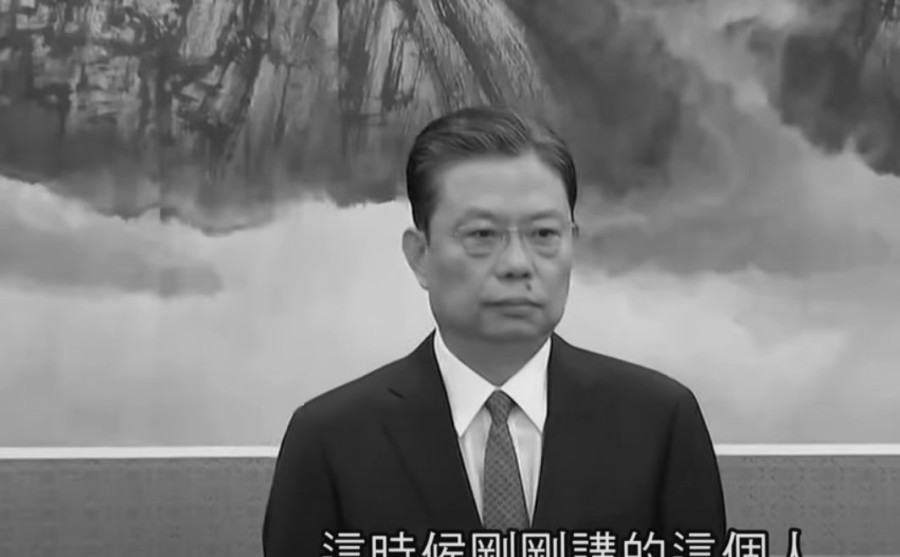
As secretary of the Military Discipline Inspection Commission and deputy secretary of the CCP’s Central Commission for Discipline Inspection, Zhang Shengmin’s position is extremely awkward: he is the “knife handle” in the military’s power struggle—whoever holds it uses it as a tool. When Zhang Youxia was first arrested, there were online rumors that the main reason was that Zhang Youxia and Liu Zhenli planned a coup to remove Xi Jinping, but Zhang Shengmin informed on them, causing the plot to fail. In this script, Zhang Shengmin plays an unglamorous role. Even if the rumor were true, Zhang Shengmin’s future fate and outcome would be unlikely to end well: on one hand, Xi Jinping is by nature suspicious, tolerates no one, and can’t stand any “sand in his eyes.” On the other hand, Zhang Shengmin had previously cooperated with Zhang Youxia to take down Xi Jinping’s confidants He Weidong and Miao Hua and other core figures from the 31st Group Army, thereby cutting off Xi Jinping’s chain of power in the military. Even if Zhang Shengmin later switched sides, Xi would not reuse him—and might still find it hard to let him go.
Fu Zhenghua is an example: Fu was originally Zhou Yongkang’s henchman, later compromised with Xi Jinping and betrayed Zhou. But Fu was ultimately purged by Xi because, in the 2016 Beijing Lei Yang incident, he incited six thousand Beijing police officers to oppose Xi. Zhang Shengmin’s eventual ending does not look optimistic. Recently, rumors that Zhang Shengmin has resigned or committed suicide have been flying everywhere—none of which are positive signals for him.
This time, the Central Military Commission revised the “Regulations on Approval Authority and Procedures for Military Party Organizations in Implementing Party Disciplinary Sanctions,” adjusting, standardizing, and restricting the boundaries of the Military Discipline Inspection Commission’s power. It is reasonable to infer this as a sensitive signal that Xi Jinping does not trust Zhang Shengmin. Put more bluntly, it can be seen as the beginning of a public rupture between Xi Jinping and Zhang Shengmin.
From another angle, the promulgation of this new intra-military Party discipline rule may also be a product—and a pretext—for Xi Jinping to shift blame. Since taking power, Xi has carried out sweeping purges in the military. Up to now, among dozens of generals, only a handful—four or five—remain; the number of lieutenant generals and major generals who have fallen may be no fewer than several hundred. The military is terrified, resentment is sky-high, and morale is seriously unstable. The hatred and anger toward Xi Jinping among soldiers is easy to imagine. The Zhang Youxia arrest in particular has become a major “slip” in Xi Jinping’s military trust crisis. The Zhang Youxia incident has become a hot potato for Xi—he is now riding a tiger and unable to get off. Issuing new rules that, on the surface, restrict the power of the Military Discipline Inspection Commission may be intended to defend himself and push responsibility away: in the past, it was the military discipline system’s unclear legal-discipline standards and abuse of power that caused these problems; it has nothing to do with “me, Xi Jinping.” In addition, on whether to purge Zhang Youxia’s remaining faction, Xi also seized the chance to throw a smokescreen—suggesting there will not be unclear authority, vague boundaries, or blurred responsibilities, and no procedural violations or institutional loopholes; in other words, there will be no wrongful cases or arbitrary arrests. This move carries a strong soothing intention. It also indirectly shows that, because of the Zhang Youxia incident, Xi has faced pushback from within the military.
What is rather strange is that, up to now, CCP Party media Xinhua and People’s Daily have not reposted this China Military Online item. Only the Ministry of National Defense website and China National Radio’s website have reposted it. At present, the CCP political situation is tangled, confusing, and hard to read; forces are locked in struggle and entanglement, and the Zhongnanhai political landscape is in a highly brittle state—on the verge of collapsing at any moment.
(First published by People News)
△






News magazine bootstrap themes!
I like this themes, fast loading and look profesional
Thank you Carlos!
You're welcome!
Please support me with give positive rating!
Yes Sure!