
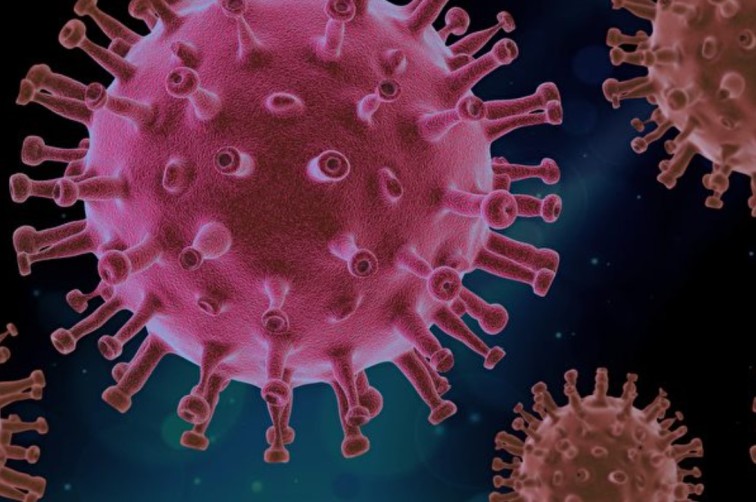
The image shows a representation of the CCP Virus (COVID-19 virus). (Pixabay)
[People News] The luxury cruise ship 'MV Hondius', which was affected by the hantavirus outbreak, has departed from the Canary Islands in Spain after successfully evacuating the last six passengers and some crew members. The ship is now heading back to the Netherlands for disinfection.
Outbreak during voyage, Cape Verde refuses to allow docking
The 'MV Hondius' set sail on April 1 from Ushuaia, Argentina, located at the southern tip of the country. The cruise was originally planned to navigate through several remote islands in Antarctica and the South Atlantic, with its final destination being the Republic of Cape Verde in West Africa.
On April 11, a Dutch passenger on board the 'MV Hondius' died suddenly due to mysterious respiratory symptoms, leading to further infections and fatalities among passengers and crew. On May 2, South African health authorities confirmed the presence of hantavirus in a British man who was receiving intensive care treatment locally, marking the first confirmation of the outbreak.
On May 3, the 'MV Hondius' sought to dock at Praia, the capital of Cape Verde, for humanitarian assistance but was firmly denied due to the virus's high mortality rate and the risk of human-to-human transmission. This left the ship effectively isolated as an 'island of infection' in the Atlantic.
The World Health Organisation (WHO) has reported that, as of now, at least seven passengers have been confirmed infected, with two suspected cases, and a total of three deaths have been recorded.
The WHO is coordinating with the EU to facilitate the docking and evacuation of the cruise ship in Spain.
In response to the escalating maritime epidemic, the World Health Organisation and the European Union requested that Spain accept the 'Hondius'. The Spanish government consented 'in accordance with international law and humanitarian principles'.
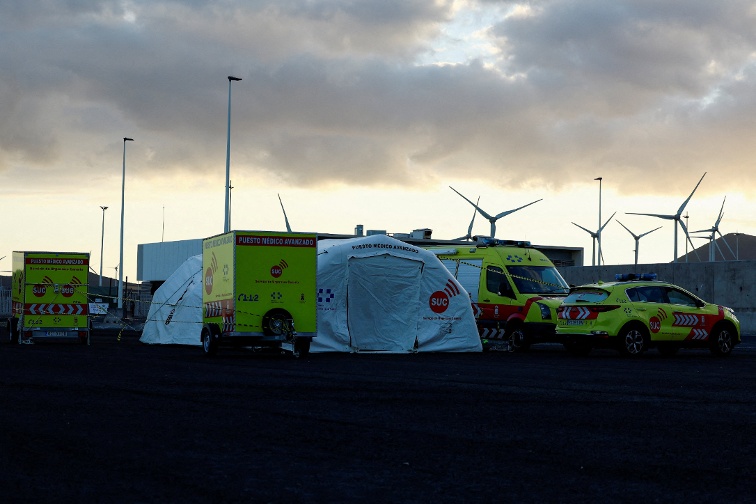
On May 8, the 'Hondius' arrived at Tenerife, Spain, where the port quickly established a strict 'red zone' quarantine to prevent the virus from spreading. On May 9, the U.S. State Department was the first to send a charter flight to repatriate 17 citizens, while the first group of EU passengers also returned home on medical charter flights. Following this, a joint charter flight from New Zealand and Australia successfully repatriated Oceania passengers on the 10th, and the remaining British passengers flew to London the same day. On May 11, the last six passengers disembarked successfully, and after the cruise ship underwent initial disinfection, it departed for its home port in the Netherlands, bringing an end to this extended maritime medical crisis.
The identity of 'patient zero' has been revealed, with suspicions that they contracted the virus during a birdwatching trip.
As investigations into the outbreak on the 'Hondius' cruise ship continue, the much-anticipated identity of 'patient zero' has been disclosed to the public.
According to the New York Post, the "patient zero" in this cruise ship outbreak has been identified as 70-year-old Dutch ornithologist Leo Schilperoord. He and his wife, Mirjam Schilperoord, were birdwatching at a landfill site in Ushuaia, Argentina, at the end of March, where they are believed to have inhaled aerosolised particles containing hantavirus from rodent droppings. This led to his infection with the only human-transmissible strain, the Andes virus, resulting in his death.
The couple arrived in Argentina on November 27 last year to begin a five-month journey through South America, travelling through Chile and Uruguay. After returning to Argentina on March 27 this year, they visited a landfill located about four miles from Ushuaia.
Local residents tend to steer clear of this towering pile of garbage, but it has become a popular destination for birdwatchers worldwide due to sightings of the rare white-throated caracara. Photographer and local guide Gastón Bretti informed the Italian news agency's Spanish service (Ansa Latina) that the area is essentially a mountain of trash, with waste accumulation far exceeding the capacity originally planned by the authorities.
Argentine officials suspect that the couple contracted the virus by inhaling viral particles from the faeces of the long-tailed pygmy rice rat at this location.
On April 1, the couple Xierpeiluode boarded the 'Hondius' along with 112 other passengers in Ushuaia, many of whom were birdwatchers or scientists.
On April 6, Xierpeiluode developed symptoms including fever, headache, stomach pain, and diarrhoea, and died on the ship five days later. Milian disembarked during a scheduled stop at Saint Helena Island in the Atlantic on April 24, intending to transfer in Johannesburg, South Africa, to return to the Netherlands. However, due to a worsening condition, she was asked to leave the plane by the crew, collapsed at the airport, and passed away the following day.
WHO: Hantavirus is not COVID-19, and the epidemic risk is controllable.
In response to the recent hantavirus outbreak linked to the 'Hondius' cruise ship, the World Health Organisation (WHO) has released an assessment report, clearly stating that this outbreak is fundamentally different from COVID-19. WHO Director-General Tedros Adhanom Ghebreyesus emphasised that while the 'Andes virus strain' involved has limited human-to-human transmission capability, its transmission mechanism is far less efficient than that of the coronavirus. Hantavirus primarily spreads through close contact with the excretions of infected rodents and is extremely fragile in the external environment, making large-scale, long-distance airborne transmission difficult.
The World Health Organisation (WHO) has conducted further analysis and concluded that the current cases show distinct clustering characteristics. By enforcing a rigorous 42-day medical observation and biosafety isolation for evacuated passengers, the transmission chain can be effectively interrupted. While the virus has a case fatality rate of up to 35%-50% that should not be overlooked, its very low basic reproduction number (R0) means that the current assessment of the public health risk to the global community remains at a 'low level.' The WHO urges countries to stay vigilant and share clinical data, but also reassures the public that there is no need for excessive panic.
△





News magazine bootstrap themes!
I like this themes, fast loading and look profesional
Thank you Carlos!
You're welcome!
Please support me with give positive rating!
Yes Sure!