

Illustration: On March 12, 2023, CCP Politburo Standing Committee members Cai Qi and Li Xi attend a session of the National People’s Congress. (Noel Celis/AFP)
[People News] On May 26, Du Wen, the former deputy director of the legal advisory office of the Inner Mongolia Autonomous Region government, disclosed in his YouTube program that Cai Qi, a member of the Standing Committee of the Political Bureau of the Communist Party of China, reported to Xi Jinping that local finances are facing a systemic crisis marked by significant blood loss and a complete depletion of their capacity to generate revenue. This conclusion is based on an independent investigation conducted by the General Office of the Central Committee.
Cai Qi informed Xi Jinping that local finances are generally in dire straits, with rigid expenditures such as the three guarantees at the grassroots level, local government debt, salaries for non-staff personnel, and repayment of project funds continuously rising, leading to an increasingly serious issue of expenditures exceeding revenues. Even in provinces with relatively favourable economic conditions, rigid expenditures now account for over 90% of available financial resources, and the ability of local finances to shuffle funds and cover deficits has essentially vanished, leaving development funds at a standstill.
Cai Qi emphasised that the revenue-generating capacity of local governments at all levels is becoming increasingly exhausted, placing a heavy burden on central finances. The management of central finances indicates that maintaining people's livelihoods relies on transfer payments, stabilising growth depends on long-term national debt and special bonds, and managing risks involves borrowing new funds to pay off old debts, while local governments avoid bankruptcy through debt replacement facilitated by the central government. The overall situation is that the problem of expenditures exceeding revenues is worsening, the scale of debt is expanding and becoming more uncontrollable, and the room for the central finances to adjust and adapt is shrinking.
Cai Qi also acknowledged that the most significant risk currently lies in the severe cash flow shortages of public welfare projects funded by local debts, with a wave of defaults potentially on the horizon. A wave of suspensions of these government public welfare projects is already taking place. The political security and social stability risks arising from collective rights protection actions by some contracting companies and migrant workers should not be underestimated. The cycle of accounts receivable for local governments is continually being extended, making it increasingly difficult for some enterprises to survive, leading to bankruptcies.
According to Du Wen, during the report, Cai Qi first praised Xi Jinping, attributing the economic failures to historical responsibilities that are gradually being addressed. Under the leadership of General Secretary Xi Jinping, the overall situation is showing a stable and positive trend.
However, Cai Qi did not shy away from reporting the systemic crisis within the Communist Party's financial system to Xi Jinping, effectively issuing a critical health warning to Zhongnanhai. By examining the current economic and financial situation of the Communist Party, we can conduct a further analysis.
All 28 Provinces and Cities have Completely Succumbed, and the Financial Self-sufficiency Rate has collapsed.
The most alarming aspect of Cai Qi's report, as conveyed by Du Wen, is that the local fiscal capacity to generate revenue has nearly been lost. Cai Qi's diagnosis is spot on.
In 2025, the general public budget revenue for local governments under the Communist Party is projected to be approximately 12.21 trillion yuan, with central transfer payments soaring to 10.19 trillion yuan. Local expenditures are expected to reach 24.4 trillion yuan, resulting in a deficit of 800 billion yuan. The budget for 2026 continues this trend, with local revenue anticipated to grow by 2.4%, and central transfer payments to local governments further increasing to around 10.415 trillion yuan, while the local fiscal deficit remains at 800 billion yuan.
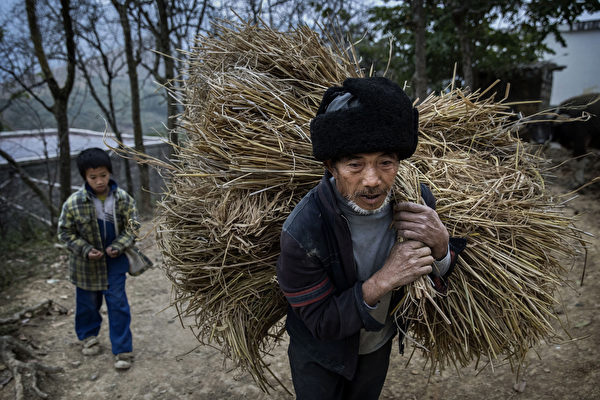
The fiscal self-sufficiency rate (local income/expenditure) has emerged as the most telling indicator of financial collapse. Among the 28 provinces and cities in the country, excluding Hong Kong, Macau, and Taiwan, approximately 70% of provinces have a self-sufficiency rate below 50%. Shanghai, which was once the last stronghold of fiscal surplus in the nation, has now succumbed completely. The self-sufficiency rates in economically robust eastern provinces like Guangdong, Jiangsu, and Zhejiang range from 67% to 77%, indicating some level of autonomy. However, many regions in the central and western parts of the country report self-sufficiency rates as low as 20% to 30%, or even lower, with Tibet at around 10%. This implies that in most provinces, for every 1 yuan spent, they can only generate 0.2 to 0.5 yuan in revenue, with the remainder relying entirely on central government support. Furthermore, the funds of the central government are derived from a tax-sharing system with the provinces. In essence, the economic output of developed provinces has been continuously provided at no cost to underdeveloped provinces. Under the Communist Party's banner of common prosperity, the reality of widespread poverty is becoming increasingly plausible.
Many grassroots governments have entered a phase of austerity, struggling to maintain basic livelihoods, wages, and operational stability, all of which are becoming increasingly challenging.
The Collapse of the Land Finance Myth and Structural Illnesses as the Root Cause
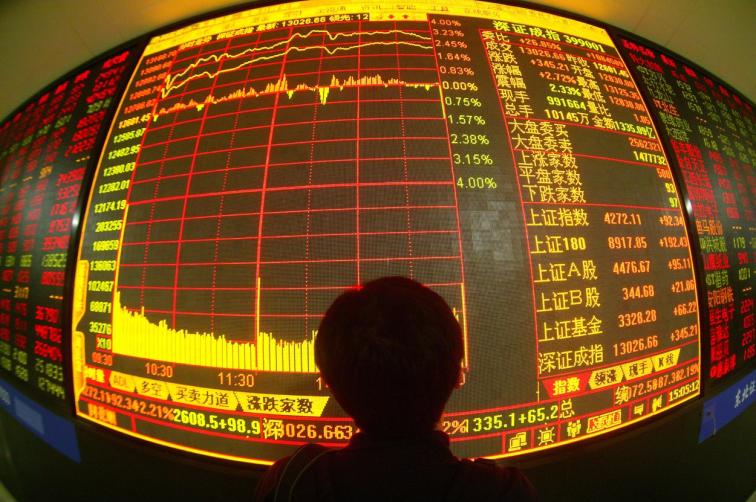
Local fiscal “self-generation of revenue” mainly relies on two engines: taxation and land transfer fees. Over the past 30 years, real estate has been the largest money-printing machine for local authorities, with land sale revenues once accounting for 30% to 50% of local fiscal income. Today, this myth has completely collapsed. The real estate sector is in deep decline; more than 80% of cities have lost property liquidity, transactions are sluggish, prices have evaporated, and land transfer revenues continue to fall, becoming the biggest source of fiscal haemorrhaging for local governments.
The corporate sector is further burdened, becoming the micro-level cost of macroeconomic decline. Manufacturing PMI has long hovered below the expansion-contraction line, and PPI has continued to show negative growth. Cai Qi reportedly informed Xi Jinping that for 42 consecutive months, prices in 31 out of 41 key industries have declined. Industrial enterprise costs have continued to rise, while profit margins have hit multi-year lows. Major tax categories, such as income tax, are therefore naturally experiencing weak growth.
The population crisis is a long-term, structural and relentless killer. Ageing and low birth rates have led to a shrinking labour force, rapid increases in social security expenditures, and declining consumption capacity. Household consumer confidence is weakening, precautionary savings remain high, and corporate willingness to expand production is low, further suppressing the tax base. While fiscal revenues decline, expenditures on the “three guarantees” (basic livelihood, salaries, and government operations) continue to rise, and the scissors gap between revenue and expenditure is widening.
The fundamental cause of fiscal haemorrhaging and economic decline lies in systemic structural problems. Local governments have long relied on local government financing vehicles (LGFVs) and PPP models to carry out infrastructure construction through hidden financing, accumulating massive implicit debt. Officially acknowledged hidden debt once exceeded 14 trillion yuan, while international rating agencies and media estimate that China’s local hidden debt may reach 60–70 trillion yuan. The large-scale public welfare projects mentioned by Cai Qi are, in most provinces, essentially unfinished or stalled projects. Individual investments often range from tens to hundreds of billions of yuan, or even exceed one trillion. Construction periods are long, and repayment cycles typically last 20–30 years or more. After completion, these projects mostly provide services to the public for free or at low cost, generating minimal or no revenue.
Since 2024, the Chinese Communist Party has launched a debt-resolution package totalling around 10 trillion yuan, aiming to significantly reduce debt levels before 2028. However, its essence remains “borrowing new debt to repay old debt.” In 2026, the quota for local government special bonds remains high, with approximately 4.4 trillion yuan in new issuance. Interest burdens have already become a heavy load.
Fiscal Crisis Triggers Chain Reactions Across the Economy, Society, and Politics
The impact of the collapse of local fiscal “self-generation” capacity is multidimensional, systemic, and potentially fatal.
At the economic level, local governments’ investment capacity has sharply declined, limiting the implementation of infrastructure and “new productive forces” projects. Although special bonds are issued on a large scale, most are used for debt restructuring and settling arrears, leaving limited room for new stimulus, resulting in very weak effects. On the consumption side, falling housing prices have eroded household wealth, compounded by employment pressure, leading to persistently weak retail growth. A wave of business closures coexists with youth unemployment, and deflationary risks are intensifying. Excessive competition (“involution”) in the real economy has spread from industry to services. Confidence among foreign and private enterprises has collapsed, with capital fleeing both domestically and internationally. Money supply has surged but circulates inefficiently outside the real economy, exacerbating financial risks.
At the social level, pension and medical insurance deficits are widening, creating a comprehensive crisis of “ageing before becoming wealthy.” Wage arrears at the grassroots level are spreading from private enterprises to the public sector. In some areas, reports of staff reductions in public institutions and salary cuts for civil servants are frequent. Social passivity (“lying flat”) and precautionary savings are increasing, further weakening domestic demand and forming a vicious cycle. Deep population ageing and youth unemployment pose severe challenges to the sustainability of the social security system. Waves of unemployment, mortgage defaults, and unpaid wages are fostering social tension, with bottom-up conflict and extreme acts becoming increasingly common.
At the political level, tensions between the central and local governments are intensifying. The central government is forced to increase transfer payments, maintaining a deficit ratio of around 4% or higher, and issuing ultra-long-term special treasury bonds to balance finances. Local officials, under pressure from debt accountability and political loyalty requirements, increasingly adopt a passive “lying flat” attitude. In the absence of effective economic measures, authorities resort to political signalling to conceal crises and shift focus.
Xi Jinping Is Sitting on a Volcano
With local fiscal capacity collapsing, government coffers are running dry, and grassroots social tensions are spreading like wildfire.
According to incomplete statistics, there were more than 5,000 protest incidents across China in 2025, a significant increase from the previous year. In 2026 so far, such incidents remain frequent. In provinces such as Henan, Shandong, and Guangdong, teachers and civil servants have faced wage arrears, allowance cuts, or discounted payments. In parts of Zhengzhou, teachers have not received full salaries for months, while some grassroots civil servants have seen their monthly income halve from around 5,000 yuan to about 3,000 yuan. Conflicts over unpaid wages among construction and manufacturing workers occur frequently, with some areas witnessing road blockades, government sieges, and even extreme acts such as self-immolation or arson.
On platforms like Douyin and Xiaohongshu, users post anti-Xi and anti-CCP content either subtly or openly. The so-called “Great Charge Movement” is described as a “suicide squad-style counterattack,” including graffiti of Winnie the Pooh, satirical clown references, and coded mockery of top leadership, overwhelming censorship systems.
Xi Jinping is sitting on a volcano. On the surface, high-pressure stability maintenance appears to control the situation, but beneath, magma is surging in all directions. Once the chain reaction from fiscal crisis to social crisis spirals out of control, any local incident could become the final straw that breaks the camel’s back.
(First published by People News)






News magazine bootstrap themes!
I like this themes, fast loading and look profesional
Thank you Carlos!
You're welcome!
Please support me with give positive rating!
Yes Sure!