

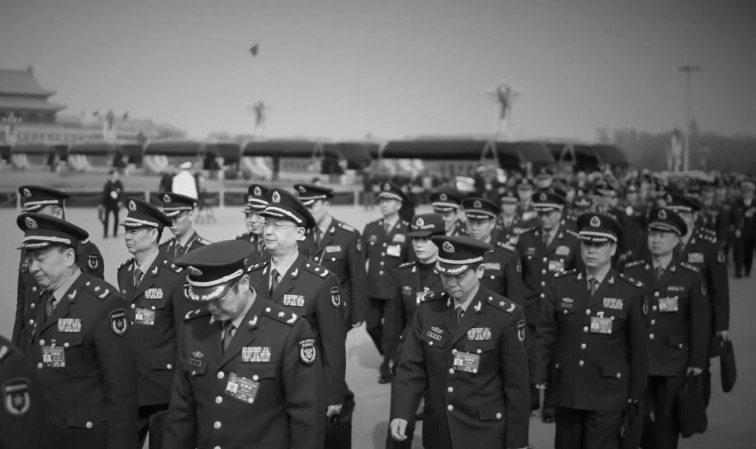
Illustrative image: Surveillance cameras surrounding Beijing's Tiananmen Square closely monitor the movements of people in the area. (Screenshot from the internet)
[People News] June 4 marks the 37th anniversary of the 'Tiananmen Incident'. In the lead-up to this date, the Chinese Communist Party (CCP) has significantly intensified its internet censorship, VPN blocking, and stability maintenance measures, with observers describing this as the most severe wave of information control in recent years. For instance, during live broadcasts on Douyin, any mention of phrases like 'I'm sorry', 'I love you', or 'teacher' results in immediate bans, prompting a mix of anger and amusement among many Chinese internet users.
No Laughing Allowed: 'I Love You' is Prohibited
According to the Liberty Times, Chinese writer Li Ying, currently residing in Italy, shared information from within the Great Firewall on the X platform today, asserting that this year's June 4th has seen the strictest censorship in Douyin live broadcasts to date. The term 'teacher' has been inexplicably banned, along with phrases that convey guilt or gratitude, such as 'I'm sorry' and 'I love you'. Furthermore, loud speaking and the use of letters are prohibited to prevent accidental mentions of sensitive numbers like 8964, leading to a blanket ban on all numbers.
It has been reported that viewers of the live broadcasts are also unable to type these phrases. Many streamers have faced bans for inadvertently crossing these new red lines, with the justification being 'violating laws and regulations.'
The extent of censorship measures by the Chinese Communist Party (CCP) has left many Chinese netizens, who are used to such restrictions, in shock. They have humorously commented, "We can't speak loudly, we can't speak softly, we can't apologise, and there are limitations on numbers, English, and reduplicated words. What era am I living in?" They also expressed feelings of helplessness, saying, "I really have no way out, family members," and noted, "Everyone has become a riddle master." Others remarked, "This is making me laugh in anger," and described their lives as feeling as absurd as a spy movie. One user pointed out, "Now the live streaming rooms are almost turning into riddle competitions, where the host has to twist their words in complicated ways, and the audience is anxious just typing a message. The more restrictions there are, the more curious everyone becomes about what can and cannot be said."
Escalation of Surveillance and Suppression
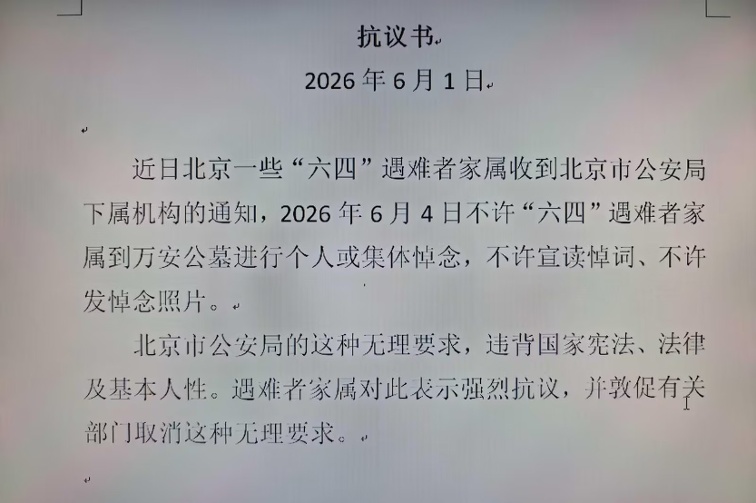
In the lead-up to the anniversary of June Fourth this year, there has been a noticeable escalation in China's internet censorship, VPN blocking, monitoring of dissenters, and suppression of public memorials. Online searches reveal that the CCP's surveillance measures during the June Fourth period are primarily reflected in several key areas:
1. Strengthened Blocking of VPNs and Circumvention Tools
Recently, several media outlets have reported that since April of this year, China has intensified its crackdown on VPNs (circumvention tools), leading to interruptions or exits from the Chinese market for some previously stable services. Analysts suggest that this is linked to the information control needs surrounding the June Fourth anniversary.
For instance, some VPN services commonly used by foreigners in China have reportedly become unstable or ceased operations, with users noting that "it is harder to circumvent the wall than in previous years."
2. Strict Control of Sensitive Words, Images, and Online Memorials
Every year around June Fourth, Chinese social media platforms typically block symbols such as: "June Fourth," "1989," "Tank Man," "Tiananmen," candles, white flowers, and other symbolic representations.
This year, some interviewees noted that even more subtle forms of commemoration are being deleted more easily, with certain chat groups no longer displaying the memorial images and coded language that were common in previous years.
Scholars who study China's censorship mechanisms have pointed out that the recent improvements in AI censorship capabilities have enhanced platforms' ability to identify images, homophones, euphemisms, and metaphors, leading to a quicker deletion of posts.
3. Dissidents and rights activists are being 'preemptively stabilised'
Reports from overseas media and human rights organisations indicate that several dissidents, witnesses of the June Fourth incident, and rights activists have faced actions such as: being visited for 'tea', movement restrictions, travel-style house arrest, home surveillance, and being barred from interviews.
Some individuals were instructed: 'Do not talk about June Fourth, do not post, do not accept interviews from foreign media.'
Lai Ching-te: The Chinese Communist Party should acknowledge the truth
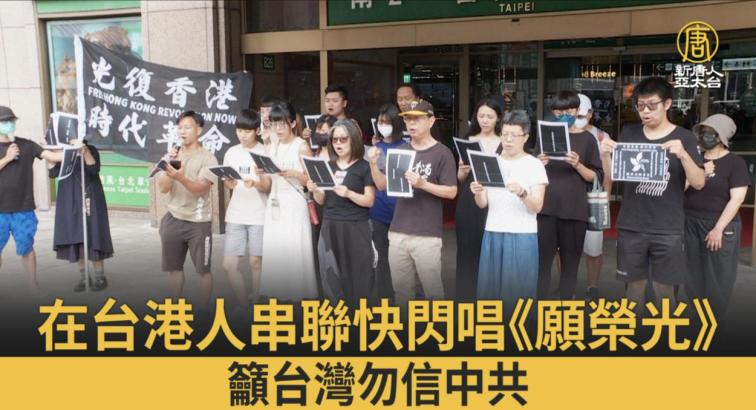
Hong Kong, which was once the largest venue for the June Fourth candlelight vigil in the Chinese-speaking world, has found it increasingly difficult to hold public commemorative activities in recent years. Locations like Victoria Park have been repurposed for other official or commercial events, and some commentators believe that Hong Kong's role as a public memory space for June Fourth has significantly changed in recent years.
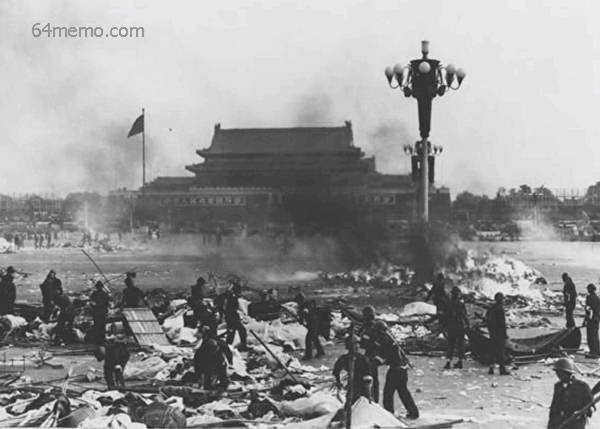
In Taiwan, President Lai Ching-te consistently makes a public statement every June Fourth, condemning the Chinese Communist Party for sending troops to massacre students. On June 4 of this year, he urged the CCP to confront history and acknowledge the truth on Facebook.
According to Voice of America, Lai Ching-te stated on Facebook, '37 years ago today, thousands of young people, brimming with ideals and aspirations, were ruthlessly shot and crushed by the army and tanks on the streets of Beijing, Tiananmen Square, and throughout China.'
Lai Qingde expressed, "I sincerely hope that China can confront the June Fourth Incident from 37 years ago, acknowledge the truth, heal the wounds, and foster reconciliation and dialogue. This would allow the people to freely express their opinions and enable individuals from different generations and perspectives to engage in public decision-making."
Rubio: The CCP's censorship cannot erase the history of June Fourth
In Beijing, a spokesperson for the Chinese Ministry of Foreign Affairs accused the United States of 'slandering' China's political system following a statement from U.S. Secretary of State Marco Rubio commemorating the 37th anniversary of the June Fourth Incident. Notably, this official commentary was removed from the public record.
On June 4, U.S. Secretary of State Marco Rubio remarked that the CCP's censorship cannot 'erase' the brutal crackdown on unarmed protesters in Tiananmen Square in 1989, asserting that the victims will eventually receive 'vindication.'
He stressed, 'Those who sacrificed their lives for the inalienable rights of free speech and peaceful assembly will ultimately be vindicated.'
△


News magazine bootstrap themes!
I like this themes, fast loading and look profesional
Thank you Carlos!
You're welcome!
Please support me with give positive rating!
Yes Sure!